


 1792
1792 0
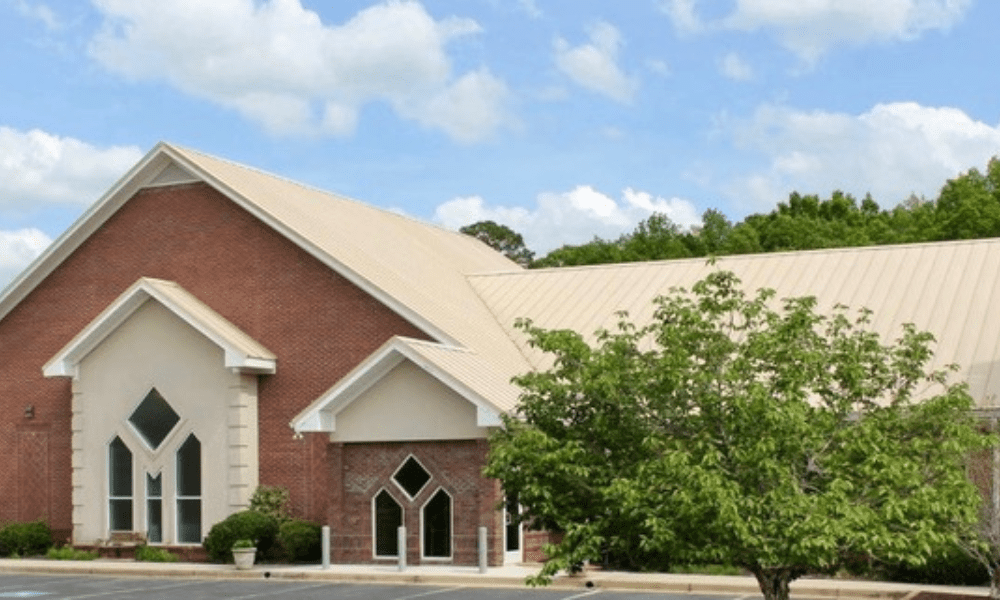
0More than 80 people gathered April 19 at Congregation B’nai Israel in Fayetteville for a Yom HaShoah memorial service honoring Holocaust victims and reflecting on the responsibility to confront hatred today.
Yom HaShoah, or Holocaust and Heroism Remembrance Day, commemorates the six million Jewish lives lost and recognizes acts of resistance such as the Warsaw Ghetto Uprising. The local service brought together members of the congregation alongside neighbors from area churches and the broader community.
Remembering and bearing witness
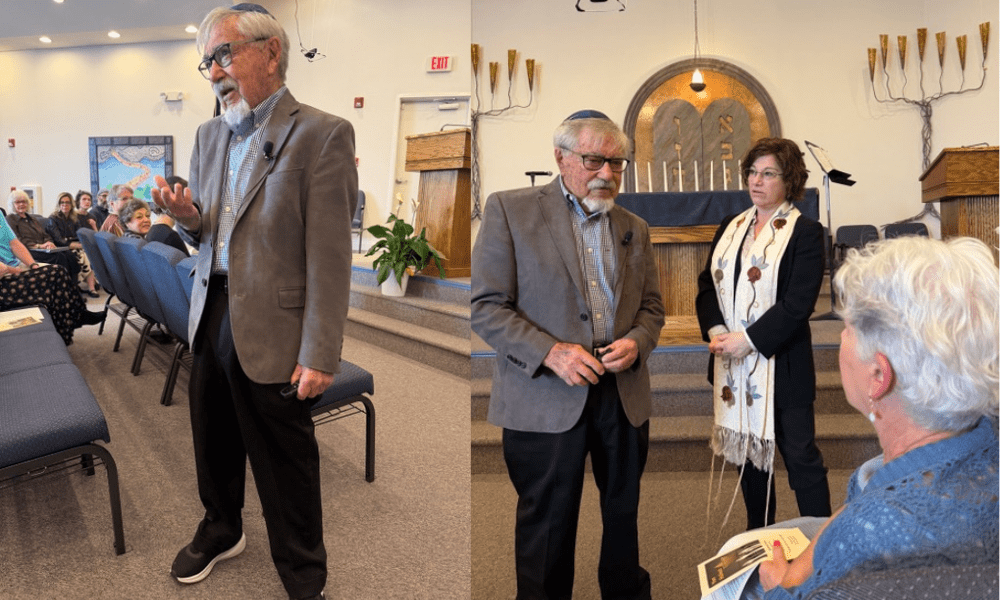
Rabbi Ellen Nemhauser opened the program by acknowledging both the gravity of the day and the presence of those outside the Jewish community.
“We gather today on Yom HaShoah – this commemoration of the Holocaust, and the murder of nearly half the world’s Jewish population,” Rabbi Nemhauser said. “It is particularly heartwarming and uplifting to have amongst our Jewish community, so many of our neighbors, supporting us in grieving this incredibly tragic loss to our people.”
She urged attendees to carry forward both memory and responsibility, pointing to the consequences of indifference.
“Today, we stand against that silence and indifference,” Rabbi Nemhauser said. “We honor the 6 million, we affirm our commitment to stand up and speak up with any oppressed neighbor, to fight against hatred in all forms, ensuring that ‘never again’ is an action, not just a slogan.”
Her remarks included a quote from Rabbi Joachim Prinz, who fled Nazi Germany and later became a civil rights leader in the United States: “The most urgent, the most disgraceful, the most shameful and the most tragic problem is silence.”
A survivor’s story
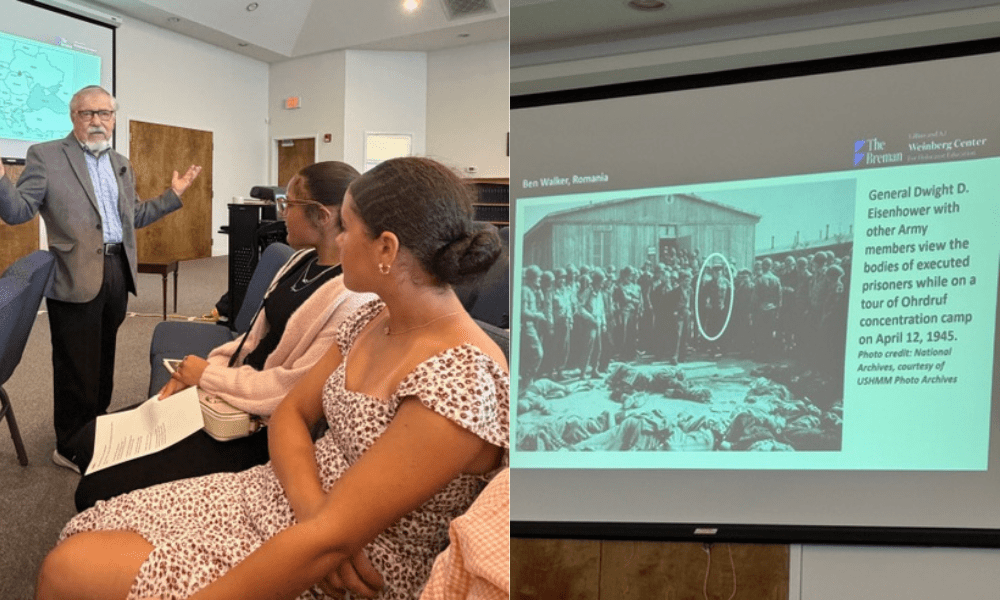
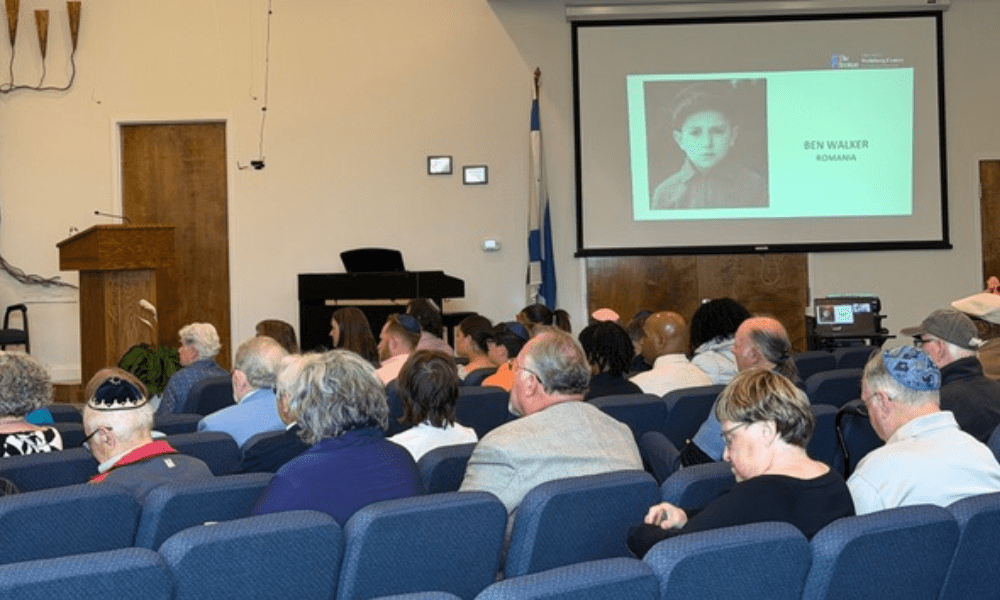
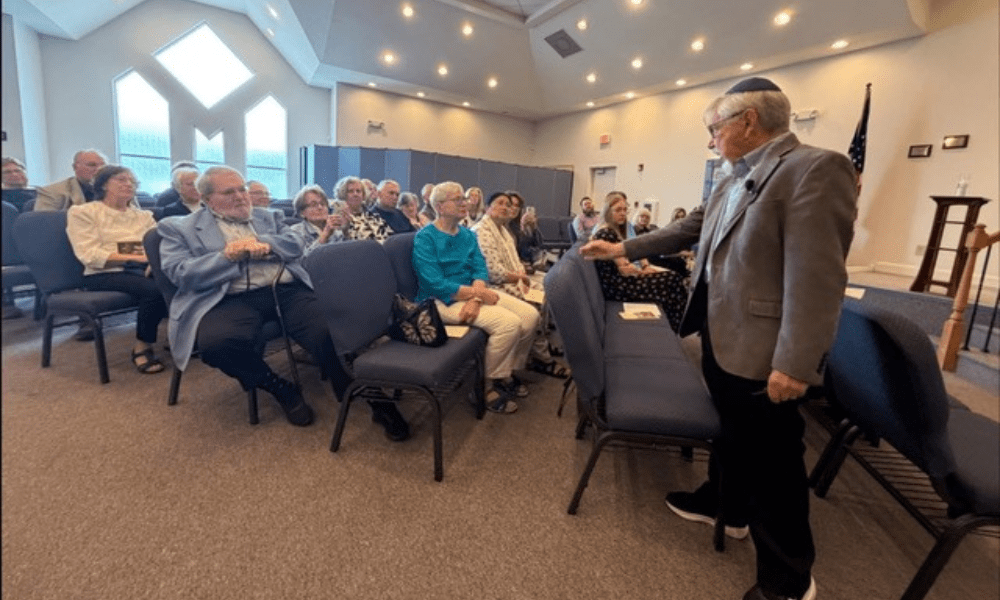
The centerpiece of the service was testimony from Holocaust survivor Ben Walker, whose life story traces the arc from persecution to survival and, ultimately, education.
According to the event program, Walker was six years old when his family was ordered to report to a railroad station within hours, eventually enduring harsh conditions in Transnistria during World War II.
He and his mother were the only survivors of their family after years of displacement, forced labor, and starvation, before later emigrating and building a new life in the United States.
In the decades since, Walker has dedicated himself to sharing his experiences with audiences, including students and community groups, helping ensure that firsthand accounts of the Holocaust are not lost.
A program of remembrance
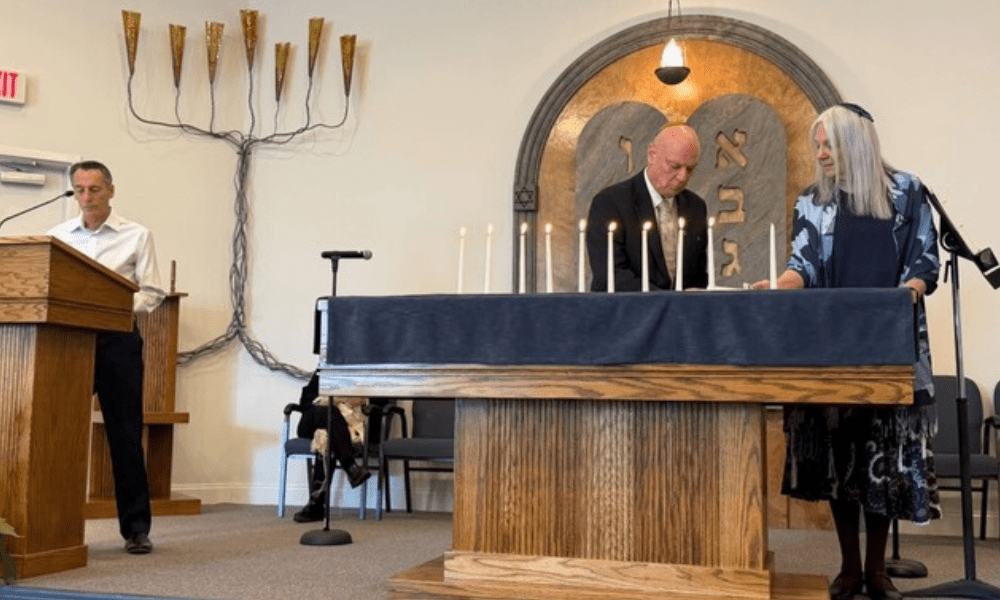
The service followed a structured program that included music, readings, and a candle-lighting ceremony honoring victims and survivors.
Eleven candles were lit, each accompanied by readings drawn from Holocaust survivors, victims, and historical figures, including Anne Frank and Chief Rabbi Jonathan Sacks.
The ceremony concluded with traditional prayers, including Kaddish, and a final benediction led by Rabbi Nemhauser.
A community moved to reflect
Congregation President Jennifer Rudbart said the event left a lasting impression on those in attendance.
“The Board of Trustees at Congregation B’nai Israel were honored to welcome Mr. Ben Walker to speak at our Yom Hashoah remembrance service held at CBI,” Rudbart said. “This service is dedicated to honoring those lost in the Holocaust, including the six million Jewish lives taken.”
She said attendees were deeply affected by Walker’s testimony.
“The more than 80 people in attendance to hear Mr. Walker speak were profoundly touched, a community moved to tears by his story,” Rudbart said.
Rudbart noted that opportunities to hear directly from survivors are becoming increasingly rare.
“Services such as this are important as we continue to strive to educate our community—and future generations—about the atrocities of the Holocaust, especially this generation of children, who sadly will be the last to hear directly from a survivor,” she said.
From remembrance to responsibility
Both speakers emphasized that remembrance must lead to action.
“These stories remind us of our shared responsibility: to stand against hatred in all its forms, wherever and whenever it appears,” Rudbart said.
Rabbi Nemhauser echoed that message in closing.
“May today’s program urge us all, and inspire us all to act with courage in the face of hatred,” she said. “May we serve our neighbors near and far with compassion, generosity, empathy, and good will.”
The service closed with a shared commitment captured in Rudbart’s final words: “Never again is now.”



Leave a Comment
You must be logged in to post a comment.