

 3878
 0
Tomorrow, Fayette County votes.
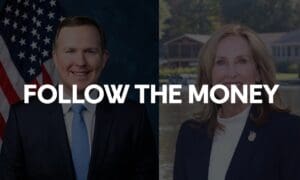
Throughout this year, I have used this column to talk about our local politics. I compared Brian Jack and Maura Keller and then followed the money behind them. I tested Josh Bonner and Tim Wilkinson against the issues we say matter most. I dug into the insurance commissioner’s race, the three constitutional amendments at the bottom of your ballot, and the District 3 county commission race that will decide who represents Peachtree City. I asked questions, checked the answers against public records, and told you what I found, even if it did not flatter the people I covered or please their supporters.
This column is about what to do with all of this, and it comes down to one idea. Fayette County gets better when we elect officials who improve our community by addressing real problems.
What “better” means is up to you. For some, it means lower taxes and slower growth. For others, it means more housing options, safer roads, or stronger schools. We all may define it differently, and that is okay when our votes rest on facts and reason.
We should not decide our future based on fear or pure loyalty to a team.
The World We’re Actually Living In
Making our community better starts with seeing it clearly. Fear works by pulling our attention away from real problems, and we have plenty of real ones. This week, some people will tell you everything is great, and others will say everything is falling apart. Our world is so complex that both could be right in certain ways. But right now, most of us lean toward the worried side. In an NBC News poll taken in early October, 71% of Americans said the country is on the wrong track, The reasons are not hard to find.
Nationally, we have serious challenges:
- The consumer price index rose 3.7% over the year ending in September, up from 3.4% the month before.
- Employers added just 29,000 jobs in September, far fewer than economists expected. Unemployment rose to 4.2%.
- After enhanced Affordable Care Act subsidies expired, the average net premium for Georgians who kept their marketplace coverage roughly doubled, from $69 to $148 a month.
- The Supreme Court struck down the President’s broadest tariffs in February, but the Yale Budget Lab estimates tariffs still cost the typical household more than $1,000 a year.
- The conflict with Iran helped drive gasoline prices up 27% over the year ending in August.
- Social Security’s retirement trust fund is projected to run short in late 2032, and benefits would be cut automatically by about 22% under current law.
In Georgia, the picture is mixed:
- Lawmakers passed an income tax cut, a rebate of $250 to $500, and a 60-day gas tax suspension. The state then trimmed about $300 million in planned spending, including $30.7 million for school buses and transportation.
- Auto insurance rates have started to ease since 2025, but they still sit close to 50% above the national average.
- Home premiums have climbed roughly 24% since 2023.
In Fayette County, there are pressures that hit close to home:
- The county’s gross tax digest grew about 64% in five years, from roughly $7.0 billion to $11.6 billion. That is good news if you are selling and harder news if you are a young family trying to buy, a retiree on a fixed income, or a renter.
- Data centers are already here. While the school system expects about $40 million from QTS next fiscal year, three in four older Georgians worry they will raise their power bills.
- The state spent roughly $18 million on new turn lanes at Highway 54 and 74. It is still too early to know whether they will fix our worst intersection, and based on what I’ve casually seen online, I’d say early sentiment is not positive.
None of these problems has an easy answer, and no one party has all the solutions. That is why the people we send to solve them matter more than the team they play for.
Who Will Serve Us Best Does Not Sort Neatly By Party
Set aside the national noise for a moment and look at the three races on your ballot specific to our area, which is the federal House, the state House, and the county commission. On each issue, the better answer rarely comes from the same party every time. For the county race, I also draw on the May 5 candidate forum hosted by the Fayette Chamber of Commerce and the Peachtree City and Fayetteville Rotary Clubs, which I covered in detail.
What it costs to live here
- Congressman Brian Jack (R) points to the tax law that created no tax on tips or overtime and a $6,600 deduction for seniors. But he did not join the 17 Republicans who voted to extend health insurance subsidies, whose loss doubled premiums for many early retirees here.
- His challenger, Maura Keller (D), would restore those subsidies and pay for her plans with corporate tax increases. She was more specific in person than her platform suggests, naming Social Security fixes like raising the cap on income subject to the payroll tax. Her promise that ending the tariffs would lower prices immediately overstates what Congress can do.
- State Rep. Josh Bonner (R) voted for this year’s income tax cut, rebate, and gas tax suspension, and his homestead bills are on your ballot tomorrow. He also helped write the 2020 law limiting how fast Fayette school assessments can climb. He would not say whether he supports Medicaid expansion.
- His challenger, Tim Wilkinson (D), would make the income tax progressive and pay for Medicaid expansion by legalizing casinos and recreational marijuana, something the legislature has never done.
- James Clifton (R), running for county commission, promises to eliminate homeowners’ property taxes using QTS revenue. A commissioner cannot do that because a new homestead exemption requires an act of the legislature and a referendum.
- His opponent, Chandra Wright (D), wants large corporations to pay enough to fund grants and training for local small businesses, which in practice would mean granting fewer tax breaks since the county cannot set its own corporate tax rates.
Growth and data centers
- Jack has questioned whether Fayette and Coweta need data centers at all, even as the White House he serves moved to fast-track them. He also led the repeal of a federal rule threatening the tankless water heaters built by Rinnai, whose North American headquarters is in Peachtree City. Rinnai’s president credited him with preserving more than 200 jobs.
- Keller would tax hyperscale data centers and end the secrecy agreements around them, though most of those levers belong to state and local governments.
- Bonner voted in 2024 to keep Georgia’s data center tax break but now supports ending it. The break costs more than $2.5 billion a year.
- Wilkinson would end the break, but he could not name a state law he would change to rein in data centers.
- Clifton’s instinct to protect Fayette’s low-density, suburban character reflects what many residents want. But his promise of “no data centers” misses that the ones in Fayette were approved by city councils, not the county.
- Wright wants the development authority to recruit while elected officials set guardrails that put residents first.
Housing and getting around
- Bonner did not address housing directly, and on traffic he did not point to a road project he secured himself.
- Wilkinson offered tax breaks for first-time homebuyers and knew which Coweta road projects are stalled.
- Clifton promised to stop apartments in unincorporated Fayette, where the lack of sewer already rules them out. He also promises no MARTA, which no one has proposed. Asked about the county’s transportation plan at the May forum, he pivoted to the TDK extension, a city decision.
- Wright cited Georgia’s shortage of roughly 345,000 homes and made a case for workforce housing so teachers, police officers, and firefighters can live where they serve. Her transportation answer at the May forum had no specific policies, and the priorities on her website, which cover public safety, careful stewardship of tax dollars, and quality of life, do not address housing or roads.
Each of these candidates has strengths and weaknesses, and some are more pronounced than others. Yet many of those weaknesses go unexamined because voters will support a candidate simply for being a Republican or a Democrat.
Why do so many of us pass over the candidates offering real solutions to vote for someone who may not serve our community as well?
Why We Vote For A Label
Nobody has time to research every race, and the letter next to a candidate’s name is a shortcut. However, that shortcut has gotten less reliable.
In 2003, Yale psychologist Geoffrey Cohen showed liberals and conservatives two welfare proposals, one generous and one strict. Without party labels, people chose the plan that matched their own beliefs. Once told where their party stood, people on both sides took their party’s position instead. They also believed they had decided on the merits and assumed everyone else was the partisan one.
In other words, the label does not just help us decide. It can decide for us.
Political scientist Lilliana Mason explains why that pull has gotten so strong. In her book Uncivil Agreement, she shows that our party has fused with our race, religion, geography, and other parts of who we are into what she calls a “mega-identity.” Once that happens, politics stops being a debate over policy and becomes a contest between teams, and the voters who once held our system together who did not fit neatly on either side become harder to find.
You can hear that team mentality from both directions. Last year, I wrote a column asking “Is Empathy Bad?” after some prominent voices on the right began treating empathy itself as a weakness. Elon Musk called it a “bug” in our moral system and warned about “suicidal empathy.” The left has blind spots too. Some progressives answer conservatives’ hardships with mockery, and an entire online community exists to celebrate misfortune hitting people seen as MAGA supporters.
My conclusion from that article has not changed. Compassion that depends on political agreement is just another form of tribalism, and treating the other side as neighbors is how a community this divided keeps working. The good news is that the hostility is not permanent. A 2024 Stanford-led study in Science tested 25 approaches on more than 32,000 Americans, and 23 of them significantly reduced partisan animosity, especially the ones that highlighted relatable people across party lines.
The University of Pennsylvania’s Daniel Hopkins explains why this hits local races especially hard. In The Increasingly United States, he found that Americans now know more about national politics than state or local politics and let national loyalties dictate our down-ballot choices. We increasingly choose a county commissioner based on how we feel about the president even though those two jobs have almost nothing in common. A commissioner decides our zoning, our roads, and our county budget, and none of that runs through Washington. Local news is part of the answer. A study of 110 newspaper closures found that in counties that lost their paper, split-ticket voting fell by 1.9% compared with similar counties that kept one. When people lose local information, they fall back on the national team jersey.
When we vote by team, we stop asking the question that matters most: what will this person actually do for our community? That is exactly the opening a fear campaign needs.
What Tribalism Looks Like Up Close
Most of the candidates on your ballot gave you a mix of strengths and weaknesses to weigh. One campaign in particular gave you something else: a story that was not true, and fear to sell it.
Look back at Clifton’s positions above, and a pattern appears. Most of what he campaigns on, from the TDK extension to apartments, MARTA, and data centers inside city limits, is either city business or something no one has proposed. At the May forum, I found that he rarely talked about what a county commissioner actually does.
He has also abused this community’s trust. In last year’s Peachtree City Council race, every major claim in his platform turned out to be wrong or misleading. This year, he launched his campaign on a claim that Peachtree City was secretly working to annex Coweta County land for a data center, a story that put him on television news and pushed the mayor to publicly rebut the rumors.
None of it was true.
As I documented in March, Peachtree City’s zoning does not allow data centers anywhere, no annexation request of Coweta land was ever documented, and the Development Authority, the mayor, and a council member all denied his claims in writing. Clifton admitted to The Citizen that his evidence was “circumstantial.” When the retreat recordings he demanded showed no data center proposal for Peachtree City, he relabeled a clip of officials discussing a Fayetteville project as a Peachtree City conversation and posted it as proof, as I laid out in April. Then the annexation study examined only land inside Fayette County. The city, which had said it was not looking to annex into Coweta, kept its word and never studied the Coweta land Clifton warned about. That didn’t stop him from declaring “VICTORY” in a Facebook post, as if he had stopped it. And even though the Peachtree City data center never existed, his issues page still claims he “recently uncovered” a plan for one on Lake Macintosh.
Many of our neighbors will vote for him anyway tomorrow. Some share real frustrations about growth and trust in local government, and his campaign speaks to them.
But ask yourself what you are rewarding. A candidate who does not talk about the job he is seeking, who has misled you about a threat that never existed, and who has never corrected it is asking for your trust again. So why would we give it to him?
For many voters, the honest answer is the team he plays for. That is what tribalism does. It lets us overlook what we would never accept from someone on the other side. And it does not stop at party lines.
In the spring primary, Republican voters had a more grounded option in Phil Crane, but to some of Clifton’s supporters, Crane was not Republican enough. Clifton, a former first vice chairman of the Fayette County Republican Party, had well-connected help, and when I asked the party’s chairwoman in March to say where the party stood on his claims, it never distanced itself from him. Primary voters chose Clifton by roughly two to one. Even within one party, the deciding question became which side you were on.
You can see that pull in how people respond to reporting, too. After I covered the May forum, one reader posted this comment:
“Once I saw that Kennth [sic] Hamner had written about the Fayette County District 3 Commissioner Forum, I knew without reading it, that Hamner would trash James Clifton and throw his support behind RINO Crane. You can always count on Kenneth Hamner’s biased hit pieces.”
Think about that. A Republican who had spent years serving on local boards became a “RINO” the moment he stood in the way of the preferred candidate, and the column was judged before it was read. Nothing in that response disputed a single fact. The verdict came first, and the truth never got a chance.
It has continued since then. Last week, I wrote about where campaign money in the 3rd Congressional District comes from and where it goes, using the same federal filings and similar questions for both Jack and Keller. Within days, a letter to the editor from Nancy Holland, who has served as first vice chair of the Fayette County Republican Party and worked on Brian Jack’s congressional campaign, claimed the column “completely stopped following the trail” when it reached Maura Keller. It had not, but one falsehood in her letter stands out in particular. She wrote that “the Democratic Party and its candidates rely heavily on outside money, and Maura Keller is no exception.” Whether “outside” means out-of-state donors or outside groups, a fair look at the filings shows the opposite.
- Of the summer donations large enough to be listed by name, 82% of Keller’s came from Georgia addresses, compared with just 16% of Jack’s.
- Ninety-six percent of Keller’s money came from individuals. Jack’s campaign, by contrast, has taken about $1 million from nearly 300 PACs.
If Holland is worried about outside money, the records point to Jack.
The filings were the same for every reader, but Holland is not just any reader. She has helped lead the local Republican Party and worked on Jack’s campaign, yet her letter presented her only as a Fayetteville resident. She spent her closing paragraphs praising Jack’s record and urging “local conservatives and independents to turn out in droves.”
A local GOP insider promoted a falsehood to help her team.
Here’s Where You Come In
I was born and raised in Fayette County. I have watched it grow, change, and argue with itself. I believe most of us want the same thing for this place, which is for it to keep getting better. We will not always agree on what “better” looks like, and we do not have to. But our choices should be grounded in what is really happening so we produce the best outcome.
That is why tribal voting matters here. A candidate who knows the label will carry him does not need a plan, a record, or the truth. And the cost of electing the wrong person is not paid on Election Day. It comes due in the years that follow. Zoning decisions shape neighborhoods and economic development for decades. Roads and water systems go unfixed while officials chase problems that do not exist. Tax dollars get spent without a real plan behind them. Over time, we lose the public trust that makes local government work.
So judge wisely.
Vote for the candidates who will leave our community better than they found it.
*Hamner’s views are his own and do not necessarily represent the opinion of The Citizen.




Leave a Comment
You must be logged in to post a comment.