


 7968
7968 4
4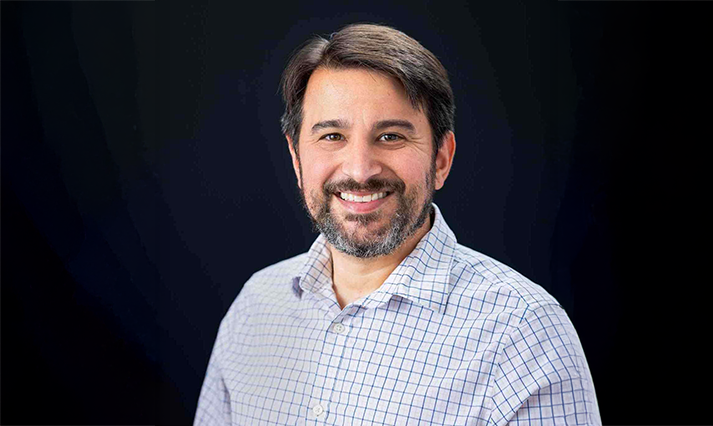
There is a strip of black netting strung across George Von Walthausen’s yard, and it does not work. He has tried everything a person can reasonably try to save his plants, but the deer are not passing through the way they used to. Instead, they stop and settle in. They have lunch, dinner, and breakfast right there in his lawn, and they eat up anything he buys to make the place look good.
George has lived in his house for 32 years. He used to never have a deer problem, but he said that all changed the moment somebody cleared 600 acres of habitat a third of a mile from his front door and called it economic development.
I have written about the QTS data center before, and I came down on the side of the company. The national water story that drove so much outrage turned out, on the county’s own records, to be far more about a botched meter transition than anything QTS actually did. But clearing the company on the water story does not mean the project has been easy on the people who live beside it.
George lives with the data center every day. And after spending an hour at his home, I was convinced his perspective deserves to be heard on its own terms.
Same Fight, Bigger Stakes
George and his wife moved to the Flat Creek Trail area in 1994. The land was quiet then, and the night was pitch black. The neighborhood was full of airline people who valued exactly those two qualities. “It was very, very nice,” he said.
George does not romanticize the past, though. He readily credits the development around him with bringing conveniences he genuinely values, including a good-sized hospital two miles from his home. But he draws a sharp line between what growth gives and what growth costs, and he is clear about which area of the county pays for it. “We have the density,” he said. “We have the nonsense. We got the data center.”
He is not bitter about the geography so much as clear-eyed about it, and that clarity carries into his memory of how this part of the county has fought development before. He points to Annaliese Park, the development his neighborhood protested fiercely back in 2004 and lost anyway.
To George, this is a cycle that keeps repeating. Back then, the Annaliese Park developers got their variances, built their houses, and moved on. Now another developer has arrived, gotten what it came for, and will soon be off to the next project.
The only thing that has really changed is the scale and the impact it will have on the neighbors’ lives.
What It Is Actually Like To Live There
The campus George lives beside is not a modest project. QTS plans to invest up to $1 billion in Project Excalibur, which broke ground in 2023 and is expected to grow to as many as 16 buildings across a 615-acre site by the time it reaches full build-out in 2032.
When you grasp that the construction phase George is currently enduring may run for years still and that the operational phase will follow it indefinitely, the things he describes stop sounding like temporary inconveniences and start sounding like a permanent rearrangement of daily life. He organized his complaints loosely into four categories when I asked him, and they move naturally from the disruptions that are already here to the ones he knows are coming and cannot stop.
The first, and the one we started with, is the wildlife. The deer are only the most visible part of it. George describes a steady displacement of critters of every kind who now have nowhere to go but the yards of the people who remain. No matter how much netting he buys, it is a problem he cannot solve at his property line because the cause sits a third of a mile away.
The second is traffic, which he describes as having tripled or quadrupled on roads that were never built to carry that load. He talks about the thousands of construction workers cycling through the site, and he is blunt about their impact. “A lot of these folks are not from around here,” he said. “They don’t mind racing their motorcycles and their jalopies around and making racket because it’s not their stomping grounds. They don’t care.”
The traffic does not quiet down in the evening the way it used to, and George ties that directly to the fact that the site operates under City of Fayetteville rules after the annexation, which he claims permit work and noise to continue until one in the morning.
The third category is the construction itself, and the blasting is the worst of it. Rock blasting is a routine step in a project this size, and QTS has said its subcontractor monitors the scale of every blast and sends out notifications to neighbors about timing. For a while, George says, those notifications actually came. QTS sent a weekly email to residents laying out the blasting plans for the days ahead, and he genuinely appreciated it as a gesture toward communication.
The problem was that knowing a blast would happen was not the same as knowing when. So he would be out in his yard, going about his day, when with no warning a sound like a bomb would go off. The bigger ones did more than startle him. “Some of these blasts shook the house, shook the ground. This entire area,” he said.
The fourth category is the one George stressed the most because it is the one that does not end when construction does.
Right now there is already a general hum in the air, a low constant background noise that did not exist before, layered on top of the backup alarms and the engines and the blasting. But the hum is only a preview. Once the campus goes fully operational, he expects twenty-four hours a day of noise from the cooling units mounted on top of these enormous buildings, and he expects light pollution at night where there used to be darkness. He talks about this with real grief, because the darkness was something he valued. “It was nice to have it where you could see the stars at night,” he said. “That made me feel good.”
The only light pollution this area previously had came from Atlanta like a distant smear on the horizon. Now the source is next door.
What George Wants
When I asked George what he would say to our local elected officials, his answer was that he would say nothing different from what he said before the project ever broke ground.
Back then, he went to the meetings during the annexation debate. He made his two-minute speeches and aired his concerns. But when the votes finally came, they were unanimous. No dissent, just a clean 5-to-0 agreement to move forward.
That unanimity is what stays with him. His frustration with the Fayette County commissioners is not that they are incompetent. His word for it is “arrogant,” and his complaint is about whether they answer the people who elected them.
He describes emailing his commissioner about one problem or another and hearing nothing back. “Crickets,” as he put it. He understands these are part-time jobs that do not pay much, but he also points out that nobody forced anyone to run. “You went and put yourself out there,” he said. “You said, I’m going to represent my little district. What are you doing?”
What he wants from his elected officials is not a magic solution he knows does not exist. He wants someone to answer him. He wants someone to say out loud that the deal was not perfect.
What he wants from QTS is more concrete. He starts with one specific fix, the weekly blasting emails that stopped arriving at some point. “I sure would like to see them restart that,” he said. But the real ask underneath it is simpler: an honest, upfront accounting of what is coming and when.
He also wants the company to stop with the gestures that feel like an insult. At one point, QTS sent out holiday cards carrying little debit cards for local businesses, free car washes and meals at the Broadway Diner, addressed to the neighbors whose property was covered in construction dust. George did not see goodwill in that. He saw a company trying to buy his patience on the cheap.
“First-World Problems In Your Own Backyard”
It would be easy to dismiss all of this as what George himself, with characteristic self-awareness, called “first-world problems.” He is right that nobody is going hungry over deer eating his hostas.
But the phrase he reached for next is the one that stuck with me. He called them “first-world problems in your own backyard,” and that changes things. The national debate over data centers and water tables and electrical rates is easy to hold at a distance until it is happening a third of a mile from where you sleep.
George is not asking anyone to stop progress. He has watched the county grow for three decades, and though he joined the fight against projects like Annaliese Park, he made his peace with most of what came. But the data center is not just one more development to grumble about. It has genuinely changed the character of where he lives.
The larger context only sharpens his case. New data centers are prohibited in every City of Fayetteville zoning district under an ordinance the City Council adopted in early March. The city looked at what one of these projects actually brings to a community, and it decided the answer was no. Not here, not again.
What They Had To Say
After my interview with George, I sent his concerns to QTS, the City of Fayetteville, and the Fayette County Board of Commissioners. All three responded. What follows are their answers in their own words.
QTS
A resident says QTS for a time sent weekly emails to residents outlining upcoming blasting plans. He claims those emails stopped arriving at some point, and he’d like to see them resume. Can you confirm whether that notification program is still active, and what the current process is for alerting nearby residents to blasting?
“When blasting has been required, we’ve worked to keep nearby residents informed through advance notifications. The notification program is still in place. As construction progresses and blasting activity slows down, those notifications may become less frequent, but we remain committed to providing advance notice whenever there’s something that may impact neighbors. Residents can receive alerts about blasting timing via text message and automated calls, and we encourage anyone who isn’t currently receiving those updates to sign up so they have clear visibility into what to expect. Information on how to sign up for these alerts can be found on the QTS Fayetteville project page here: https://q.com/data-centers/fayetteville/”
He describes a significant increase in traffic and notes that work and noise continue late into the night under City of Fayetteville rules. Anything QTS would offer on traffic or hours of operation during construction?
“We understand that construction activity can be disruptive. We work closely with the city and our construction partners to follow all local requirements and to manage activity as thoughtfully as possible. This includes coordinating deliveries, monitoring site activity and looking for ways to reduce impacts where we can.”
He’s concerned about 24-hour cooling-unit noise and light at night once the campus is fully operational. What can QTS say about steps being taken to limit noise and light for nearby residents both short and long term?
“We are mindful of nearby neighbors and have taken proactive steps to address concerns related to construction impacts, including lighting and noise. Our team has worked directly and collaboratively with nearby neighbors to understand and respond to their concerns. We have adjusted, repositioned and where appropriate disabled lighting to minimize impact. Noise levels are actively monitored through decibel monitoring at multiple locations along the construction site perimeter. We adhere to local noise ordinances during construction and our regular operations. Our campuses are designed with thoughtful site planning, such as setbacks, screening, and directional lighting, to help limit visibility and reduce disruption to the community. Once operational, the facility is designed to operate within applicable sound requirements, with the goal of minimizing ongoing impact to nearby residents. Our goal is to be a responsible neighbor and make improvements where we can. We’re committed to continuing that dialogue long after the construction is complete.”
He referenced a round of holiday cards with gift cards to local businesses. That did not sit well with him. Instead, he’d like more consistent, direct communication from QTS to neighbors. What does QTS do now for community engagement around the campus, and what may it do differently in the future?
“Staying connected with the community is really important to us. We’ve set up a number of ways for residents to stay informed, ask questions and share concerns including direct outreach, community touchpoints and a project information page with FAQs and a response form. Our team has also spent time working directly with nearby residents to better understand their concerns and respond where we can. We’re committed to continuing to listen and improve and we’re open to feedback on what works best for neighbors. We encourage community members to share their feedback directly with us by contacting us at [email protected].“
City of Fayetteville
The City’s own notices confirm sitework blasting on the campus. A resident says QTS for a time sent weekly emails to residents previewing blasting, that those stopped, and that he was never given specific timing for individual blasts, some of which he describes as shaking his house. What role does the City play in overseeing the blasting schedule and in ensuring nearby residents are notified?
“The City of Fayetteville requires builders to apply for blasting permits, which are reviewed by City staff, who ensure the approved blasting is communicated to residents. General communication is handled by the City’s Communication Department via website, social media, and e-mail newsletters. The City also requires builders to communicate directly with residents living close to the blasting site.”
He notes that work and noise continue into the early morning under City rules. What are the City’s permitted construction hours for the site, and has the City received or acted on noise complaints from nearby residents?
“City of Fayetteville ordinances require construction activities to cease between the hours of 10 p.m. and 7 a.m. unless a special request permit has been granted. Sometimes, special request permits are granted for construction activities such as concrete pouring, which is relatively quiet and helps keep construction traffic off the local roads during periods of higher traffic volume. The City has received noise complaints, which are investigated by City personnel and addressed to the builders.”
He describes a substantial increase in traffic on roads near the site. Has the City taken or planned any steps to manage construction traffic in the area?
“Fayette County and the City of Fayetteville have worked with QTS to reduce the amount of individual vehicle traffic entering and exiting the construction sites. Off-site parking lots have been established in the area, and construction workers are shuttled to and from the construction site. A small-scale concrete batch plant has also been approved for the construction site to further reduce construction traffic in the area. Based on what we have learned from this massive construction project, we have asked state-level planners to include construction traffic estimates in their future project reviews.”
Once the campus is fully operational, he anticipates continuous noise from cooling equipment and light pollution at night. What conditions, if any, did the City attach to the project to limit long-term noise and light for adjacent residents?
“Construction on the QTS Data Centers Campus is expected to continue into 2029, and the City of Fayetteville will continue to address noise and light issues. As sections of the campus are completed, landscaping will be reintroduced to the site, including evergreen trees, shrubberies, and other vegetation, which will help reduce noise and light. In the meantime, the City will enforce the current noise ordinance and work with QTS to ensure their builders are switching off lights when they are not being used. QTS has also installed downward-directed LED lighting around the campus, which is helping reduce ambient lighting.”
The City Council recently prohibited new data centers in every zoning district. Does the City have any reflection on how this project was permitted relative to the standard it has since adopted?
“Based on what City of Fayetteville leaders knew at the time, the QTS Data Centers project was approved and welcomed into the City. QTS is expected to be the largest single property taxpayer in Fayetteville and Fayette County, with property tax revenue expected to reach $200 million a year and sales tax revenue around $170 million a year. The data center campus is expected to employ 500 employees with an average $150,000 salary, not to mention other jobs created for the construction and support of the facilities. At the time of the City’s approval, the City was unaware additional powerline routes would be necessary, and we did not know local residents would be negatively impacted by right-of-way acquisition and power pole construction activities. The City was unaware of what the utility providers were planning. Largely in response to those events, City leaders amended its zoning ordinances to prohibit future data center campuses within City limits.”
Fayette County Board of Commissioners
The Board voted 5-to-0 to allow this project to move forward. Does the Board have a response to residents who saw that unanimity as a lack of meaningful debate over the project’s impact on their neighborhood?
“Regarding the unanimous 5-to-0 vote by the Board, it’s important to note that the Board thoroughly reviewed the annexation packet and supporting materials before the meeting. The vote reflected the Board’s confidence that the concerns raised by staff, particularly those affecting residents, were seriously considered and addressed with the City of Fayetteville. While the vote was unanimous, this resulted from a robust process of evaluation, not a lack of meaningful debate.”
A resident describes contacting his commissioner about concerns related to the campus and receiving no reply. How does the Board characterize its responsiveness to residents in this part of the county?
“If there are claims of unanswered emails, we would be glad to review past communications. The Board is committed to being responsive and we have public comment available at meetings, and residents are encouraged to reach out directly to staff or commissioners. We want every resident to feel heard, and we offer multiple avenues for engagement, whether by phone, email, or public forums.”
What consideration did the county give to the project’s effect on nearby residents, including traffic, construction noise and blasting, and long-term noise and light?
“Concerning the project’s impact on nearby residents, staff outlined their concerns, which were incorporated and strengthened by the City of Fayetteville. The annexation packet and agenda item provide a comprehensive review of these considerations.”
Given the City of Fayetteville’s March 2026 ordinance prohibiting new data centers in every zoning district, does the Board have any reflection on how this project was approved and whether it would approach a similar proposal differently today?
“The Board is always open to reflecting on resident’s thoughts and comments.”
What To Make Of These Responses
The three responses tell their own story when you set them beside what George actually described.
George says the blasting notifications stopped. QTS says the program is still in place. George says work and noise continue past midnight. The City of Fayetteville says its ordinance requires construction to stop at 10 p.m. with limited exceptions for quiet work like concrete pouring.
Somewhere between George’s yard and the official record, there is a gap that needs closing.
The county’s answers were the most revealing in what they did not say. Asked whether the Board had a response to residents who saw the unanimous vote as a lack of meaningful debate, the county called it “a robust process of evaluation.” Asked what consideration it gave to the project’s effect on nearby residents, the county pointed back to the annexation packet (which I am including here). Asked whether it would approach a similar proposal differently today, the county said it is “always open to reflecting on resident’s thoughts and comments.” George has been offering his thoughts and comments for four years.
The City of Fayetteville, to its credit, came closest to a direct answer. It acknowledged that it did not anticipate the additional powerline routes or the impact on residents from right-of-way acquisition, and it said those consequences were largely why it changed its ordinances to prohibit future data centers. That is an honest answer, and it confirms exactly what George has been saying: this project brought consequences that the people who approved it did not see coming, and the people who live beside it are the ones absorbing them.
Nowhere To Go, No One To Listen
Right before I left his home, I asked George what he would do if he could wave a magic wand. His first instinct was not to wish the data center away. “I would reduce my age by 10 to 15 years,” he said, “so I’d be a little younger and have the ability then to say, okay, it’s been a nice run here, folks. See you later.”
He cannot do that, though. This house is simply it for him, and so he stays. He mitigates what problems he can. But what I believe makes him most upset is being managed instead of heard, handed polished statements and gift cards and told the process was robust while his house shakes and the stars disappear.
“That’s bullshit,” he said.




Leave a Comment
You must be logged in to post a comment.