


 1124
1124 0
0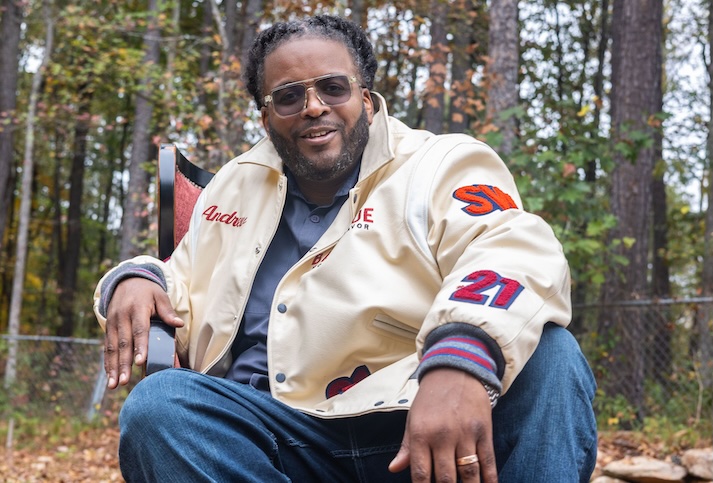
What is up my Eaters! I hope you are well. I am fantastic. This week, I’m going to get right into it. I am going to continue in my acknowledgement of Black History Month. This week, I am going to share with you the influence that black and brown people have had on food in America.
There was a time in this country when Black Americans were legally and socially considered less than equal — first in bondage, then in segregation, and even during the Civil Rights movement when equality itself was debated. Their humanity was questioned.
Their rights were denied. And yet, even then, their culinary skill was not.
Enslaved Africans ran plantation kitchens. They fed households that denied them freedom. During segregation, Black cooks prepared meals in homes, hotels, and rail cars where they themselves could not sit as guests. Their labor was exploited. Their names erased. Their talent undeniable. That contradiction matters.
While America hesitated to recognize Black citizens as equal, it relied on them to shape its palate. American cuisine did not evolve in spite of Black and brown hands. It evolved because of them. And that evolution was not accidental. It was innovative.
George Washington Carver is often reduced to peanuts. That reduction misses the point. In a South drained by monocropping, Carver restored soil through crop rotation and diversified what could be grown and eaten. He expanded the American pantry. That is culinary infrastructure.
Along the southeastern coast, the Gullah Geechee preserved rice cultivation techniques and seafood traditions that still define Lowcountry cuisine. Shrimp and grits. Red rice. Hoppin’ John. These dishes are not incidental. They are knowledge carried across oceans and safeguarded under pressure.
Innovation also looks like elevation.
Edna Lewis understood that Southern Black cooking was not rustic improvisation but seasonal precision. She insisted that field peas and summer tomatoes deserved white tablecloths. She reframed Southern cuisine with clarity and confidence. She did not just cook. She legitimized.
Long before American borders were drawn, Indigenous communities were practicing food science that would shape the continent. Nixtamalization transformed corn into a nutritionally complete staple. Without it, tortillas, tamales, and countless corn traditions would not exist as we know them. Cornbread as we know it would be different.
These are not side notes. They are foundations.
If we are honest about what defines American cuisine, three traditions rise immediately: barbecue, soul food, and the layered brilliance of Cajun and Creole cooking.
Barbecue is fiercely defended. We debate sauce and region — Texas versus the Carolinas, brisket versus whole hog. But before competitions and branded rubs, there were men tending pits through the night, mastering fire and patience. Whole-animal cooking over live flame was preserved and refined by enslaved Africans and later Black pitmasters who turned tough cuts into tenderness. Barbecue is not nostalgia. It is craft.
Soul food, too, is often simplified but undeniably foundational. Collards simmered low. Cornbread in cast iron. Sweet potato pie. Fried catfish. These dishes emerged from constraint yet became symbols of family and celebration. Soul food is not indulgence. It is resilience on a plate.
Then there is Cajun and Creole cuisine — living proof that American food has always been collaborative. In Louisiana, African, French, Spanish, Caribbean, and Indigenous influences converged. Gumbo. Jambalaya. Étouffée. These dishes were not born in trend cycles. They were built in kitchens where innovation was necessity.
As someone who works with smoke and live fire, I do not see these traditions as relics. I see them as frameworks. When I build flavor, when I slow-cook meat until it yields, I am operating inside systems refined long before me.
Those systems were built by Black and brown hands.
And the story does not end there.
Black and brown chefs are not only foundational to American cuisine — they are defining its present.
Marcus Samuelsson. Mashama Bailey. Kwame Onwuachi. Carla Hall. A new generation of pitmasters like Rodney Scott and Rasheed Philips. They are not waiting for permission. They are shaping taste in real time — on television, in fine dining, and across social media.
This is not a trend. It is recognition catching up to reality. And it is happening here too.
In metro Atlanta, chocolatiers like Ashleigh Pearson of Avec Noelle — trained within elite culinary environments under chefs like Thomas Keller — are producing chocolate that is precise and world-class. Sarah Dubale of Culture Sweet Tea is expanding Southern sweet tea with flavors rooted in the African diaspora and the Caribbean. Farmers like John Jackson of Comfort Farms and Gabriel and Tamita of Caribe United Farm are cultivating heritage and stewardship in Georgia soil.
And I would be remiss not to acknowledge that I, too, operate within this lineage.
As Chef Andrew Chambers of Pink’s Barbecue, when I tend a pit and blend Caribbean influence with Southern technique, I am not inventing from nothing. I am refining within a tradition forged by generations who mastered craft under difficult conditions.
That is the American table. Layered. Collaborative. Forged in fire and memory.
Barbecue. Soul food. Cajun and Creole cooking. Rice and beans. Tortillas and tamales. Chocolate and sweet tea. Farm and fire. These are not trends. They are foundations.
Today, Black and brown chefs, farmers, and makers are not only preserving those foundations — they are building upon them in full view of the world.
That is worth recognizing. Not as charity. Not as tokenism. But as truth.
Eaters, thank you for joining me this week. I hope something you read resonated with you. Remember, you can always come see me or my team at the Peachtree City Farmer’s Market.





Leave a Comment
You must be logged in to post a comment.