


 2093
2093 0
0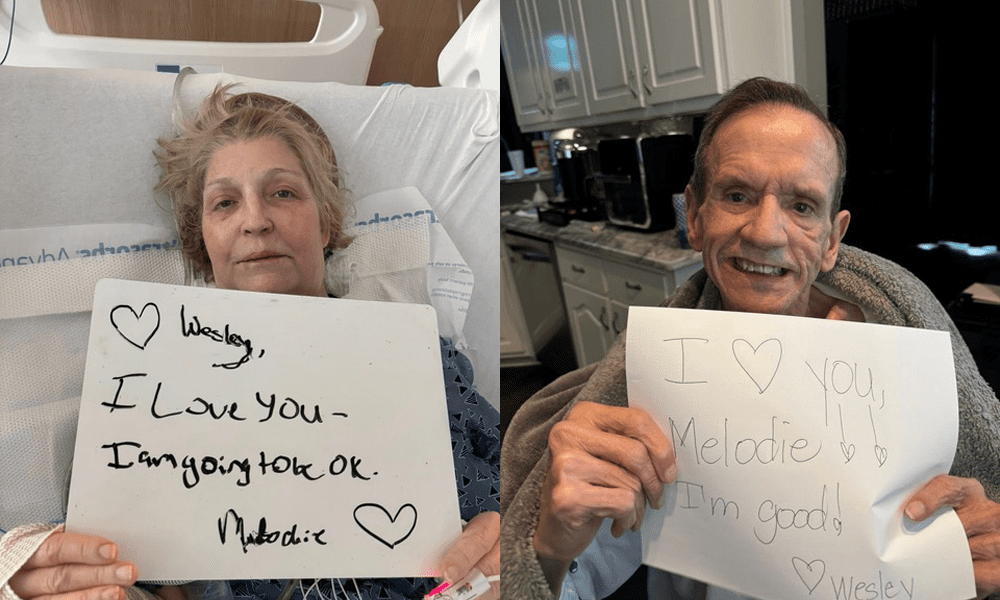
Ten days after undergoing a surgery doctors feared could permanently take her voice, Melodie Woods is speaking again — slowly, with effort, and with a thickness to her voice — but clearly enough to be understood.
She is also tasting food.
For Woods, a Peachtree City resident diagnosed with Stage 4 salivary gland cancer, the outcome marks a dramatic turn in a story that matters not only because of her own prognosis, but because of the husband waiting for her at home.
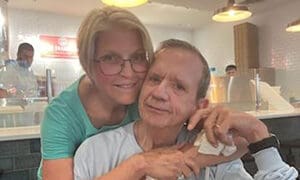
Woods is the primary caregiver for her husband, Wesley, who lives with progressive supranuclear palsy (PSP), a rare neurological disease that has left him unable to speak and unable to care for himself. The couple’s intertwined medical crises have meant that every development in Woods’ recovery carries consequences for both of them. As The Citizen has previously reported, Woods’ cancer diagnosis collided with her role as Wesley’s sole caregiver, creating an urgent need for support at home.
A better outcome than expected
Woods underwent surgery earlier this month at Emory University Hospital. In the days leading up to the operation, doctors cautioned that the procedure could fundamentally change Woods’ ability to speak and eat, as The Citizen reported ahead of the surgery.
Surgeons warned beforehand that the procedure could require removal of her entire tongue, leaving her unable to speak or eat. Doctors also told Woods to prepare to have a tracheostomy following surgery.
Instead, because of the precision of the surgical team, doctors were able to preserve both a critical blood vessel and a major nerve — and removed the tracheostomy earlier than expected.
“They told her to prepare to go home with the trach,” said her daughter, Melissa White. “But they were able to take it out.”
The operation, initially expected to last up to 12 hours, took about eight.
When Woods woke up, she immediately noticed something unexpected.
“She realized her mouth was already closed,” White said. “She didn’t think that would even be possible.”
Surgeons were able to save the front portion of Woods’ tongue by preserving the artery that supplies it with blood. They were also able to save a nerve that allows for movement.
“That nerve is why she’s able to talk at all,” White said. “And it’s why she’s progressing as quickly as she is.”
Hearing her voice
No one — including Woods herself — expected she would be able to speak so soon, or at all.
When The Citizen spoke with Woods this week by phone, her words came slowly and required effort, but she was clearly understandable.
“It’s hard,” Woods said. “It’s very tiring.”
Still, the ability to speak has been especially meaningful because Wesley has lost his own ability to talk.
“She’s been able to talk to him,” White said. “We FaceTimed, and she told him she loved him. We even sent him a video so he could hear her voice.”
Taste returns
Doctors had cautioned Woods that she might never eat again, and that even if she learned to swallow, tube feeding could remain permanent.
When doctors allowed her to try ice water, Woods described it as “delicious.”
Soon after, doctors offered applesauce.
She could taste it. “It tasted normal, because I still have the tip of my tongue,” Woods said.
Woods has only tried small amounts, and swallowing remains difficult. Much of the work of pushing food back occurs in the portion of the tongue most affected by surgery. Even so, doctors have been encouraged by her progress.
“There’s now a real possibility,” White said, “that over time she might not need the feeding tube at all.”
Recovery — and challenges at home
Woods remains hospitalized and is undergoing swallow therapy, occupational therapy, and pain management. Recovery has been complicated by severe migraines, which doctors believe were exacerbated by surgery and anesthesia but are now better controlled.
She continues to experience significant pain at surgical sites on her neck, arm, and leg, where tissue was taken for reconstruction and skin grafting.
At home, Wesley’s care continues — now complicated by winter weather moving into the region this weekend.
With icy conditions and uncertain travel, professional caregivers may be unable to reach the Woods’ home, a reality that has already required family members and trusted helpers to step in. Daughter Melissa White hasn’t been able to schedule anyone to help on the weekend, due to weather concerns.
“Weather like this makes everything harder,” White said. “You can’t always count on caregivers being able to get there.”
What comes next
Pathology results from the surgery are still pending. Depending on those findings, doctors may recommend radiation as a precautionary next step.
Woods is expected to remain hospitalized for at least another week or more, followed by continued therapy and a lengthy recovery.
“She’s doing incredibly well,” White said. “But it’s still a long road.”
Community support continues
As of the time of publication, the GoFundMe established to support the Woods family had raised $104,790 through nearly 1,000 donations, with individual gifts ranging from $5 to $4,500.
The funds are being used to support professional caregiving for Wesley, medical expenses, transportation, and household needs — assistance that remains critical as Woods continues her recovery and caregiving logistics remain fragile.
Those wishing to help can find the GoFundMe at: https://www.gofundme.com/f/support-wesley-melodie-woods-health-journey



Leave a Comment
You must be logged in to post a comment.