


 14378
 0

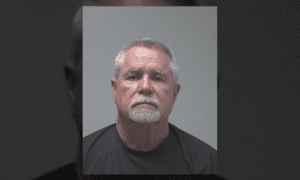
Edwin Brant Frost IV was sentenced Monday to 15 years in federal prison and ordered to pay $76,454,374.39 in restitution to victims of the First Liberty Ponzi scheme, following a Newnan courtroom hearing where investors described losing retirement savings, financial security, and even the trust of their families.
Chief U.S. District Judge Leigh Martin May imposed a sentence one year longer than the 14 years federal prosecutors recommended and 10 years longer than the five years Frost’s attorneys requested. The 69-year-old Newnan businessman must also serve three years of supervised release after completing his prison sentence.
Frost has been given 30 days to surrender and is expected to report to federal prison in Montgomery, Alabama, on Wednesday, November 25, the day before Thanksgiving.
The October 26 hearing took place in the federal courthouse in downtown Newnan, just doors away from the former First Liberty Building and Loan offices where Frost operated the business at the center of the fraud.
Frost pleaded guilty May 12 to one count of wire fraud. Federal prosecutors said his Ponzi scheme caused more than $76 million in losses to more than 300 investors, many of them retirees who trusted him with their life savings.
The courtroom was so crowded that some attendees were directed to an overflow courtroom, where they could hear the proceedings.
Among those following the hearing were Coweta County Board of Education member Amy Dees, Georgia Assistant Commissioner of Securities Noula Zaharis, and victim advocate Lisa Deveraux. All three spoke with The Citizen afterward.
U.S. Attorney condemns use of faith to attract investors
U.S. Attorney Theodore S. Hertzberg issued a statement following the sentencing, describing how Frost used religious and political associations to gain investors’ confidence.
“Like a false prophet and ravenous wolf in sheep’s clothing, Frost used religion, politics, and promises of profitable returns to lure investors into giving him their hard-earned money. He wickedly exploited their faith to plunder their accounts and enrich himself,” Hertzberg said.
“This was a stunning, sinful, and sacrilegious abuse of trust that wrecked hundreds of investors, including retirees and seniors who lost their life savings.”
According to the U.S. Attorney’s Office, Frost operated the fraudulent investment scheme from at least 2021 through July 2025 through First Liberty Building and Loan LLC.
He promoted the company as a conservative Christian lender helping small businesses obtain short-term financing.
Investors were promised annual returns of 8% to 18%, paid monthly, from high-interest bridge loans to businesses awaiting longer-term financing, often through the Small Business Administration.
By 2021, numerous loans had defaulted, and First Liberty was no longer generating enough legitimate income to meet its obligations. Instead of disclosing the company’s financial problems, Frost continued assuring investors that their funds were being used for performing loans and that only a few borrowers had defaulted.
In reality, he was using money from new investors to pay returns to existing investors, the defining characteristic of a Ponzi scheme.
Federal investigators determined that Frost also diverted at least $5 million of investor funds for personal benefit. Expenditures included a $230,000 vacation home rental in Maine, more than $140,000 in jewelry, a $20,800 Patek Philippe watch, more than $335,000 paid to a rare coin dealer, more than $2 million in credit card payments, and more than $570,000 in political contributions.
Marlo Graham, Special Agent in Charge of FBI Atlanta, said the sentence reflected the FBI’s commitment to pursuing complex financial fraud cases.
The investigation was conducted by the FBI and the Federal Deposit Insurance Corporation Office of Inspector General, with substantial assistance from the Securities and Exchange Commission and the Georgia Secretary of State’s Office. Assistant U.S. Attorney Angela Adams prosecuted the case.
Victims describe financial and family devastation
Amy Dees, who listened to the entire hearing from an overflow courtroom, described the investors’ testimony as the most significant part of the day.
“Their testimonies preached a sermon,” Dees said.
According to Dees, several investors described damage to relationships with spouses and children who had trusted their recommendations to invest with Frost.
One father described the pain of having encouraged his children to invest, only to lose their confidence in his financial judgment. Others described marriages strained by the losses.
The Baldwin family, including a father and two sons, was among those who addressed the court.
Lisa Deveraux, who was seated in the main courtroom, said their testimony illustrated consequences extending across generations, including concerns about paying for children’s education.
Some victims who had not intended to speak ultimately found the confidence to address the judge after listening to others, Deveraux said.
Frost’s attorneys had submitted more than 80 letters from pastors, political associates, family members, business owners, and longtime friends describing his charitable activities and service to the community.
Prosecutors, however, argued that Frost had exploited those same religious and political relationships to attract investors.
Amy Dees: A day of accountability for Coweta County
For Dees, Monday’s hearing carried significance beyond the federal criminal case.
She has served on the Coweta County Board of Education through years of political activity involving the Frost family and attended the sentencing because she wanted to support the victims and witness the outcome.
“It’s a good day in Coweta,” Dees said.
Her comments reflect a history of political disputes involving the family and local Republican organizations.
Brant Frost V, the convicted businessman’s son and a former First Liberty employee, previously served as chairman of the Coweta County Republican Party.
He resigned as chairman in August 2025 amid controversy surrounding First Liberty’s collapse. The Citizen previously reported concerns from Republican leaders, including state Rep. Josh Bonner, about the family’s continued political influence after the scandal became public.
Dees said she felt the family’s conduct toward her and the community over many years made it important for her to attend.
“I went to see Justice come to a family that I feel has attacked this community for years,” Dees said.
Her comments describe her personal experience and views. Monday’s federal sentence concerned Frost IV’s criminal conduct; it was not a finding of wrongdoing against his relatives.
Dees also expressed admiration for the investors who addressed the court, describing their willingness to speak publicly despite painful financial and personal consequences.
“I was so proud of these victims,” she said.
At 95, James McMaster speaks for himself and other victims
Among those addressing the court Monday was 95-year-old James McMaster, the oldest known victim of the First Liberty scheme.
McMaster, whose story The Citizen previously reported, lost approximately $1.3 million after investing with First Liberty.
His longtime friend Lisa Deveraux, who helped organize the First Liberty Victims Portal, described his courtroom appearance:
“James McMaster was a rock star.”
Because of health concerns, McMaster had prerecorded a victim statement in case he could not attend the hearing. According to Deveraux, arrangements had been made through the FBI to submit the recording if necessary.
Instead, McMaster appeared in person.
Deveraux said he walked the court through his investment, the research he conducted before trusting First Liberty, and his interactions with Frost.
He also discussed a photograph Frost had sent him of himself and his daughter celebrating Christmas in New York. Deveraux said the personal connection was particularly meaningful to McMaster because he had lost his own daughter at age 50.
McMaster raised questions about the roles of other individuals connected to First Liberty and efforts to recover investors’ money.
Deveraux said his willingness to speak publicly has helped other victims overcome their reluctance to tell their stories. Some have felt embarrassed about losing money, particularly after encouraging friends or relatives to invest.
His example, she said, has helped others come forward.
Judge challenges Frost’s explanation
After the victims and other speakers addressed the court, Frost had an opportunity to speak on his own behalf.
According to multiple people who attended the hearing, Frost discussed business difficulties and an artificial intelligence venture he believed could have rescued First Liberty from financial collapse.
The defense’s earlier sentencing memorandum had described his investment in MyHealthAI, a virtual healthcare company whose anticipated financial success never materialized.
Several witnesses told The Citizen that Judge May described Frost as “delusional” in connection with this explanation.
Zaharis recalled the judge telling Frost that his presentation sounded as though he were attempting to sell her an investment.
Both Dees and Zaharis said they were struck by what they regarded as a lack of remorse in Frost’s courtroom remarks.
Zaharis, who watched from the main courtroom, observed that Frost did not turn toward the victims while speaking. She said she had expected more warmth and humility from someone whose attorneys had emphasized his remorse.
Dees described Frost’s remarks as an attempt to explain the business failure rather than fully confront the victims’ losses.
These observations contrasted with the defense’s portrayal of Frost as profoundly remorseful and committed to making amends.
According to attendees, the defense also requested that Frost be allowed 90 days before reporting to prison. May allowed 30 days.
State investigation continues
Zaharis attended the hearing representing Georgia Secretary of State Brad Raffensperger’s Securities Division, which has been conducting its own investigation into First Liberty and individuals associated with the operation.
She addressed the court and emphasized the financial harm suffered by investors, many of whom are between 70 and 90 years old.
Zaharis told The Citizen that more than 150 victims have filed complaints with her office and that investigators have spoken with approximately 90% to 95% of them.
Some victims remain reluctant to speak publicly because of embarrassment or fear that family members, friends, or people in their churches will learn about their losses.
Zaharis said her division has numerous ongoing administrative proceedings and active investigations connected with First Liberty.
Three individuals associated with First Liberty have already been subjected to separate state enforcement actions:
• Brant Frost V, former Coweta County GOP chairman and son of Frost IV.
• Timothy Nathaniel Darnell, a former Bankers Life financial advisor.
• Randy Hough, a member of the Fayette County Board of Education.
The Secretary of State’s Office previously issued $500,000 civil penalties against each of the three and referred their cases for possible criminal prosecution.
Those actions are separate from the federal criminal case against Frost IV.
Zaharis said the state investigation is independent of the federal proceedings. Her office administers Georgia securities laws and can pursue administrative remedies and refer matters to prosecutors.
“We made the decision that it was very important that we show the victims that we are in support of them, and that is why we went,” Zaharis said.
Questions remain about recovering investors’ money
The restitution order represents a substantial financial judgment against Frost, but it does not mean victims will immediately receive repayment.
During Monday’s hearing, an attorney representing the court-appointed receiver questioned the defense’s description of Frost’s cooperation with efforts to recover investor assets, according to Dees and Deveraux.
Dees said the receiver’s representative told the judge that the defense had only recently expressed a willingness to cooperate, like in the last day.
Deveraux said she also had questions about that account, given earlier proceedings involving First Liberty’s loans and business records.
Judge May directed attention toward continuing recovery efforts, and victims were invited to meet after the hearing with representatives involved in the investigation and receivership.
Deveraux created the First Liberty Victims Portal to give investors a place to share their stories, obtain information, and connect with agencies involved in the investigation and recovery process.
She said the portal will continue providing assistance without charging victims.
One recovery effort has already produced a significant agreement.
In April, the Georgia Secretary of State’s Office announced a $6.7 million settlement with Bankers Life Advisory Services and Bankers Life Securities to repay 46 investors who had been directed to First Liberty by Darnell while he was employed by Bankers Life.
The agreement was intended to return those investors’ lost principal, accounting for any money they had previously received. According to a recent call with Zaharis, those funds have been repaid to Darnell’s victims.
But that settlement covers only a portion of the people harmed by First Liberty’s collapse.
Deveraux believes the next phase of the case must concentrate on recovering money for other investors and determining what additional action may be taken against individuals involved.
“This man in jail is one thing, but the recovery is a whole another animal,” Deveraux said.
Sentencing ends one chapter, but not the case
Frost’s prison sentence brings a significant conclusion to the federal criminal case against him, but investors continue to face unanswered questions about their losses.
The Secretary of State’s Office has confirmed continuing investigations. The court-appointed receiver is working to identify and recover assets. Victims and their advocates continue pressing for restitution and accountability.
For McMaster and others who came forward, the hearing provided an opportunity to have their experiences heard by the judge responsible for determining Frost’s punishment.
Deveraux said she was relieved by the sentence but remained focused on what comes next.
“Everything is focused, has to be focused, on recovery,” she said.
For the victims of First Liberty, the sentence has been imposed. The work of recovering their money remains.






Leave a Comment
You must be logged in to post a comment.