


 8253
 0
Most of us can name our governor. Far fewer of us can name our state representative. In a national Johns Hopkins survey, fewer than one in five Americans could name their state legislators.
That is a problem because the legislature decides more about daily life here than Washington does. Your income tax rate, the rules behind your property tax bill, how schools are funded, how data centers are taxed, and what police can do with license plate cameras all run through the Gold Dome in downtown Atlanta.
On November 3, voters in Georgia House District 73 will decide who represents them there for the next two years.
Republican Josh Bonner has held a House seat since 2017 and won his last contested race in 2024 with 66.9% of the vote. His challenger is Democrat Tim Wilkinson, a retired letter carrier from Newnan.
It is easy to look at that margin and decide there is nothing to discuss. But one candidate has a decade of votes on the record, and the other is asking for our trust with none.
The Citizen ran Bonner’s re-election announcement in February, but my goal here is to test both candidates against the issues residents say matter most. For Bonner, I question whether he has used his growing seniority for the households in this district. For Wilkinson, I question whether a candidate with almost no money and no legislative experience can show a working grasp of what a state representative controls.
I sent both candidates the same core questions. Wilkinson spoke with me by phone. Bonner answered in writing, and his votes described below come from the House’s official roll call records.
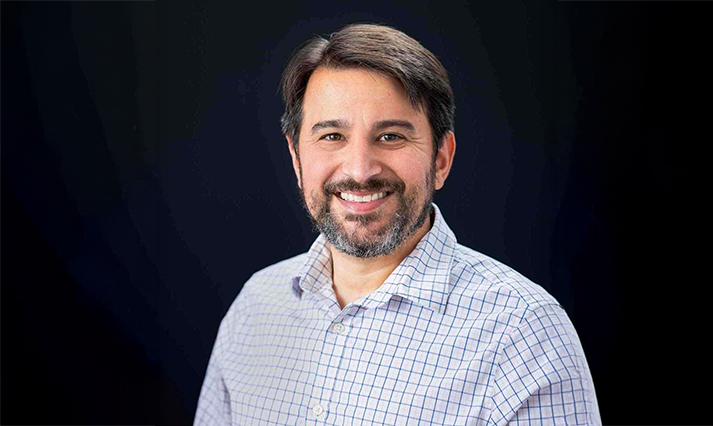
Incumbent Josh Bonner
Bonner grew up in Fayetteville. He describes the job as representing “the community I grew up in,” a phrase he used at Rotary in June and again in his answers to me.
He is a University of Georgia graduate and a former Army military intelligence officer. He now serves in the Army Reserve as a colonel and has deployed overseas three times, including to Iraq. Outside the Capitol, he owns Southeast Properties, a commercial real estate brokerage. He once chaired the Fayette County Republican Party and serves as a deacon at New Hope Baptist Church.
At the Capitol, he chairs the Defense and Veterans Affairs Committee and serves on Appropriations. This spring, Speaker Jon Burns put him on a new blue-ribbon study committee on local government taxation.
He says his reason for running again is generational. He wrote that he wants “to ensure that the same opportunities and way of life I experienced growing up here are available to my children and grandchildren.” He also plans to bring a package of bills next session “to make Georgia the best place in the country for military, veterans and their families.”
Through July, his campaign had raised about $35,800 for this cycle. Roughly two-thirds came from businesses and political action committees. The largest checks came at $3,300 each from the Georgia Association of Realtors PAC and Newnan developer Brent Scarbrough & Company.
Challenger Tim Wilkinson
Wilkinson is 66. He and his wife raised five children in Peachtree City from 1997 to 2010 before moving to Newnan. He carried mail for the U.S. Postal Service for 33 years and often served as a representative for the National Association of Letter Carriers. Since retiring in 2019, he has worked two part-time jobs, one as a retail clerk and one as a hotel night auditor.
“I’ve always been a working class man,” he told me. “I always will be a working class man.”
Two years ago, he came up 17 votes short in the Democratic primary. This year nobody ran against him. His campaign had reported just $525 in contributions. He told me that has grown to about $1,500, most of it his own money, and that he has taken nothing from business interests. He has a campaign website and relies on signs, social media, and public events.
I asked how a Democrat wins a district Trump carried by 25 points. He did not hedge. “Everybody makes mistakes, and sometimes they make a major blunder, as in electing Donald Trump to the presidency,” he said. He thinks some Republicans have soured on the president, and he pointed out that most voters cannot name their state representative.
Georgia House of Representatives – District 73
Before we get to the issues, let’s look at who we are.
District 73 crosses the county line. It covers parts of Fayette and Coweta, including much of Peachtree City, part of Fayetteville, Sharpsburg, and part of Newnan. Bonner lives on the Fayette side, and Wilkinson lives on the Coweta side.
About 63,000 people live here. The median age is 43.3, and the median household income is roughly $114,000. Only about 6% of residents live below the poverty line.
Politically, we lean hard to the right. Donald Trump carried the district with about 62% in 2024. The Fayette precincts are a bit less Republican than the Coweta ones. Bonner won about 65% in Fayette and about 68% in Coweta.
As I wrote in May, Fayette as a whole has been drifting toward Democrats. Even so, this district’s slice of the county remains far more Republican than the county as a whole.
No one has polled this district by itself, but statewide polls and local surveys keep pointing to the same handful of concerns:
- Prices and taxes. Rising costs were the top issue for Georgia voters in an AARP poll taken in July, and 39% put it in their top two.
- Housing. In Peachtree City’s 2024 community survey, affordable housing was the city’s lowest-rated feature.
- Data centers and power bills. Three in four older Georgia voters told AARP they worry data centers will raise their utility bills.
- Traffic and growth. Traffic was among residents’ most consistent complaints in Newnan’s planning sessions this year.
- Health care, schools, and insurance. All three remain close behind.
Taxes and the Cost of Living
Let’s start our dive into the issues with the one voters rank first.
The legislature sets the two taxes most of us notice — the state income tax and the gas tax. On both, the two men agree more than they disagree.
“We’ve cut Georgia’s income tax, delivered tax rebates, suspended the gas tax when families needed relief, increased the dependent deduction, and capped annual property assessment increases,” Bonner wrote. The roll calls back that up. He voted for this year’s income tax cut, this year’s rebate of $250 to $500, and the 60-day gas tax suspension.
A few of his figures went further than the facts, though. He wrote that the income tax rate has been cut “from 6% to 3.99%,” but the rate this year is 4.99%. The new law lets it fall to 3.99% over several years, but only if revenue targets are met. He also wrote that families will pay 55% less income tax than in 2018, which is the high end of a 30% to 55% estimate promoted by House leadership.
That relief also came with trade-offs he did not mention. After this year’s tax package passed, the state trimmed about $300 million in planned spending. That included $30.7 million for school buses and transportation.
Wilkinson’s website calls for ending the state income tax. In our conversation, he took a different position. He said the rate should stay around 4.99% but become progressive with lower rates for lower incomes and higher rates at the top. Georgia’s constitution caps the top rate at 6%, so that change would need only a new law.
“Where we differ is that further state income tax reductions will not be replaced by overall sales tax increases,” he said. “This would certainly place the tax burden on the working class.”
He backs the gas tax suspension, just as Bonner did. On housing, he offered “substantial tax breaks for first-time homebuyers.” Bonner did not address housing at all in a direct manner.
Property Taxes
Local governments and school boards set millage rates, but the legislature writes the rules for assessments and must approve local homestead exemptions like Fayette’s. Both candidates think property taxes are too high. “There is no debate that property taxes are too high,” Bonner wrote. “Homeowners are being taxed on unrealized gain and many of our citizens are being forced to leave the community.”
This is where Bonner has arguably done the most local work. In 2020, he helped pass a Fayette-only law that limits how fast the school portion of a homeowner’s assessment can climb. Increases are held to the lesser of 3% or inflation. The statewide cap that took effect under HB 581 and this year’s SB 33 is tied to inflation instead.
Three more bills Bonner sponsored are on the Fayette ballot this November as local referendums. If voters approve them, the Fayette school system and the county, and the City of Fayetteville for city voters, would each get a new homestead exemption. Starting in 2027, each exemption would be based on property tax revenue above its 2025 level and would lower taxes on homesteads. The bills are House Bills 1581, 1582, and 1583, and Bonner has pointed to them as his answer to constituent complaints about rising bills. He wrote that passage “will give every homestead property owner in the county an opportunity to see property tax relief.”
While Bonner’s local bills would keep property tax relief in the hands of local boards, his statewide vote would have gone much further.
This year he voted for HR 1114, a constitutional amendment that began as a plan to eliminate homestead property taxes. The version the House voted on was scaled back. It would have cut the taxable value of homesteads from 40% of appraised value to 10% over ten years, starting in 2027 and ending in 2036. HR 1114 fell short of the two-thirds vote it needed. Its companion bill, HB 1116, passed the House but failed in the Senate. Lawmakers then moved much of it, including a new local sales tax that local governments can use to cut homestead taxes, into SB 33, which passed and became law.
I asked Bonner how schools would replace the lost money. He did not say.
Fayette’s five mayors have pushed the other direction. In June they asked the county’s legislators to leave property tax decisions to local officials. Peachtree City Mayor Kim Learnard told the state to “get their hands out of my bucket of money.”
Wilkinson rejects eliminating the tax. “That’s not feasible,” he said. “The only way you could do that would be by increasing the sales tax. So I do not approve the total elimination of the property tax because it would be to the detriment of public schools.” He did not propose a specific alternative.
Data Centers and Power Bills
Georgia exempts data center equipment from sales tax, and only the legislature can change that. This is where Bonner gave his most important answer.
In February 2024, the House voted 96-71 to pause that exemption. Most House Republicans backed the pause, but about a dozen voted no, including Bonner. Gov. Kemp later vetoed the bill.
The break has only grown more expensive since. A state audit found it is responsible for only about 30% of data center investment in Georgia. The rest would have come anyway. The state’s own estimate now puts the cost at more than $2.5 billion in state and local sales tax in a single year.
Bonner now wants to end it. “I support removing the existing sales tax exemption,” he wrote.
He said his 2024 vote was about protecting the project already underway here. “I voted against HB 1192 as it would have had an immediate negative impact on the existing data center project in Fayette County.” The bill did exempt only contracts signed before July 1, 2024, and Kemp raised the same worry in his veto. I could not find a public record showing whether QTS would have lost its exemption.
Coweta is next. Atlas Development’s $17 billion Project Sail near Newnan was rezoned by county commissioners in April, and residents sued in May. The case is still pending, and it is one of five data center proposals in Coweta.
This spring, Newnan Republican Sen. Matt Brass passed a bill through the Senate to end the exemption for new projects. It never got a vote in the House. Bonner’s new position puts him on the same side as his Coweta colleague. The open question is whether he will press his own leadership to bring that bill to the floor next year.
Bonner opposes a statewide moratorium and wants local governments to decide where data centers go, but he was firm that they should pay their own way. Data centers should “bear the cost of that development, to include all utilities and services,” he wrote, and they “should not increase any utility rate or locally provided service.” He voted for the House’s 2026 bill to keep data center costs off household power bills, which died in the Senate.
One of his votes is hard to square with that concern about utility costs. In March he voted against HB 641, which would have required electric utilities to have a written policy on cutting off service to customers with serious, life-threatening conditions. It passed 134-28, and most House Republicans supported it. He did not address it in his answers to me.
Wilkinson’s website promises to “limit or prohibit data centers.” He told me he would have voted for both the 2024 pause and this year’s repeal. He praised the Coweta residents fighting Project Sail and wants data centers to cover their own grid costs, protect air and water, and face clawbacks if they fail to deliver. He also noted that water supply is a regional concern, which I wrote about in August.
When I asked which state laws he would change to accomplish that, he came up empty. “I can’t think of any particular state laws,” he said, “but we’ll change whichever ones necessary to protect citizens from big industry coming in and taking advantage of our citizens.”
Traffic
The state decides which major road projects get built through the Georgia Department of Transportation and the State Transportation Board. Bonner was frank that the state’s biggest local road projects are still unproven. “The measures being taken to improve the intersection at Highway 54/74 and at Exit 61 have been in the works for some time now,” he wrote, “and we’ll see whether or not this alleviates some of our traffic concerns once they are complete.” The new 54/74 turn lanes opened in late July at a cost of roughly $18 million.
He described his job as backing local officials and keeping “close contact” with the State Transportation Board, now chaired by Newnan’s Dennis McEntire. He did not point to a road project he secured himself.
Wilkinson knew his Coweta roads. His first priority is the Lower Fayetteville Road widening, including the bridge over I-85. That $72 million project is not expected to start construction until 2031. He also wants Highway 16 rebuilt as a four-lane divided road and Highway 154 widened between Highway 54 and I-85.
“Instead of building it and they’ll come, they came and now we got to build it,” he said.
On the 54/74 intersection, Wilkinson thinks a bridge would do the most good. A grade-separated interchange was floated in a 2014 corridor study, but it is not the design the state chose.
Health Care
Georgia is one of 10 states that have not fully expanded Medicaid. Expansion would cover adults earning up to about $21,000 a year, and estimates suggest 300,000 to nearly 450,000 uninsured Georgians would gain coverage. Only the General Assembly can make that choice, which makes it one of the biggest decisions a state representative will face.
Bonner did not say whether he supports expansion. Instead, he listed other health care measures he has supported like legislation requiring clearer medical billing, letting nurses take on more types of care, loosening certificate-of-need rules that limit where new health facilities can open, and adding money for medical schools and residency slots. He did not say how those measures would help Georgians who lack coverage.
That leaves him in line with his party’s leadership. Georgia Republicans have backed Pathways, the state’s limited program that requires enrollees to document work or other qualifying activities. Republican lawmakers shot down a Democratic effort to expand Medicaid earlier this year.
Wilkinson called Medicaid expansion the one big thing he could realistically help pass. He believes the federal match would bring enough Republicans along. He estimated the state’s cost at about $300 million a year in exchange for roughly $3 billion in federal money.
His math is close from what I can tell. With Washington paying 90%, the state’s fiscal note on this year’s expansion bill put the net state cost at $155 million to $317 million a year. The 2025 federal tax law did end an extra incentive for new expansion states and added work requirements, so the deal is less generous than it once was.
He would pay Georgia’s share by legalizing and taxing casinos and adult marijuana sales. He put the combined revenue at $700 million to $800 million a year. Colorado took in $236 million from marijuana last year. Adjusted for Georgia’s larger population, that suggests around $430 million. And a 2016 study projected casinos could bring $320 million to $400 million a year. Those figures land near his estimate, but both are rough comparisons, not forecasts for Georgia.
Bonner, by contrast, wrote that he has “consistently voted against any expansion of gambling in our state and will continue to do so.” He voted against HR 450, this year’s sports betting amendment, which failed 63-98.
Insurance
The insurance commissioner approves rates, but the legislature writes the rules for lawsuits and insurers.
Bonner voted for SB 68, the centerpiece of the 2025 tort reform package. “We have seen rates for property and auto insurance stabilize and even go down in some instances,” he wrote.
That holds up for car insurance, at least in part. As I wrote in my piece on the insurance commissioner race, Georgia drivers absorbed some of the steepest increases in the country before the laws passed. Since then, State Farm, Travelers, and Allstate have all filed rate cuts, though State Farm’s began before the laws took effect. State Farm’s reductions total more than 10%, or about $190 per insured vehicle. While those cuts could help, Georgia rates still sit close to 50% above the national average.
Homeowners have not been so lucky. Georgia home premiums rose about 7% last year and have climbed roughly 24% since 2023. The increases are smaller than before, but premiums are still going up. The main driver is storm losses like Hurricane Helene, which is why tort reform has done little for homeowners so far.
Bonner blamed two lobbies for blocking further relief. “These two powerful lobbies are a definite hindrance to any sort of reduction to premiums,” he wrote of health insurers and trial lawyers.
Wilkinson surprised me on insurance. Many Democrats opposed the tort reform package, but he does not. “At this time, I would say that I support the tort reform laws,” he said. “The last thing we need are frivolous, unnecessary lawsuits.”
Schools
The legislature writes the formula that funds every public school in Georgia and decides whether tax dollars can follow students to private schools.
Bonner is a school choice supporter. He wants to expand the Promise Scholarship, a $6,500 account that students zoned to the state’s lowest-performing schools can use for private school tuition. He voted for it in both 2023 and 2024. No Fayette schools appeared on last year’s eligibility list while five Coweta schools did.
He also wants to revisit the state’s school funding formula “to ensure that monies appropriated to our public schools are deployed more directly to the classroom, not an over-sized administrative bureaucracy.” He credited the legislature with $10,000 in teacher raises over eight years. Permanent raises since 2019 total $9,500, plus a one-time $2,000 supplement this year.
Wilkinson opposes vouchers. “All the money, our state tax money, our local tax money goes to the public school system and not private schools that can discriminate based on religion or disability,” he said.
License Plate Cameras
This has been a hard year for public trust in Flock cameras. Fayetteville fired three officers for misusing the system. Peachtree City lost two officers over it. In Coweta, three sheriff’s office employees resigned after an audit. Back in February, I wrote that the local system seemed to have real safeguards. This year proved those safeguards were not enough.
Bonner’s position has sharpened over the past two months. In September, when asked about proposals to reform the state’s license plate camera law, he agreed it needed tightening. “While I fully support the ability of law enforcement to keep our community safe, I do have concerns over privacy and the misuse of these cameras,” he wrote. He stopped short of saying what should change or whether he would sponsor a bill.
His answer this time was much more specific. “I believe we need to raise the standard for access to these cameras to at least the same as any other warrant,” he wrote. He also wants stiffer penalties for misuse. “Every citizen is entitled to due process and I don’t believe that is the current standard set by the use of these cameras.”
That would be a big change. Under current state law, officers need only a “law enforcement purpose” to search the data, they can keep it for up to 30 months, and misuse is only a misdemeanor. If Bonner introduces a warrant bill, it could be one of the most consequential privacy bills of the 2027 session. He has not yet said he will.
Wilkinson wants mandatory audits, tougher penalties, and limits on sharing data with other agencies. “You don’t put money in a cookie jar and then don’t put a lock on it,” he said.
Elections and Maps
Bonner cosponsored this year’s bill that grew the Fayette elections board from three members to five. He said the county commission asked for it, and it passed without a single no vote.
This is important because Georgia is likely to redraw its maps before 2028, and whoever wins this seat will get a vote on the new lines. Bonner wrote that new maps should “preserve equal representation, protect constitutional rights, respect established communities, and produce geographically coherent districts.”
Wilkinson wants an independent commission to draw the lines. “The use of redistricting to gerrymander districts should be denounced and ended by both parties,” he said. He would also lengthen House terms to four years with an eight-year limit, which would take a constitutional amendment.
What Should We Make Of This?
I started this article with two questions. For Bonner, whether he has used his growing seniority for the households in this district. For Wilkinson, whether he understands what a state representative actually controls.
Bonner’s local record is real. He helped write the 2020 law that limits how fast Fayette school assessments can climb, and his homestead bills put a real decision in front of Fayette voters this fall. On several statewide issues, his answers went further than his record. He now backs ending the data center tax break he voted to keep in 2024, and he wants to require a warrant for license plate searches, which would go well beyond anything in current Georgia law.
His answers also left holes. He would not say whether he supports Medicaid expansion, one of the biggest health care decisions the legislature controls. He voted for an amendment to sharply cut homestead property taxes without explaining how schools would make up the money, a vote that sits awkwardly next to his own local bills. He voted against HB 641 when most House Republicans supported it, and he did not explain why. Several of his tax figures went further than the facts. And for a ten-year incumbent, his campaign website still says nothing about data centers, traffic, health care, or property taxes at a district level.
So has he used his seniority for this district? On Fayette property taxes, yes. On the costs that reach every household, like power bills and health coverage, his record and answers are thinner.
Wilkinson came across as earnest and unpretentious. He has lived the working-class life he talks about. On some issues, he showed a real grasp of the job. He knew which Coweta road projects are stalled and when the state plans to build them. His Medicaid math held up better than I expected, and he broke with his party on tort reform.
But he also has his gaps. Data centers are the issue at the center of his campaign, yet he could not name a single state law he would change to address them. His position on the income tax shifted between his website and our conversation. And his plan to pay for his priorities depends on the legislature legalizing casinos and recreational marijuana, which it has never done and has its critics.
So does Wilkinson understand what a state representative controls? On roads and health coverage, more than his campaign budget suggests. On the issue he has made the center of his campaign, not yet.
Here’s Where You Come In
Josh Bonner has spent ten years building influence in Atlanta, and he has used some of it well for Fayette homeowners.
Tim Wilkinson offers a working man’s voice without the network that gets bills passed. The test for him is whether a first-term Democrat in a Republican-controlled House could get anything done.
Either way, your power bill, your property tax bill, and your child’s classroom are shaped more by the Gold Dome than by Congress. Which kind of voice you want there is a question only you can answer.
Early voting in Fayette runs through Friday, October 30, including Sunday, October 25. On Election Day, Tuesday, November 3, polls are open from 7 a.m. to 7 p.m. You can find your sample ballot, polling place, and early voting sites in Fayette and Coweta on the Georgia My Voter Page.







Leave a Comment
You must be logged in to post a comment.