


 2589
2589 2
2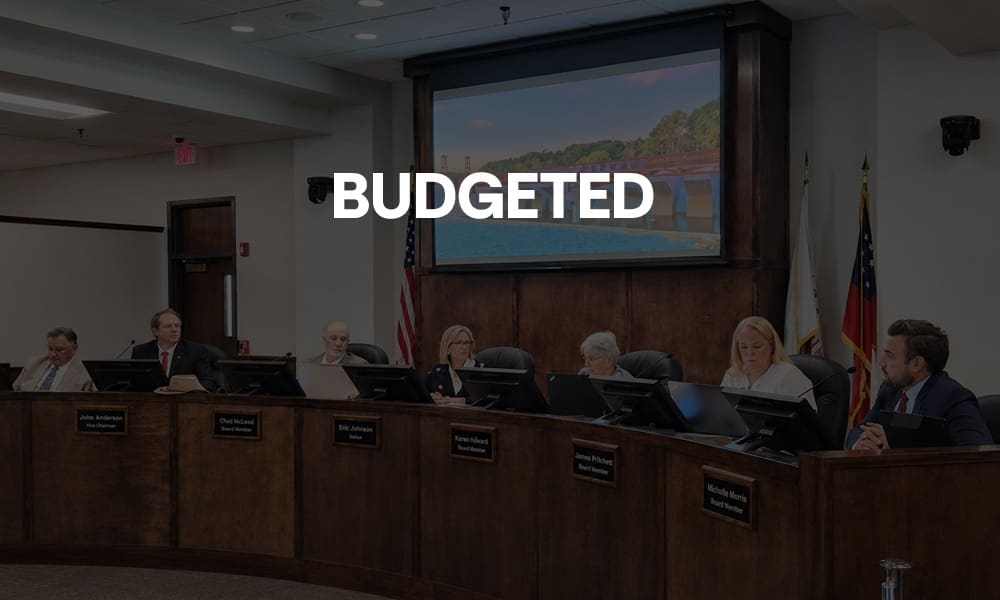
Peachtree City’s proposed Fiscal Year 2027 budget, presented during last Thursday’s City Council meeting, would keep the city’s millage rate unchanged while investing in public safety, employee retention, and long-term infrastructure projects, even as officials continue to navigate rising labor and operating costs.
During the public hearing, City Manager Justin Strickland presented a proposed $60.8 million general fund budget, a 4.8% increase over the current year’s adopted budget. The proposal maintains the city’s current millage rate after reductions in previous years and includes funding for additional firefighters, police and planning staff, employee cost-of-living adjustments, and capital improvements across the city.
“This is a balanced budget,” Strickland told council, noting the proposal continues the city’s emphasis on maintaining existing service levels while preparing for future growth.
Balancing rising costs
Strickland said the city’s budget continues to reflect economic realities that have affected local governments nationwide since the COVID-19 pandemic.
Consumer prices have risen approximately 27% since 2020, while average wages have increased about 25% over the past six years, creating a more competitive labor market for recruiting and retaining employees.
“We are not immune to price increases in things that we purchase, just like we’re not in our personal lives either,” Strickland said. “Fortunately, we don’t have that problem at this time because we are competitive in the market.”
The proposed budget includes a 3% cost-of-living adjustment for employees, along with increased funding for healthcare, utilities, fuel, and technology costs. It also includes new part-time positions to support the city’s Youth Council and Public Art initiatives.
Personnel expenses continue to account for roughly two-thirds of the city’s general fund budget, reflecting the labor-intensive nature of services such as police, fire, emergency medical services, parks, recreation, and public works.
Councilwoman Suzanne Brown noted that healthcare costs account for one of the budget’s largest increases, a challenge facing employers across both the public and private sectors.
“Healthcare costs have gone up for everybody, every place,” Brown said. “We have 389 employees.”
Staffing for growth
Among the budget’s largest additions are the final three firefighter/paramedic positions needed to fully staff the future Fire Station 85, completing a three-year hiring plan.
The proposal also funds a new police administrative assistant, an additional city planner, and an EMS training officer. Together with several position reclassifications, the personnel additions represent a net general fund cost of about $682,000.
Councilwoman Laura Johnson praised the proposal and said she believes it continues the city’s focus on maintaining the infrastructure residents depend on.
“I’m very proud of this budget. Thank you for your work on it. I feel like we’re focusing on the things that we need to focus on. I think maintenance is massive,” Johnson said.
Keeping the tax rate steady
The proposed budget recommends leaving the city’s millage rate unchanged.
Strickland said the city expects property tax revenues to increase primarily because of growth in the tax digest rather than a higher tax rate. Homesteaded properties are now subject to Georgia’s new floating homestead exemption under House Bill 581, which limits annual increases in taxable value based on inflation. This year’s increase is capped at 2.7%.
Rather than recommending another millage rollback, officials said they are watching the implementation of the state’s new Local Homestead Option Sales Tax, or LHOST.
If approved by the General Assembly, local governments, and voters, the one-cent sales tax could substantially reduce property taxes for homesteaded homeowners beginning as early as 2028 by replacing a portion of property tax revenue with sales tax collections.
Strickland said the proposal could provide significantly greater tax relief than another reduction in the millage rate.
Investing in facilities
Beyond day-to-day operations, the city plans to continue investing in major facilities and infrastructure.
Officials outlined plans to use approximately $6 million in reserves, combined with federal grant funding, to renovate police facilities, convert the former gun range into a public safety training and emergency operations center, and improve evidence storage and patrol operations at the existing police headquarters.
The city is also evaluating approximately $12 million in future bond financing for improvements at Kedron facilities, the Braelinn multi-purpose athletic fields, and other capital projects.
Strickland said the city expects to absorb the annual debt payments without increasing the millage rate.
“I hope you all saw the one thing that I saw,” Councilman Clint Holland said. “We’re going to borrow $12 million, and, oh by the way, we’re not going to raise your taxes. We’ll pay for it. We’ll absorb it. We’ll take care of it.”
City officials also emphasized what residents receive for their local tax dollars, noting that while Peachtree City has the county’s highest municipal millage rate, it provides its own fire and EMS services, maintains more than 100 miles of multi-use paths, operates more than 40 parks, supports one of Georgia’s premier public libraries, and maintains neighborhood entrances and medians. Staff estimated the average homeowner pays about $1,200 annually to the city, while roughly two-thirds of a typical property tax bill goes to the Fayette County Board of Education.
A resident’s perspective
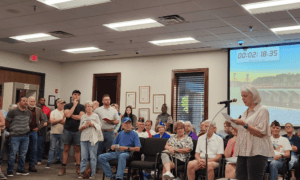
Because the budget discussion came at the end of what was a four-hour council meeting, only one resident spoke during the public hearing.
Paul Schultz praised the city’s continued focus on maintaining infrastructure rather than allowing public facilities to deteriorate over time.
“I feel like I get so much value for what I get in Peachtree City,” Schultz said. “My water bill is higher than that.”
Schultz also encouraged the city to continue studying long-term uses for its reserve funds while supporting employee pay increases and investments in aging infrastructure.
What happens next
The proposed budget is scheduled to return to the City Council for adoption on Aug. 20. Residents will have another opportunity to address the council before the vote during the regular public comment portion of that meeting. If adopted, the Fiscal Year 2027 budget will continue funding city operations while advancing public safety, recreation, employee retention, and infrastructure projects without increasing the city’s millage rate.



Leave a Comment
You must be logged in to post a comment.