


 2258
2258 0
0
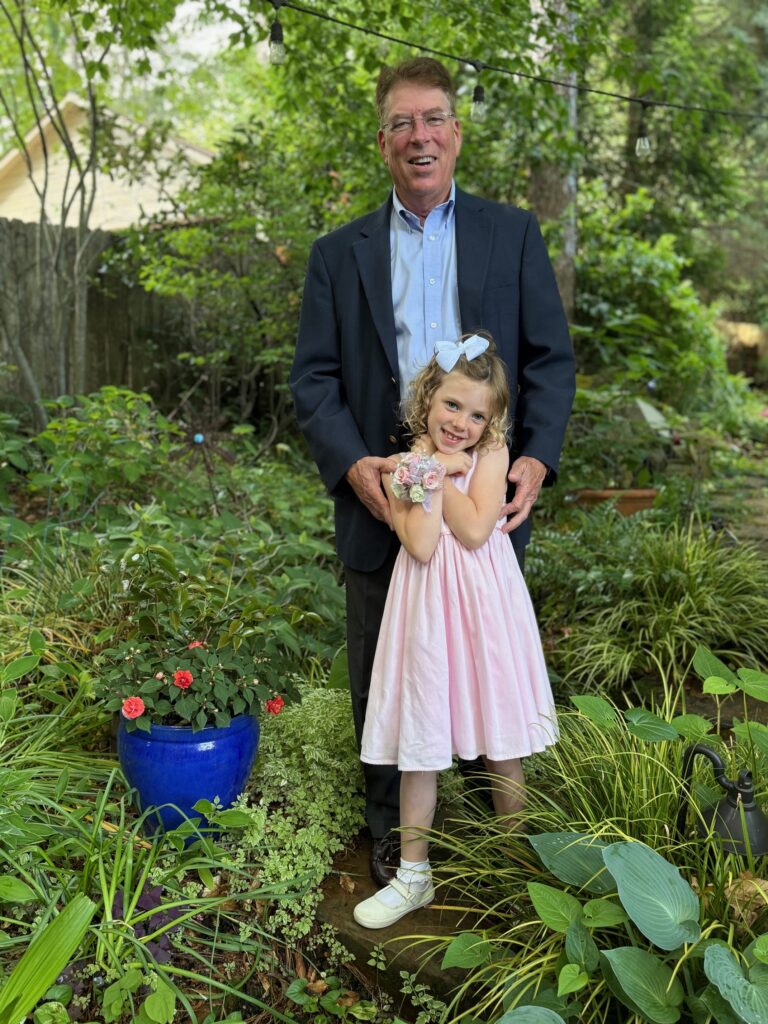
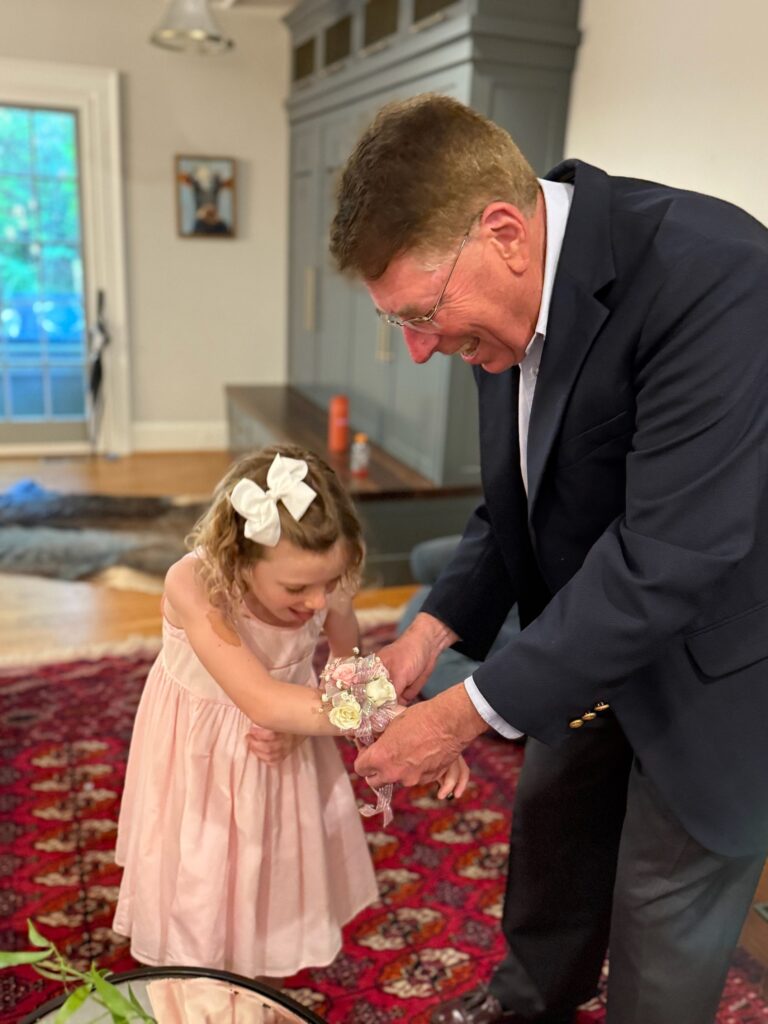
Sometimes life grants you a do-over. My seven-year-old granddaughter invites me to escort her to Morningside Elementary’s inaugural “Small Tall Ball.” What a grand honor! Having skipped all of my high school proms, I readily accept and commission Huddleston Florist to create a diminutive wrist corsage to match Hadley’s dress. We pose for the obligatory photographs at her home and then again when entering the school gym. This ends any semblance of a high school affair, as the children find cavorting among themselves much more enticing than dancing with their decades-older “dates,” mostly parents. So, I brushed up on my triple step swing for nothing.
I corral Hadley for refreshments – donut holes and Capri Sun juice packets – and quiz her about her classmates. She is a keen observer. She points out the rambunctious boys and the polite ones, the girls who talk too much and those who are catty, and her favorite playmates. When she deserts me to climb upon the playground equipment with her friends, I watch the children and begin to imagine what kind of adults they might become. Their personalities already hint at paths they might take – quiet, bold, kind, mischievous.
I find myself reflecting on my own childhood classmates and wondering how we have changed since we once climbed on playgrounds together. My 50th high school reunion comes to mind. I typically could identify my peers without glancing at their name tags since I’ve known most of these folks since elementary school. Pigment eluded many manes, and most of us lug around more pounds than we did a half century ago.
Working the room, I exchanged two-minute pleasantries for a while, and then transitioned to more substantial sharing with once-valued companions. I avoided vocational topics and asked if they’ve enjoyed happy lives. Some wished to reminisce, so I was reminded of slow dancing at parties in Denise’s basement, waltzing through college prep classes, and tangoing very disagreeably with cherry vodka.
University of Houston social psychologist Rodica Damian and her colleagues identified a group of 16-year-olds who answered personality questions and administered the same items to them fifty years later. To no one’s surprise, they found that broad patterns of thoughts, feelings, and behaviors changed little over the lifespan.
Some rough edges were smoothed. Most of the 66-year-olds were more conscientious, emotionally stable, and agreeable than their earlier editions. However, their relative scores, when compared to their peers, remained unchanged. So, if Susie was very conscientious at 16, she is still more so than her fellow Medicare recipients today.
Well aware that personality characteristics don’t usually change, it still surprised me how little these had evolved in my classmates. Ricky narcissistically droned on about his life’s minutia without the slightest interest in anyone else. Tommy and Chuck easily attracted others to laugh along with their humorous anecdotes. Rock was eager to show off his attractive, younger wife, while John left his less glamourous spouse at home. Denise hugged me tightly with genuine affection, while Jenny maintained rigid boundaries. Little really changed save the calendar.
Of course, I was not immune to my peers’ evaluations. I’d like to think that I have matured grandly over the last five decades, but I’ll bet those gathered saw me as very similar to my mid-1970s self. Perhaps they gauged me to be a little more polished; they undoubtedly observed that I was a bit wider.
We can exercise some control over our behavior, but our basic wiring remains largely fixed. Amending personality takes tremendous effort and is rarely pursued. Psychotherapy patients more often lament how they are misunderstood than consider how they can change to erase misgivings, though some exceptions exist.
The old joke is apropos, “How many psychologists does it take to change a light bulb?” Answer: “Only one, but the light bulb has to really want to change, and it takes a long time.”
I come back to the present and watch these first graders scamper up and down the playground equipment, oblivious to the personality template that will shape their lives. I note the meek and strong and contemplate their future selves. A half century from now, perhaps they will assemble in some hotel ballroom and share their life stories. The patterns will not be too difficult to divine.
We depart the soiree an hour and a half after arriving, logging as much fun as anyone has ever reported to me about their prom. Like many school socials, the shy and boisterous act in character, the food is marginal, and the experience does not warrant the energy devoted to the preparation. Yet, I enjoyed my first prom these 50 years after high school graduation, and my date was fantastic!








Leave a Comment
You must be logged in to post a comment.