


 152
152 0
0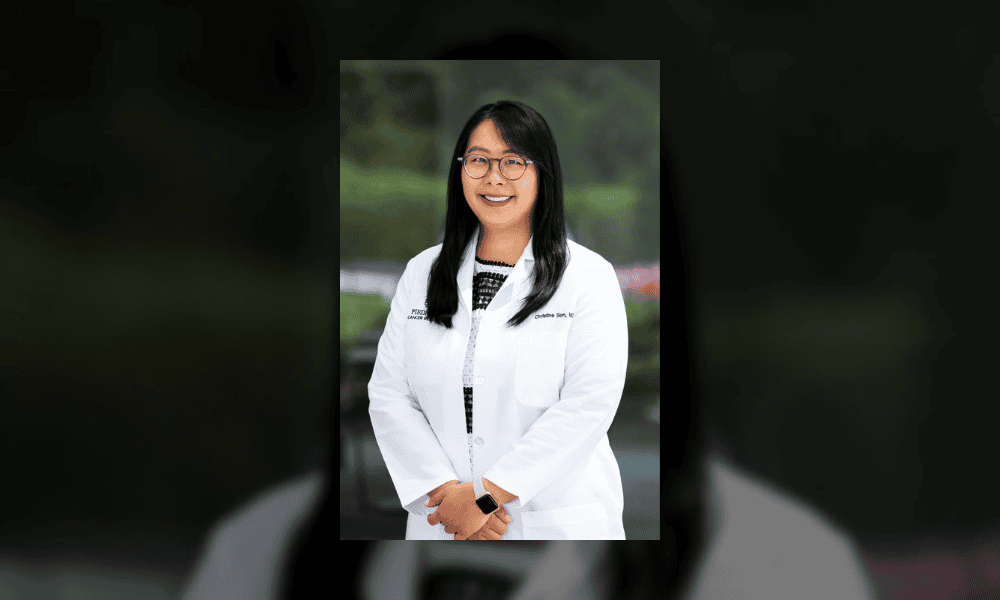
When Dr. Christine Son completed 15 years of education and medical training, she faced the same decision many new oncologists face: pursue an academic career, or join a community-based private practice.
After graduating from Harvard University, completing medical school, residency, and fellowship at the University of Tennessee in Memphis, and serving an additional year as chief resident, Son had opportunities to consider all paths. Ultimately, she chose Piedmont Cancer Institute, a private, community oncology practice.
For Son, the decision came down to one thing: patients.
“I think the big draw was for community, private practices in general, there’s just a little bit more freedom,” Son said. “You get to focus on the clinical aspects of oncology, focus on patient care, seeing patients.”
Today, Son sees patients in PCI’s Fayetteville office three days a week and its Atlanta office two days a week. While many physicians spend significant portions of their careers balancing research, teaching responsibilities, administrative meetings, and patient care, Son says private practice allows her to devote nearly all of her professional energy to treating patients.
“I get to focus completely on patients,” she said. “Almost everything for me is clinical. It’s all directed towards patient care.”
More time focused on patients
Academic medical centers, such as Emory Healthcare, play a critical role in training future physicians and advancing research, but those responsibilities require time and attention.
“In academics, you have to have other responsibilities that are not just clinical,” Son explained. “You definitely still need to be very active in the research world, and being a professor and working with fellows, academics and teaching is also a really important aspect of your career.”
At Piedmont Cancer Institute, Son’s day-to-day work centers on diagnosing, treating, and supporting cancer patients.
That focus extends beyond physician appointments.
“Our whole model is very patient-oriented,” she said. “We really pride ourselves on being able to be much more available for patients when they call. We want them to be able to reach either us or a nurse very easily, get everything addressed very quickly.”
Because physicians are consistently present in the clinic and directly engaged in each patient’s care, Son believes patients often receive answers and support more quickly than they might within a large hospital system.
“We have the capacity to address things much more quickly and are able to provide more of that kind of direct care,” she said.
Bringing cancer care closer to home
For many patients, especially those undergoing weekly treatments, convenience becomes more than a luxury—it becomes a quality-of-life issue.
One of the advantages Son sees in community-based oncology is the ability to receive advanced cancer care without traveling into Atlanta.
“We are able to have clinics in different parts of town that’s not just Atlanta,” Son said. “Being able to get your treatments close to home, I think is extremely important.”
Many cancer patients require frequent appointments, infusions, chemotherapy treatments, laboratory work, and follow-up visits. Those trips can become physically exhausting for patients and their caregivers. Locally, Piedmont Cancer Institute has offices in both Fayetteville and Newnan, both in proximity to the hospitals.
“People who can come in for their weekly chemos and then go home, and it’s a very easy drive,” Son said. “I feel like that’s kind of another benefit.”
She emphasizes that convenience does not mean sacrificing access to advanced care.
“We are able to do all of the molecular testing and genetic testing close to home,” she said. “We have all the access. We’re able to do everything. We can just do it closer.”
Relationships that matter
Cancer care is unique among medical specialties because physicians often walk alongside patients for months or years.
“I think we are able to have really good relationships with our patients because we see them very frequently,” Son said. “We’re kind of in a journey together in that way.”
“It’s emotionally probably difficult, but it’s also very rewarding,” Son said.
She credits PCI’s experienced physicians, nurses, and support staff with helping create an environment where both patients and providers can succeed.
“I don’t think I could do this without my partners,” Son said. “It’s been really nice to have resources around me.”
For patients throughout Fayette, Coweta, and surrounding communities, that combination of accessibility, advanced treatment options, and patient-focused care is exactly why Son chose private practice—and why she believes it continues to benefit the people she serves.
According to their spokesperson, “While PCI is proud to be part of the Piedmont Clinic network, we are an independent oncology practice led by our team of physicians. Our physicians oversee the clinical direction of the practice and remain committed to delivering personalized, patient-centered cancer care to the communities we serve.”
To learn more about Piedmont Cancer Institute or schedule an appointment, visit www.


Leave a Comment
You must be logged in to post a comment.