


 6437
6437 0
0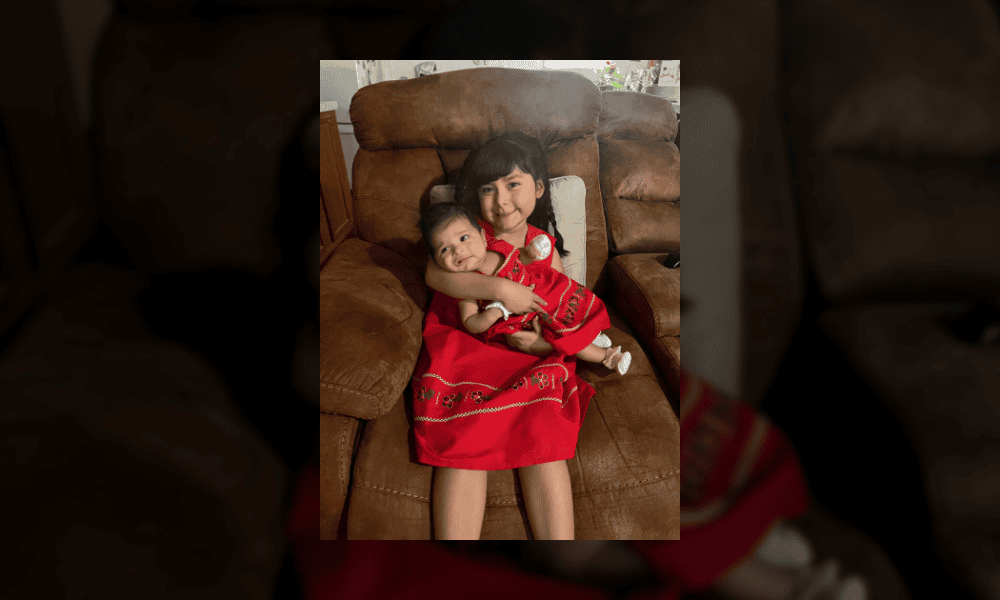
The first sign was a red spot in the corner of Rosalie’s right eye.
Rosalie had recently returned from a family trip to Mexico, and her mother, Mia Pena, initially wondered whether the pool water had irritated it. When the redness continued into Georgia’s pollen season, allergies seemed like another reasonable explanation.
Rosalie was 6 years old. She otherwise appeared healthy.
But the eye remained red. Sometimes, Rosalie said, it hurt or burned. An urgent-care visit produced advice to continue allergy medicine and lubricating drops. An ophthalmologist saw inflammation and prescribed steroid eye drops. Rosalie was also given glasses because she might have been straining her eyes.
Something still did not feel right to her mother.
“I guess I was just like, this is not just allergies,” Pena said.
The family began noticing that Rosalie did not move her eyes normally when someone called her. One eye started turning inward. Then she began to limp.
At first, her parents wondered whether she was adjusting to the new glasses.
Then, while the family was preparing to go grocery shopping in early May 2024, Rosalie tried to put on her shoes using only her right hand. Her left hand remained clenched.
Her father asked why she was not using it.
“I can’t, Daddy,” Rosalie told him, according to her mother.
That was the moment the explanations involving pollen, inflammation and glasses no longer made sense.
The family took Rosalie to a Children’s Healthcare of Atlanta urgent-care location. After a neurological examination, the staff would not let the family simply drive away. Rosalie was transported for emergency evaluation.
A CT scan revealed a tumor. An MRI followed.
The results came back within hours.
“I remember the oncologists being there and telling me that I would never forget these words that he’s about to tell me, and he’s right,” Pena said. “May 6 is when they told me, ‘Your daughter only has nine months to live. She has DIPG.’ And there’s no cure.”
Rosalie was diagnosed May 6, 2024, with diffuse intrinsic pontine glioma, commonly called DIPG—an aggressive brain tumor with no reliable cure.
Although her parents were told she might have nine months, Rosalie lived for nearly two years after her diagnosis.
She died April 17, 2026, less than three weeks before the second anniversary of the day her family received the diagnosis. She was 8.
“She almost made it to two years,” Pena said. “Thankfully, we had more time with her, but it’s not enough.”
A tumor in a vital part of the brain
DIPG develops in the pons, a portion of the brainstem involved in essential functions including breathing, swallowing, heart rate, balance and movement.
Dr. Jason Fangusaro, a pediatric neuro-oncologist who leads the developmental therapeutics program at Children’s Healthcare of Atlanta, called it “one of the most aggressive brain tumors that we see in children.”
Its early signs can be deceptively subtle.
Children may develop an eye that turns or points in an unusual direction, slight imbalance or difficulty swallowing. Some are first seen by an eye doctor or general practitioner because the symptoms do not initially suggest an aggressive brain tumor.
“Usually, they present with more subtle findings,” Fangusaro said.
DIPG cannot be removed surgically. The tumor grows through a part of the brain that controls functions necessary for life. Removing it would also remove or severely damage those functions.
Radiation is the principal established treatment. It can shrink the tumor and improve symptoms, sometimes allowing a child to return close to her previous level of functioning.
But the improvement is generally temporary.
Fangusaro said the tumor usually begins growing again. A second course of radiation can sometimes provide another period of improved function or quality of life, but it does not cure the disease.
Fighting for time
Rosalie’s family searched for options after her diagnosis.
She underwent a brain biopsy at the University of Alabama at Birmingham and entered a clinical trial involving the drug then known as ONC201. She also completed 30 radiation treatments.
During treatment, Rosalie initially became weaker. Then one day, she approached her mother and snapped the fingers of the left hand she previously had been unable to open.
“Mommy, look,” she said.
Her walking improved as well.
For months, Pena said, someone looking at Rosalie might not have known she was a child with brain cancer. She returned to school on a reduced schedule. She played with her younger sister, Adeline. She continued taking the trial medication and traveling to UAB for appointments, blood work and scans.
But in the summer of 2025, the problems returned. Rosalie again became unsteady. The tumor had grown.
The family chose a second, shorter course of radiation. It restored much of her movement and helped her swallow again for a time.
By early 2026, however, Rosalie was losing the ability to walk independently. Her left side weakened. Swallowing became more difficult, and mucus accumulated in her airway.
Pena gave birth to another daughter, Juliette, on March 10. Steroids helped Rosalie swallow and speak well enough to spend time with the newborn sister she had been waiting to meet.
Rosalie lived for a little more than another month.
On April 16, she asked for boba tea. Her father brought it to her. Later, she appeared to fall asleep.
She did not fully wake again.
Rosalie died early the following morning in her parents’ arms.
More than a diagnosis
Pena does not want her daughter remembered only for the cancer that killed her.
Rosalie was energetic and funny. She loved babies and younger children and often behaved like a small mother toward them. She ran with Pena and grew up around the CrossFit gym where her mother trained and coached.
She was outgoing enough to greet strangers and offer them a smile.
Rosalie had asked her parents repeatedly for a younger sibling. After Adeline was born, the two became inseparable despite the difference in their ages.
When Adeline became upset, Pena said, she often ran to Rosalie for comfort. Rosalie was her safe place.
Even after Rosalie could no longer walk, she wanted to leave the house and experience something each day. Because she disliked using a wheelchair, the family found a large wagon in which she could ride.
“What are we doing today?” she would ask.
Pena said her daughter changed the way she thinks about time.
“Don’t take things for granted,” she said. “I thought my kids were the ones that were gonna bury me, not the other way around.”
A Peachtree City connection—but not a Peachtree City residence
The family lived in Jonesboro during Rosalie’s illness.
Their connection to Peachtree City is substantial, but different from living within the city at the time of diagnosis.
Pena moved to Peachtree City when she was 9, attended Crabapple Lane Elementary School, Bennett’s Mill Middle School and McIntosh High School, and graduated in 2016. Her parents continued to live in Peachtree City.
Rosalie spent significant time there while growing up. Her grandmother in Peachtree City cared for her when Pena was in school, and the family regularly returned on weekends.
That distinction matters because concern about DIPG began circulating on local social media as residents discussed what they believed were several cases involving children in Peachtree City and surrounding communities.
The number and geography changed from one post or conversation to another. Some people referred to three cases. Others said five. Some described Peachtree City residents; others included children living elsewhere who had family, school, church or other ties to the community.
The Citizen has not established that five children living in Peachtree City were diagnosed within one year. Nor has a public-health agency determined, based on the information provided to The Citizen, that the reported cases constitute a cancer cluster.
The distinction between residence, community ties and time spent in an area would be essential to any formal investigation.
Does the pattern warrant investigation?
Dr. Whitney Clifton, a Peachtree City resident with a doctorate in epidemiology, began looking at the question after seeing the local social-media discussion.
Clifton works in behavioral-health epidemiology for the Georgia Department of Juvenile Justice. She is not a cancer epidemiologist and has not conducted a formal investigation of these cases.
Her initial reaction was conditional.
“If this is true, this warrants an epidemiological investigation,” she said.
Clifton emphasized that the first step would be confirming each diagnosis. Investigators would then need accurate diagnosis dates, residential histories, geographic information, demographics, family medical histories and possible shared exposures.
Only after confirming the cases and defining the population could investigators determine whether a cluster actually existed.
Clifton said even a statistically unusual grouping would not, by itself, prove that an environmental exposure caused the cancers.
Residents have speculated online about pesticides, golf-course runoff and other possible environmental factors. The interviews and other materials reviewed by The Citizen do not establish a connection between DIPG and any of those suspected causes.
Clifton said she found no research directly connecting DIPG clusters to golf courses.
“You can’t get ahead of yourself,” she said.
Fangusaro offered another caution.
He said concerns about apparent geographic concentrations of DIPG arise periodically. Because the disease is so rare, random distribution can sometimes produce small groupings that appear meaningful.
He has not analyzed the reported Peachtree City-area cases. But he said previous epidemiological reviews of similar concerns have not identified a consistent geographic or environmental cause.
“There’s been no definitive links to anything chemical, industrial, pesticides, no lifestyle factors, nothing specific,” Fangusaro said.
Available research, he said, points more toward spontaneous mutations arising within the child’s brain than toward a known external exposure.
That does not prove that the local reports should be ignored. It means an investigation would have to begin without assuming either that the cases share a cause or that they are merely coincidental.
A question without an answer—yet
Rosalie’s doctors could tell her parents where the tumor was, what it would do and what treatments might temporarily slow it.
They could not tell them why their daughter developed it.
Pena said one doctor described it simply as bad luck.
Since Rosalie’s diagnosis, the family has heard from other parents whose children had DIPG. Pena also learned of children with connections to Peachtree City and nearby communities.
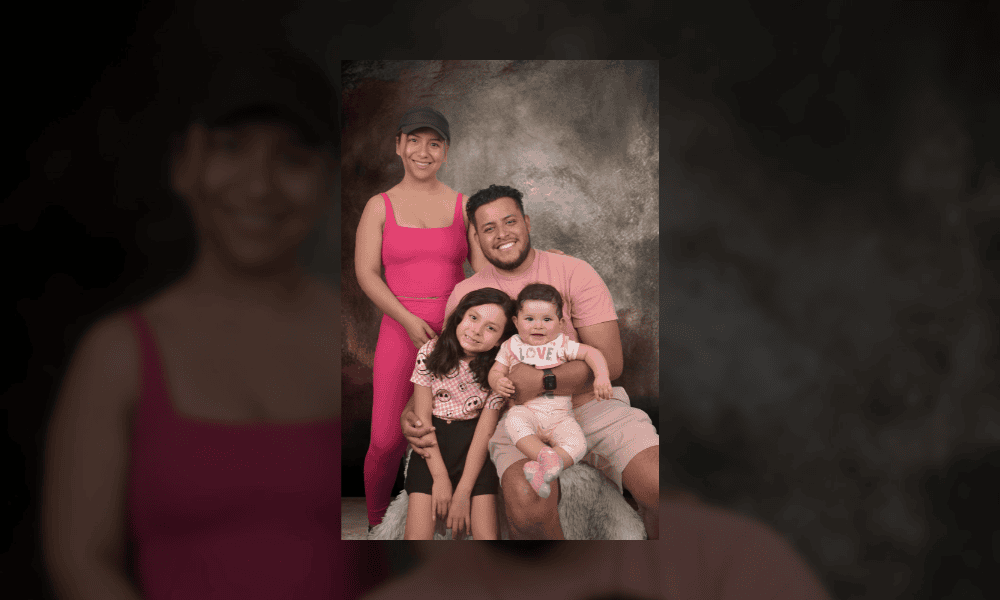
For her, the questions are no longer abstract. She has two younger daughters and worries about what is known—and what remains unknown—about the disease that took their sister.
Fangusaro said the pattern may ultimately prove to be the kind of random concentration that can occur with a very rare diagnosis.
Clifton believes the reported cases deserve enough scrutiny to determine whether there is a pattern at all.
What neither expert said is that anyone currently has evidence of a common local cause.
For now, there is a family grieving an 8-year-old girl who loved to run, loved babies and wanted to fill her days.
And there is a community asking whether other families have faced the same devastating diagnosis unusually close together—or whether lightning has simply struck, inexplicably and terribly, more than once.




Leave a Comment
You must be logged in to post a comment.