


 3553
3553 0
0
Where in Heaven’s name does this interjectory phrase mean? Where did it come from?
Your compiler wishes he knew.
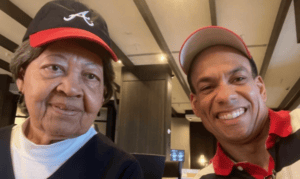
His late grandmother, Kathryn Crawford Langford (1905-1995), who was the longtime principal of Brooks Elementary School and who died in the house in Brooks next door to the one in which she had been born nearly ninety years before, said it rather often in a variety of situations. She might say it to mean, “Get over it and move on.” Or she may have meant, “I don’t believe what you’re telling me.” Or, “No way!” Or. “That’s just nonsense!” Sometimes it denoted surprise, as in “My goodness!” And sometimes it more or less meant, “I declare!”, which we covered in a previous column. It is quite a useful and unoffensive phrase – we can all think of vulgar replacements for nearly all the meanings above – but your compiler has no idea where it came from.
Your compiler’s grandmother was not the only one who said it; he heard it often in his youth from a wide assortment of older ladies in Middle Georgia. The late Olive Ann Burns (1924-1990), in her classic novel, Cold Sassy Tree, has the protagonist’s mother (whose character was based on Miss Burns’s maternal grandmother, and would have been a generation older than your compiler’s grandmother, as well as from a totally different region of the state – northeast Georgia) saying the same short phrase in the same exact usages.
This leads your compiler to his second question about this elusive phrase: was it a woman’s phrase only? Your compiler cannot for the life of him ever recall hearing a man say it, but he heard plenty of older women using it over the years. Never anymore, alas, but frequently years ago.
A possible answer may be found in the interjection, “pshaw,” which Webster’s says dates to the 1650s and is used to express irritation, disapproval, contempt, or disbelief. Your compiler has seen that word in writing meany times, and supposes it must be the root from which his phrase of the week springs. He does not know for certain, but that is his best guess. And if he is right, his grandmother’s (and Miss Burns’s grandmother’s) usage would simply be a matter of regional idiom and pronunciation.
Ah, shah! Your compiler reckons it doesn’t really matter, but it makes him wonder just the same. And he really misses hearing the unoffensive and versatile old phrase. Its modern replacements, while typically much more vivid, are also typically much more vulgar and potentially offensive.
And while your compiler has absolutely no objection to an occasional swear word used for emphasis of a matter, the cussing-for-the-sake-of-cussing one hears so often on television and in films today is simply over the top – way over the top – in his opinion. Had his late grandmother ever been confronted with such language in a film or in a conversation, would have sniffed with disgust and said, “Ah, shah! Every one of those folks has a potty mouth and I’m not going to listen to this curse-fest a minute longer,” and gotten up and walked out. And if a youngster had come out with one of the foul replies one so often hears today, she’d have dragged him to the nearest sink and washed his mouth out with soap.






Leave a Comment
You must be logged in to post a comment.