


 5004
5004 1
1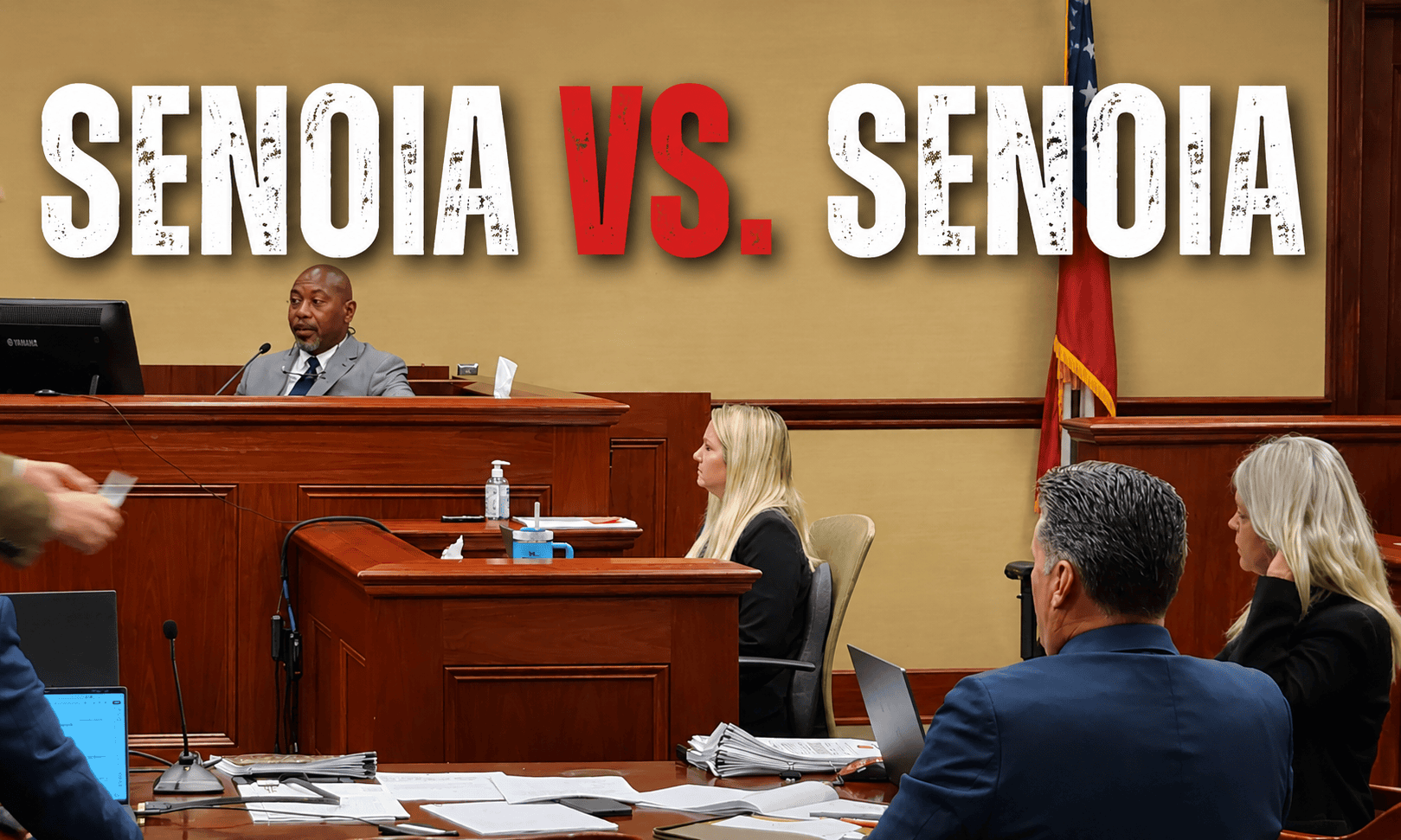
Editor’s Note: This is the fourth installment in The Citizen’s examination of the City of Senoia’s civil lawsuit against former City Manager Harold Simmons, former Mayor Dub Pearman and former Mayor and former Assistant City Manager Jeff Fisher. The first three stories examined the official-immunity hearing, the City Hall budget process, the employee pay study and the council votes now at the center of the compensation dispute. This installment turns to a separate allegation that occupied a significant portion of the testimony: the demolition of a historic Sharpsburg church and the disposal of its remains on Senoia property.
Before a collapsing church building in Sharpsburg became an allegation in a Senoia lawsuit, Harold Simmons was cutting its grass.
The congregation no longer held regular services. The roof eventually fell in. Grass grew waist-high around the property on East Highway 16.
Simmons, then Senoia’s city manager, had grown up in the church. His mother had attended it throughout her life. When he saw what had become of the property, he contacted Sharpsburg’s mayor and offered to maintain it himself.
“I called him and said, ‘Hey, don’t worry about the grass. I’ll come cut the grass,’” Simmons testified.
What followed would eventually involve a demolition permit, an asbestos inspection, privately paid demolition costs, materials transported to Senoia property, two churches with nearly identical names and a deed executed more than two years after the building came down.
The City of Senoia now alleges that Simmons improperly used his public position and City resources to benefit property connected to him. Mayor Scott Tigchelaar has described the sequence as self-dealing.
Simmons denies that. He says he responded in his official role as Senoia’s city manager to a request from the mayor of Sharpsburg, using the day-to-day operational authority he believed that position gave him. He described the project as assistance between local governments that could also benefit Senoia through the reuse of some materials, while helping preserve property that had long served a historically Black congregation.
The court has not decided which interpretation is correct.
The church Simmons remembered
On redirect examination during the July official-immunity hearing, Simmons described a connection to Pleasant Grove Baptist Church that began generations before the demolition.
“My mother was born in 1931, and she was born and went to that church as a child,” Simmons testified. He said it was the only church she attended until her death.
Simmons attended there as a boy. The church had no insulation, he said, and one of his childhood responsibilities was getting up early to turn on the heaters so the building could warm before services.
“I hated doing it, but I knew I was getting up to do it,” he testified.
Simmons joined the Marine Corps in 1980 and moved away from the congregation. When he returned in 1989, he was married, and he and his wife attended another church. He said he later returned to Pleasant Grove after learning that its roof was failing.
By then, Simmons estimated that about 30 members remained. His mother had served as an usher, he said, and many of the church’s deacons had died.
“It just meant a lot,” he testified.
Simmons also testified that the land had been given to the local Black community in approximately 1895 or 1896 for use as a church or school.
He attributed that information to Coweta County attorney Brad Sears, whom Simmons said had researched the property’s history. The original deed or other nineteenth-century record underlying that account is not among the source documents currently reviewed by The Citizen.
According to Simmons’ testimony, the historic document provided “that that property will remain in the hands of blacks as a school or a church. If not, it converts back to the family that donated property.”
Simmons said the church burned in 1921 and was rebuilt within several years. He testified that the replacement building was later surrounded with brick.
Those statements reflect Simmons’ sworn account of the property’s history and the restriction he believes governs it. The court has not ruled on the meaning or enforceability of any restriction in the original land grant.
First the grass, then the building
Former Sharpsburg Mayor Blue Cole corroborated that Simmons’ involvement began before the demolition.
Cole, who served as mayor from 2018 through 2023, testified that the grass began growing after the church stopped holding regular services. Simmons contacted him and said he planned to take care of it.
“Just don’t worry about it,” Cole said Simmons told him.
Cole said the building later became a municipal concern after its roof collapsed. Sharpsburg tagged it as an unsafe structure, and it remained in that condition for several months.
Cole then contacted Simmons.
“I reached out and said, ‘Hey, what what what can we do about the building?’” Cole testified.
Over the following weeks, Simmons obtained a demolition permit and the building was pulled down, Cole said.
Cole described Sharpsburg as a town of approximately 330 residents at the time, with no place inside the town to dispose of the demolition material. He testified that Senoia had previously helped Sharpsburg with other needs and that he understood the church project as another example of neighboring municipalities assisting each other.
“We ran it through the normal process,” Cole testified, saying he spoke first with Simmons and then-Mayor Dub Pearman.
Under questioning by the City’s attorney, however, Cole could not say that a particular written mutual-aid agreement authorized the disposal of a demolished Sharpsburg building on Senoia property.
“I don’t know,” Cole said.
He also testified that he did not know who owned the church property in 2023 or how Pleasant Grove Baptist Church was legally organized.
When asked whose debris it was, Cole answered that it belonged to the church—not the Town of Sharpsburg.
That distinction is important. Simmons and the defense describe the demolition as a decision he made in his official capacity as Senoia’s city manager, using what he understood to be his authority over day-to-day municipal operations to assist Sharpsburg with an unsafe-building problem. The City argues that Sharpsburg did not own the property or debris, that no agreement specifically authorized the disposal and that assistance to a private church was not automatically municipal assistance.
Two Pleasant Groves
Even identifying the church became complicated during the hearing.
The historic church was Pleasant Grove Baptist Church.
In October 2022, several months before the demolition, Simmons incorporated a separate nonprofit called Pleasant Grove Nondenominational Church, Inc.
Its incorporation documents named Simmons as incorporator and registered agent. Simmons testified that his wife and son were among those named in organizational roles. He said the nonprofit existed on paper because he hoped eventually to start a church but did not yet have a building, members or donations.
The two entities shared the Pleasant Grove name, and the Sharpsburg property address appeared in the nondenominational church’s incorporation documents.
That overlap repeatedly complicated the questioning. When an attorney asked Cole whether Simmons was chief executive officer of Pleasant Grove Baptist Church, Judge Jephson Bendinger stopped to ask whether the attorney instead meant the nondenominational church.
“All I’ve heard so far is about documents related to the non-denomination,” Bendinger said, describing the relationship between the entities as “one of the hanging threads” before the court.
Simmons repeatedly maintained that the Baptist church and the nondenominational church were separate.
The City argues that the documents show meaningful connections among Simmons, the nonprofit and the Sharpsburg property. The defense says the shared name and Simmons’ involvement do not erase the distinction between the historic congregation and the nonprofit he later created.
The demolition permit
A February 2023 permit application further connected the names.
The application listed the project as “Pleasant Grove Non-Church,” identified the property at 4267 East Highway 16 and named Simmons as the applicant, with his title listed as pastor. It also identified Pleasant Grove Church as the property owner and “self” as the general contractor.
The building was demolished after the permit process.
Simmons testified that developer Brent Scarborough supplied the equipment and labor to tear down the structure without charging him. Simmons, however, said he personally paid the other costs associated with preparing for and removing the building.
He said Sharpsburg required an asbestos inspection before issuing the demolition permit. Simmons said he hired a company used by Senoia to conduct the test, paid approximately $800 for it and provided the results to the appropriate officials. He also said he paid the permit costs.
Pollard provided the dumpsters used for the demolition material and arranged for the loaded containers to be transported to Senoia property. Simmons testified that he personally paid Pollard for the dumpsters and the multiple trips. He said no part of those costs was charged to the City of Senoia.
The material was taken to an area behind Senoia’s Public Works facilities.
Simmons testified that he consulted Public Works personnel before the material arrived. He said he was told the wood could be burned and the brick or block could potentially be used in City projects.
Simmons repeatedly testified that he acted as Senoia’s city manager, not as a private property owner or church official. He acknowledged that no written agreement specifically authorized him to place debris from a Sharpsburg building on Senoia property. His position was that the authority attached to his office gave him discretion over ordinary operations, including cooperation with another municipality, so long as he did not violate the law, the City charter or City policy.
The City disputes both that interpretation of his authority and his claim that the project benefited Senoia. It also disputes that the presence of potentially reusable material authorized Simmons to have the remains of the private church building placed on City property.
“Debris is debris”
Jimmy Hall, who had worked in Senoia’s Public Works Department, testified that some cement blocks from the demolished church had potential City use.
He also described the area as a longstanding disposal site containing material that predated the church demolition, including dirt, broken asphalt or concrete, scrap metal and other debris. A separate scrap area held items collected around the city for later recycling.
Hall said the church material arrived over multiple days. His involvement, he testified, was primarily to make sure the loads were placed off the roadway so employees could continue reaching the back of the property.
Shown photographs of the material, Hall identified some bricks or blocks that could have been used by the City. But when the City’s attorney asked whether the debris field itself provided value to Senoia, Hall answered, “No.”
He did not describe it as a hindrance, either.
“I would say no because it’s a dump site anyway,” Hall testified.
On further questioning, Hall said the church debris was not meaningfully different from other material already taken there.
“Debris is debris,” he said.
Tigchelaar offered a different assessment.
He testified that Senoia did not operate a landfill to his knowledge. After becoming mayor, he visited the site and saw broken cinder block, wood, shingles, concrete, insulation and appliance parts. He said much of the material appeared consistent with the collapsed Sharpsburg church, although he acknowledged that he could not definitively establish that every item came from the building.
The City later obtained an estimate to remove the debris. Tigchelaar testified that it did not belong on City property and that he was concerned about possible contamination from an old building.
“There’s no value to it,” he testified. “It does not belong on city property. We need to clean it up and remove it.”
A deed two years later
The building was demolished in early 2023.
In May 2025, a quitclaim deed transferred the property from Pleasant Grove Baptist Church to Pleasant Grove Nondenominational Church.
The deed placed Simmons’ signature, as chief executive officer, and his wife Kelly Simmons’ signature, as secretary, in the grantor’s signature section. Simmons testified that he understood himself to be signing for the nondenominational church that was taking over the property, not exercising control over the Baptist church.
“Whatever the lawyer said was legit, and what he needs to put in there,” Simmons testified. “But all I know is that I was not in control of any church.”
He emphasized that the deed was signed in 2025, more than two years after the demolition.
Simmons testified that he paid $10 in connection with the transfer. The deed refers to $10 and other consideration. A county property record lists the transfer as a $0 sale.
The county record values the vacant 1.21-acre property at $39,226 for 2025 and $40,402 for 2026. Those assessment figures are not the same as a sale price, market appraisal or finding that Simmons personally received a financial benefit.
Still, the City says the sequence matters: the unsafe structure was removed without the property owner bearing the demolition and disposal costs, and the cleared property was later transferred to a nonprofit Simmons incorporated and led.
The City calls it self-dealing
In an interview after the hearing, Tigchelaar said the demolition and later transfer supported the City’s allegation that Simmons had acted for his own benefit.
“Harold was trying to self deal and get a benefit for Harold by dumping it on City of Senoia property,” Tigchelaar said.
Tigchelaar rejected the defense characterization that Sharpsburg faced an emergency requiring Senoia’s help. He argued that Sharpsburg could have followed its unsafe-building procedures, arranged for demolition and placed a lien against the property for the cost.
He also argued that Simmons’ signature in the grantor section of the later deed contradicted Simmons’ testimony that he had no ownership or control of Pleasant Grove Baptist Church.
“It’s completely self-dealing,” Tigchelaar said.
Those are Tigchelaar’s assertions and the City’s interpretation of the documents—not findings by the judge.
Simmons says that interpretation ignores the property’s history, the restriction he believes attaches to the land and the reason he sought to preserve it.
Valuable to whom?
Simmons testified that developers began calling him after the building was demolished. He said he could not sell the property because it did not belong to him and because he understood that the historic grant limited it to use as a church or school for the Black community.
“The government can’t sell it. It’s not mine. I can’t sell it,” he testified.
Simmons said he sought legal advice because he was concerned that someone could eventually obtain the property through taxes, liens or other legal proceedings and disregard its history.
He testified that an attorney prepared the quitclaim deed so the property could be preserved. Simmons said he hoped that a church might eventually be rebuilt there.
“I did it because in the future, as a pastor, I would love to rebuild this church,” he testified.
When asked whether he had tried to sell the property or use it for his own benefit, Simmons answered:
“I’m just cutting the grass. Matter of fact, I got to go do it this weekend.”
The City’s attorney pressed Simmons on whether a cleared parcel was worth more than one burdened by a collapsing building.
“Valuable to who?” Simmons responded. “Because you can’t sell it.”
He acknowledged that the collapsed building had been a liability and that, if the property could be sold, the land could be worth more without it. But he maintained that he could not sell it for another purpose.
The dispute therefore extends beyond who arranged the demolition or where the material went.
It asks whether Simmons used his position as Senoia city manager to remove a burden from property that later went to an organization he controlled—or whether, as Simmons maintains, he exercised the day-to-day authority of that office to respond to another mayor’s request, personally paid the project’s direct costs, brought potentially useful material to an existing municipal disposal area and later acted to preserve historically restricted church land.
What remains unresolved
The July hearing was not a final trial on those allegations.
Judge Bendinger is considering whether Simmons, Pearman and Fisher are entitled to official immunity from some or all of the City’s claims. He has not ruled that the church project was authorized municipal assistance, improper disposal, self-dealing or a private use of public resources.
A decision is not expected for at least four months after the hearing and could take considerably longer. The briefing schedule does not begin until the official transcript is completed, which we reported last week will take approximately 40 days. The City then has 30 days to file its brief, the defense has another 30 days to respond and the City has 15 days to reply. Only after that process is complete will the matter be ready for Judge Bendinger’s decision, and no deadline requires him to rule within a particular period.
The City will argue that the defendants lacked authority for the challenged actions. The defense will argue that those actions were undertaken as part of their official responsibilities and are protected from suit.
Until the judge rules—and unless the case later proceeds to a determination on the underlying facts—the same demolition remains two very different stories.
To the City, it was public assistance used to remove a private liability and improve property that ultimately went to Simmons’ nonprofit.
To Simmons, it was an exercise of the authority he believed he held as Senoia’s city manager—an effort to help a neighboring town and preserve the ground where his mother worshipped, where he once rose early to light the heaters and where, decades later, he still cuts the grass.


Leave a Comment
You must be logged in to post a comment.