


 5721
5721 3
3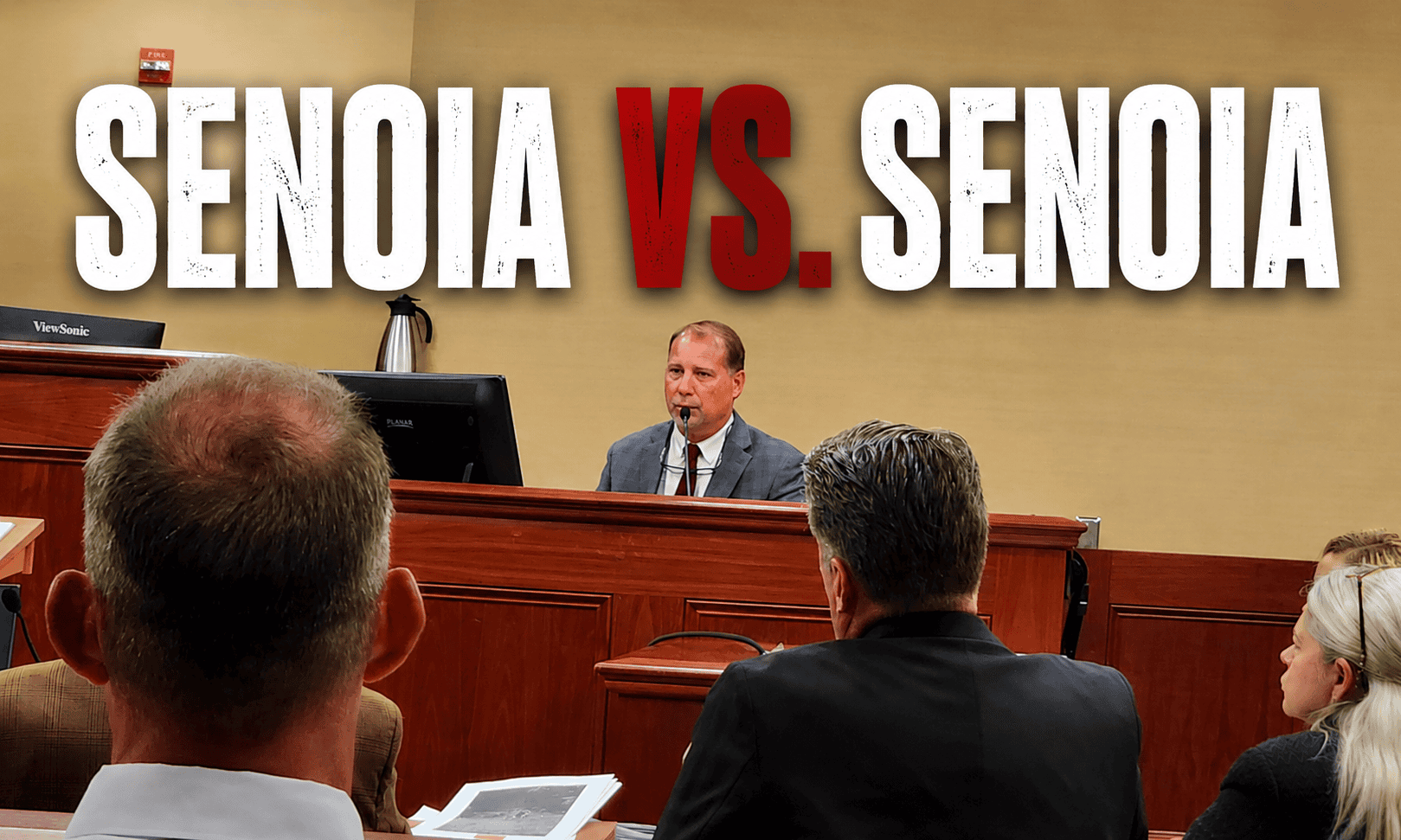
The city’s charter envisioned one process. The people who ran City Hall describe another. Two days of testimony revealed how years of budget meetings produced fundamentally different understandings of the same decisions.
Editor’s Note: One of the goals of this series is to help readers understand not only what was said in court, but how the people at the center of this lawsuit explain the events surrounding it. To do that, The Citizen is drawing from sworn courtroom testimony, interviews conducted before and after the immunity hearing, court filings and other public records. Quotations are attributed to their source. Some quotations come from interviews and therefore will not appear in the official court transcript.
The City of Senoia has filed a civil lawsuit against former City Manager Harold Simmons, former Mayor Dub Pearman and former Mayor, former Assistant City Manager and current Coweta County Commissioner Jeff Fisher, alleging unauthorized salary increases and violations of the city charter. All three deny wrongdoing. As this series examines the testimony and competing accounts surrounding the case, each installment explores a different question raised by the evidence.
The first installment in this series examined what unfolded during two days of testimony in Coweta County Superior Court. This installment steps back from the courtroom to examine the budgeting process itself—and why the people who participated in it remember it so differently.
How did so many experienced public officials walk away from the same budget meetings with fundamentally different understandings of what had actually been approved?
The answer matters because Senoia’s 2014 city charter outlines a different process. The charter provides that the mayor and council are responsible for conducting annual performance evaluations of the city manager and negotiating the city manager’s compensation.
Yet throughout two days of testimony and interviews conducted for this series, witnesses from both sides consistently described a system centered on the annual budget rather than formal evaluations or salary negotiations. None of the testimony presented during the immunity hearing described annual performance evaluations occurring during the years at issue.
That question surfaced repeatedly during two days of testimony and in interviews before the hearing. The answers varied dramatically—not because the participants necessarily remembered different meetings, but because they assigned different meaning to the same process.
A Process Years in the Making
Former Mayor, former Assistant City Manager and current Coweta County Commissioner Jeff Fisher says the budgeting process at the center of Senoia’s lawsuit wasn’t created in a single year or by a single administration.
Instead, he describes a process that he believes remained remarkably consistent over nearly a decade, spanning multiple city managers, multiple mayors and numerous city councils.
“I pulled the budget meetings from 2013 all the way to 2020,” Fisher said in an interview before the immunity hearing. “They’re identical.”
That timeline is significant because Harold Simmons did not become Senoia’s city manager until 2017. Fisher argues the budgeting process he described was already in place years before Simmons assumed the position and continued after he became city manager.
To Fisher, that consistency matters.
He said each year’s proposed budget moved through public workshops, first readings and second readings before ultimately being adopted by the mayor and council. In his view, the city manager’s compensation was presented to elected officials each year as part of that larger budget process, giving council members multiple opportunities to review the proposed compensation and ask questions before voting.
Four Opportunities
Former City Manager Harold Simmons describes that process much the same way.
“They want to act like they didn’t have a part in raising my salary,” Simmons said during an interview before the immunity hearing. “I did present my salary to them four times a year.”
Simmons said council members first received proposed budgets electronically before public meetings began. According to his description, the budget was then reviewed during a public workshop before moving through first and second readings and ultimately being adopted by ordinance.
He said those presentations included discussion of his proposed compensation.
“This is the city manager’s salary for last year. This is what I’m asking for this year. Are there any questions?” Simmons recalled telling the council. “No.”
Asked whether council members received the actual dollar amount of his proposed annual salary before voting, Simmons answered, “Yes.”
Simmons’ description closely mirrors Fisher’s. Both maintain elected officials were repeatedly presented with the city manager’s proposed compensation before approving each annual budget.
Different Memories
Former Mayor Dub Pearman also described the budgeting process as one requiring active participation by elected officials, while acknowledging that the budget itself did not necessarily isolate every component of the city manager’s compensation.
Asked whether a council member could look at the budget documents and immediately identify the city manager’s salary, Pearman responded, “I don’t know if it was clear, as in this is the salary, and this is what the benefits are.”
Pearman explained that personnel costs reflected more than salary alone. Rather than viewing that as a flaw in the process, however, he said it reinforced what he believed was the responsibility of elected officials to ask questions and understand the documents before approving them.
That perspective stands in contrast to the testimony of current council members Dale Reeder and Maurice Grover, both of whom testified they did not realize the salary increases at issue until years later.
During the immunity hearing, Reeder was shown budget documents from multiple years and repeatedly asked whether Simmons’ salary appeared as its own line item.
“No,” Reeder answered.
Instead, Reeder testified, the city manager’s compensation appeared to be included within broader salary categories for City Hall employees rather than separately identified.
Later, attorney Chris Webb asked Reeder how he reacted when he eventually learned how much Simmons was making.
“I was surprised and shocked and embarrassed, really,” Reeder replied.
Grover, who has served on the Senoia City Council for 20 years, described a similar experience.
Asked whether he remembered Simmons requesting the 10 percent salary increase reflected in a 2020 personnel memorandum, Grover answered, “I do not.”
He likewise testified that he did not remember the council voting to approve the increase or Simmons or then-Mayor Jeff Fisher informing council afterward that the increase had been granted.
Asked when he first became aware of the raise, Grover replied, “During the Freedom of Information request during the 2025 campaign.”
Webb then asked how he reacted.
“I was shocked on how we got from where I knew it to be to where it was that day,” Grover testified.
Questioned about a second 10 percent increase reflected in a 2022 personnel memorandum, Grover again testified that he did not remember Simmons requesting the increase, the council approving it or learning about it until the same Freedom of Information Act requests during the 2025 campaign.
The Personnel Memoranda
Those competing explanations come into sharp focus in a series of annual personnel memoranda that now sit at the center of the lawsuit.
After each annual budget had been approved by the mayor and council, Simmons testified that he prepared a one-page personnel memorandum stating his salary for the coming year. He then asked the sitting mayor to sign it before placing it in his personnel file.
Former Mayor Jeff Fisher signed those memoranda while serving as mayor. Former Mayor Dub Pearman signed them during his administration.
There is no dispute that both mayors knew the salary reflected in the memoranda. What the parties dispute is what those signatures meant.
For the City, the signed memoranda are among the principal pieces of evidence supporting its claims against Fisher and Pearman. Throughout the immunity hearing, the City’s attorneys argued the documents reflected corrupt actions taken outside the authority granted by Senoia’s charter—conduct they contend is not protected by official immunity.
Fisher and Pearman reject that characterization. They contend the memoranda simply documented compensation they believed had already been approved through the public budget process and that signing them was part of carrying out their official responsibilities as mayor. Because they maintain they were performing their official duties rather than acting with malice or corrupt intent, they argue they are entitled to official immunity.
Questioned under oath about a 2019 memorandum reflecting a 10 percent salary increase, Simmons testified that the increase itself had already been approved through the annual budget before the memorandum was ever prepared.
“When I presented the budget to them in December, they approved the budget with that 10% in my salary line item,” Simmons testified.
Asked how the mayor and council knew about the proposed increase, Simmons outlined what he described as a multi-step approval process.
“When I present that budget to mayor and council, it says my salary for this year and proposed salary for next year,” he testified.
According to Simmons, he emailed the proposed budget to elected officials, invited them to review it with him individually, discussed it during a public budget workshop, presented it again during first and second readings, and only after the council adopted the budget by ordinance did he adjust his salary.
“I then changed my salary after January to the percentage that mayor and council approved,” he testified.
Simmons further testified that the memoranda were not intended to establish his compensation. Instead, he said he prepared them for his own personnel records as documentation of the salary he believed had already been approved through the budget process.
He also explained why he kept them.
During his testimony, Simmons said he maintained the signed memoranda in his personnel file because he believed there could come a day when his compensation would be questioned. The memoranda, he testified, were intended to document what he believed had already been approved through the public budget process.
That testimony illustrates one of the central disagreements in the lawsuit.
Simmons, Fisher and Pearman describe a budgeting process that, in their view, established the city manager’s compensation before any personnel memorandum was signed. Reeder and Grover testified they participated in that same budgeting process but said they did not realize the salary increases reflected in the memoranda until years later.
Judge Jephson Bendinger will ultimately decide whether that process satisfied the requirements of Senoia’s charter—and whether the actions of Fisher, Pearman and Simmons are protected by official immunity.
For everyone else, the testimony raises a broader question that extends well beyond this lawsuit: When experienced public officials participate in the same meetings, review the same budgets and later remember them so differently, what responsibility does each person bear for making sure they understand what they’re approving?
More Than a Lawsuit
Two days of testimony revealed remarkably different understandings of the same budgeting process.
Simmons, Fisher and Pearman described a system they believed openly presented the city manager’s compensation through annual budget discussions before any personnel memoranda were prepared. Reeder and Grover testified they participated in that same process but did not realize the salary increases reflected in those memoranda until years later.
Judge Jephson Bendinger is not deciding which version of events is ultimately correct.
Over the next several months, attorneys for both sides will submit additional written briefs before Bendinger rules on a much narrower question: whether Simmons, Fisher and Pearman are entitled to official immunity from some or all of the City’s claims.
His ruling could produce several different outcomes. He could determine that all three defendants are entitled to immunity, deny immunity to all three, or reach different conclusions for each defendant. He could also dismiss portions of the City’s complaint while allowing others to proceed.
If immunity is denied in whole or in part, the case could move to an appeal or eventually to a civil trial, where the underlying allegations would be litigated.
Whatever happens next, the testimony heard over two days left behind a broader question that reaches beyond one lawsuit.
How can experienced public officials participate in the same meetings, review the same budgets and leave with fundamentally different understandings of what they approved?
That question may ultimately prove as important to Senoia’s future as whatever Judge Bendinger decides about its past.





Leave a Comment
You must be logged in to post a comment.