


 2155
2155 0
0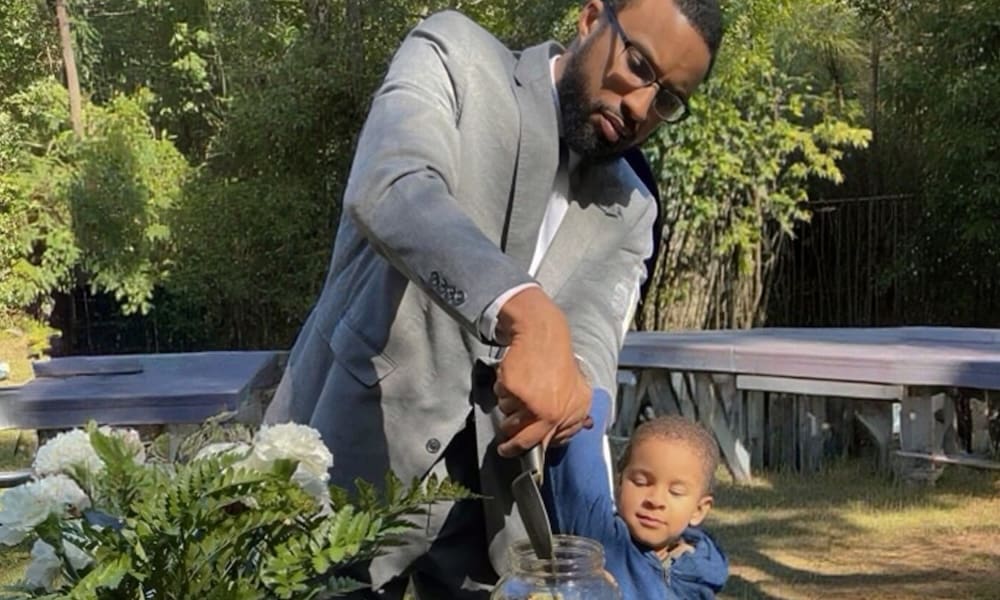
In Fayette County, some of the most important lessons of Black History Month are found close to home, rooted in the land, institutions, and communities that still exist today, even if their stories have often been overlooked.
Jan Bryant, co-chair of the Fayette County Community Remembrance Coalition (FCCRC), stresses the importance of understanding this local history. For Bryant, Black History Month is not just about remembering injustice; it is about recognizing resilience, leadership, and the ways Black residents shaped Fayette County despite being excluded from public systems. When schools and institutions failed Black families, communities stepped in. Black churches became centers not only of worship but also of education. Flat Rock (AME) Church in Fayetteville and Holly Grove African Methodist Episcopal (AME) Church in Peachtree City established schools for Black children when the county would not.
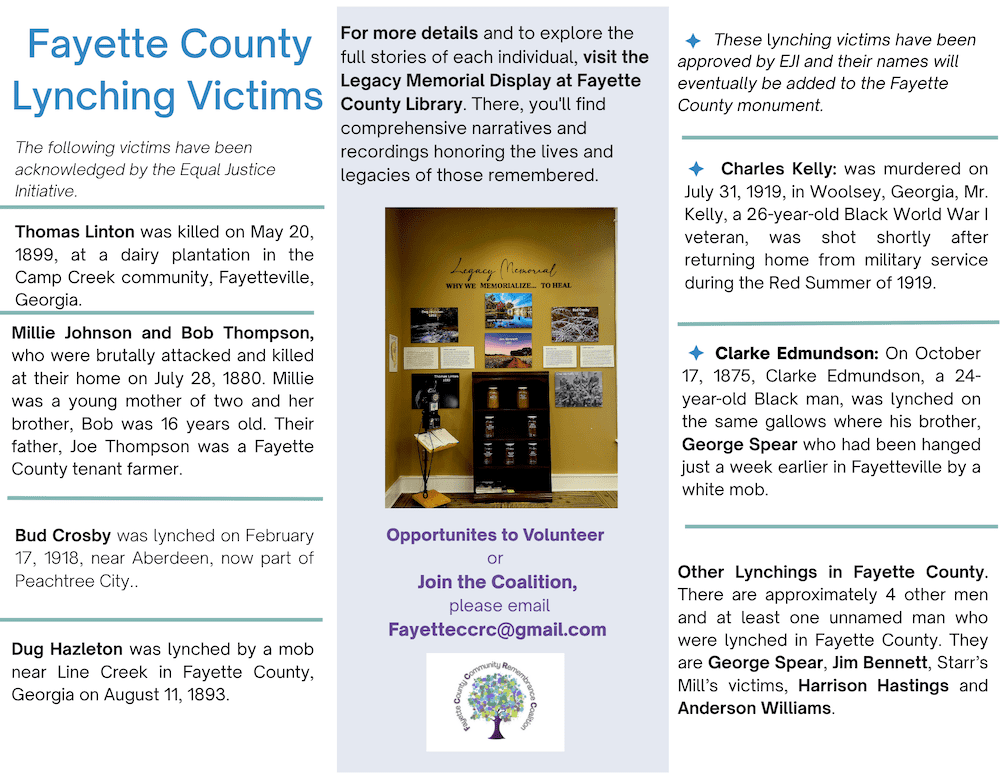
One of FCCRC’s main goals is helping residents understand that racial injustice happened locally. Bryant says, “Racial injustice isn’t just in history books. It happened here to people who lived and worked in this county.” Through research supported by the Equal Justice Initiative (EJI), FCCRC has documented multiple lynchings in Fayette County, with more cases still under investigation. Individuals memorialized include:
- Clarke Edmundson — October 17, 1875, Fayetteville, GA
- George Spear — October 10, 1875, Fayetteville, GA
- Millie Johnson — July 28, 1880, Fayette County/Clayton County, GA
- Bob Thompson — July 28, 1880, Fayette County/Clayton County, GA
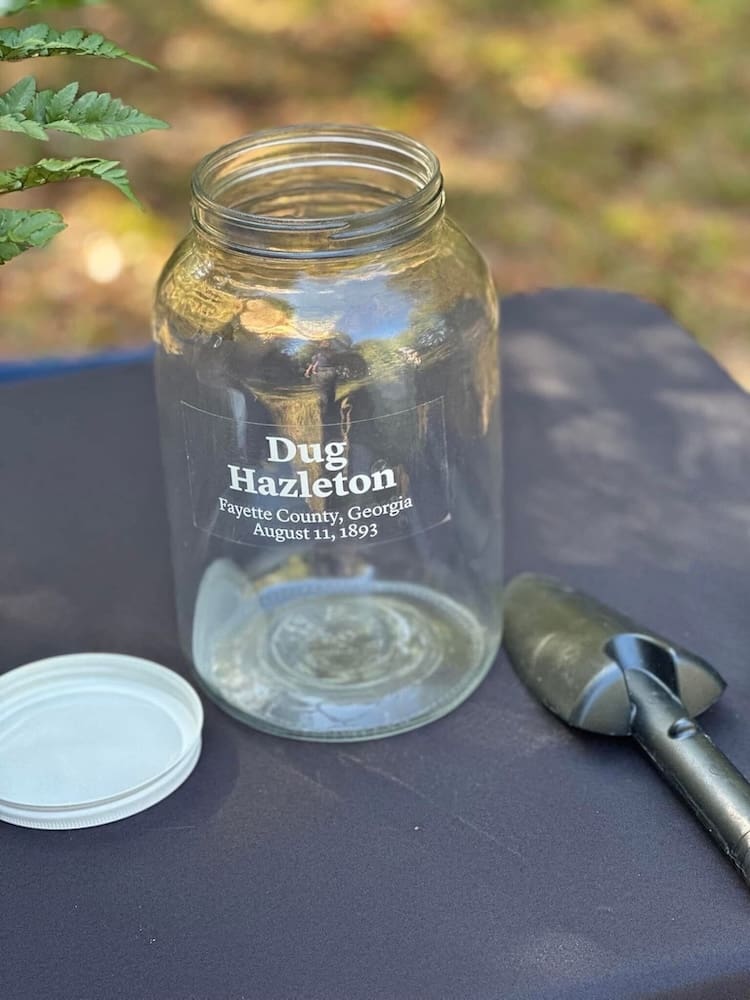
- Dug Hazleton — August 11, 1893, near Line Creek, Fayette County, GA
- Thomas Linton — May 20, 1899, Camp Creek community, Fayetteville, GA
- Jim Bennett — October 15, 1908, Fayette County, GA
- Bud Crosby — February 17, 1918, near Aberdeen (now Peachtree City), GA
- Charles Kelly — July 31, 1919, Woolsey, GA
Additional victims connected to Starr’s Mill, Harrison Hastings, Anderson Williams, and others are still being identified.
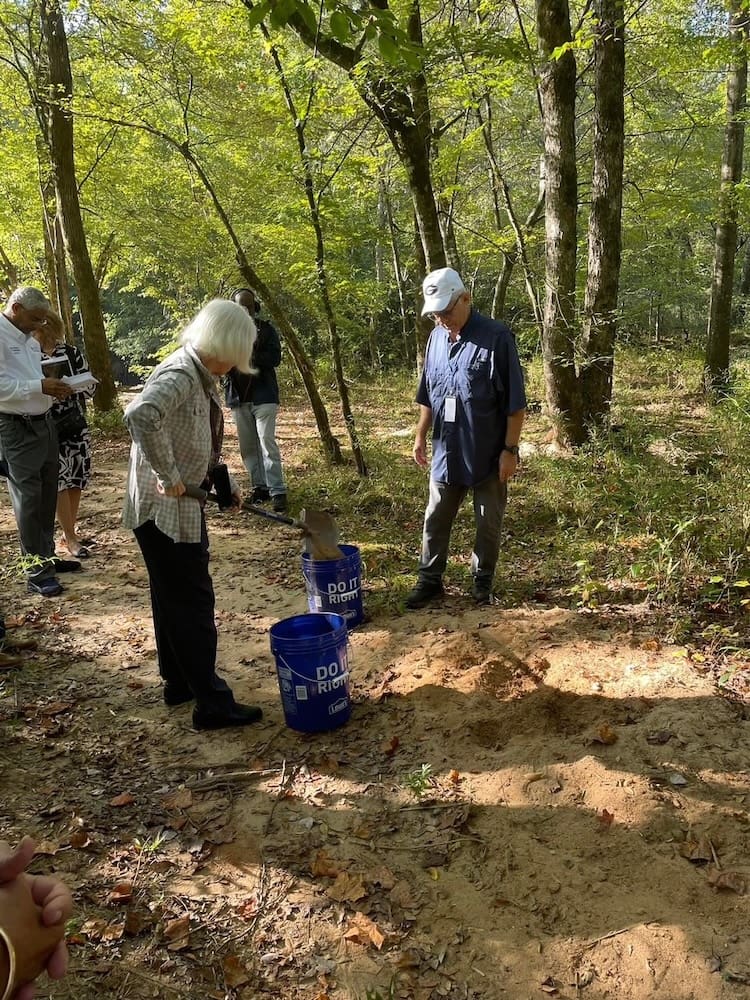
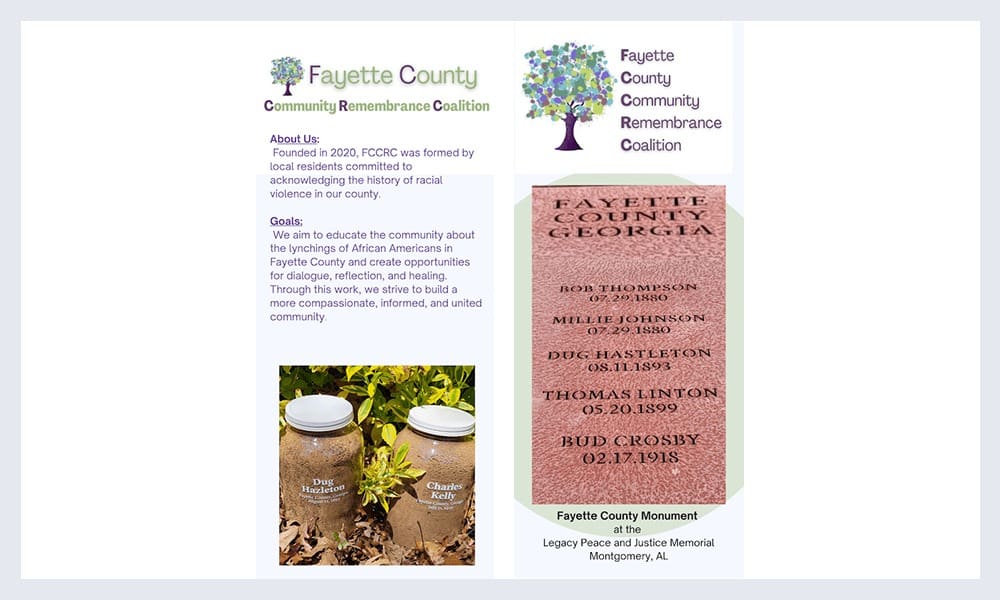
As part of its work, the FCCRC collects soil from locations as close as possible to where individuals were lynched, with each Soil Jar labeled with the victim’s name, date of death, and location. Displaying the soil makes these lives and deaths tangible, emphasizing that these individuals mattered and will not be forgotten.
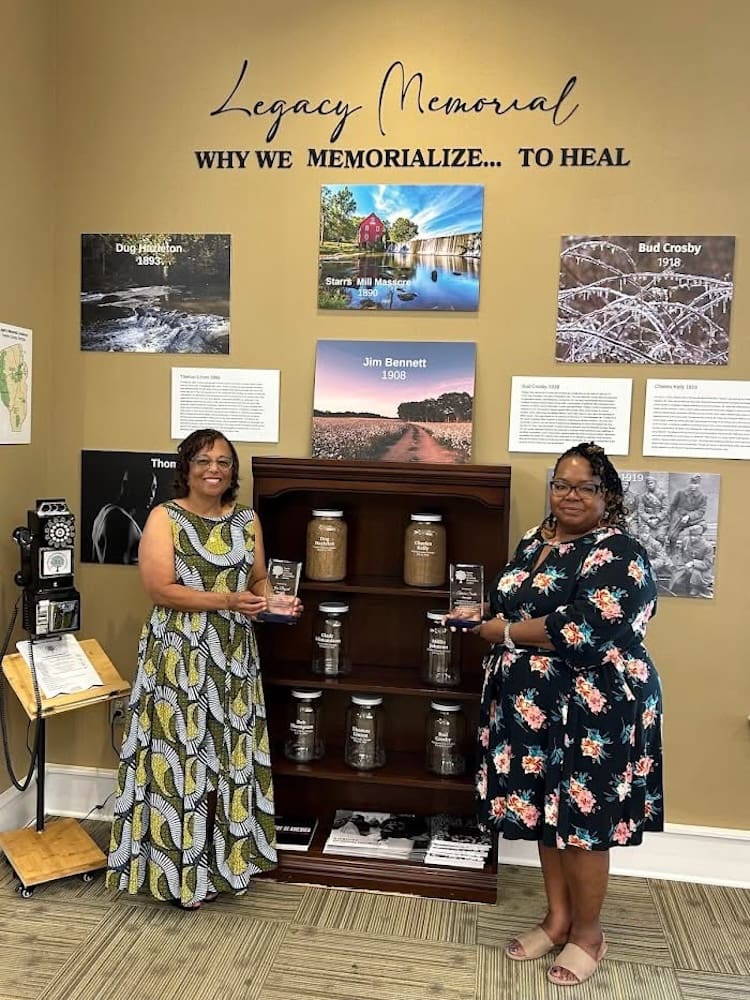
The soil collection process is deeply meaningful, bringing community members together to honor victims of racial terror, as shown in photographs from the ceremonies attached to this article. A Legacy Memorial is currently housed at the Fayette County Library, where visitors can learn more about each individual’s story. FCCRC is also working with local leaders to permanently add the victims’ names to a memorial outside the historic Fayette County Courthouse, planned for installation in spring 2026. While acknowledging the pain these stories carry, FCCRC co-chair Jan Bryant emphasizes their importance: “Remembering these victims is about truth and healing. Naming them helps the community understand how racial violence shaped Fayette County.”
Bryant believes confronting this imbalance is essential for the community to truly learn from its past. She emphasizes, “Black people built much of Fayette County from the ground up and deserve credit for it. The goal is not to erase history but to tell it fully. Educate yourself and know the contributions Black residents have made and continue to make.” Embracing Fayette County’s full history celebrates that resilience and those contributions while shaping a more inclusive future. Remembering those memorialized by FCCRC fosters understanding, healing, and a community defined by truth, respect, and pride. To learn more about getting involved with the FCCRC, please email [email protected].






Leave a Comment
You must be logged in to post a comment.