


 1332
1332 1
1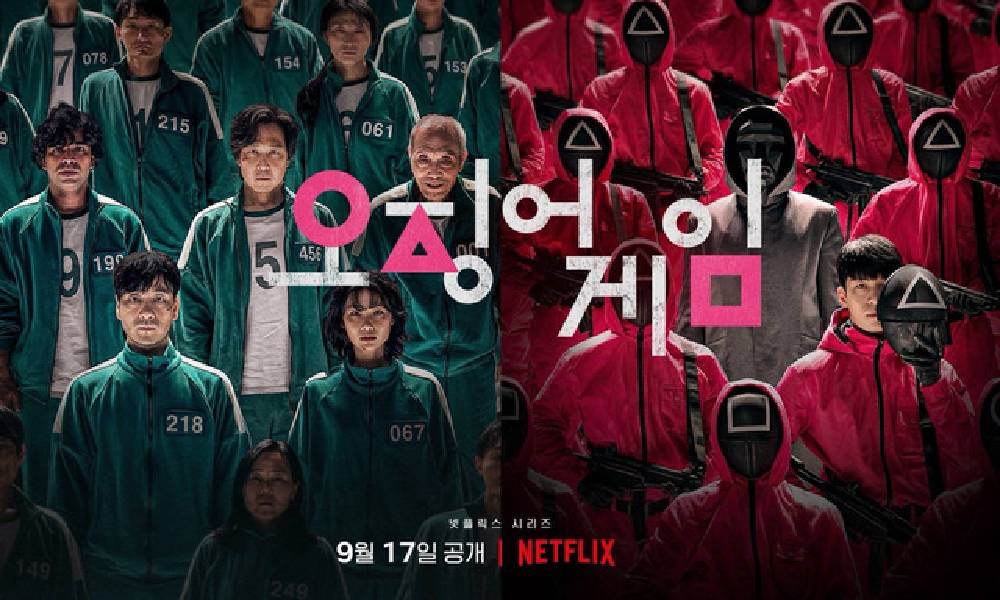
I watch a lot of Korean dramas.
Not in a casual, “I’ve seen a couple” way, but in a way that has required a spreadsheet. A very active spreadsheet. I keep it open on my phone through Google Sheets or on my laptop, depending on which screen I’m already using. If I’m watching an Instagram reel recommending a new Korean drama on one device, I use the other to immediately add it to the list.
The spreadsheet currently has 882 entries.
It tracks what I’ve watched, what’s been recommended to me, and what I’m saving for later. When I finish a drama, I put a deeply satisfying capital X in the next column. Some shows have four Xs, because I’ve watched them four times. That’s not an accident. That’s endorsement.
When I’m not running The Citizen, taking care of clients at my marketing agency Dirt1x, serving on a nonprofit board, or interacting with my family, there’s a very good chance I’m watching a Korean drama—more commonly referred to as a K-drama. I’m also a natural night owl, which means the “just one more episode” problem has plenty of time to become a real commitment. This is not a casual hobby. This is an organized, documented obsession.
If you’ve never watched a K-drama before, that spreadsheet probably doesn’t mean much to you yet. But it will, because K-dramas are not like most American television—and once they get under your skin, they tend to stay there.
For the uninitiated, K-dramas are structurally different from most American series. American dramas typically stretch across multiple seasons and often end with a cliffhanger designed to make sure you come back next year. K-dramas usually don’t work that way. Most tell a complete story in about 16 episodes. Beginning, middle, and end. Emotional resolution included.
This matters to me more than I realized at first, because my brain and cliffhangers are not friends.
My husband can tell me the same joke multiple times, because I don’t reliably store that information. Plot details behave the same way. If a season ends and the next one doesn’t arrive for a year, I will have forgotten who everyone is, why they are mad at each other, and why any of it mattered in the first place. K-dramas respect this limitation. They finish the story while I’m still fully invested.
Another practical bonus: because of Korean television standards, most K-dramas are relatively clean. Unless Netflix funded it, there’s usually not much graphic sex or language. That’s not the main draw for me, but it doesn’t hurt.
What is a major draw is that watching a K-drama feels like visiting somewhere interesting without leaving my house. After hundreds—truly, hundreds—of dramas, I now understand a surprising number of Korean phrases. If I made even a modest effort to formally learn the language, I’d probably pick it up much faster than I expect. But I’m not trying to give myself homework in the middle of my entertainment. I’m already fluent in subtitles.
Because there are subtitles, I can’t multitask. I can’t half-watch while answering emails. It forces a kind of focus I used to only get at the movie theater—when your phone stays dark and your attention stays put. Now I get that same mental break from my couch.
I started watching K-dramas during the pandemic, like many people who were stuck at home and desperate for distraction as the world felt increasingly unsteady. I got hooked quickly. I made a Facebook post about the very first one I watched, and friends chimed in with recommendations. One of those recommendations came from a slight acquaintance.
That acquaintance is now one of my very best friends.
Out of K-dramas, I got Angie—an amazing attorney who lives in Tyrone and someone I talk to multiple times a week. We love K-dramas most, but we also watch shows from Thailand, China, and Japan. We text constantly, trade recommendations, and go out to dinner together. This is not just a virtual friendship. What started as shared entertainment turned into shared life: family updates, celebrations, hard moments. Real friendships can come from very unexpected places.
I’ve also picked up a new party trick. When someone tells me they’ve never watched a K-drama, I ask what kind of TV they usually like and then recommend one they might enjoy. Romantic comedies, thrillers, workplace dramas, fantasy, zombies—there is almost always a K-drama that fits. You don’t have to take notes. You don’t have to understand the culture going in. You just have to be willing to read subtitles and let the story take you somewhere else for a while.
If you’ve never watched a K-drama before, Netflix is the easiest place to begin. Here are a few of my go-to recommendations, especially for people who want an escape from their usual viewing habits. I’ve even suggested some of these to a friend who had recently lost her husband. K-dramas can be immersive in a way that gently pulls your attention somewhere else, without demanding too much of you at once.
If you love shows like The Wonder Years or This Is Us, try Reply 1988. It has brilliant acting, a warm ensemble cast, deep friendships, and a tender, earned romance. If you love it—and many people do—next watch Hospital Playlist, by the same creators. It’s a medical drama that balances humor, heart, and long-term friendships beautifully. From there, Resident Playbook, a spinoff focused on OB/GYN residents, is well worth your time.
If you love The Walking Dead and all things gore, start with the Korean zombie film Train to Busan. Then move on to All of Us Are Dead, a high school-centered zombie drama that is tense, emotional, and surprisingly character-driven.
If you like fantasy with a bit of time travel, one of my all-time favorites is The King: Eternal Monarch. It features parallel worlds, an evil villain, a compelling royal lead, and an epic romance that unfolds on a grand scale.
If you need encouragement to succeed despite difficult circumstances—and enjoy a workplace romance—try Romance Is a Bonus Book. You don’t have to love books to enjoy it, but it does feature the publishing industry. It’s triumphant, funny, and deeply satisfying to watch.
If you like action and don’t mind violence, Squid Game went viral for good reason. The seasons do end with cliffhangers, but all of them are now out, so they can be binged straight through. There are also relatively few episodes per season, which makes it an easy commitment for skeptical first-timers.
Perhaps you’re reading this and thinking, Yes, but I’ve already watched everything on Netflix. If that’s the case—and I see you—the next subscription to get is Rakuten Viki, which is packed with Asian dramas. The very first show to watch there is Lovely Runner, my all-time favorite K-drama. It has a swoony romance, lots of humor, and a twisty time-travel plotline. It has four capital Xs on my spreadsheet, and I’m thinking about watching it for a fifth time, because it doesn’t get old for me.
I didn’t set out to become this person. I didn’t plan the spreadsheet. I didn’t anticipate the capital Xs, the repeat watches, or how deeply attached I’d become to stories told half a world away. But here I am—happily immersed, emotionally invested, and occasionally very tired because “just one more episode” is a lie I continue to tell myself at 2 a.m.
If obsession is measured by joy, connection, and the ability to step briefly out of your own world and into another, then yes—I’m completely obsessed.
And honestly, I’m fine with that.









Leave a Comment
You must be logged in to post a comment.