


 1460
1460 0
0
What is up, my Eaters! I hope you are all well. This week we’re talking collard greens and all I learned from an Old Southern Black Lady. Before we get into that, I hope your Thanksgivings were delicious. Ours was pretty low-key this year, but the food did not disappoint.
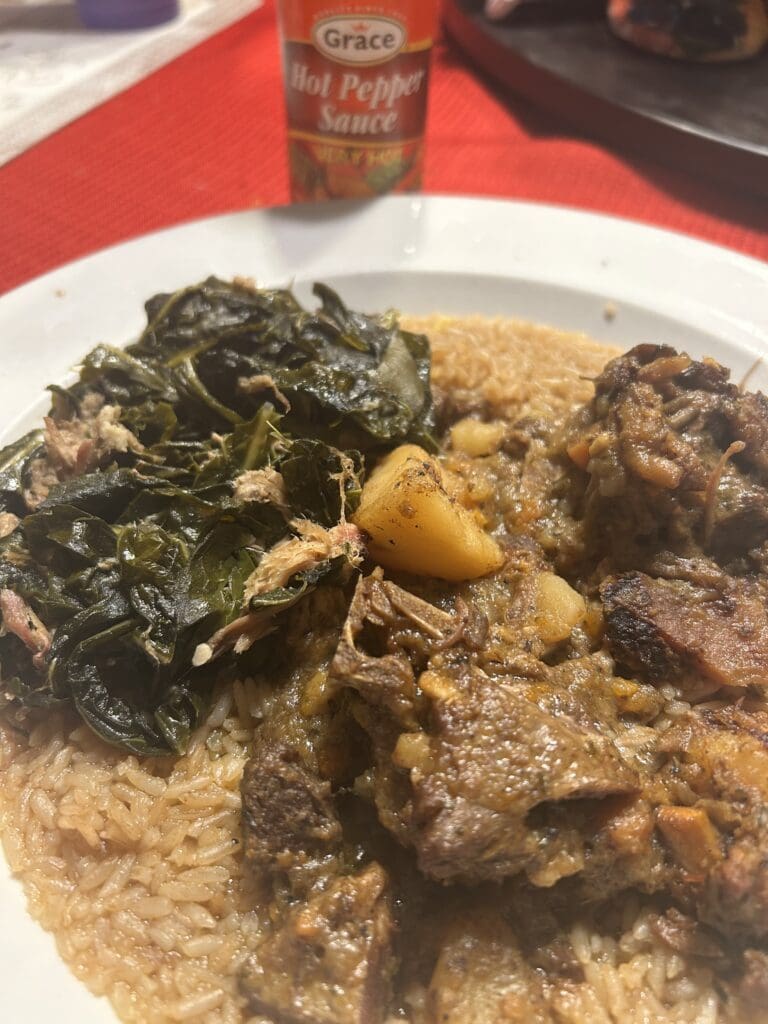
Our oven broke the night before, so it was a blessing that the menu didn’t include a roasted turkey or ham. Instead, we started with an appetizer hour of our favorite finger foods in honor of my dad, who always loved a good appetizer platter. For the main meal we had curried goat that braised on the stovetop all day, served with Jamaican rice and peas and steamed vegetables. For dessert, we had my wife’s grandmother’s green Jell-O recipe. Yes, Jell-O salads are still alive and I am grateful.
When I think about the food fundamentals of the American South, there are few ingredients more pivotal than collard greens. Greens of all kinds show up on the table, but chief among them are collards. To some, they represent generations of history and tradition. To others, they just taste good. Wherever you fall, collard greens are the undeniable king of greens in my opinion.
I love collards because they remind me of my parents and where I come from. Growing up, collards were a staple in our garden. Many meals were accompanied by a side of sautéed collards with garlic and onion. I know that’s a far cry from the stewed greens of the South, but trust me—the deliciousness was on 100. I also love collards for the history and tradition they carry for so many Southern families.
Recently, I was hired to make some collards. I was told the customer wanted “greens” that tasted like they were cooked by an old Southern Black lady. I am not an old Southern Black lady, but I was referred for the job and I was happy to take it.
Years ago, my wife and I owned a Caribbean and soul food restaurant called Divine by Design. The menu had all the Southern fare you’d expect, including collard greens. One day I was in the kitchen prepping greens when I noticed one of my employees watching me. She was an older Southern Black lady named Linda, and I could tell by the look on her face that she did not agree with whatever I was doing to those greens.
So I asked her to show me how she made them. She agreed, and I was overjoyed. Linda didn’t know that I had literally wished, more than once, that I had an old Southern Black lady to teach me how to make greens. Now I did, and her name was Linda.
She spent that afternoon teaching me how to make greens the way she had watched her mother and grandmother make them. For weeks afterward, she watched, tasted, and critiqued every pot I made. One day she finally gave my greens her full approval. That moment was huge for me in learning Southern cuisine. It’s been years since Linda’s masterclass, and I still cook my collards the way she taught me.
Linda was an answer to prayer. I learned so much from her in a short time. She gave me her final approval and then she quit. I never saw her again. It was as if the Lord sent Linda just to teach me how to make her greens. Every time I put a pot of collards on the stove I still feel Linda with me.
This week, I’m sharing what Linda taught me about making collard greens. Whether you’re a pro or a novice, these tips will help you make a pot of greens worth talking about.
Tips for Linda’s Greens
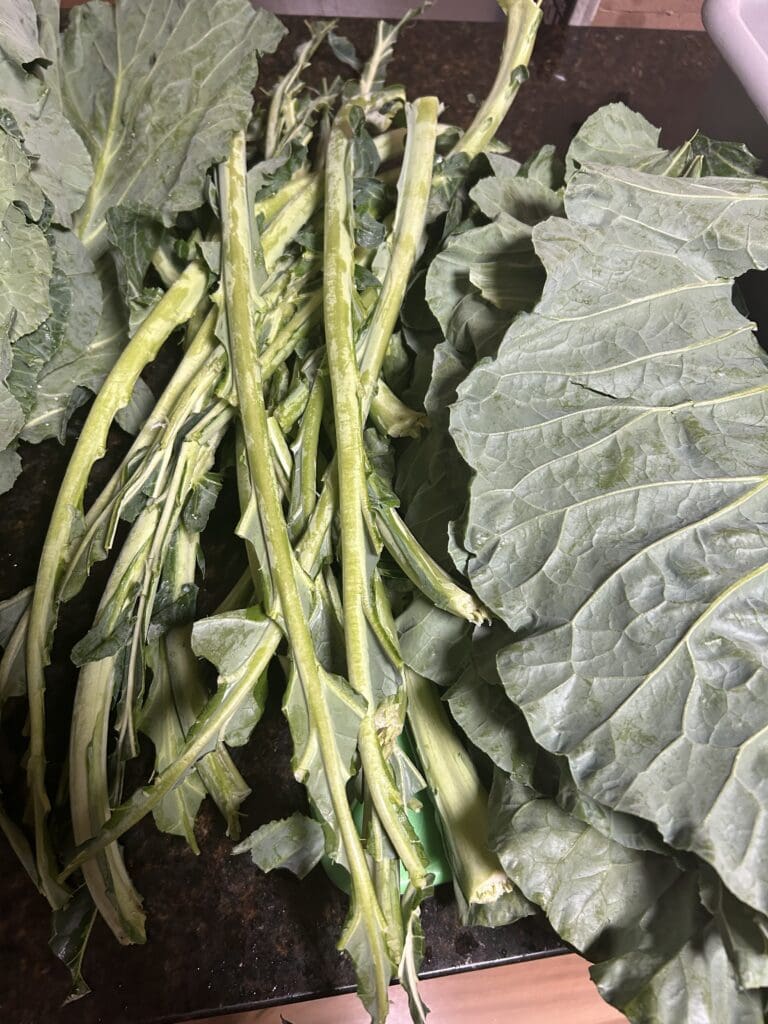
- Only use good greens. I get mine from local farmers markets or reputable food stores. You can also grow them yourself.
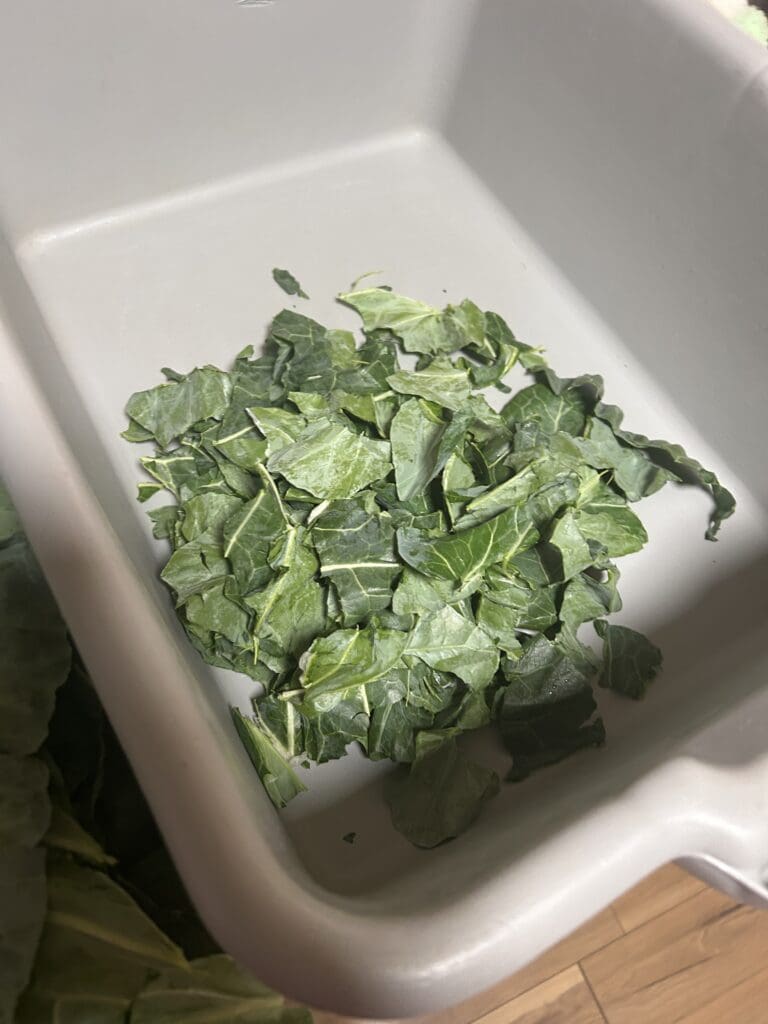
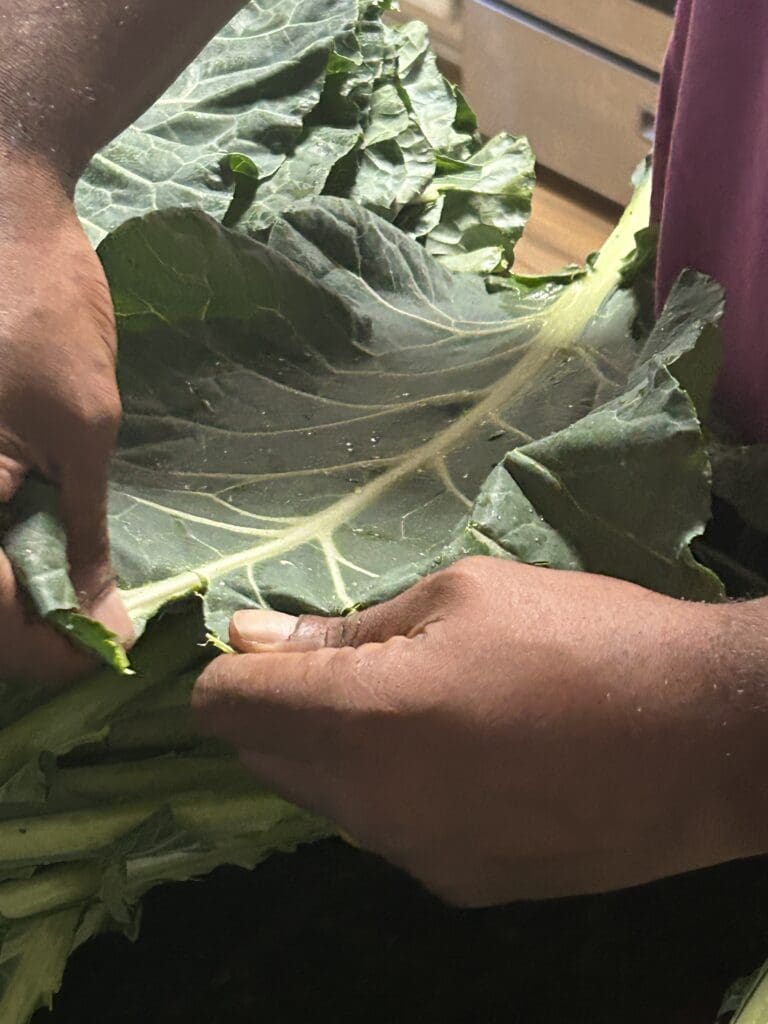
- Tear your greens by hand. Don’t put a knife on your greens. I can’t explain it, but it makes a difference.
- Wash your greens—wash them well. No one wants dirt in their food.
- Season them simply, but season them. For us, that means one onion cut in half, garlic, black pepper, red pepper flakes, smoked meat (optional), and kosher salt. Your greens shouldn’t be overpowered, but they should taste peppery.
- “Don’t put no water on your greens!” I still hear Linda saying this. If you want the greens people talk about and crave, don’t ignore it. The key to great pot liquor is letting the collards cook in their own juices.
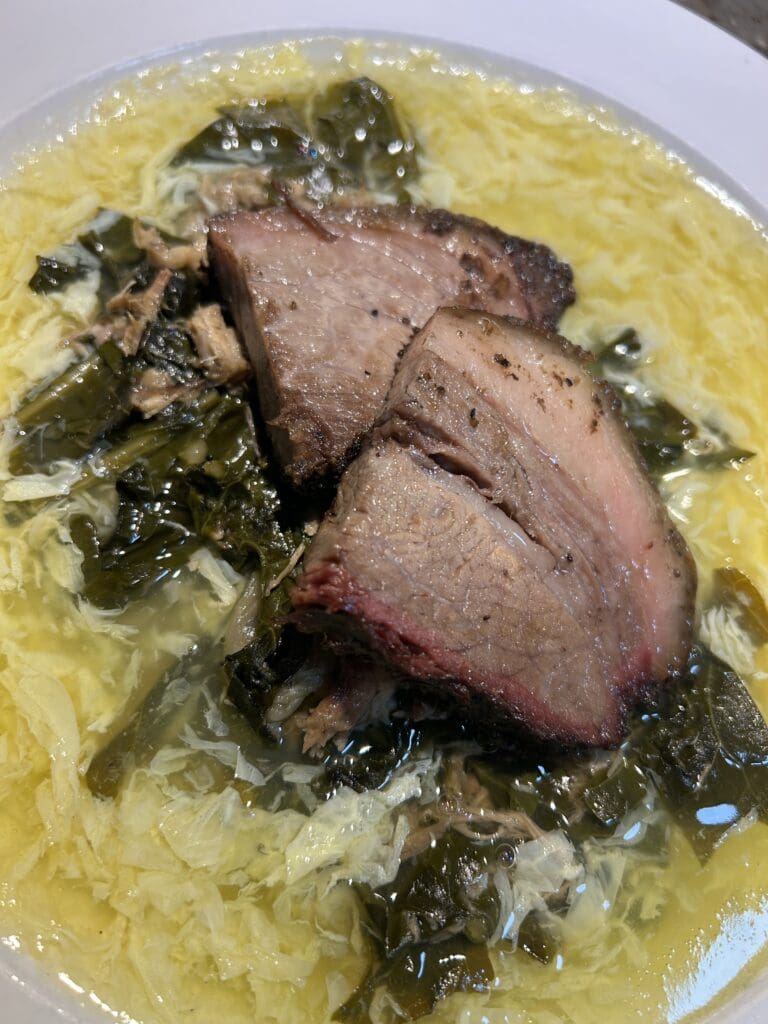
- Start low and slow. Once the greens are in the pot, set the heat low and cover. Stir every 15–20 minutes until they cook down and you can see the pot liquor form. Then you can turn the heat up to a gentle simmer to start tenderizing the greens. This is when you can add smoked meat or a little stock if you’d like.
- Cook them until they’re easy to chew. Don’t rush this part. Tender collards are loving collards.
I already had Linda and her collards on my mind before this recent customer ever called, so when I got the order it felt serendipitous. As I stood in my kitchen tearing leaf after leaf, I thought about Linda and her mother and her grandmother. I thought about the hours they must have spent tearing collard leaves together over a lifetime—sharing laughter, stories, history, and most importantly, the ways of their kitchen and their greens. I also thought about all the people in all the houses, all across the South, and beyond who share the same testimony as Linda and the women who came before her. This holiday season, I am grateful for that old Southern Black lady and her collard greens. I’m grateful that, for that moment in time, she brought me into her story and her legacy. And I’m grateful to have this platform to now share Linda, her greens, and a small piece of that legacy with each of you.
Eaters, have an amazing week. Make and eat all the collards this holiday season. Remember Linda and reflect on and consider your own stories and legacies. Make your own traditions and maybe just maybe teach someone else a collard trick of your own. I look forward to being with you again. Remember, you can always come see me or my team at the Peachtree City Farmers Market every Saturday.






Leave a Comment
You must be logged in to post a comment.