


 6493
6493 2
2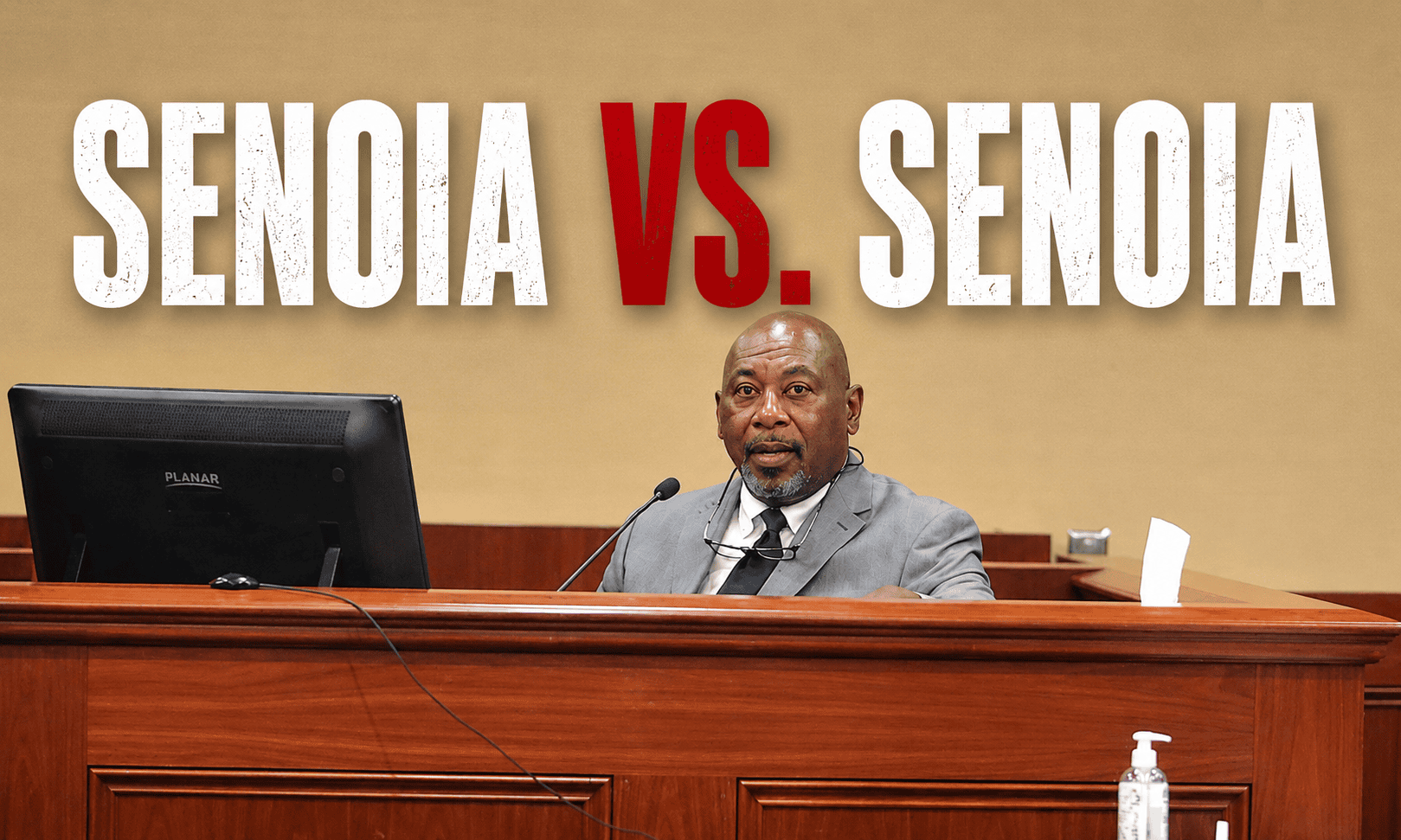
Editor’s Note: A city suing three of its former leaders is almost unheard of. Over the coming weeks, The Citizen will examine the lawsuit, testimony, public records and competing narratives behind one of the most significant legal disputes in Senoia’s recent history. Rather than simply recount courtroom proceedings, this series will explore how the conflict developed, what both sides contend, what the evidence presented so far shows, and what questions remain for the courts to decide.
Cities rarely sue the people who once led them.
Yet that is exactly what has happened in Senoia, where the city has filed a sweeping civil lawsuit against former City Manager Harold Simmons, former Mayor Dub Pearman and former Mayor and former Assistant City Manager Jeff Fisher, who now serves on the Coweta County Commission.
The City alleges Simmons received unauthorized raises while Pearman and Fisher approved or enabled actions that violated the city charter and their fiduciary duties. Much of the complaint against Fisher centers on personnel memoranda he signed while serving as assistant city manager that the City contends exceeded his authority. All three deny wrongdoing.
Last week’s two-day hearing in Coweta County Superior Court was not about deciding whether those allegations are true.
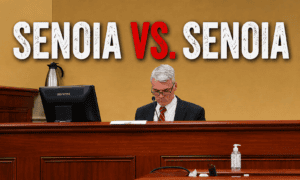
Instead, Judge Jephson Bendinger is considering whether the three former officials are protected by official immunity—a legal doctrine that could end much or all of the lawsuit before it ever reaches a jury.
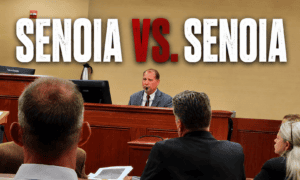
The hearing drew a should-to-shoulder packed courtroom. Former mayors, current and former council members, family members of the parties, attorneys, and members of the public filled Courtroom C on the third floor of the Coweta County Justice Center for two days of testimony last Wednesday and Thursday. The courtroom was so crowded that the bailiff offered The Citizen his seat after every bench had been filled, while additional spectators were turned away at the door.
But after listening to every witness, interviewing the principals and attorneys on both sides before and after the hearing, and examining the documents at the center of the dispute, the testimony suggested this case is about much more than disputed raises.
It is about how the people responsible for running City Hall came away with fundamentally different understandings of how the city manager’s compensation was approved, documented and reviewed.
Judge Bendinger made clear from the outset that his task was not to decide the entire lawsuit.
“This is an evidentiary hearing on immunity,” he told attorneys before testimony began.
At the conclusion of the hearing, Bendinger outlined a briefing schedule that will stretch the process about three months. After the transcript is completed, the City will have 30 days to submit its written brief, followed by 30 days for the defense to respond and an additional 15 days for the City’s reply before the judge begins preparing his ruling.
Before adjourning, Bendinger reminded both sides what he expects when those briefs arrive.
“We’ll look at facts. We’ll look at the law. We’ll make a decision, whatever it is,” he said, cautioning attorneys against sensational arguments that stray from the evidence.
Following the hearing, Mayor Scott Tigchelaar said the proceeding addressed only one issue.
“The purpose of the hearing was for them to prove immunity,” he said, emphasizing that the hearing was not intended to determine whether the City’s allegations ultimately succeed.
That distinction is important because, regardless of how Judge Bendinger rules, additional litigation could still follow if immunity is denied.
The hearing revealed two very different views of how Senoia’s government functioned.
Attorneys for the City argued Simmons received compensation beyond what the city charter allowed without the required approval of mayor and council, and that Pearman and Fisher either approved or failed to stop those actions while serving in leadership roles.
The defense presented a very different picture.
Through testimony from Simmons, Pearman and Fisher, defense attorneys described a budgeting process that evolved over many years, spanning multiple mayors and city managers. They argued compensation decisions were reflected in annual budgets presented to council, discussed during public budget workshops and ultimately approved through the city’s budget process.
At one point, Judge Bendinger interrupted Simmons’ testimony to better understand exactly how the former city manager believed those approvals occurred.
“That happens at open meeting, is what you’re saying?” Bendinger asked.
“Three times,” Simmons replied, explaining that each year he presented his previous salary, discussed the proposed budget in public meetings, asked whether council members had any questions, and that the council ultimately approved the budget by resolution.
Whether that process satisfied the requirements of the city charter is one of the central questions dividing the parties.
Former Mayor Jeff Fisher testified that Senoia’s budgeting process had remained substantially consistent through multiple administrations, while Pearman’s testimony reflected a similar view of where responsibility rested.
Attorney Chris Webb questioned why, during a contentious November 2025 council meeting, Pearman did not step in when council members challenged Simmons about salary increases.
“Did you explain that to the council during this meeting?” Webb asked after Pearman testified that Simmons’ compensation had been included in the annual budget.
“I expect them to do their jobs,” Pearman replied.
Pressed further, Pearman added, “Simmons can hold his own ground. I thought he was able to explain whatever he needed to explain.”
Webb countered that Simmons had not answered the council’s questions that night.
That exchange highlighted perhaps the most significant question to emerge from the hearing.
Not simply whether raises occurred.
But who bore responsibility for ensuring everyone understood them.
Throughout two days of testimony, the City’s attorneys argued executive compensation required clearer authorization and oversight under the charter.
The defense argued elected officials received the information they needed through the budget process and had a responsibility to ask questions if they did not understand what was presented.
Although both sides spent two days presenting testimony about budgets, salaries and city government, attorney Steve Greene said the immunity hearing ultimately turns on a much narrower legal question.
“For Harold to demonstrate immunity, he has to show he had the authority to give himself pay increases, that authority qualified as discretionary, and that by giving himself pay increases at his sole discretion, that was not corruption or wrongdoing,” Greene said following the hearing.
Greene argued the City’s position is that the defendants acted outside the authority granted by Senoia’s charter, meaning the court need not even reach the remaining elements of the immunity analysis.
Defense attorney Chuck Boring said the law starts from the opposite presumption.
“Once we’ve asserted official immunity, the burden is on the plaintiffs to overcome it and show that we are not entitled to official immunity,” Boring said. “The default is that if the alleged acts happened while my clients were acting in their duties as public officials, then they are immune from suit, with very specific exceptions.”
Those competing legal theories will ultimately be weighed by Judge Bendinger as he considers whether the defendants are entitled to official immunity.
His decision will not determine whether every allegation in the lawsuit is true or false. It will determine whether the lawsuit itself may proceed.
Whatever that ruling ultimately is, the hearing offered one lesson that reaches beyond this lawsuit.
Maybe the biggest lesson from two days in court wasn’t about who was right. It was that too many people assumed someone else was paying attention.
Council should have known what its city manager was being paid and made sure his performance reviews happened. If that wasn’t happening, the city manager should have made sure those conversations took place.
Judge Jephson Bendinger will decide whether the former officials are protected by official immunity. But whatever he ultimately rules, every city deserves a system where questions this important don’t go unanswered for years.


Leave a Comment
You must be logged in to post a comment.