


 5596
5596 0
0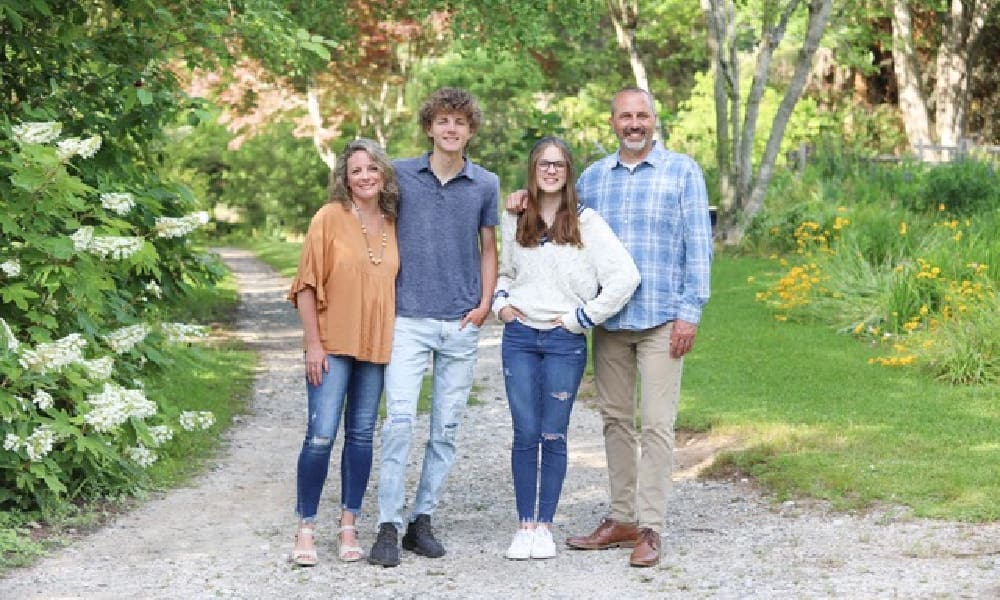
Mason Sells collapsed during a soccer game and never got back up. Now, a Georgia bill bearing his name aims to make sure others do.
The Mason Sells AED Coordination Act, which passed both chambers of the Georgia legislature unanimously this week, would connect the locations of automated external defibrillators (AEDs) with 911 systems — helping bystanders find and use the devices in the critical first minutes of a cardiac emergency.
A moment that changed everything
Sells, a Fayetteville resident, Trinity Christian School graduate, and business major at Mercer University, was playing in an intramural soccer game on September 23, 2024, when he was struck in the chest with a ball and collapsed.
“So what happened to Mason is something called commotio cordis, or a concussion of the heart,” his father, Scott Sells, said. “He was hit in the chest with a soccer ball … and his heart went into vfib, and he collapsed on the field.”
The condition disrupts the heart’s rhythm at a precise moment, sending it into ventricular fibrillation — a state where it can no longer pump oxygenated blood.
Without immediate intervention, survival is rare.
“When you have a sudden cardiac arrest outside of a hospital, you have less than 8% chance of survival in the first place,” Sells said.
But that outcome can change quickly with access to an AED.
“If an AED is placed on the chest within one minute, the statistics say that it’s a 90% success rate,” he said. “After three minutes … it’s 60%. But after that third minute, it goes down 10% each minute.”
In Mason’s case, the first shock came 13 minutes after he collapsed.
“There was just no chance,” Sells said.
Closing the gap between emergency and response
The legislation named in Mason’s honor is designed to close that gap — the minutes between collapse and care that often determine whether someone lives or dies.
Under the bill, businesses, schools, and other entities with AEDs would register their locations with 911 systems. Dispatchers could then direct callers to the nearest device during an emergency.
The bill also expands training for 911 operators, including how to guide callers through CPR and AED use over the phone.
“The beautiful thing about an AED is it talks to you. It tells you much of what to do,” Sells said. “But still, many people don’t even recognize what it is or how to use it.”
In many cases, he said, the issue isn’t whether an AED exists — it’s whether anyone knows where it is or how to access it in time.
“If you called 911, and they told you it’s less than 100 feet away, it is literally the difference between life and death,” he said.
A local loss, a statewide response
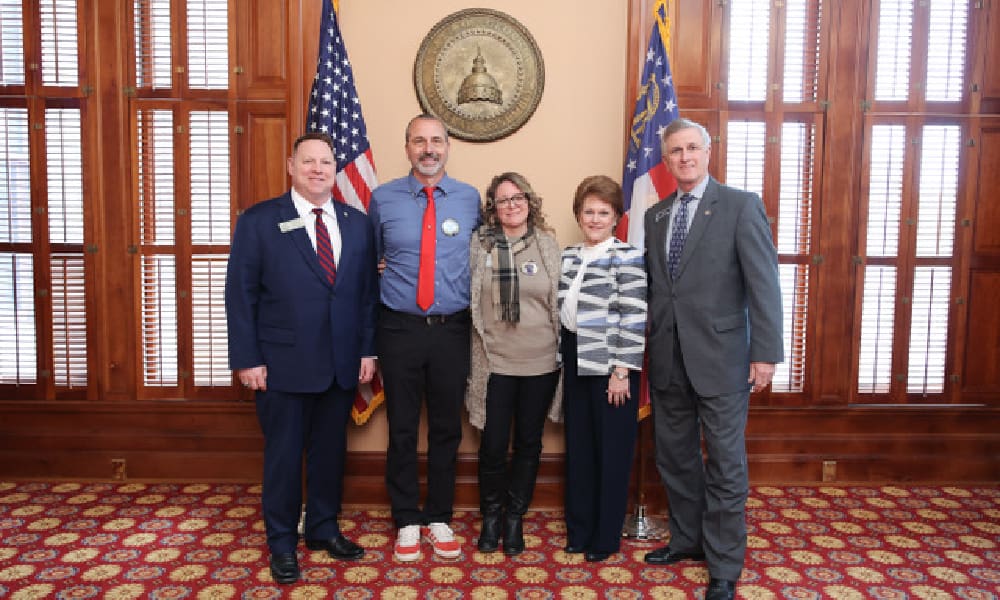
The bill passed both the Georgia House and Senate without a single opposing vote. It was carried locally by State Sen. Marty Harbin and State Rep. Josh Bonner, who represent the Sells family’s community.
“The Mason Sells Act is the result of tragedy turned into advocacy,” Rep. Bonner said. “Scott and Rachael’s tireless efforts will ensure lifesaving measures are available for future emergencies across our state. Mason represented the best of our community and his memory will live on through this important legislation.”
Sells said he has been told the bill is expected to be signed into law by Gov. Brian Kemp.
“I believe this is going to be huge,” he said. “I believe this is going to save a lot of lives.”
Still, he described the moment as complicated.
“The only words I can think of are bittersweet,” Sells said. “I would trade every one of those lives to have my son back.”
More than a law
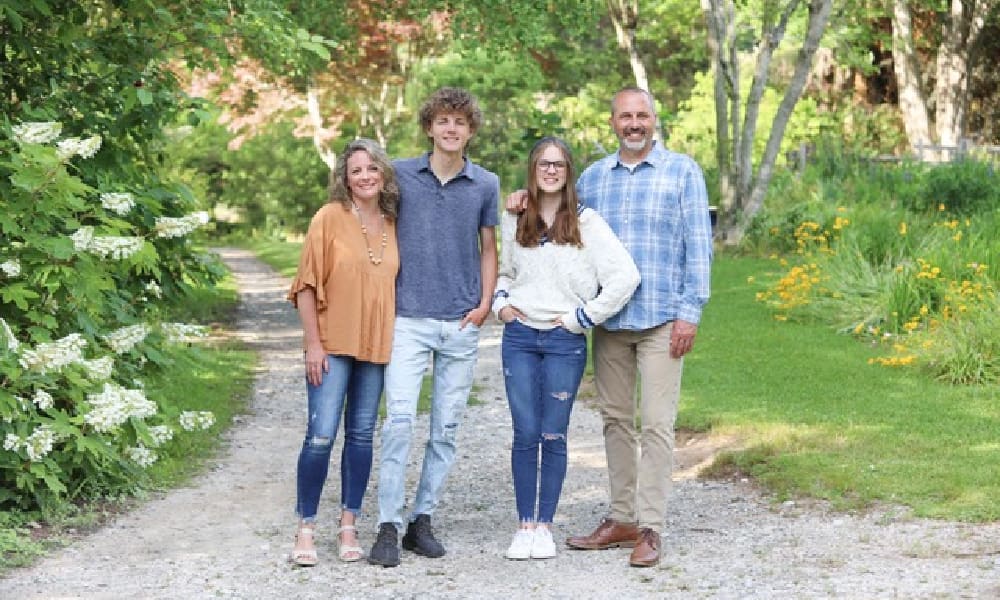
Sells, 50, has lived locally since childhood, himself a product of Peachtree City schools. He and his wife, Rachael, who own and operate a property management business, raised their children in Sharpsburg and Fayetteville.
He described Mason as intelligent, steady, and deeply loyal — someone who built strong friendships across different groups and stayed closely connected to his family.
“He was a family guy,” Sells said.
Now, Sells is focused on making sure other families don’t face the same loss.
He carries an AED in his own vehicle and encourages parents to ask hard questions about safety.
“I’m going to sign my kid up for this sport — do you have AEDs? And if the answer is yes, show it to me,” he said. “It can’t be locked in a cage. It can’t be locked in an office.”
He also has a message for anyone witnessing an emergency.
“If ever in question … call 911,” Sells said. “Every single one of them would tell you that.”
What comes next
Sells said he plans to push for similar legislation in other states and eventually at the federal level.
“I definitely don’t plan to stop here,” he said.
If signed, the Mason Sells AED Coordination Act would take effect in Georgia, creating a system designed to save lives in the moments that matter most.
For Sells, the mission is clear.
“I have to carry on his legacy,” he said. “And now that legacy is going to be established into the Georgia code.”



Leave a Comment
You must be logged in to post a comment.