


 4155
4155 0
0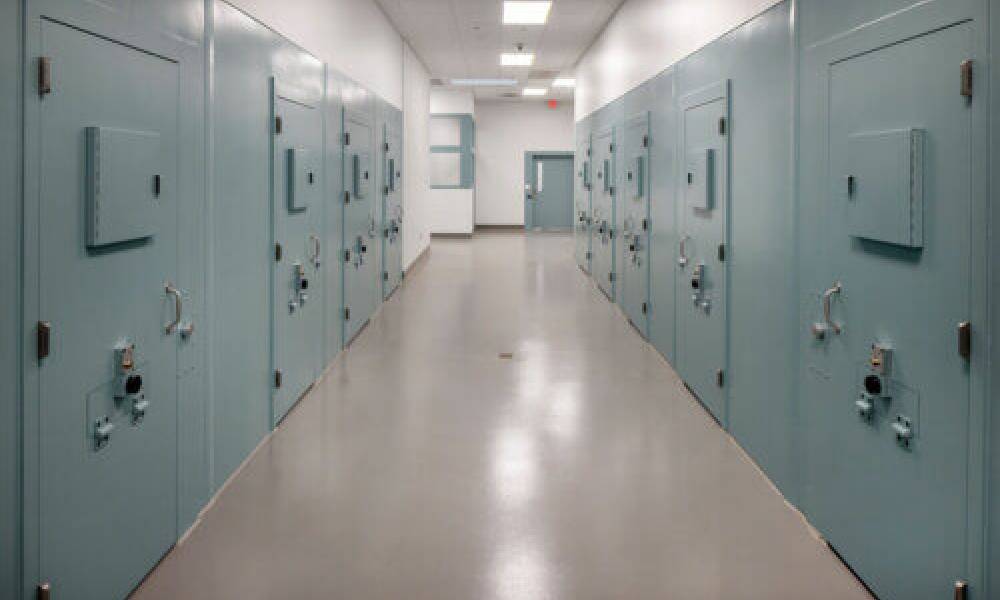
Sheriffs in Fayette and Coweta counties say local jails are housing dozens of inmates with serious mental illness while they wait months — sometimes a year or longer — for evaluation or placement in Georgia’s limited state mental health system.
“We don’t want to be in the mental health business. No, none of us do,” Fayette County Sheriff Barry Babb said during a recent jail tour.
In Coweta County, Sheriff Lenn Wood described similar pressures inside a jail that currently houses 593 inmates and is expanding to a capacity of 645 beds.
Inside the jail: medication, crisis, and refusal
Breana Greene, the Coweta jail’s infirmary director, said about 60% of inmates are medicated for some condition, and roughly 150 are prescribed psychotropic medications. About 200 are receiving psychiatric services, including counseling or medication management.
The jail’s psychiatrist is on site 24 hours a week, and counselors provide about 30 hours of therapy weekly.
“We don’t force medicate,” assistant infirmary director Barbara Walker said, explaining that inmates have the right to refuse treatment. When someone is in active psychosis, she said, they often do not believe they are ill and decline medication.
Coweta’s infirmary currently houses about 40 inmates who cannot be placed in general population because of mental health conditions or vulnerability. Officials said those inmates are housed in more controlled, private rooms with closer monitoring, and many are on suicide watch or require additional observation.
Even with those safeguards in place, jail administrator Major David Hill said risk cannot always be predicted.
Hill said Coweta lost two inmates to suicide last year, both of whom were in general population and were not on suicide watch at the time.
Sheriff Wood said the strain can also affect staff safety. He described a recent incident in which three detention officers were injured during a confrontation involving an inmate disputing medication. All three officers were transported to the hospital with hand and wrist injuries, and one suffered a bite injury, he said.
The “catch-22” in the system
Coweta officials described a recurring problem that can keep inmates in jail longer than expected.
Some inmates are ordered by a judge to receive a forensic mental health evaluation — typically to determine whether they are competent to stand trial. Greene said those individuals may wait months, sometimes more than a year, for a forensic bed to open.
During that wait, an inmate who was stable when the court order was issued may deteriorate, especially if they refuse medication.
If they fall into active crisis, Greene explained, they may not be accepted into a short-term crisis stabilization unit because they are already designated for a forensic evaluation bed. At the same time, they may not be accepted into the forensic unit while in acute psychosis.
“So then we have someone waiting over a year for this forensic bed that’s in crisis,” Greene said.
The result, officials said, is that the inmate remains in jail — sometimes without a completed diagnosis — because there is nowhere else for them to go.
Sheriff Wood said that proving criminal intent can also become complicated when mental illness is involved, further slowing court proceedings while inmates remain housed locally.
Long waits statewide
In Fayette County, Sheriff Babb and jail commander Major Erin Hancock said some inmates remain in jail solely because they are waiting for placement in a state mental health facility.
Hancock said the jail currently has 12 inmates waiting for a state hospital bed, adding that wait times for male placements can stretch up to a year.
Asked how many beds exist statewide for certain court-ordered placements, Sheriff Babb answered, “There’s 100,” noting Georgia has 159 counties — meaning those beds serve the entire state.
Sheriff Babb also described one Fayette inmate who had been waiting three years for state mental health placement — the longest in the jail at the time. That inmate ultimately pleaded guilty and received a 10-year sentence, with credit for the three years already served in jail and the balance on probation, Sheriff Babb said.
Those delays carry financial consequences. Sheriff Babb estimated Fayette’s average cost of housing an inmate exceeds $90 per day.
Coweta estimates its average cost at about $67 per inmate per day, though officials noted that figure fluctuates.
After release: the cycle continues
Sheriff Wood said stabilization inside jail does not always translate to stability outside it, particularly when former inmates struggle to maintain access to prescribed mental health medications.
“The ones that come and we get them stabilized, and they go back out, they’re fine until they can’t get the drugs anymore, and then they’re back in here again,” Sheriff Wood said.
Coweta medical staff said they work with outside providers and recovery groups to help connect inmates to services before release. But they acknowledged that consistent access to medication and follow-up care can be difficult once someone leaves custody.
Officials said the result is a recurring pattern in which untreated mental illness and substance abuse can lead to re-arrest, returning individuals to the same system that is not designed to function as a long-term mental health provider.
A proposed state hospital
The Georgia Senate recently approved a $409 million adjustment to the amended fiscal 2026 budget to fund construction of a new 300-bed forensic mental health hospital. Reports from Georgia Public Broadcasting and WJCL state that approximately 200 of those beds would be dedicated to forensic evaluations and treatment tied to court proceedings.
If approved by the Georgia House and signed by the governor, the facility would be the first new state psychiatric hospital built in decades.
Sheriff Wood said even that would be only a starting point.
“Is one going to be enough. No,” Sheriff Wood said. Still, he called the proposal “a step toward some type of relief that we’ve never had before.”
Now in the House’s hands
The Senate has already passed the budget adjustment. The proposal now moves to the Georgia House of Representatives.
One of Fayette and Coweta’s House members has already signaled his support.
“We have individuals who are incarcerated that have needs well beyond the ability of law enforcement to support,” State Rep. Josh Bonner, R–Fayetteville, wrote in an email. “While the population that will qualify for these beds far exceeds 300, this is a good start to address the issue of mental health in Georgia.”
Sheriff Wood said residents who support the measure should contact their House members.
“Right now, I want them to be contacting their state representatives in the House,” Sheriff Wood said, urging constituents to help ensure the hospital funding remains in the supplemental budget.
Sheriff Wood said the issue affects every county jail in Georgia and encouraged residents to make their voices heard as the House considers the proposal.Residents can find and contact their Georgia House representative through the Georgia General Assembly website at legis.ga.gov.


Leave a Comment
You must be logged in to post a comment.