


 3467
3467 0
0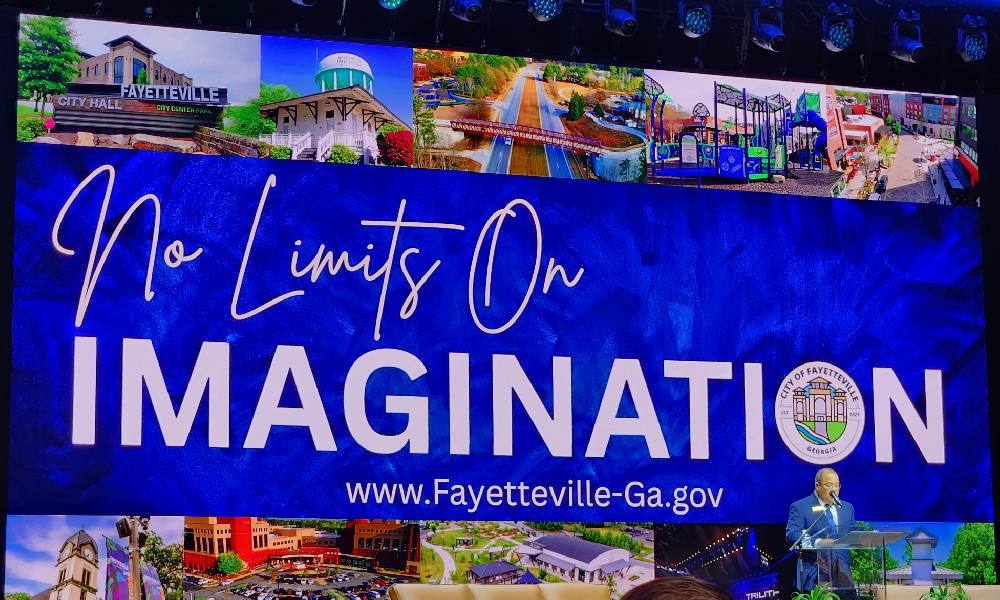
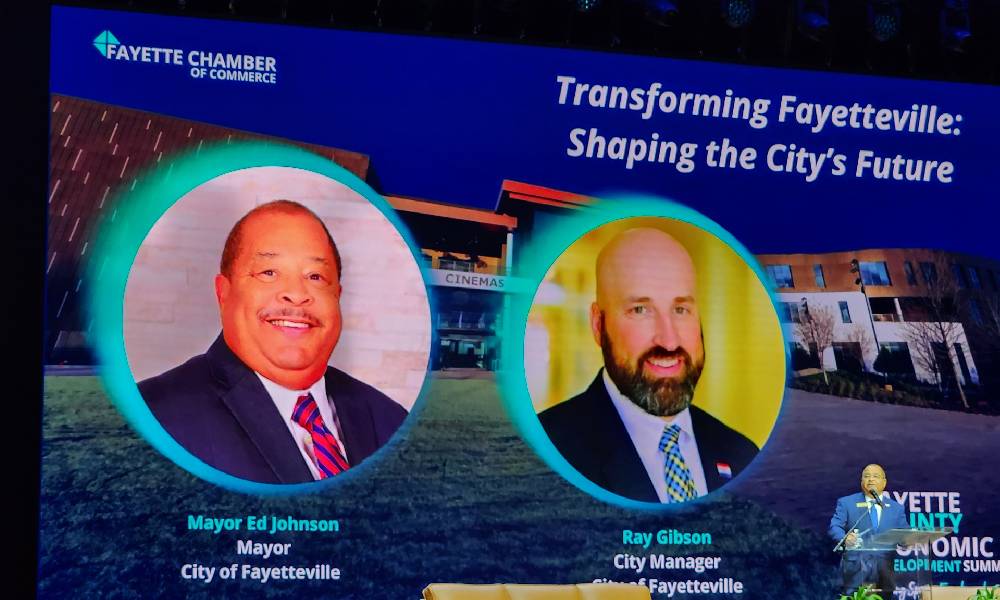
Over the next several weeks, The Citizen will break down how each incorporated city and town in Fayette County plans to grow, build, and compete in a rapidly changing regional economy. The series begins with Fayetteville, where Mayor Ed Johnson and City Manager Ray Gibson outlined a year of major development, downtown expansion, and long-range planning during the Fayette Chamber of Commerce Economic Development Summit on February 12.
Fayetteville leaders described 2025 as a year of measurable growth and 2026 as a turning point when long-range plans begin taking visible shape.
“Where are we as a city?” Johnson said. “Fayetteville stands today as a city grounded in its values and is confident in our direction. We are a community that believes in thoughtful growth, responsible leadership and collaboration.”
“This update is not just about programs. It’s not just about projects or development. It’s about people. It’s about unity, and it’s about the shared commitment to the future of Fayetteville and Fayette County.”
Economic development gains
City departments reported steady activity throughout 2025. The building department issued more than 1,300 permits, supporting more than $10.5 million in construction activity and completing more than 5,000 inspections. Code enforcement resolved more than 1,000 cases, and planning and zoning reviewed nearly 300 development plans.
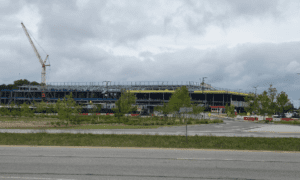
Major projects came online, including the QTS data center facilities and Promenade Parkway Commerce Center, now home to national companies such as Graybar and A1 American. The city also welcomed 388 new businesses.
Fayetteville adopted a new five-year economic development action plan, Reimagining Fayetteville, focused on sports tourism, creative services, retail and hospitality, and technology and professional services. The plan outlines potential initiatives including a city sports complex, attainable housing efforts, a convention and visitors bureau, and a comprehensive beautification strategy.
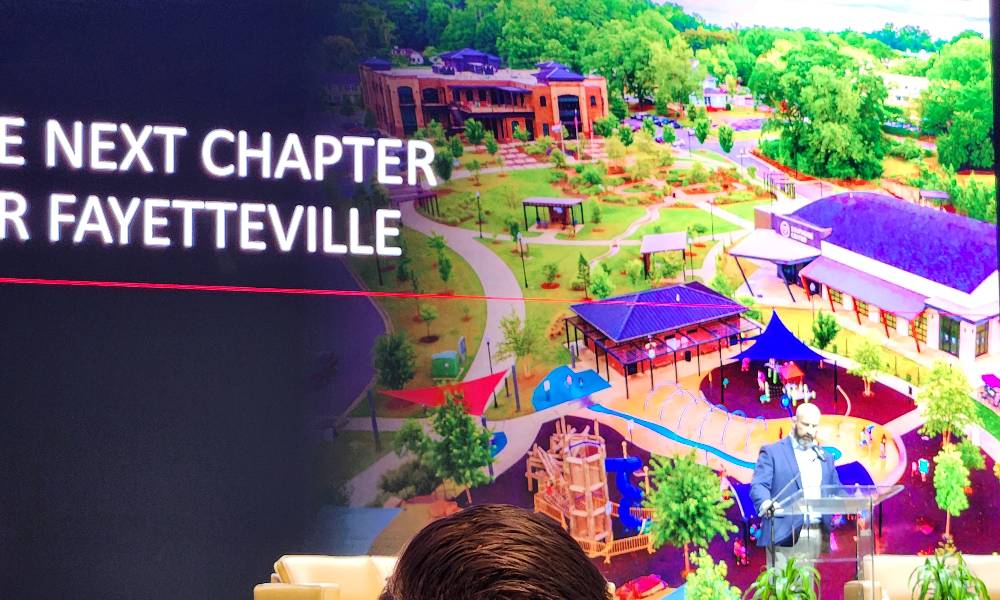
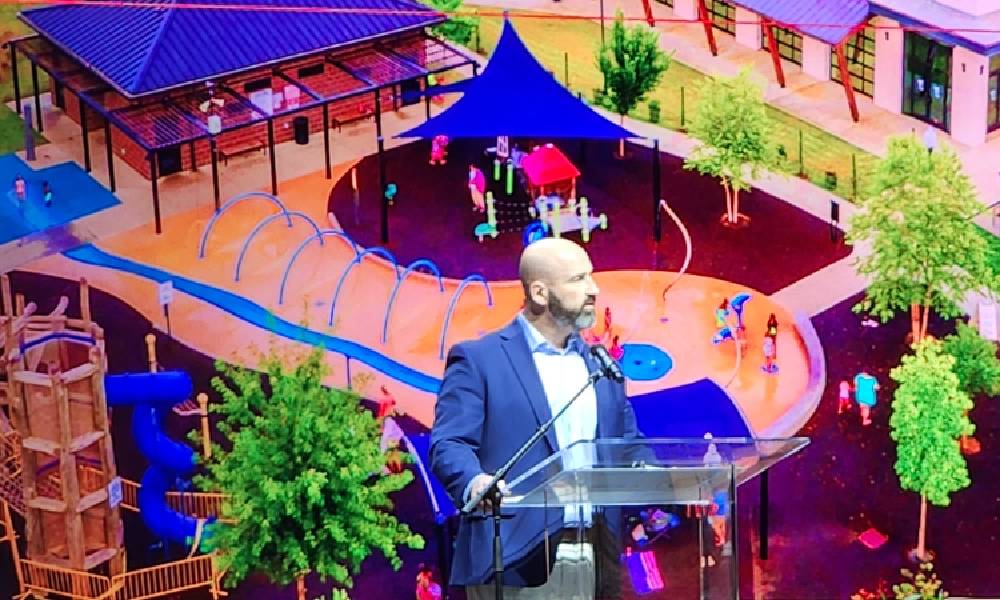
“It’s the year long-range plans begin to physically take shape,” Gibson said. “It’s the year intentional planning becomes tangible progress.”
Sports and entertainment momentum
Gibson pointed to Fayetteville’s emerging role in sports and entertainment, citing the arrival of U.S. Soccer and the continued expansion of Trilith, including Trilith Live.
“These are true game changers for the community,” Gibson said. “Sports and entertainment drives visitation. Visitation drives spending, and spending fuels our local economy.”
He said Fayetteville is positioned to become “a regional destination for sports, entertainment, business and quality of life.”
The city is exploring a sports complex feasibility study and evaluating the creation of a convention and visitors bureau to capture and promote visitor activity.
Downtown redevelopment and housing
Downtown revitalization remains central to the city’s strategy.
Key projects include a proposed 38-acre mixed-use development, Meridian on the Square, and continued growth along Main Street, including the upcoming Rickshaw Thai restaurant.
“I know not everyone likes apartments,” Gibson said. “But this brings energy and foot traffic to our community that will allow us to potentially get those better restaurants we all talk about.”
The city is also updating its facade grant program, developing downtown small-area plans, and finalizing its Livable Centers Initiative (LCI) downtown placemaking and public art program, including a new arts district along Lee Street.
“This is about creating a downtown that people want to come to, not just pass through,” Gibson said.
Traffic and data center concerns
Gibson acknowledged community concerns about traffic and data centers.
“Fayetteville sits at the crossroads of two major highways,” he said. “So traffic is going to come through our downtown whether we invest in it or not. So the choice isn’t no traffic versus traffic, it’s traffic with no investment or traffic alongside a vibrant, walkable, economically strong community.”
On data centers, Gibson described QTS facilities as “modern, environmentally responsible, and use closed-loop water systems and advanced efficiencies.”
“They generate revenue that allows the city to invest in infrastructure, beautification, trails and quality-of-life improvements,” Gibson said. He added that over time, that revenue could potentially help lower residential property taxes.
Public safety and city services
Mayor Johnson also highlighted investments in public safety.
The Fayetteville Police Department earned state re-accreditation, added six new officers, and launched a dedicated traffic unit. Community engagement programs expanded, including the Citizens Police Academy, youth programs, Coffee With A Cop, and Christmas with the Police.
The fire department placed a new rescue truck into service, trained 12 new paramedics with a 100% certification rate, upgraded to an advanced life support license, and installed more than 500 smoke alarms through safety initiatives.
“A city that communicates well is a city that listens, learns and leads with clarity,” Mayor Johnson said, referencing expanded communications efforts including the GoVille! app and a new communications director.
Looking ahead
Gibson closed by emphasizing collaboration among Fayette County municipalities.
“It’s not about competition,” Gibson said. “Hey, we may be competing with Peachtree City to get certain companies, but at the end of the day, to make Fayette County the best it can be, we have to keep up partnerships and relationships.”
Mayor Johnson echoed that message.
“I am proud of where Fayetteville is today,” Johnson said, “not because we are finished, but because we are moving forward with purpose, in unity and with integrity.”Next in the series, The Citizen will share economic development updates from another Fayette County municipality presented at the summit.




Leave a Comment
You must be logged in to post a comment.