


 17977
17977 3
3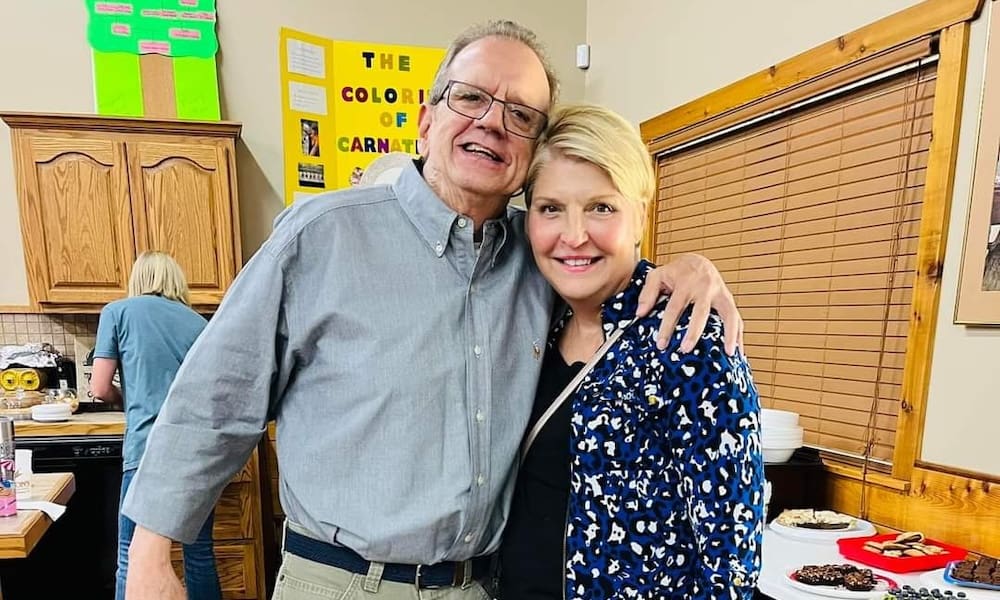
On an ordinary August morning, Melodie Woods stepped into the shower—one of the few quiet moments she still has in a life shaped entirely around caring for her husband, Wesley. As she washed her face, her fingers brushed across something that hadn’t been there the day before: a firm knot just below her right ear.
She didn’t know it yet, but that moment would mark the beginning of a crisis that would upend the Woods’ world and leave the longtime Peachtree City couple needing help from the community they’ve quietly served for decades.
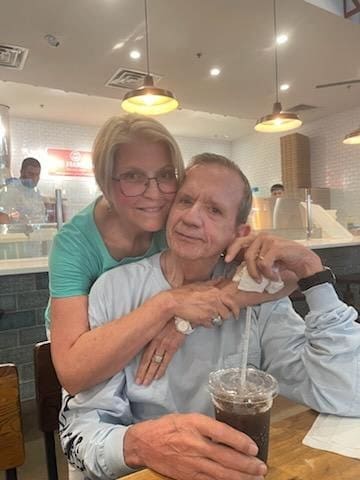
For five years, Melodie, 67, had been the full-time caretaker for Wesley, 68, whose rare, degenerative neurological disorder had already stolen his speech, much of his mobility, and the retirement the couple had worked their whole lives to build. Now, just as his needs reached their most demanding stage, Melodie learned she had Stage IV salivary gland cancer, one of the rarest and most aggressive forms of head and neck cancer.
The diagnosis means she will soon undergo a major surgery that will remove most of her tongue, require grafting tissue from her arm or leg, and leave her unable to speak or swallow for months. She will have a tracheostomy, a feeding tube, and a long rehabilitation ahead—while Wesley will need 24/7 supervision to keep him safe.
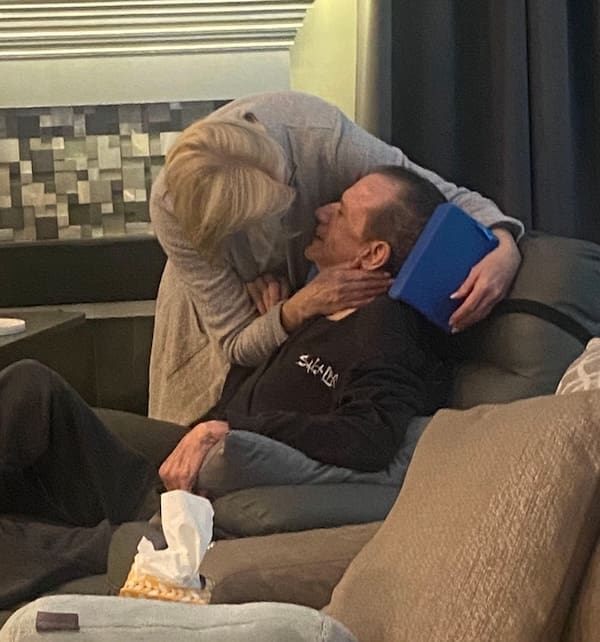
“He cannot be left alone,” Melodie said. “He can choke even on his own saliva. He might try to stand and fall. He needs someone with him constantly.”
And now, she simply can’t be that person—not while fighting for her life.
A lifetime of giving way to a season of unimaginable need
Many in Fayette County know Melodie from her years of service through the Fayette Chamber of Commerce, or from the Cancer Wellness Walk she and a Leadership Fayette class once developed and ran to benefit Piedmont Fayette Hospital. She spent decades at local financial institutions—Regions Bank, Neighborhood Community Bank, and later The Southern Credit Union—where she became the person customers followed from job to job.
“I had a very tight clientele of people who’d been loyal to me for years,” she said. “They followed me everywhere I worked.”
One of them was local business owner Chip Smith of Action Plumbing, who eventually hired her to manage financials for his companies. He now allows her to work when she can, from home, and as little as her health permits.
But Wesley’s illness changed everything.
The first sign appeared in late 2020 when he began stuttering—something he’d never done. What seemed small quickly grew into tremors, balance issues, and trouble with speech. The Woods began a long circuit of neurologists throughout 2021, piling up medical bills as they waited more than a year for a specialist appointment at Emory.
“We were running $20,000 to $30,000 a year in bills.”
Wesley’s illness emerged years before he qualified for Medicare, placing the full weight of diagnostic testing onto the couple’s private insurance. Every MRI, lumbar puncture, neurology consult, and out-of-network lab fee came with steep co-pays or full out-of-pocket costs.
“We were running twenty, thirty thousand dollars a year in bills,” Melodie said. “Some of the labs didn’t take our insurance at all. We had to put entire tests on credit cards.”
During that same period, Wesley—long considered “the go-to person” at the Georgia Power plant where he worked for 38 years—began quietly questioning whether he could pass the complex recertification exams required for his job. The chemistry- and math-heavy simulator work had become harder as his symptoms progressed.
“One day he came home after only a couple of hours and said, ‘I retired,’” Melodie recalled. “He didn’t tell me he thought he couldn’t pass the recertification. He was too proud.”
You would think someone with a successful career at a place like Georgia Power would be financially set, even in the face of a bad medical diagnosis. But his illness wasn’t the first time that Wesley had faced tragedy.
In 2013, Wesley suffered a loss most people cannot fathom. His sister, Hollie, and niece, Shelby, were among the victims killed by the Texas teen later dubbed the “Affluenza” defendant, Ethan Couch—a case that drew national outrage. As the only surviving sibling, Wesley became solely responsible for the care of his grieving mother. Medicare would not cover her assisted living, and she had nowhere else to go.
“What are you going to do? You take care of your mother,” Melodie said.
To pay for her care, Wesley withdrew hundreds of thousands of dollars from his retirement account, absorbing the tax penalties and long-term losses. He fully expected to rebuild those savings by continuing to work another ten years — but his illness forced him to retire early, making that impossible. He’d worked for less than two of those ten needed years.
The retirement savings he hoped to rebuild had already been drained caring for his mother after the tragedy that struck their family. So when the medical bills surged at the very moment their income dropped, there was no safety net left.
Their remaining savings dissolved into medical debt long before Medicare could help—and by the time Wesley finally qualified at age 65, the most expensive diagnostic phase of his illness was behind them.
In April 2022, after years of searching, Emory specialists finally diagnosed him with Progressive Supranuclear Palsy (PSP)—a rare, incurable brain disorder that affects movement, swallowing, and speech. Today, Wesley can no longer speak. He requires constant supervision to prevent falls or choking.
Then came the diagnosis she never saw coming
Melodie’s shower discovery on August 30, 2025 seemed minor at first—urgent care providers told her repeatedly it was “just swollen glands” fighting a cold. But the knot never went away. Her sore throat kept returning. Each time she sought help, she was told to use saltwater gargles or Flonase. She went to urgent care three times in one month about this problem. She tried to get an appointment with her primary care physician, who didn’t have any appointments until next March.
By late October, she was desperate enough to ask her rheumatologist—who treats her severe arthritis—if she could at least look at her neck, because urgent care kept insisting the lump was normal.
“She said, ‘Absolutely not. If you don’t have a sore throat anymore, that gland should be gone,’” Melodie recalled. “She ordered an ultrasound that day.”
That ultrasound led to a CT scan, which led to a Friday appointment with ENT specialist Dr. Paul Free. After inserting a scope and examining her throat, he removed the instrument and said quietly:
“I’m so sorry. I’m so sorry.”
“I’m like, Dr. Free, how can you—what are you saying you’re so sorry? You haven’t even biopsied anything,” Melodie said.
“He said, ‘I know, I know, honey, I know. But some things, when you’ve seen them enough times—even before you biopsy . . . you’re absolutely right, I can’t be 100% sure, but I can be 90% sure. The most important thing now is that we get you to the right place.’”
She was referred urgently to Winship Cancer Institute of Emory University.
A rare and aggressive diagnosis
Within days, Melodie underwent a needle biopsy, followed by a second biopsy under general anesthesia. The initial expectation was tongue cancer—serious, but treatable with radiation and limited surgery.
But on the night of October 30, her pathology results posted.
She had salivary gland cancer, an extremely rare diagnosis representing only 4% of cases like hers—and it was already Stage IV.
“They’re going to have to remove three-quarters of my tongue,” she said. “I’ll have a feeding tube for eight to ten months. I won’t be able to talk. Nothing tastes the same.”
Two spots on her lungs appear suspicious, though doctors cannot yet biopsy them due to the scale of her upcoming surgery.
A race against the calendar
On December 10, Melodie will receive her final treatment plan and surgery date. But doctors have already told her the operating room has been reserved.
“The cancer is growing too aggressively,” she said. “It’s not going to be three weeks out. It might be a week.”
During that time, Wesley will require 12 hours a day, 7 days a week of in-home care—care that Medicare does not cover.
The cost: $2,000 a week, or up to $10,000 a month, not including their own medical and living expenses.
“There’s not much left,” she said. “And every time you take from retirement, you lose even more.”
A social worker told her the only way to qualify for Medicaid would be to exhaust all remaining savings, sell their home, and use the proceeds.
“So if I survive this,” she said, “I would be penniless and homeless. Where would I go? What would I live on?”
“I just want to know he’s safe.”
Wesley does not yet know the full extent of Melodie’s diagnosis.
“He knows something’s not right because I don’t have the strength I usually have,” she said. “But I didn’t want to scare him until I knew the plan.”
She hopes to tell him after the December 10 appointment—when she can also tell him how he will be cared for.
“My biggest fear is being in the hospital, unable to focus on myself, lying there panicked about whether he’s safe,” she said. “That’s all I want. I just want him to be safe.”
Her voice trembled.
“And I do want to get better. I just don’t know what they’re going to tell me yet.”
A call to the community they’ve quietly served
Melodie and Wesley have lived in Peachtree City’s Cedarcroft neighborhood since 1996. Their circle of lifelong friends is working hard to help the story reach beyond their immediate networks.
“This shouldn’t be happening to people who did everything right,” she said. “We worked hard our whole lives. We paid into the system. And now we can’t get the help we need.”
Her friends have launched a GoFundMe to help cover Wesley’s care during her surgery and recovery. Even a month of care is beyond the couple’s reach. A year of the support Wesley needs would cost more than $120,000.
“It will mean everything,” Melodie said. “It will give me a chance to heal. It will give him a chance to be safe.”
For years, Melodie was the one organizing fundraisers to support cancer wellness programs in Fayette County. Today, she is the one in need of the kindness she once worked so hard to give.
How you can help
To support Wesley and Melodie as they face the most difficult chapter of their lives, donations can be made here:
👉 https://www.gofundme.com/f/support-wesley-melodie-woods-health-journey
Every contribution—large or small—brings them one step closer to safety, relief, and hope.





Leave a Comment
You must be logged in to post a comment.