


 1524
1524 4
4February is American Heart Month, so I felt it was finally time to share my personal heart story. My paternal line has a long history of heart issues. My paternal grandfather died when I was two years old. His obituary states that he was “stricken at home” at age fifty-seven. In his case, “stricken at home” means he just dropped dead as he walked across the yard. He was walking and talking one second and BOOM—gone the next.
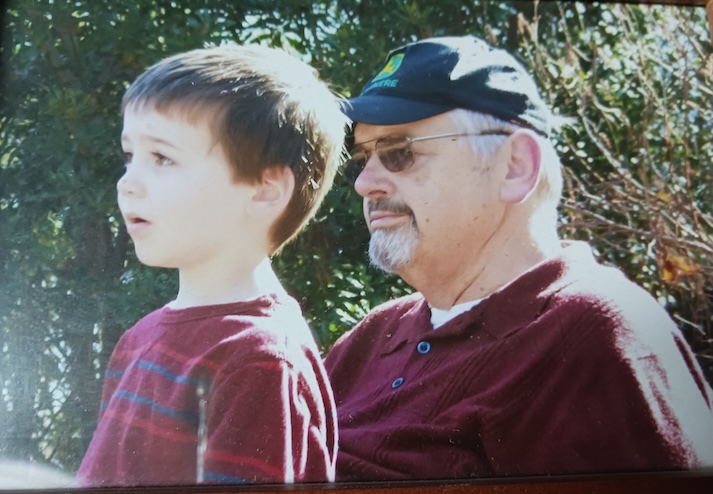
My father was always a large man, but he began putting on massive amounts of weight right around age fifty. Over the course of three years, he grew into the shape of a giant beach ball and was put on a medically supervised liquid diet. When he continued to balloon, his dietician knew something was wrong and referred him to a cardiologist who diagnosed him with acute heart failure. He was admitted to the University of Nebraska Medical Center where doctors drained over eighty pounds of fluid from his body. He survived, but the damage to his heart was permanent. A year later, he took early retirement and thanks to modern medicine, lived another thirteen years.
I’d long known I had an irregular heartbeat. In my early twenties I was told it was premature ventricular contractions (PVCs), a benign condition. I was forty-three when I took up running and decided to train for the Diva Half Marathon. Due to my family history, it seemed prudent to get checked out by a cardiologist. I took the first available appointment at Piedmont Heart, which was with the new guy, Dr. Ryan Crisel. I am not exaggerating when I say this: at that time, Dr. Crisel looked like a college student—an undergrad. But he was whip smart. He immediately recognized the sound my heart made as mitral valve prolapse (MVP), which was confirmed after an echocardiogram. According to the American Heart Association, MVP is a condition in which the two valve flaps of the mitral valve don’t close properly, but bulge (prolapse) upward into the left atrium. Sometimes the prolapse allows blood to leak backwards or regurgitate. Thankfully, my regurgitation was mild. Dr. Crisel gave me the okay to train, saying we’d continue to monitor it every year for any changes.
The regurgitation remained the same for four years. Then, in 2019, Dr. Crisel informed me that the leak had worsened and was now considered “moderate.” By 2020, it had become “severe,” which meant it was time for treatment and by treatment I knew he meant surgical repair. It was something we had discussed since day one—the “what ifs.”
Although heart surgery seemed a bit extreme for an otherwise healthy forty-nine-year-old woman, I thought about my father and the deterioration of his quality of life. His decline started around the same age and likely began with his mitral valve. I knew had he still been alive he would have urged me to have the surgery. He wasn’t finished with life when he died, and I wasn’t finished with mine either. I still had kids at home. This surgery, if successful, would restore my life expectancy to that of someone in the general public. It was an easy decision.
Dr. Crisel referred me to a cardiothoracic surgeon, Dr. Federico Milla, former Director at the Marcus Heart Valve Center at Piedmont Atlanta Hospital. (Dr. Milla has since moved out of state.) He was known as the premier surgeon for mitral valve repair in the Southeast. Face masks were still compulsory in the fall of 2020, so I never once saw Dr. Milla’s face; however, his kind eyes and thoughtful demeanor won me over. I trusted him. As it turned out, Dr. Milla didn’t even have to crack my chest. Instead, he performed what’s called a mini thoracotomy, entering the chest through the ribs to repair the valve. (I have before and after pictures of my mitral valve—how cool is that?)
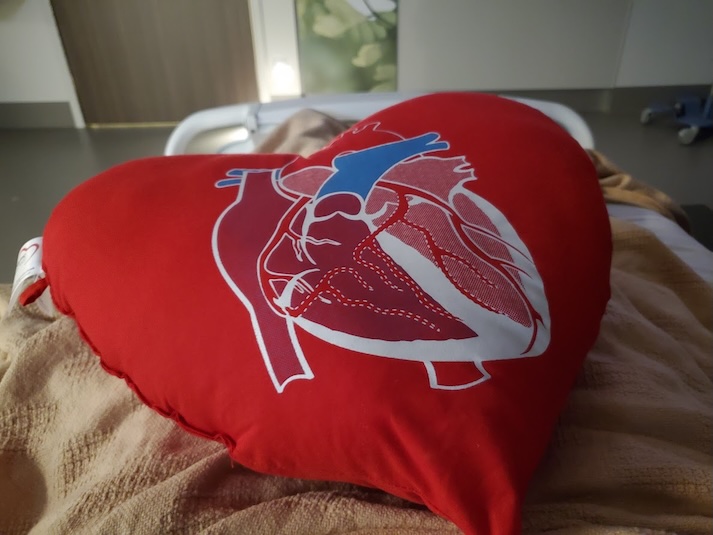
It’s been a little over four years since the surgery and I’ve lived a lot since then. I’ve seen both of my kids graduate from high school and start college. I plan to be here for weddings and grandkids, too, God willing.
All this is to say, be proactive and get your tickers checked—especially if you have a family history of heart disease or have had any kind of symptoms, no matter your age. Preventative care can save you and your loved ones a lot of heartache.






Leave a Comment
You must be logged in to post a comment.