


 209
209 0
0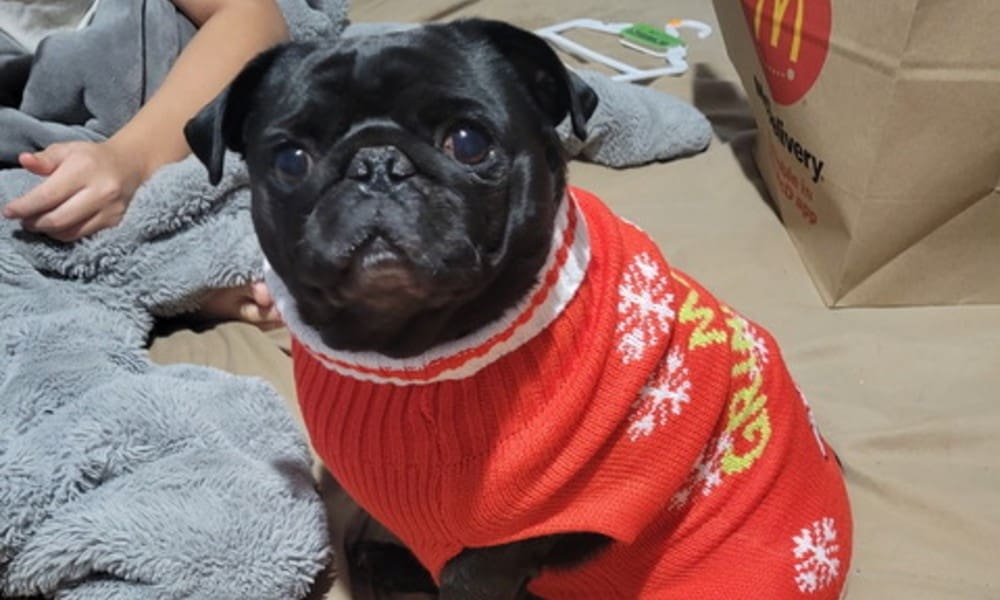
When Rebecca Belote learned that her family’s black pug, ChaCha, might still be alive seven months after Senoia Animal Hospital charged her family $716.50 for veterinary testing, euthanasia, and cremation, she had one goal: Bring her son’s dog home.
But after seeking help from Senoia Police, visiting the hospital, and contacting the husband of the veterinary technician who reportedly took ChaCha home, Belote learned something she never expected.
ChaCha had survived her original appointment, lived for months with another family, and reportedly was later put down while healthy, amid the controversy surrounding another animal whose euthanasia had not been carried out.
“They had to put down two perfectly healthy animals because of it,” Kolby Broussard told Belote during a Facebook Messenger video call, portions of which were reviewed by The Citizen.
Broussard is the husband of McKenna Broussard, a veterinary technician at Senoia Animal Hospital previously identified in The Citizen’s investigation into Annie, a cat whose family paid to have her euthanized but who remained alive for approximately 18 months in McKenna Broussard’s care.
His statement raises questions about whether ChaCha was put down because of the media coverage and police involvement surrounding Annie, and whether the dog’s death was an attempt to eliminate evidence of what had occurred.
It remains unclear when ChaCha was reportedly put down, who performed the procedure, or who authorized it.
A family’s heartbreaking decision
ChaCha was a 4-year-old purebred pug who belonged to Belote’s 17-year-old son. The family had purchased her as a puppy for approximately $1,500 after the boy, who had long wanted a pug, found one available from a breeder north of Atlanta.
The two were inseparable.
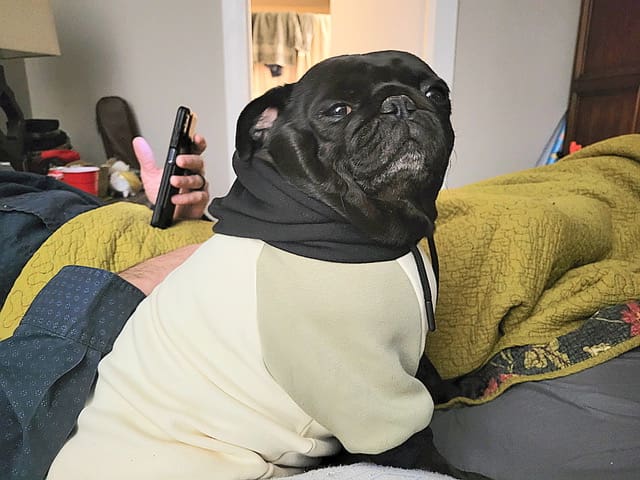
ChaCha had a little chaise lounge in his bedroom, steps leading to his bed, and a wardrobe of dog clothes. He sometimes wore matching outfits with his dog, including Christmas hoodies.
In early 2026, ChaCha became seriously ill. She began drinking excessive amounts of water, urinating inside the house, and becoming increasingly lethargic.
On March 4, 2026, Belote’s husband, Mark, took ChaCha to Senoia Animal Hospital, where the family had trusted the veterinary staff with their pets for years.
According to Belote, veterinarians determined that ChaCha was diabetic and suffering from ketoacidosis, a potentially life-threatening complication of diabetes. She said her husband was told the dog’s organs were failing and that treatment could cost thousands of dollars each month, with no guarantee that ChaCha would survive or enjoy a reasonable quality of life.
Belote said the family was not simply unwilling to pay for treatment. They understood that even with extensive medical intervention, ChaCha was unlikely to recover.
Mark agreed to euthanasia because he did not want the dog to continue suffering.
He stayed with ChaCha while she was sedated, hugged and kissed her goodbye, and left believing she would be euthanized.
The family received a bill for $716.50.
The invoice, provided to The Citizen by Belote, is dated March 4, 2026, and includes an office visit, blood and urine testing, other diagnostic procedures, euthanasia, and communal cremation.
The hospital also provided Belote with a copy of the euthanasia authorization bearing that date.
The expense was significant for the family.
“It was $716.50 and we had to split it and use all our money in our bank account and I put the rest on CareCredit,” Belote wrote in a text message. “We didn’t have enough to cover it all. Because the charges were from all the testing as well as the euthanasia service.”
Belote said that if the hospital had explained ChaCha could recover with medical care and offered the family the option of surrendering her for treatment, they would have considered doing so. But according to Belote, that option was never presented.
For months, the family’s teenage son believed his dog was dead.
Annie’s case reveals a troubling similarity
The allegations about ChaCha follow two earlier investigations by The Citizen involving Senoia Animal Hospital.
On September 5, The Citizen published Senoia Family Paid to Euthanize Cat. She Was Still Alive 18 Months Later.
The investigation documented how a family had taken their 19-year-old ragdoll cat, Annie, to Senoia Animal Hospital on February 14, 2025, after her health and quality of life had seriously declined.
The family signed a euthanasia authorization, paid for the procedure and communal cremation, and left believing Annie would be euthanized.
Instead, Annie survived and went home with McKenna Broussard, receiving ongoing veterinary care at the same hospital for approximately 18 months.
The family learned Annie was still alive in July 2026 after a veterinary technician discovered the cat’s identity and informed them. A subsequent Senoia Police investigation confirmed that Annie had been living with Broussard.
In statements to police and The Citizen, hospital representatives acknowledged Annie had survived her scheduled euthanasia. The hospital said its staff had acted out of a desire to preserve the cat’s life but acknowledged that it had failed to honor the family’s trust.
Annie was euthanized on August 13, 2026, after her original family learned what had happened and requested that the hospital carry out the euthanasia they had authorized.
Unlike Annie’s case, the Belotes say they would have considered allowing someone else to care for ChaCha if the dog could recover.
The September 16 follow-up, Exclusive: Former Senoia Animal Hospital Worker Says Annie Wasn’t the Only One, introduced the allegations involving ChaCha. A former veterinary worker said she had witnessed ChaCha’s sedation being reversed after her owner left the hospital and that the dog later went home with a hospital employee.
At the time, The Citizen had not identified ChaCha’s family.
The story that led to ChaCha
After The Citizen published its September 16 investigation, someone shared the article in the Senoia Locals Facebook group, helping bring the allegations to the attention of ChaCha’s family.
The Facebook post included a photograph of a black pug that had not appeared in the newspaper’s original article.
Rebecca Belote saw the post and immediately recognized her family’s dog.
The photograph wasn’t one she had taken. It showed ChaCha with a child she didn’t recognize.
Belote, a traveling nurse who works near Tallahassee, Florida, was on her way home when she began contacting people to learn what had happened.
She soon discovered that veterinary records obtained during the earlier Annie investigation showed a dog named ChaCha receiving treatment for diabetes under McKenna Broussard’s account months after ChaCha’s supposed death.
For the first time since March, Belote believed her son’s dog might still be alive.
The hospital says ChaCha was dead
Belote first went to the Senoia Police Department seeking help locating ChaCha and determining whether the dog was still alive.
She said police directed her toward civil remedies rather than opening a separate criminal investigation into her complaint. Belote then decided to visit Senoia Animal Hospital herself.
The hospital provided ChaCha’s medical records and a copy of the March 4 euthanasia authorization.
Belote said the records confirmed ChaCha had been microchipped.
She then told hospital personnel she had information suggesting her dog had survived and was receiving treatment under Broussard’s account.
Belote said she met with office manager Mary Greer, who denied that ChaCha had survived.
Greer asked early in the conversation whether Belote was recording and told her she could not record inside the privately owned hospital. Belote stopped recording. The Citizen reviewed the brief recording made before the conversation continued without being recorded.
The following account of Greer’s explanations is based on Belote’s recollection of that unrecorded conversation.
According to Belote, Greer acknowledged the earlier incident involving Annie but said the allegations about ChaCha were untrue.
Instead, Greer reportedly explained that McKenna Broussard had been caring for another black pug named Betty, belonging to her mother.
When Belote asked why veterinary records showed a dog named ChaCha receiving diabetes treatment under Broussard’s account, she said Greer suggested that names could easily be changed in the hospital’s computer system and the records might belong to another dog.
Belote said she was also told a former employee had a dog named ChaCha, potentially accounting for the confusion.
Belote also asked whether McKenna Broussard still worked at Senoia Animal Hospital. Although Broussard’s photograph and name had been removed from the hospital’s website, Belote said Greer confirmed that Broussard remained employed there.
Belote asked whether she could speak directly with Broussard. According to Belote, Greer said Broussard had been through a difficult time following the publicity surrounding Annie’s case and might not be willing to talk. Belote said the hospital offered to pass along her telephone number.
Belote left the hospital without an explanation she believed.
The suggestion that the records belonged to a different dog raises another question.
According to Belote, ChaCha’s veterinary records showed that she had been microchipped. That identification could potentially have allowed a comparison between the Belotes’ dog and the animal the hospital identified as Betty.
But by the time Belote learned about the possibility of that comparison, ChaCha reportedly was no longer alive.
A call from Broussard’s husband
Belote had already contacted Kolby Broussard through Facebook Messenger, hoping he could persuade his wife to return ChaCha.
In a text message to The Citizen before speaking with him, Belote explained that she was considering legal action but primarily wanted her son’s dog returned.
“I contacted McKenna Broussard’s husband on Facebook to beg them to give ChaCha back,” she wrote. “I told them I’m not mad at her. That I can see she’s been paying for medical care and we just want ChaCha back.”
Her children were anxious to know what would happen.
“My kids are just so upset,” Belote wrote. “They keep asking when we are going to DO something but I don’t know what to do. They thought we would get ChaCha back right away. It’s killing me.”
Kolby Broussard responded to Belote’s message with a Facebook Messenger call. While Senoia Animal Hospital had denied that ChaCha survived her original euthanasia appointment, Broussard gave Belote a different account.
According to Belote, he confirmed that ChaCha had lived with his family and received veterinary treatment while in their care.
“I can assure you, your pet was very well taken care of. ChaCha had a good life,” Broussard told Belote during the partially recorded Facebook Messenger call reviewed by The Citizen.
He also told her that ChaCha was no longer alive.
“They had to put down two perfectly healthy animals because of it,” Broussard said, referring to the controversy surrounding the earlier reporting about Annie and ChaCha.
Belote said she asked whether ChaCha had become sick again. According to her account, he told her the dog had been healthy.
The conversation provided Belote with the first direct acknowledgment from someone connected to Broussard’s household that ChaCha had survived the March 4 appointment and subsequently died.
A second conversation
Belote said Kolby Broussard contacted her again later, after speaking with his wife.
Although Belote was unable to record that conversation, she described it in a text message to The Citizen shortly afterward.
According to Belote, Broussard asked her not to pursue action against McKenna Broussard or Senoia Animal Hospital and offered her money in an effort to resolve the situation.
Belote declined the offer.
“I told him I don’t want his money,” she wrote.
She said she was not prepared to promise that she would abandon her efforts to determine what had happened to ChaCha.
For Belote, the immediate goal had never been financial compensation. She had contacted Broussard hoping to bring her son’s dog home.
Correcting the original account
Identifying the Belote family has also allowed The Citizen to correct several details in its September 16 story.
The former veterinary employee who described ChaCha’s case remembered the dog’s owner as an elderly man, possibly a veteran, who was living on a fixed income.
Belote said those impressions were incorrect.
Her husband, Mark, is neither elderly nor a veteran. He sometimes wears a camouflage hat and has a white beard, which may have contributed to the employee’s recollection.
The family is not living on a fixed income.
Belote also clarified that while the projected cost of treating ChaCha was a concern, the decision to euthanize her was based primarily on the prognosis communicated by the hospital.
Belote is a nurse who previously worked in hospice care. She said she regularly administers insulin and monitors blood sugar levels as part of her work.
Had the hospital told the family that ChaCha could recover with ongoing diabetes treatment, Belote said they would have considered providing that care themselves.
“I give insulin all day every day,” Belote said. “I check blood sugars all day every day. It’s what I do.”
The family was not offered the opportunity to surrender ChaCha for treatment, according to Belote.
Instead, her husband left believing his son’s dog would die.
The newly identified family, March 4 invoice, and euthanasia authorization provide details that were not available when the original story was published.
Questions for Senoia Animal Hospital
The Citizen has contacted Senoia Animal Hospital office manager Mary Greer with specific questions about ChaCha’s fate.
The newspaper asked when ChaCha was euthanized, whether the hospital could provide documentation of the procedure, and whether she initially went home with McKenna Broussard rather than being euthanized on March 4.
The questions also addressed what medical treatment ChaCha received while under Broussard’s care and why veterinary records under Broussard’s account included a dog named ChaCha if the animal was actually the black pug identified as Betty.
Most significantly, The Citizen asked whether ChaCha had been euthanized because of the media coverage and police involvement surrounding Annie’s case.
That question raises the possibility that ChaCha’s reported death may have been connected to efforts to eliminate evidence of what happened after the Belotes originally authorized her euthanasia. No evidence reviewed by The Citizen has established that as the motive.
The hospital was also invited to provide any additional statement it wished to make about ChaCha.
As of press time, The Citizen has not received a response to those questions. When we called on press day to see whether answers were forthcoming the receptionist indicated that the manager had received our email and forwarded it on to Senoia Animal Hospital’s attorney saying, “We’re not answering any more questions at this time.”
Belote, meanwhile, said she was pursuing complaints with the Georgia State Board of Veterinary Medicine and exploring her legal options.
The little pug’s chaise lounge, clothes, and steps to her owner’s bed remain in the family’s home.
For months, they had been reminders of a dog the family believed had died in March.
For a brief time, after learning she had survived, they represented the possibility that ChaCha might come home.
But according to Kolby Broussard, ChaCha had already been put down while healthy, before the Belotes even knew she had survived her original appointment or that bringing her home might have been an option.


Leave a Comment
You must be logged in to post a comment.