


 1881
1881 0
0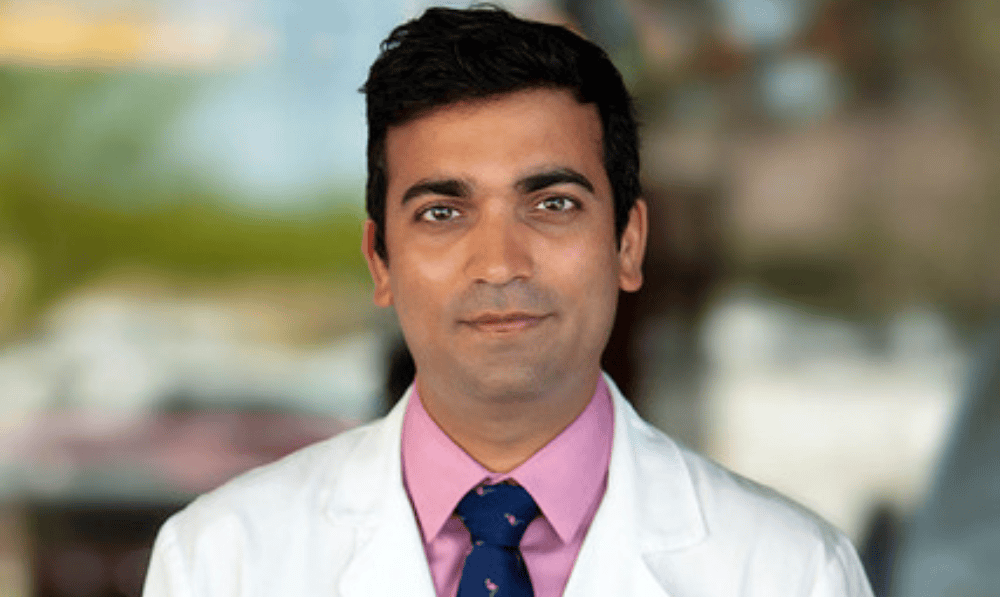
For some cancer patients, the words “clinical trial” can sound like something to consider when everything else has failed.
Dr. Vipin Lohiya says that is one of the biggest misconceptions he encounters.
Clinical trials can sometimes offer patients access to promising new treatments at the beginning of their cancer care — not simply as a last resort. And at Piedmont Cancer Institute, where Lohiya is a medical oncologist and hematologist and principal investigator for multiple clinical trials, determining whether a trial is appropriate can be part of the conversation from the start.
“Using clinical trials, which could potentially give you an option to have a better outcome, could prevent you from going to the situation where this becomes a last resort,” Lohiya said.
What a clinical trial really is
A clinical trial is a carefully designed research study intended to answer a specific medical question. In cancer care, that could mean studying a new treatment, a new combination of existing treatments, or a different way to manage the disease or its side effects.
There is already scientific evidence behind a treatment before it reaches patients in a clinical trial, Lohiya explained, although there is never a guarantee that an investigational treatment will work for an individual patient.
Different phases of clinical trials also answer different questions. Earlier-phase studies may focus more heavily on determining an appropriate dose and identifying potential side effects. Later Phase 2 and Phase 3 studies are more likely to focus on effectiveness and how a treatment compares with or adds to existing standards of care.
For patients, understanding those distinctions matters.
Lohiya said some people hear “clinical trial” and immediately worry that they will receive no treatment, be given a placebo, or become what they describe as a “guinea pig.”
“You’re never a guinea pig,” Lohiya said. “You will be provided all the information how to contact the team, and you always have a right to withdraw from the clinical trial at any given time or any given point without any penalties or without any questions.”
In cancer studies, Lohiya said, patients generally are not denied an existing standard treatment simply so researchers can compare it with nothing. Depending on the design of the study, patients may receive standard-of-care treatment while another group receives the standard treatment plus the investigational therapy.
That is one of the questions patients should ask before enrolling.
When a trial becomes first-line treatment
Lohiya has seen firsthand why timing can matter.
He pointed to a patient with small cell lung cancer who entered a clinical trial in which immunotherapy was added to chemotherapy. At the time, chemotherapy alone had been the standard treatment.
The patient received the investigational combination as a front-line treatment rather than waiting until other options had been exhausted. Lohiya said the patient ultimately lived approximately three times longer than had originally been expected.
“Not every patient benefits from it,” Lohiya said, “but yes, this is a case where we use this as a front-line treatment.”
The example also demonstrates how cancer care changes. Treatments that begin in clinical studies can eventually become part of routine care when research demonstrates that they are safe and effective.
That can be particularly significant with cancers where existing treatment options remain limited. Lohiya pointed to pancreatic cancer, as well as some breast and lung cancers, as areas where physicians may have strong reasons to discuss available trials early.
More monitoring — and more commitment
Clinical trial participation comes with potential advantages beyond access to an investigational treatment.
Patients are closely monitored by their physician and research team, Lohiya said, while the study itself may also involve oversight by the trial sponsor and other investigators.
“If you’re part of the clinical trial, you are paid more attention,” Lohiya said. “There’s a lot of eyes on you to make sure that you’re going on the right path.”
That additional monitoring also requires a commitment from the patient.
A trial may mean more appointments, additional testing or samples, or longer treatment days. Transportation, work schedules, and childcare can make participation difficult for some families. An investigational treatment may also cause additional side effects, and there is no promise that it will prove more effective.
“It might not be the right fit for every patient,” Lohiya said.
That is why he encourages patients to ask questions: What stage is my cancer? What is the standard treatment? Are there clinical trials available to me? What is the purpose of this particular study? What does my physician recommend? Is there a placebo involved? How often would I need to come to the office?
Eligibility also depends on the individual patient and the specific characteristics of the cancer.
Bringing research closer to home
Piedmont Cancer Institute currently has 22 clinical trials open, with additional studies in the pipeline, Lohiya said. The trials span different phases and different types of cancer, and he estimated that approximately 100 to 200 patients participate in PCI clinical trials each year.
For Lohiya, being involved in that research is part of providing sophisticated cancer care without requiring every patient to travel to a major academic medical center.
He has practiced oncology for more than 10 years and has spent those years at Piedmont Cancer Institute, working from its Fayetteville and Stockbridge offices. He has served on the practice’s research committee and as a principal investigator on studies involving cancers including colon, breast, and lung cancer.
“My goal was to get all the best care for cancer closer to home,” Lohiya said.
That matters particularly for older patients and others for whom repeated trips into Atlanta or to distant research centers can become another burden during an already difficult time.
Clinical trials are one way to bring some of that research-driven care into the community.
And even when an experimental treatment ultimately does not prove successful, Lohiya said researchers still learn from the results.
“Even if you don’t benefit, it still provides a potential chance for investigators, for physicians, to learn more about the disease, so that they can carve out better treatment options in future,” Lohiya said.
For patients facing a cancer diagnosis now, his message is not that a clinical trial is always the right choice. It is that patients should know whether one is available before assuming it belongs at the very end of the list.
“Why not look for better outcomes?” Lohiya said.
According to their spokesperson, “While PCI is proud to be part of the Piedmont Clinic network, we are an independent oncology practice led by our team of physicians. Our physicians oversee the clinical direction of the practice and remain committed to delivering personalized, patient-centered cancer care to the communities we serve.”
To learn more about cancer treatment options or clinical trials at Piedmont Cancer Institute, or to schedule an appointment, visit www.



Leave a Comment
You must be logged in to post a comment.