


 2111
2111 0
0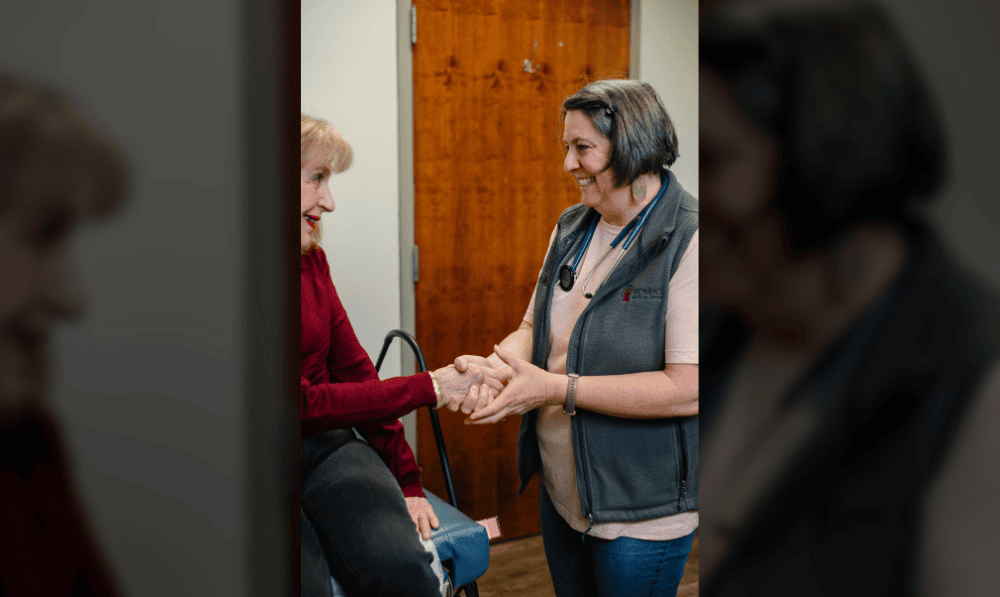
Hot flashes. Trouble sleeping. Mood changes. Brain fog. Fatigue. Irregular periods. A sudden lack of interest in sex.
For women in their 40s and 50s, the list can raise one big question: Is this menopause?
Not necessarily.
Dawn Coffman, PA-C, of Women’s Medical has spent close to three decades of her career in women’s health, including the past 17 years at Women’s Medical. She said understanding the difference between perimenopause and menopause is an important first step toward figuring out what may help.
“Perimenopause are the years leading up to menopause,” Coffman said. “Menopause is defined as one whole year without any kind of bleeding.”
That distinction matters because although many of the symptoms can overlap, Coffman said the hormonal changes happening inside the body — and the approaches providers may consider to manage them — are different.
When hormones start fluctuating
Perimenopause commonly begins during a woman’s 40s, although timing varies. During those years, Coffman said the ovaries may no longer produce hormones in the same predictable cycle they once did.
Periods may become irregular, heavier, lighter, shorter, or longer. Some women develop hot flashes or other changes in temperature regulation.
Others notice the emotional and mental effects first.
“They often talk about their mental health,” Coffman said. “Their anxiety kicks up. They just, in general, feel more edgy. They typically have a shorter fuse, if you will.”
Sleep problems, fatigue, brain fog, achy joints, vaginal dryness, changes in hair or skin, and decreased libido can also occur.
“They don’t feel like themselves is what I hear a lot,” Coffman said.
Not every woman has the same experience. Coffman estimated that roughly half to two-thirds of the women she sees have symptoms during the transition, but the severity varies considerably. Some are only mildly bothered, while others find that symptoms interfere with everyday life.
For women who are still menstruating, Coffman said treatment is aimed at helping control the symptoms of perimenopause.
“The goal in perimenopause is to manage those hormone fluctuations that are causing all of those symptoms,” she said.
Depending on the patient and her individual health needs, that might include hormonal contraception, certain antidepressant medications, improvements in sleep habits, exercise, or a combination of approaches.
Hormonal contraception does not delay menopause, Coffman said.
“Your ovaries are still going to do what they’re going to do,” she said. “The hormonal contraception does not affect the length of their life or their lifespan. Your ovaries are going to stop producing hormone at some point, regardless of what we do hormonally.”
When menopause arrives
Once a woman has gone a full year without menstrual bleeding, she has reached menopause.
Many familiar symptoms may continue, including hot flashes, irritability, dry skin and hair, and vaginal dryness. The difference, Coffman explained, is that the ovaries are no longer functioning in the same way and hormone production has dropped substantially.
That is when hormone replacement therapy may become part of the conversation for some patients.
“The goal is to ease the transition of your body from everything functioning normally to perimenopause to no hormone,” Coffman said. “We’re going to try to give you back small amounts of the hormones that your ovaries used to make for you.”
How long that treatment continues varies from woman to woman, she said. Some may use it for a relatively short period, while others need symptom management longer. Decisions are made based on the individual patient, her symptoms, and how she responds.
Sometimes it isn’t menopause
One reason Coffman encourages women to discuss symptoms with a medical professional is that not everything that looks like perimenopause actually is.
She frequently sees women in their 30s or early 40s who are worried that their exhaustion, irritability, poor sleep, or other symptoms mean they are entering perimenopause.
While early perimenopause is possible, Coffman said another explanation is often staring them in the face: life is exhausting.
“A lot of women in their 30s and early 40s are in seasons of life where they’re super busy, they’re stressed, they got kids, they have husbands, dogs, in-laws, all the things that they’re juggling,” Coffman said. “Their season of life is just very stressful and busy.”
Those women may be dealing with too little sleep, too little exercise, overscheduling, chronic stress, or anxiety or depression that becomes more noticeable during hormonal changes.
Thyroid problems can also create some similar symptoms. Coffman said thyroid testing is among the blood work that may be considered during an evaluation, along with other testing when medically appropriate.
That is one reason she does not believe women should diagnose themselves from a checklist on social media.
“There’s a lot of information out there, but there’s also a lot of misinformation,” Coffman said. “I feel like one of my jobs is to give accurate information and to give very practical help to people. That’s not something they found on TikTok or Google.”
Three places to start
Whether hormones are the primary problem or only part of it, Coffman repeatedly comes back to three basics with her patients: sleep, movement, and creating room for rest.
Sleep comes first.
“Sleep is one of the very most important tools for our bodies to rest, to rejuvenate,” she said. “Most people do not get enough, nor do they get good quality sleep.”
Next comes movement.
“You need to move every day,” Coffman said. “Doesn’t have to be a lot. It can be a brisk little walk for 15 minutes. I’m totally fine with that. But you got to move.”
Her third recommendation can be the hardest for busy women: stop trying to do everything.
“You don’t need to be doing all the things for all the people all the time,” Coffman said. “You need to schedule in some downtime. Your body needs some downtime.”
Coffman’s perspective comes not only from decades of caring for women, but from having moved through many of the same stages of life herself while raising her large family, including several daughters.
“I feel confident that I can guide other people through the seasons because I’ve done it myself,” she said.
At Women’s Medical, some of Coffman’s relationships now span generations. After 17 years with the practice, she is caring not only for longtime patients, but also for some of their daughters.
“It’s just such a great, great practice to be able to do that through the years,” Coffman said. “I absolutely love, love, love what I do.”
Women who are experiencing changes associated with perimenopause or menopause — or who simply have questions about whether what they are experiencing is normal — can make an appointment with Women’s Medical to discuss their symptoms and options. Women’s Medical is located at 190 Handley Road, Suite A, in Tyrone. Call 770-997-5714 or visit womensmedical.com to schedule an appointment.






Leave a Comment
You must be logged in to post a comment.