


 5483
5483 0
0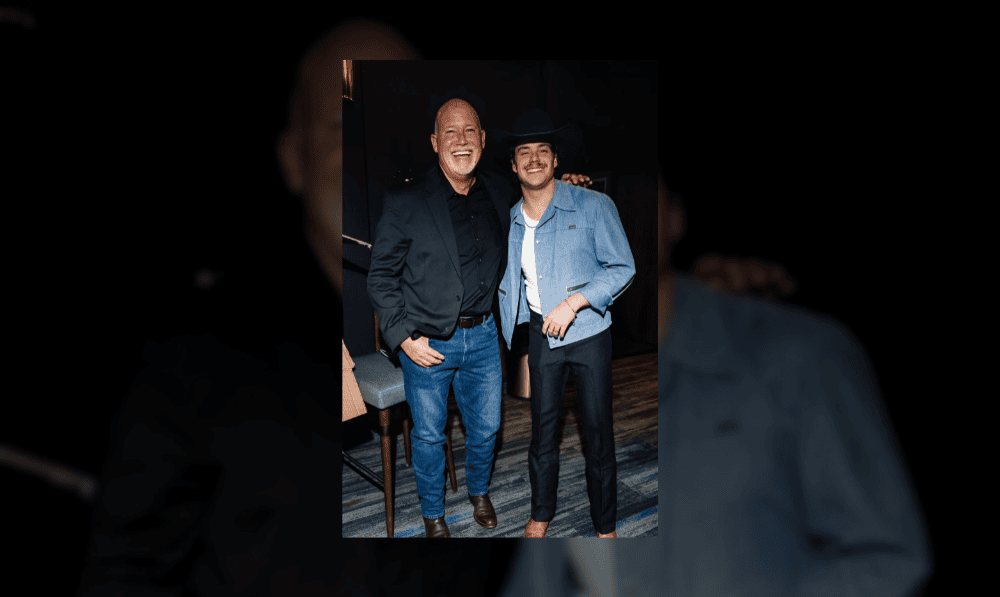
The first time The Citizen heard Zach John King sing, he was not standing on the Grand Ole Opry stage or in front of 70,000 people. He was a Whitewater High School student playing Tony in West Side Story.
Opposite him as Maria was another Whitewater student named Kat.
They were believable as the young couple falling in love onstage because, as it turns out, some of it was real.
“We met in that play,” King said. “Funny enough, I mean that was like kind of our whole thing. We met in high school and spent a ton of time rehearsing for that play, and then eventually getting to know each other and dating.”
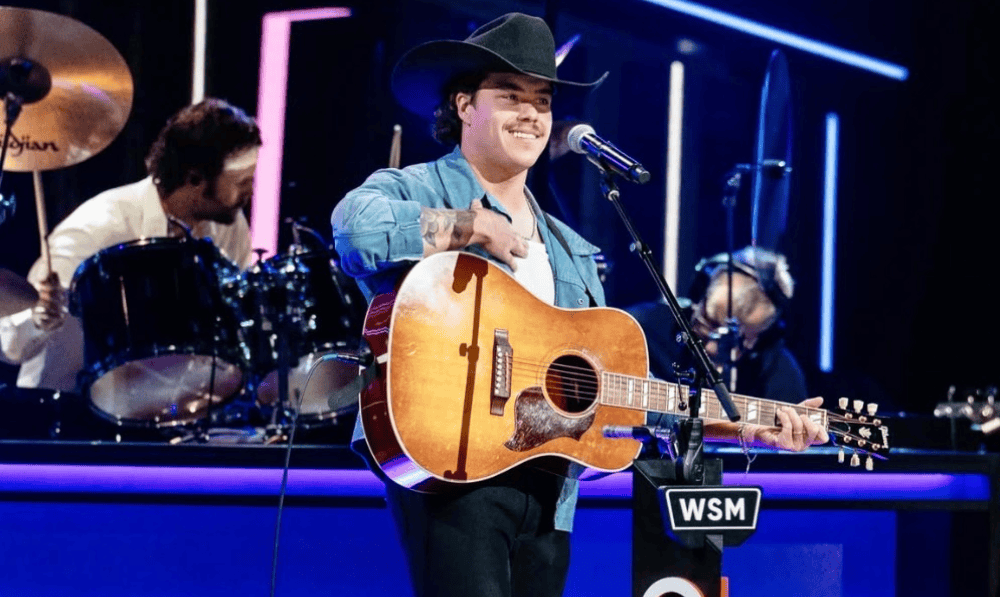
More than a dozen years later, Kat is his wife. King is a country singer with more than 2 million monthly listeners on Spotify, a Top 20 radio single, two summers touring with Morgan Wallen, a Grand Ole Opry appearance, and a nearly sold-out headline tour beginning this fall.
And on August 28, the Fayetteville native will release his first full-length album, I’m What You Get.
It is difficult to imagine a more appropriate title.
Across 20 songs, King sings about the Georgia upbringing that shaped him, loving the country living, the woman who has been beside him since high school, the pull between life on the road and home, and the father whose influence King says he did not fully recognize in the album until after his death.
There is plenty of Nashville expertise behind the project. King co-produced it with Ryan Wilson and has a team helping build a rapidly growing career.
But the stories are his.
“The whole album, everything,” King said of his songwriting. “I have so much I want to say, and I want to say it in such a specific way that I just think the best way to do it was just to write it myself.”
For listeners in Fayette County, some of those stories are going to sound awfully familiar.
A Fayetteville childhood put to music
King was born prematurely, along with his twin sister, and said the two were NICU babies at Northside Hospital. But Fayetteville is home.
His father had lived in Fayetteville his entire life, King said, and his mother had been there since high school. King attended Sara Harp Minter Elementary School, Whitewater Middle School, and Whitewater High School.
Country music entered his life early through his grandmother, who played golden-era country music on the radio in her kitchen. His musical tastes eventually stretched far beyond one genre. Sony Music lists influences ranging from George Jones and Otis Redding to The Police, Third Eye Blind, and Switchfoot.
It was actually a Switchfoot concert that made King realize he wanted to pursue music. In college, he fronted an indie rock band.
Those different influences remain audible underneath the country storytelling that now defines his work. But on I’m What You Get, the geography is unmistakably Georgia.
One of the album’s clearest hometown songs is “How To Not,” filled with the kinds of details King says came directly from growing up around Fayetteville.
“Oh, absolutely,” King said when asked if the song could be considered his “I’m from Fayetteville, Georgia” anthem. “Every little piece of that song is just me taking pictures and pieces of my childhood and great upbringing and just putting them into a song.”
The details are specific because King says they are real.
He really does hunt and fish. He really does drink gas station coffee before an early morning outdoors. The Circle K coffee in his lyrics comes from mornings with his uncle Rob. The fishing hook worn on a hat brim comes from something King himself grew up doing.
“I can’t really write about stuff that specific and not do it because I feel like at some point people would kind of call me on it,” King said. “There’s nothing that I’ve written that I don’t absolutely love.”
That authenticity matters because King’s career is now taking him farther and farther from the slower life he grew up with.
His weeks can mean four or five days on the road. Nashville moves quickly. Touring moves even faster.
What he misses about Fayetteville is almost the opposite.
“The biggest thing I miss is the pace of life back home,” King said. “The idea of coming home and slowing down, and the peace and quiet, and the tree frogs, and the just slower nature of living is probably what I miss the most.”
Like a lot of young people, King said he once wanted to get out and see the world. Being away has made him appreciate what he left.
“I think that simplicity is something that I didn’t realize I missed until I got removed from it for a little while,” he said.
His long-term vision sounds a lot like a return to that life. Once he has built the career he is chasing and left behind the music that will outlive the road years, he can picture putting the plan into place: finding a place in the woods, slowing down, and stepping away from the constant motion.
“That’s the plan,” King said. “The plan is for me to do my thing, and then, yeah, you never hear from me again.”
The irony, of course, is that recordings do not disappear when a performer leaves the road. If King gets what he is working for, the songs will remain long after he has traded stages for the woods.
Tony and Maria, after the curtain
There is another piece of King’s Fayetteville life threaded through I’m What You Get.
Kat.
After meeting during West Side Story, the pair kept their relationship going through college and married in 2020 during the COVID-19 pandemic. They later lived in Athens before moving to Nashville.
“She’s been with me through all of it, literally all of it,” King said.
That becomes particularly meaningful when listening to some of the album’s unreleased songs.
“High Like Her” captures the rush of reconnecting with someone who can still excite him every time they are together. “What I’m Giving Up” looks at the other side of pursuing music: leaving home and traveling states away to perform, and what that requires him to leave behind.
King and Kat deliberately keep much of their private life separate from his public career. She generally stays home while he tours.
That separation, King said, gives him somewhere he does not have to be the performer audiences know as Zach John King.
“She’s just the one person that doesn’t change,” he said. “She’s been with me since day one, basically, and the way we’ve done it is like we just have our own little world, and we don’t really let anybody in it.”
At home, the stage persona can go away.
“I come home, and I’m not the guy up on stage,” King said. “I’m just me. And I think that there’s such rest in that, just to be able to turn it all off and not be anybody else.”
It is an unusually fitting continuation of a relationship that started when the two were acting out one of musical theater’s great romances.
King supplied the comparison himself.
“Romeo and Juliet story,” he said.
Exactly.
Rice, beans, and waiting tables
King’s rise can look remarkably fast from the outside.
It did not feel that way from inside the apartment where he and Kat were trying to make it work.
When the couple moved to Nashville, King waited tables on Broadway to pay bills while writing music. Kat worked from home for a wedding planning company.
“It was a struggle,” he said. “We moved to Nashville, and we were doing rice and beans, and I was waiting tables on Broadway to pay the bills.”
Their apartment, he said, was “terrible” and “decrepit.”
King was writing enough that he began calling out of work. Eventually, he got fired.
He found another job at a Nashville cafe and kept going. There were months when the couple bought groceries and wondered whether they could afford the full amount they needed.
“For the better part of two and a half years, [it] was just a grind,” King said.
Then came a publishing deal.
Slowly, there was footing beneath him. Then things began moving much faster.
“There were a lot of moments where this was not anywhere close to being reality,” King said, “and I don’t ever take that for granted.”
The reality now includes a radio single, “Get To Drinkin’,” climbing inside the Top 20. King wrote the song with Rhett Akins, Kyle Sturrock, Thomas Archer, and Kyle Fishman.
He has opened for Luke Bryan, Gavin Adcock, Dylan Scott, Nate Smith, ERNEST, and others.
And then there is Morgan Wallen.
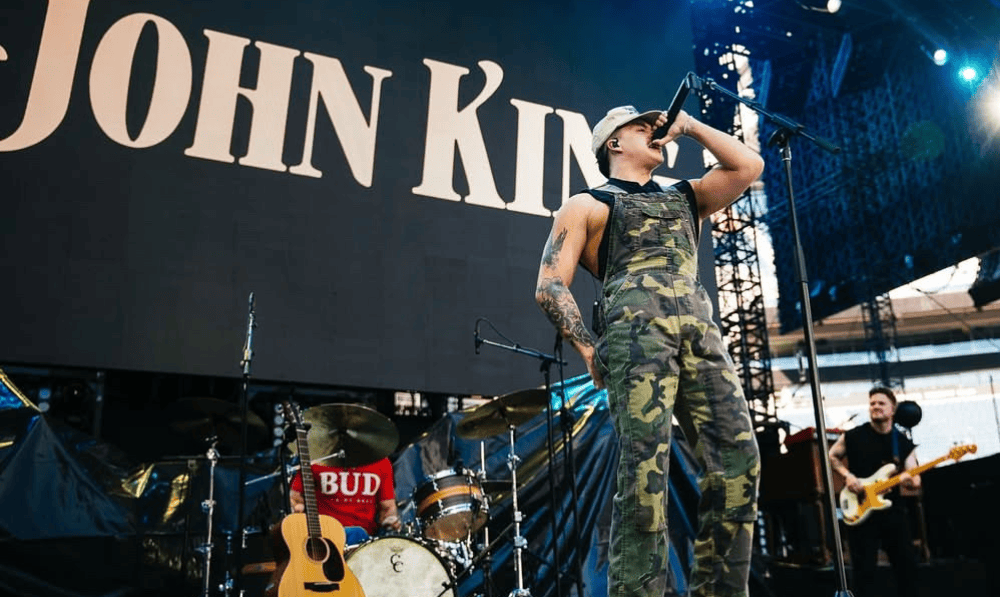
King recently completed his second summer touring with Wallen. One of King’s earliest experiences on a major concert stage threw him almost immediately into the deep end: performing in front of roughly 70,000 people.
Now he is preparing to start smaller again — but this time with his own name on the ticket.
His first headline Get To Drinkin’ Tour begins October 1 in Indianapolis. Most of the dates were already sold out when King spoke with The Citizen, with only two still having tickets available.
The venues are mostly clubs holding around 500 people, with the largest around 900.
For King, those smaller rooms represent something enormous.
“It’ll be my first time playing shows for my own fans,” he said.
Streaming numbers can show that people are listening, King said. Selling tickets tells an artist whether listeners are willing to show up.
That is why the headline tour may matter almost as much to him as the album.
“Getting people to buy those tickets is really what sets you apart from, are you an artist that’s got some listeners, or are you a sustained career-path-forward country singer?” King said.
The man behind so many of the songs
There is one person who will not be there to watch what happens next.
King’s father, John King, died recently at age 62 after collapsing while hiking during a vacation with his wife, Laurie, Zach’s mother.
“I’ve lost truly my best friend,” King said. “My dad was my guy.”
John King was deeply rooted in Fayetteville.
“He could have been the mayor of Fayetteville,” King said. “He was the best.”
He was also the man whose name his son carries.
John King built his own business renovating apartment complexes, an example his son now recognizes in his own decision to take a chance on a career that came with no guarantees.
King said his father instilled in him “this work ethic to go out and chase something and make it your own.”
“There was never a question about, you know, if I wanted to start this crazy dream,” King said. “He was so supportive of it because he had taught me and walked through this crazy thing, which is go out on your own and work until it works.”
Then King named the other thing he took from his father.
“His love for Jesus and the idea that he was such a joy to be around for so many people: that’s encouraged me that I should have that same joy,” King said.
His dad taught him to “really be able to see people. And that’s helped me live, just trying to see people better on the road.”
Perhaps the most striking thing about I’m What You Get is that the album was written before King lost his father.
King did not set out to write a memorial.
Only afterward did he begin hearing how much of his father was already there.
“I didn’t realize it honestly until he passed that there was just so much on this album that pointed back to him,” King said. “And that would make perfect sense. I mean, he was my hero.”
Even “How To Not,” the song so rooted in a happy Fayetteville childhood, changed.
John King had heard the song. He loved it.
A lyric that once simply described Zach’s identity — “I’ll always be my father’s son” — now lands differently when King sings it live.
“That was a pretty normal line for me to put in a song,” King said. “It’s just a way of saying this is who I am. But now, it holds way more weight to it.”
One photograph captures where father and son got to stand together before John King died.
It was taken after Zach played the Grand Ole Opry.
John stands beside his son, who had made it to one of country music’s most storied stages.
When The Citizen asked whether that photograph could accompany this story instead of a standard artist headshot, King did not hesitate.
“If that’s me and him at the Opry,” he said, “that’s perfect.”
What you get
There is a temptation with a fast-rising artist to look for the construction: the image, the branding, the carefully selected version of a person audiences are meant to buy.
With Zach John King, the interesting thing about I’m What You Get is how often his actual life keeps surfacing instead.
Fayetteville is there in “How To Not,” in the woods, the fishing, the Georgia references, and the slower way of living he now misses when he is away.
His father is there, sometimes in ways King himself did not understand until after John died.
Kat is there too — the girl who played Maria to his Tony and has remained the constant as their life changed around them. Songs such as “High Like Her” and “What I’m Giving Up” give listeners glimpses of what it means to be pulled back toward the person who still excites him, and what it costs to leave home behind for the road.
The hardship that came before success is not necessarily what this album is about. But it helps explain the person singing it.
Before millions of monthly listeners, there were restaurant shifts. Before the Opry, there was an apartment King describes as decrepit. Before a nearly sold-out headline tour, there were rice and beans, grocery calculations, a firing, another job, and years spent writing when there was little evidence any of it would work.
Those experiences sit behind an album concerned less with hardship than with identity: where King comes from, whom he loves, what he values, and what he refuses to lose as his world gets bigger.
King has now landed on lists of artists to watch from MusicRow, Country Now, Holler, Amazon Music, and The Nashville Briefing. His audience has climbed into the millions. His first headline tour is approaching a sellout before it begins.
But his debut album does not sound like an attempt to leave Fayetteville behind.
It sounds like a record of what he carried with him.
Losing his father has only reinforced what King wants his songwriting to remain.
“Just making sure I stay authentic to my story, and when I write, really making sure I’m focusing on telling the true stories,” he said. “At the end of the day, that’s all of it you have to lean on with this music.”
The album is called I’m What You Get.
For the boy from Fayetteville who once stood on a Whitewater High School stage singing to the girl who would become his wife, it may be less of a title than a promise.
I’m What You Get is out in full August 28.


Leave a Comment
You must be logged in to post a comment.