


 4994
4994 0
0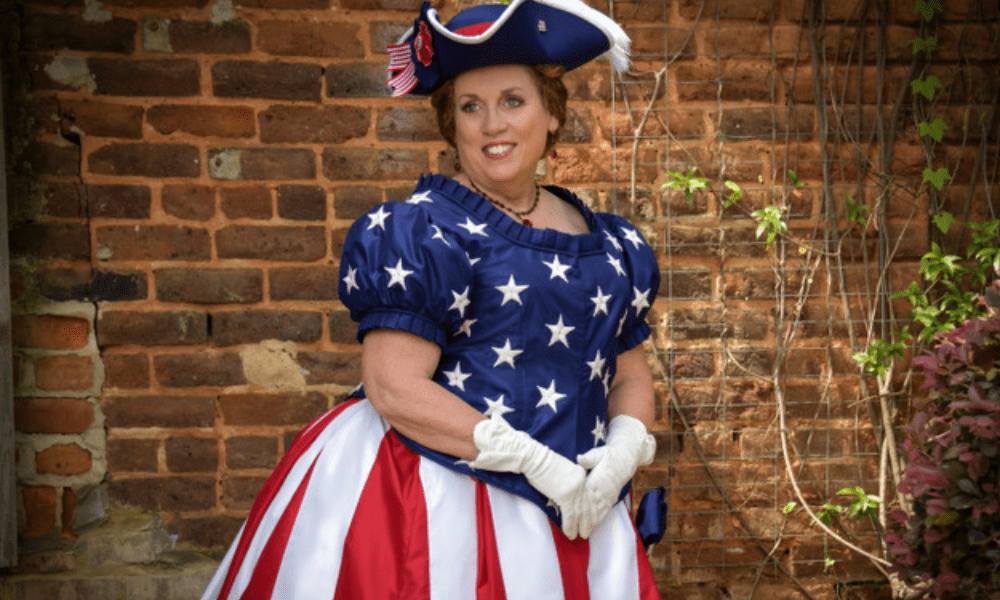
When most people think about America’s 250th birthday, they think about fireworks, parades, or patriotic music.
Peachtree City resident Teri Biglands thought about fabric.
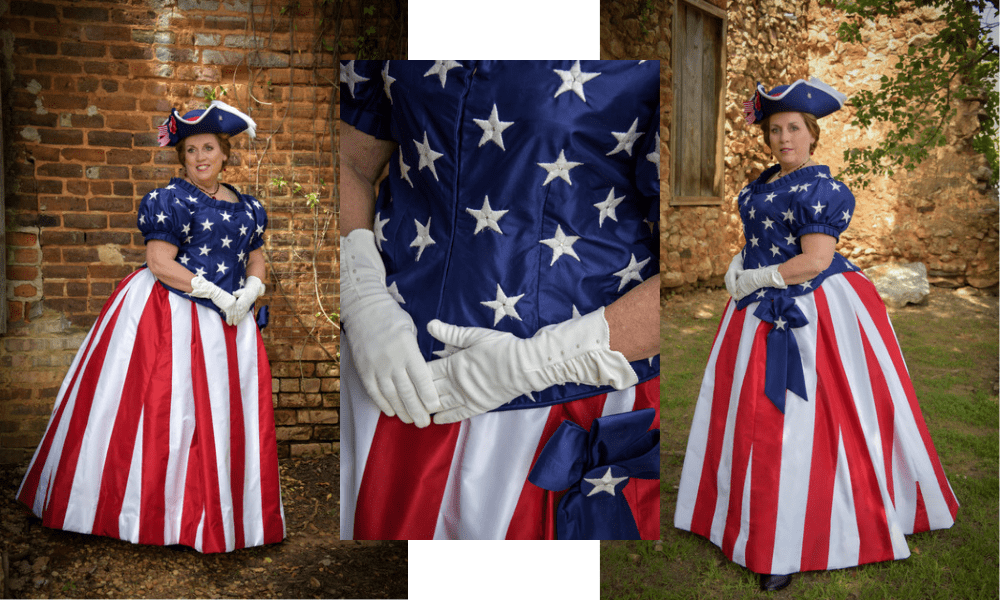
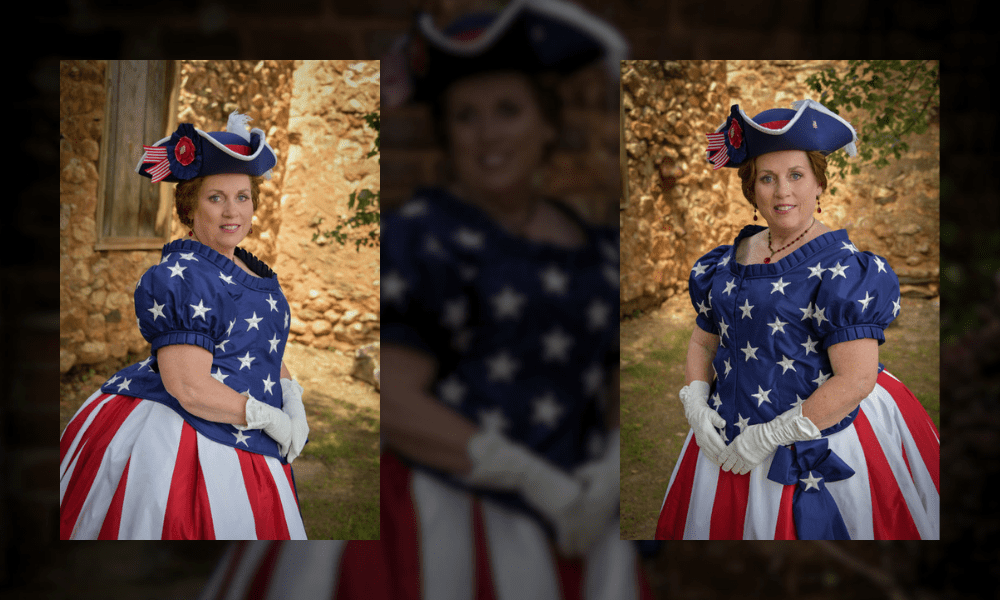
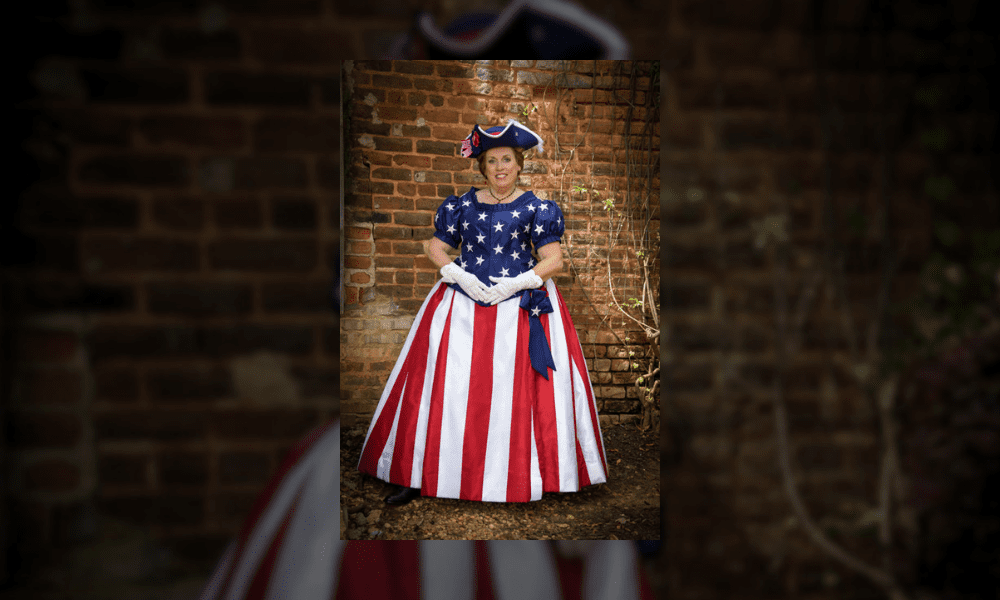
Over the past six months, the award-winning quilter and costume maker has spent hundreds of hours creating a one-of-a-kind patriotic gown inspired by Revolutionary War imagery, Victorian fashion, and one of America’s earliest comic book heroines. The finished piece features a sweeping red-and-white striped skirt, a sapphire blue silk jacket covered in hand-embroidered stars, and period-correct accessories that would look at home in another century.
For Biglands, the project was more than a costume.
It was her way of marking a milestone few Americans will ever see.
“I just wanted to really make something to commemorate our semiquincentennial,” Biglands said. “This is a really big deal for our country.”
Readers may remember Biglands from a previous feature in The Citizen about her historically inspired gowns, including Outlander-themed creations that eventually found their way into museum exhibits. A former custom drapery and window treatment business owner, she has spent years studying historical textiles and sewing techniques, building a reputation for creating garments that are as technically accurate as they are visually striking.
This latest project may be her most ambitious yet.
The inspiration came from several places at once.
One was Miss Liberty, a little-known patriotic comic book character from the 1960s who wore the stars and stripes while fighting for justice. Another was a Victorian-era red, white, and blue gown that Biglands had admired for years after seeing it offered at auction.
“I just couldn’t get it out of my mind,” she said. “I thought, you know what, I’m just going to do it.”
She combined the concepts into something entirely her own.
The resulting design blends Revolutionary War symbolism with the dramatic silhouette of Victorian fashion. The skirt features alternating red and white stripes, while the fitted blue jacket is embroidered with dozens of white stars.
Creating those materials proved to be one of the project’s biggest challenges.
Because she could not find a striped fabric that matched her vision, Biglands made her own.
“I was going to have to grow fabric,” she said.
She purchased yards of red and white silk taffeta, cut them into strips, and sewed them together by hand until she created enough striped material to cut the skirt pattern pieces. She then used historical garment references to recreate nineteenth-century hemming techniques that conceal the stitching within the folds of the skirt.
The jacket required even more patience.
Biglands carefully drafted and positioned approximately 72 stars across the garment, tracing each one before embroidering them by hand. After completing roughly 20 stars, she decided she disliked the results and removed them all before starting again.
“If each star took over an hour, I probably worked on those three or four weeks,” she said.
The embroidery was only part of the work.
Biglands also created the structural pieces hidden beneath the gown, including a Victorian corset designed to achieve the period silhouette. She constructed the garment using historical techniques she has studied through years of research, including hidden closures that Victorian dressmakers used to create perfectly smooth bodices.
“The structure is what’s going to make the outside look the way it’s supposed to look,” she explained.
Accessories received the same attention to detail.
The ensemble includes Victorian lace-up boots, period undergarments, red gloves, and a tricorn hat that Biglands recovered in matching silk fabrics and embellished with an American flag button. Even the hat’s decorative elements were carefully selected to complement the overall design.
By her estimate, the project required between 500 and 600 hours of work.
That total does not include the emotional interruption she experienced after the death of her mother during the construction process.
“There was about a month and a half where I wasn’t working on it,” she said.
The finished costume may eventually appear at New York Comic Con, where Biglands has submitted it for consideration in a juried competition focused on needlework craftsmanship. At press time, organizers had delayed announcing this year’s selections.
Whether it appears on a convention stage or not, Biglands believes the project has already fulfilled its purpose.
The deeper inspiration, she said, came from thinking about the unknown seamstress who created the patriotic Victorian gown that first captured her imagination decades after it was made.
That connection across generations became part of the reason she wanted to create her own commemorative piece.
“Every person who sews wants to leave something behind,” Biglands said.
She hopes someone, decades or even centuries from now, might look at her gown the same way she looked at that earlier creation — not simply as a costume, but as a snapshot of how one American chose to celebrate a historic moment.
“That lady who made that gown back in the 1860s, for someone like me to latch onto that 150 years later and say, ‘Wow, that is just the coolest thing ever,’” Biglands said. “I thought this really could be around another 150 years from now. Wouldn’t that be cool?”
*Credit: Images by Leslie DiGiovanni Photography


Leave a Comment
You must be logged in to post a comment.