


 3056
3056 1
1Maintenance logs confirm limited HVAC failure; tour highlights operations, mental health strain and daily costs inside county facility
After a family raised concerns earlier this month that the Fayette County Jail was too cold, Sheriff Barry Babb invited The Citizen to tour the facility and review maintenance records documenting what occurred.
“Come see how the sausage is made,” Sheriff Babb said in a phone interview after the initial story ran. “I don’t have anything to hide.”
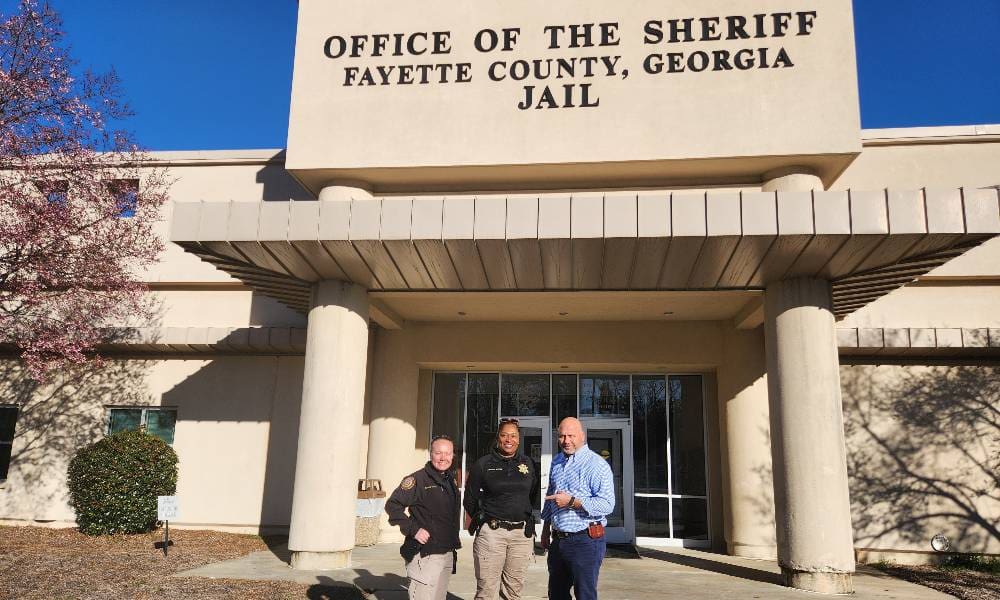
The tour took place Monday, Feb. 16, and lasted more than two hours. Sheriff Babb led the visit. Major Erin Hancock, commander of the jail, and Capt. Sonia Myers, her second in command, accompanied him throughout.
First, addressing the cold question, maintenance logs — including documentation from Siemens — show that one rooftop HVAC unit serving housing pods C5, C6 and C7 malfunctioned during a winter weekend. The lowest recorded temperature inside those areas dipped to 59 degrees.
The jail currently houses about 385 inmates but is built to accommodate more than 500. This outage would have impacted approximately 44 inmates.
“It was one unit,” Sheriff Babb said during the tour. “Three areas. Not the whole jail.”
The Repair Timeline
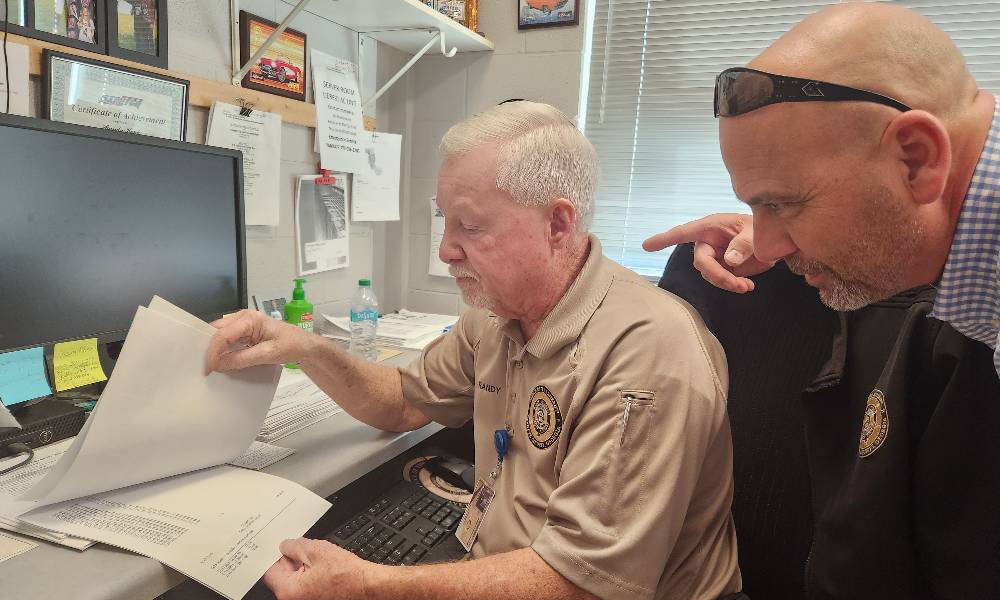
Senior Maintenance Technician Randy Kent said the unit first showed signs of trouble Jan. 29. It was temporarily restarted, but the short-term fix did not hold through the weekend.
When Kent returned to work Monday, Feb. 2, he identified the malfunction. Siemens technicians replaced a faulty circuit board the following day, Tuesday, Feb. 3.
Temperature logs reviewed during the tour show Kent typically maintains housing areas between 70 and 75 degrees. The jail operates 27 rooftop HVAC units, each controlling designated sections of the facility.
Kent explained that rooftop units generally carry an expected lifespan of about 10 years. The unit that failed was installed during renovations completed in 2015.
Kent keeps certain areas warmer, particularly suicide-watch infirmary cells where inmates are issued fewer garments to prevent self-harm.
No formal grievances were filed related to temperature during the period in question, jail administrators said. 1300 grievances were filed total in the last year. Sheriff Babb said that every one is addressed.
A Walk Through the Jail
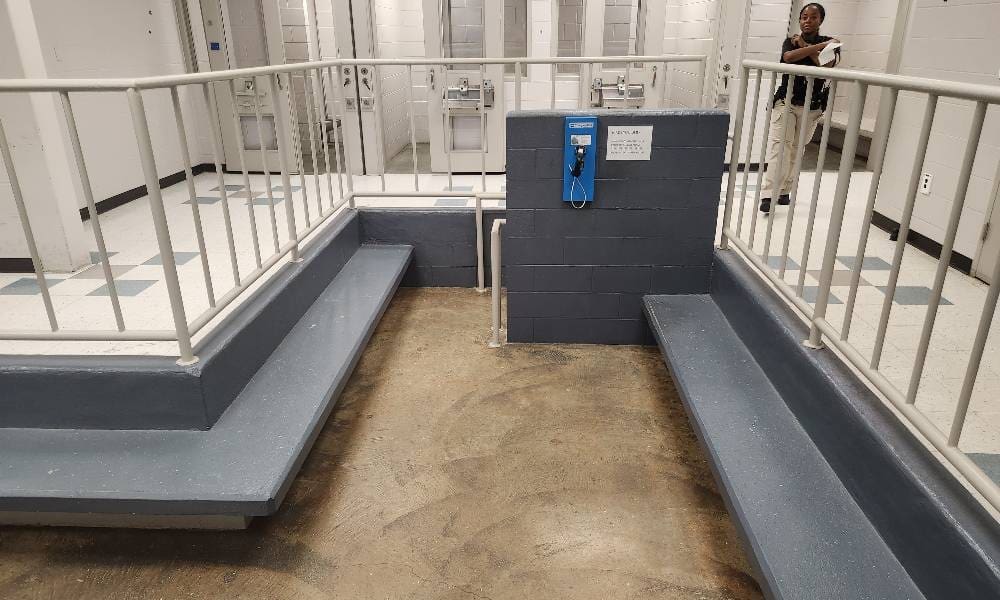
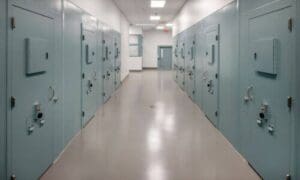
To reach the control tower overlooking C Block, one must walk through a concrete corridor stretching roughly the length of a football field. From the tower, officers monitor housing units through reinforced glass and live camera feeds.
Elsewhere, a multitasking staffer sits before a wall of screens, remotely unlocking doors and coordinating secure movement throughout the facility. Her work looks like advanced video gaming, only with much higher stakes.
If medical staff need to respond quickly, they retrieve an automated external defibrillator and use a Segway to move rapidly through the building’s long corridors.
Sheriff Babb said he insists on having a paramedic on staff inside the jail because of the facility’s size and the medical risks involved.
“You got an officer called in for an inmate cardiac arrest. How do you get there fast with an AED?” Sheriff Babb said. “It’s 400 feet, so you’re running over a football field to get down there to either fight or administer CPR. So I told them we’re getting Segways, because two officers can jump on one and get somewhere fast, whether it’s an AED or the paramedic, they can get there and they’re not wore out.”
Babb said paramedics are trained to recognize when an inmate is in severe distress and can restart a heart during a cardiac emergency — a capability he believes is critical inside a facility of this size.
The jail includes an infirmary, on-site dental equipment and a full industrial kitchen. Inmates attend court through a secure underground tunnel connecting directly to the Fayette County Courthouse.
Major Hancock has worked at the Fayette County Jail for 19 years. Capt. Myers has served there for 20. Roughly 18 months ago, they became the facility’s top two leaders — the first time both positions have been held by women.
Their leadership offices are covered wall-to-wall with family photographs — images of spouses, children and grandchildren belonging to detention officers and staff members.
Maintenance demands are constant. Kent said inmates sometimes flush pieces of bedding or jumpsuits down toilets, causing flooding that must be addressed.
Meals, Medicine and Cleanliness
The jail’s industrial kitchen produces more than 1,000 meals each day, including breakfast, lunch and dinner. Many meals are modified for inmates with dietary restrictions, including diabetes and other medical conditions, and even religious limitations.
The facility currently holds a 100 health inspection score. During Monday’s tour, kitchen counters and preparation areas were free of clutter, stainless steel surfaces were clean, and storage shelves were orderly.
Major Hancock said approximately 60% of the jail population takes some form of prescribed medication.
Sheriff Babb has said the average cost to house an inmate — including meals, medical care, maintenance and staffing — is approximately $90 per day.
Major Hancock said the jail requires daily hygiene, including mandatory showers and the daily exchange of uniforms, towels and washcloths.
“We definitely promote hygiene,” Major Hancock said during the tour. “Their uniforms and their towels and wash cloths, we’ll make them turn them in every day.”
Cleaning and kitchen duties are handled by Inmate Workers under supervision. All inmate workers are those who have already been sentenced, and are working in order to get sentence reductions and other privileges, like the ability to occasionally buy a burger and fries using their commissary funds.
Who Is Housed There
The Fayette County Jail houses individuals awaiting trial as well as those serving sentences of less than one year. Inmates sentenced to longer terms are transferred to state custody.
Seventeen-year-olds, who are legally considered adults under Georgia law, are housed separately from the general population whenever possible, Sheriff Babb said in a previous interview.
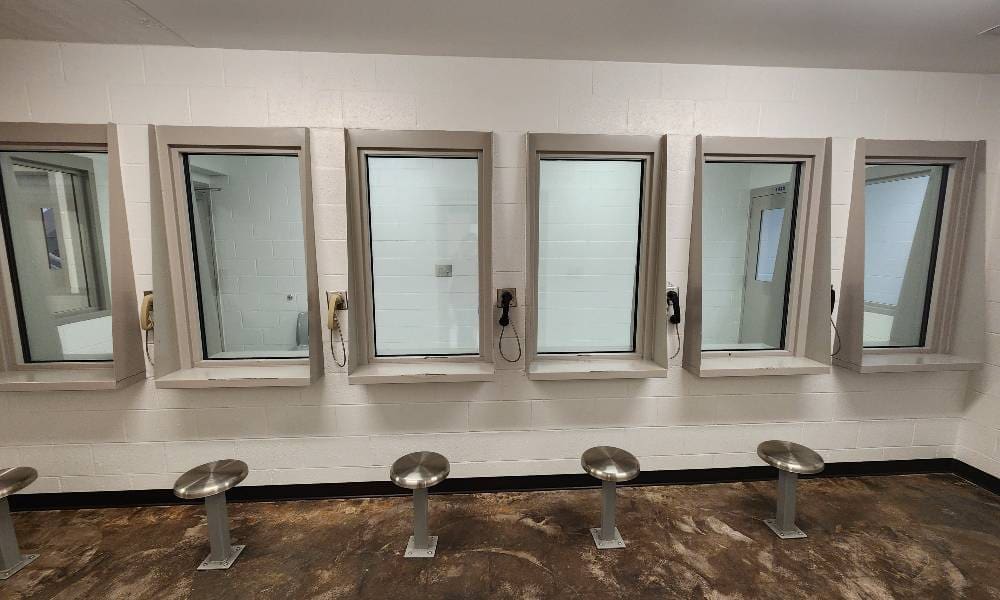
Inmates are permitted two opportunities each week to communicate with family members through video calls or in-person visits. Visits occur through plexiglass barriers separating inmates from their families. Physical contact is not allowed.
Major Hancock said inmates were not allowed to watch the Super Bowl this year. During Monday’s tour, HGTV was airing on televisions inside C Block.
Sheriff Babb said large, emotionally charged sporting events can create tension inside housing units.
“Anything that riles them up,” Sheriff Babb said, “we have to manage.”
Mental Health and Medical Pressures
One of the jail’s most significant challenges is mental health care.
As of this week, 12 inmates housed in Fayette County are awaiting placement in state mental health facilities. Statewide, Sheriff Babb said there are approximately 100 beds available for inmates who have been sentenced to receive mental health treatment as part of their court disposition.
“Think about that,” Sheriff Babb said. “One hundred beds for the entire state.”
Those beds apply only to individuals whose sentence specifically requires mental health placement. Many other inmates housed in county jails receive mental health care while awaiting trial or serving sentences unrelated to mental health commitments.
Some inmates wait months before a state bed becomes available, and often as long as a year.
“We’re not a psychiatric hospital,” Sheriff Babb said. “But once they’re in my custody, they’re my responsibility.”
Inmates experiencing serious mental health crises can be unpredictable and require close supervision. Those placed on suicide watch must be checked at least every 15 minutes.
Major Hancock said she has personally been injured — a bite on her leg that remains scarred years later — while working in housing units while managing inmates experiencing severe mental health episodes.
Medical expenses are another strain. Inmates who require hospitalization remain in the sheriff’s custody.
“Once we catch them, we’ve got to take care of them,” Sheriff Babb said.
Transparency
Sheriff Babb said he wanted the tour to occur quickly so there would be no perception the jail had been prepared for inspection.
“My name’s on the door,” Sheriff Babb said. “I answer for everything that happens here.”
Maintenance logs confirm the malfunctioning unit was repaired within one business day after the weekend. The remainder of the facility remained within Kent’s standard operating range.
The jail continues to operate near 400 inmates daily, managing aging infrastructure, rising medical costs and a growing number of inmates requiring mental health supervision.
“Once they’re in my custody,” Sheriff Babb said, “they’re mine.”


Leave a Comment
You must be logged in to post a comment.