


 1400
1400 0
0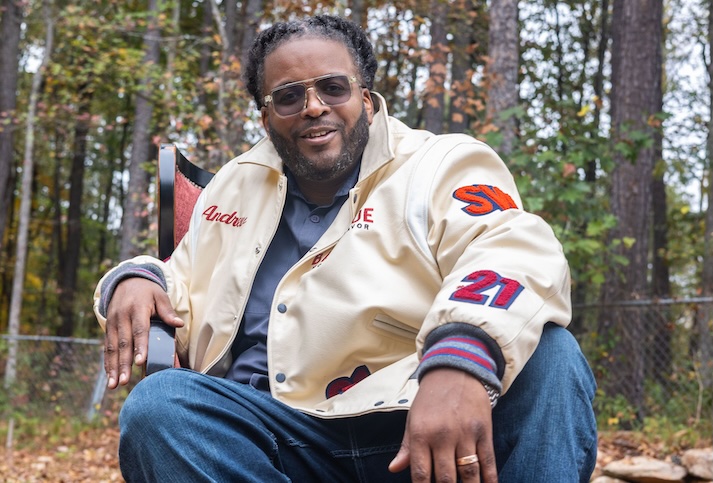
What is up my Eaters!! I hope you are all doing well this week. Valentine’s Day is this weekend. If you’re still struggling, on what to get that special someone, check out last week’s column while you still have time.
I’ve got a lot to say this week, so I’m going to jump right into it. We usually gather here around food and the stories it carries. In that sense, this week is no different. Instead of focusing on what’s on the plate, I want to share my thoughts the way I would if we were sitting together — unhurried, honest, in conversation over a good meal.
Black History Month, as we experience it today, wasn’t part of my childhood. Growing up in the 80s and 90s, it wasn’t prominent. Black history entailed whatever our parents told us and the few segments in school on slavery, Harriet Tubman, and Martin Luther King Jr. along the way George Washigton Carver and Thurgood Marshall came up as well. I remember it becoming more visible in the early 2000s — more structured, more recognized, more public. That shift was noticeable. But even then, it felt like something being observed rather than something deeply understood.
I recognize that not everyone will share my perspective on Black History Month. That’s expected. My intent is not to provoke or persuade, but to speak honestly from my lived experience. This reflection is not meant to replace any narrative — only to add another to the conversation.
From my perspective, Black History Month as a construct makes me uncomfortable.
There are three reasons for that.
First, it is not biblical. I am a Christian man, and my faith shapes how I understand identity. I know not all of you share my faith. At the same time, this paper is published in the heart of the Bible Belt, and many of you do. I hope you understand the conviction from which I am speaking.
Scripture does not define people by the color of their skin. It speaks of nations, tribes, and tongues — but not racial categories as we use them today. In the Bible, identity is rooted in being created in the image of God. That comes before ethnicity, geography, or culture.
My faith teaches me that if Scripture does not elevate something as an identity marker, I should be cautious about building frameworks around it. That does not mean history is unimportant. It means identity must be anchored in something deeper than pigmentation.
The second reason is more personal — and harder to say.
I am a first-generation Jamaican – American. That hyphen has shaped me more than I understood when I was younger. At home, I learned independence, discipline, pride, and perseverance. I learned what it meant to build something from little. I learned to value education and excellence.
In school and in society, I learned a different narrative — one rooted in the American racial experience. Those two histories overlap, but they are not identical. Navigating both has never been simple.
Some of the deepest hurt I have endured has come from within my own community. I have been stolen from, lied on, plotted against, and ridiculed for not fitting a particular mold.
I have also been treated as though I am somehow “less Black” because I have lived much of my life in predominantly white spaces — and because my wife is white. I have been questioned for my choices and judged for my relationships, as though proximity to whiteness diluted my identity.
That has been painful. Not because I question who I am — I do not — but because identity should not be policed. Being Jamaican – American. Being Christian. Being married to a white woman. Living where I have lived. None of that subtracts from who I am.
There is a unique sting when rejection comes from those who share your complexion. It complicates the assumption that shared skin color automatically produces unity or shared understanding. It does not!
The third reason is philosophical.
I do not believe we should lead with color — not now and not ever.
I also want to acknowledge something plainly. I do not particularly like referring to people primarily by color at all. I use the term “Black” here because it is the language of the broader conversation, not because I believe it fully captures who we are.
My skin is brown. I have seen many shades of brown, but never anyone whose skin is truly black. Language shapes perception. When identity is built on imprecise categories, division can quietly follow.
Leading with color can unintentionally reinforce the very separations we say we are trying to overcome.
It also fails to account for the many people of African descent who have shaped and enriched this country but are not American by origin — immigrants from the Caribbean, from Africa, from across the diaspora. Our experiences are connected, but they are not interchangeable. History is complex. Identity is layered.
Most importantly, there is more to a person than pigmentation.
Faith. Character. Discipline. Integrity. Sacrifice. Family. Calling. Conviction. These are the markers of a life well lived.
I love being a minority man. I have never wished to change the color of my skin, and I never will. My experiences have shaped me. They have sharpened me. They have deepened my perspective.
I am raising my two melanated children to love their skin and recognize its beauty. I want them grounded in their worth — confident in who they are.
But I do not want them to believe that the most important thing about them is the color of their skin.
I want them to be known for their kindness. Their discipline. Their intelligence. Their faith. Their impact. Their integrity.
One day, when my life is summarized, I hope it speaks of my character, my work ethic, my love for my family, my contribution to my community. My generosity. I do not want pigmentation to be the headline of my legacy.
Everything I share this week comes from a place of love and humanity — from putting people, and the individual, first. I recognize and deeply respect the many brown people — past and present — whose brilliance, sacrifice, and excellence have made this country richer.
In the coming weeks, I will absolutely honor this month through this column. But I will not honor anyone simply because of color. I will honor greatness. I will honor impact. I will honor courage, resilience, innovation, and contribution.
Because those things transcend pigmentation. That is how I choose to engage this moment. I invite you to consider doing the same.
Eaters, I look forward to being with you again next week. Come see me or my team every Saturday at the Peachtree City Farmers Market.






Leave a Comment
You must be logged in to post a comment.