


 2789
2789 0
0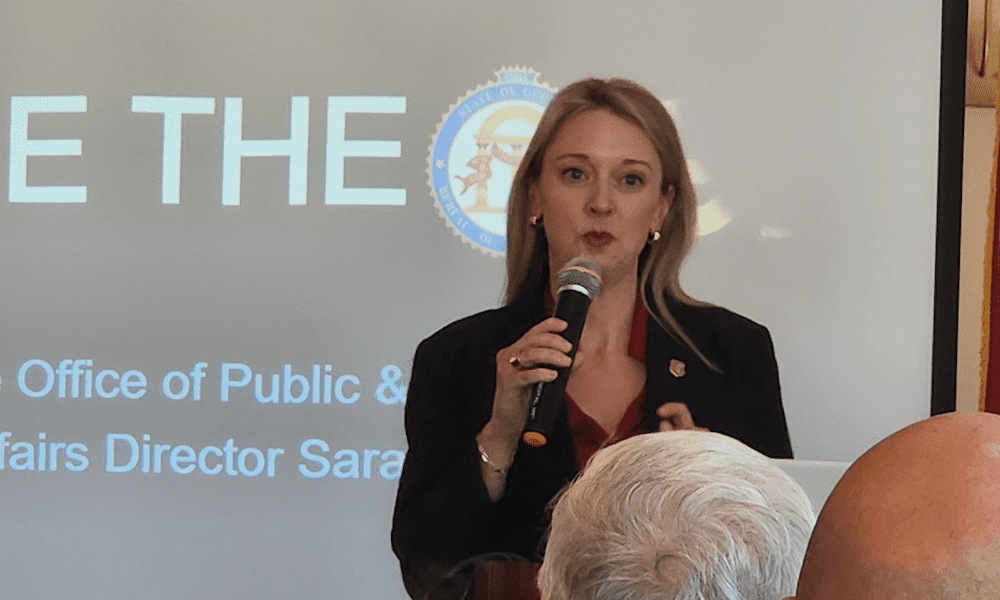
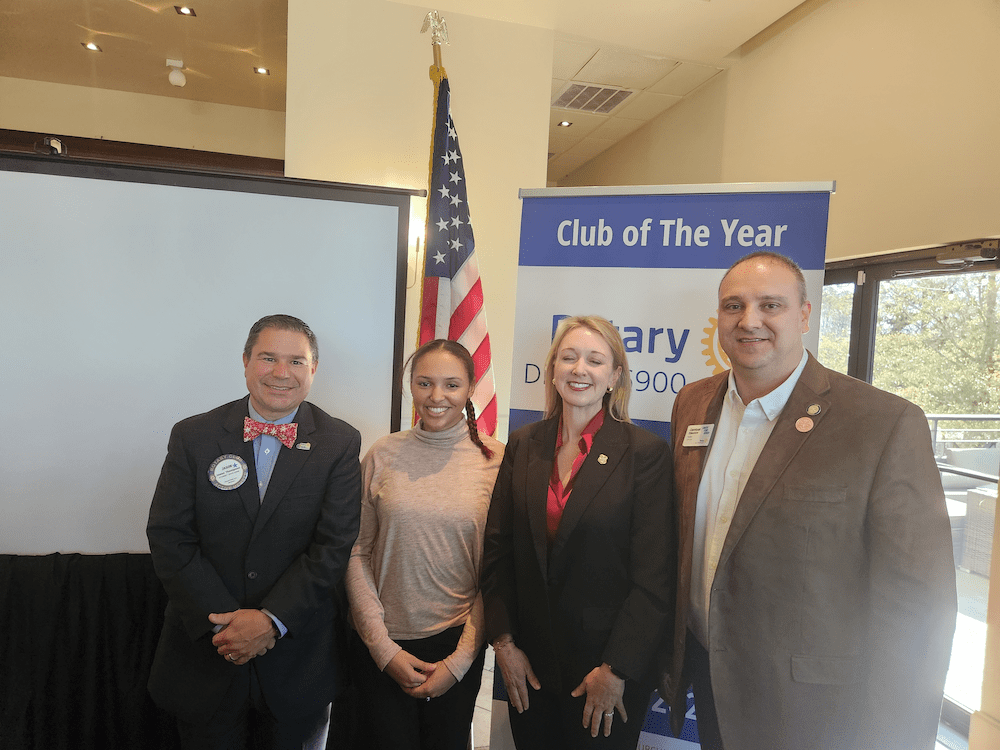
Sara Lue, director of the Georgia Bureau of Investigation’s Office of Public and Governmental Affairs, told the Rotary Club of Peachtree City on Dec. 11 that the GBI’s work stretches far beyond the investigations most residents see in headlines.
“We’re one of the largest law enforcement agencies in Georgia,” Lue said, noting the agency has “approximately 1,000 employees,” while her office “consists of four people, but a very big job.”
Lue was introduced as a sworn law enforcement officer who began her career as a GBI agent, later serving as a special agent in charge before moving into her current role.
“Our job is to ensure that we have public trust,” Lue said. “We consistently monitor our messaging. We push out news releases, and we work in the community and work with the legislature.”
Three divisions, one case
Lue described the GBI as “the investigative arm of the state,” and said the agency is structured around three primary divisions that often intersect on major cases: the Investigative Division, the Georgia Crime Information Center, and the Division of Forensic Sciences.
She said the Investigative Division includes about “350 sworn law enforcement officers,” plus support staff and GSAC, the Georgia Information Sharing and Analysis Center, which she described as the state’s fusion and intelligence center.
But she emphasized that most investigations begin with a formal request.
“Under Georgia law, only certain entities can request or initiate a GBI investigation,” Lue said, listing “superior court judges, district attorneys, chiefs or sheriffs,” and some municipal authorities, mayors, and the governor.
The Georgia Crime Information Center, commonly known as GCIC, serves as the state’s central repository for criminal justice data. Lue told the group that background checks and firearm purchase checks rely on GCIC, and that GCIC also ties into the FBI’s national system.
As for the Division of Forensic Sciences, Lue said it handles a major portion of the state’s autopsies and lab work.
“We conduct the majority of autopsies for the state,” she said, noting that only Fulton, DeKalb, and Gwinnett counties have their own medical examiner offices, while other counties rely on the GBI.
She said the GBI employs “about 15 physicians” as medical examiners and operates labs across the state, processing toxicology, DNA, trace evidence, impressions such as shoe prints, and firearms evidence.
From crime scenes to court
Lue walked Rotary members through how the three divisions can connect during a violent death investigation, drawing on her experience in the field.
“When I was in the field and we got called that there was a homicide, we open it as a death investigation,” she said. “Because we don’t know what the manner or cause of death is yet.”
Agents respond to the scene, interview witnesses, run subjects through GCIC, obtain search warrants, collect evidence, and send it to the lab, Lue said. Medical examiners then conduct an autopsy.
“You can see how the three divisions all work together on a case,” she said. “Ultimately, our goal is conviction.”
Backlogs and lab capacity
During the Q&A, we asked about forensic backlogs seen in other states.
“We do have backlog,” Lue said. “Currently, we have a backlog for our sexual assault kits, but we are making progress every month.”
Lue said the agency has “hired extra staffing” and received “more funding from the legislature” to address the backlog, adding she could provide statistics later.
Elder scams and cryptocurrency tracing
Another Rotary member asked about complex elder scams, especially when money leaves the country. Lue said she spent five years with the GBI’s cyber unit and called elder fraud trends “one of the most disturbing.”
“There’s a lot of shame that individuals who have been victimized carry with them,” she said. “And I encourage you, if you know somebody who’s been a victim or if you’ve been a victim yourself, speak up.”
Lue said cryptocurrency has become a key tool in scams, pointing to Bitcoin kiosks and ATMs “across the state,” and described schemes that often begin with texts or online messages meant to start a conversation.
“The ways that we’re dealing with these scams are that we are able to trace cryptocurrency,” Lue said. “It requires expensive software, but the GBI has that software to actually trace cryptocurrency.”
She said that tracing can, in some cases, lead to recovery through the Attorney General’s Office.
“Now we have the ability through the Attorney General’s office to seize that cryptocurrency,” Lue said. “We can return those funds to the victim.”
But she stressed speed matters.
“We have to be notified as soon as possible after a compromise,” she said. “That means 24 to 48 hours. Time is critical.”
Lue also pointed residents to the FBI’s Internet Crime Complaint Center.
“It’s ic3.gov,” she said. “That is a portal where you can put in any information about a scam or compromise. We actually have access to that portal.”
A homicide case that changed Georgia law
Asked about standout cases, Lue described a homicide investigation she worked that was initially reported as a suicide. She said investigators noted the lack of “stippling,” which she described as marks from gunpowder, and later examined blood spatter on a deck.
“Underneath the coffee cup was blood spatter, not splatter,” she said. “We don’t say splatter, we say spatter.”
Lue said investigators interviewed the victim’s close friends, and one recounted a warning the victim had shared.
“If something happens to me, shout it from the highest mountain. Alan did it,” Lue said.
At the time, Lue said, such statements were considered hearsay in Georgia and not admissible in court, but the district attorney in that case sought a change in the law.
“He actually submitted to the Supreme Court of Georgia that hearsay be admitted in domestic violence cases,” she said. “What happened to her has now had a positive impact on domestic violence victims across the state.”
What comes next
Lue encouraged Rotary members to share information about internships and careers at the GBI with students and young adults interested in public service.
“If you have individuals who are interested in law enforcement, forensic science, or a career serving others, we would love to speak with them,” she said.


Leave a Comment
You must be logged in to post a comment.