


 5457
5457 5
5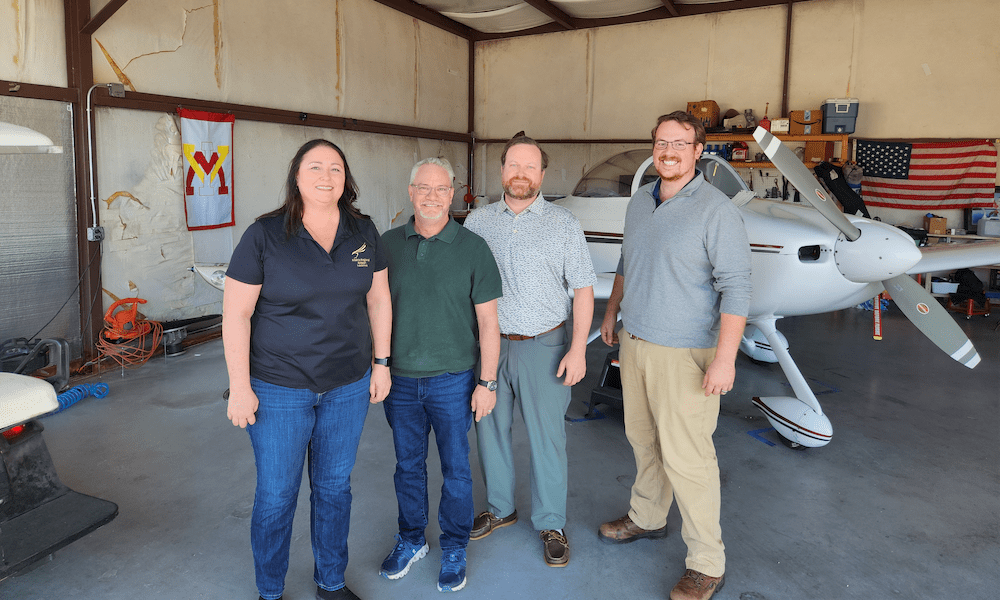
A concerned resident’s letter to The Citizen questioning whether Falcon Field is preparing for a major expansion of corporate jets prompted a closer look at what is actually happening at Peachtree City’s airport — and whether residents should expect more traffic overhead. After meeting with Airport Authority leadership, the concerns appear to be unfounded.
A resident letter sparks community questions
In an email to The Citizen, Peachtree City resident and general aviation pilot David Bowers warned that the Airport Layout Plan (ALP) shows “approximately 20 new large corporate hangars” and claimed the airport is “planning a major expansion to accommodate a significant increase in large corporate jets.” He also raised worries about the planned installation of EMAS, or Engineered Materials Arresting System, expressing concerns about noise, air pollution, and large aircraft flying over neighborhoods and recreational areas.
Bowers wrote, “Imagine replacing the calm, familiar rhythm of our local weekend hobby pilots with the constant roar of corporate jets coming and going at all hours of the day and night.”
His letter asked whether the Airport Authority had consulted with the city, county, or local citizens before moving forward with plans he believed would reshape Falcon Field.
To seek answers, The Citizen met with Airport Authority Chair Ken Fleming, Aviation Director Hope Macaluso, Assistant Aviation Director Denver Garrett, and Vice Chair Max Braun.
Their responses painted a picture very different from the fears expressed in the letter.
No expansion of jet traffic expected
Airport leadership was clear: Falcon Field is not planning or expecting an influx of corporate jets, nor is the airport able to increase flight activity at all.
“We’re at 400-ish operations a day, and I can’t see it increasing tremendously, if at all,” Fleming said.
Macaluso added that Peachtree City’s airspace is already full. “Our airspace is already saturated. We don’t have capacity to add additional flights,” she said. “We’re not trying to increase or decrease any particular kind of aircraft. We’re just trying to accommodate everyone safely.”
Currently, Falcon Field averages about 85 jet operations per month — roughly four per day, including takeoffs and landings.
And many of those jets are transient: Chick-fil-A corporate flights, aircraft ferrying employees for QTS or Microsoft, and occasional visitors. Only four jets are based at Falcon Field.
What the Airport Layout Plan really means
Much of the concern appears to stem from a misunderstanding of the ALP, a federally required planning document.
Braun explained that the ALP “isn’t written in stone — think of it as written in pencil.” It outlines what might be built over the next 10 years, not what is imminent. The FAA requires the airport to show potential future needs on the plan so the agency can consider funding requests.
“There may be things on the ALP that never happen,” Fleming said. “But if it’s not on the ALP, it definitely won’t happen.”
The 20 hangars referenced in Bowers’ letter are part of a long-term, phased redevelopment of aging 1980s portable hangars — not an effort to attract more corporate jets.
Those 1980s portable hangars sit on the first-developed section of the airport and are literally built on trailer hitches. “They are aging infrastructure,” Macaluso said. “We’ve known for quite some time that eventually those will need to be replaced.”
Redevelopment cannot begin until new hangars are built elsewhere to accommodate the current tenants. Officials estimate three to seven years before the first phase could begin.
“No one is getting the boot,” Macaluso said. “Everyone will be accommodated elsewhere on the airfield before anything is demolished.”
Why EMAS is planned — and why it’s a safety improvement
Bowers’ letter suggested concern that installing EMAS signaled unsafe conditions or expansion for larger jets. Airport officials strongly disagreed.
EMAS is a bed of crushable concrete intended to safely stop an aircraft that overruns a runway. Falcon Field is pursuing EMAS because one end of the runway borders TDK Boulevard and the other borders the CSX railroad.
“If we get the funding, it’s a huge win for everybody,” Braun said. “It increases safety. Period.”
Fleming added, “There are numerous examples where EMAS prevented injuries and damage at small airports.”
Noise concerns and the reality of modern jets
While residents often cite jet noise as a disruption, airport officials said the reality has changed significantly.
“My love seat looks out at the pattern, and I never hear a single jet,” Fleming said. “Modern jets are incredibly quiet. They get higher faster, they use less runway, and you just don’t hear them the way people think you do.”
Peachtree City also required homes near the runway ends — including Planterra and neighborhoods near the athletic complex — to include deed acknowledgments about airport proximity and aircraft noise.
Falcon Field receives zero city or county funding
One surprise for many residents may be how the airport actually operates financially.
Falcon Field receives no money from Peachtree City or Fayette County. None of the aviation taxes collected on aircraft based here return to the airport.
Instead, the airport is self-funded through:
– Fuel sales — primarily jet fuel
– Hangar and ground leases — at controlled, below-market rates
– Federal aviation grants — which come with strict rules
“General aviation airports typically operate in the red and are subsidized by counties or cities,” Macaluso said. “We don’t receive those tax dollars. We have to manage it all ourselves.”
Despite that challenge, the airport maintains $1.7 million in reserves, allowing it to front critical safety or maintenance projects until FAA reimbursements arrive.
A public meeting many missed
According to airport officials, the resident who wrote to The Citizen attended only the first 15 minutes of last week’s tenant workshop, then left — missing the remainder of the 75-minute discussion about tenant relocation, timelines, and efforts to accommodate every aircraft owner.
“Every tenant who wanted to speak got up and spoke, some repeatedly,” Macaluso said.
What residents should know moving forward
Nothing about Falcon Field’s redevelopment is imminent, and officials stressed that Peachtree City residents should not expect increased jet traffic, higher noise levels, or changes in airport activity.
“People hear the word ‘change’ and think it must be for the worse,” Fleming said. “But this is about replacing aging, 40-year-old hangars and making the airport safer.”






Leave a Comment
You must be logged in to post a comment.