


 3373
3373 1
1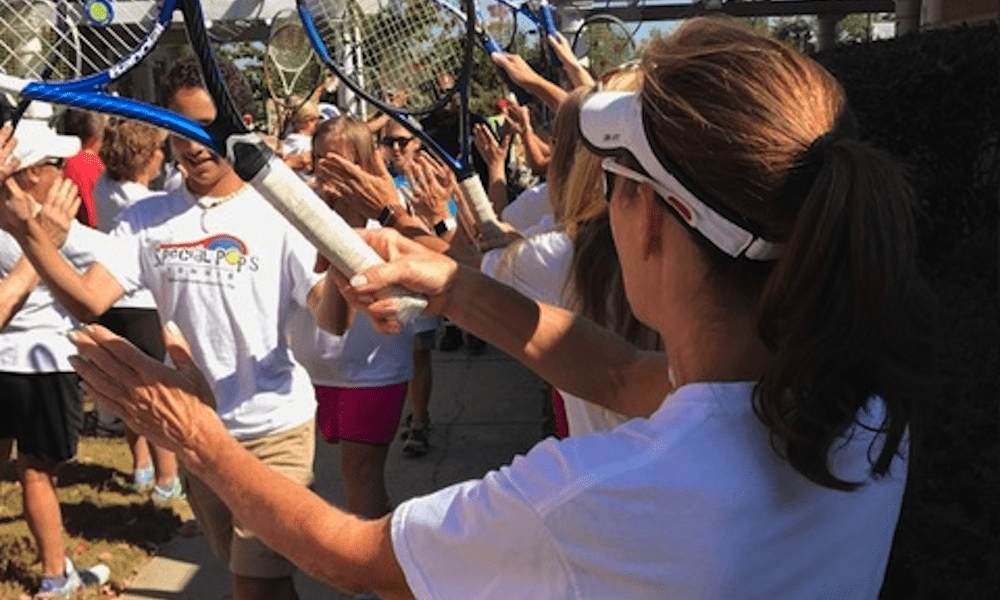
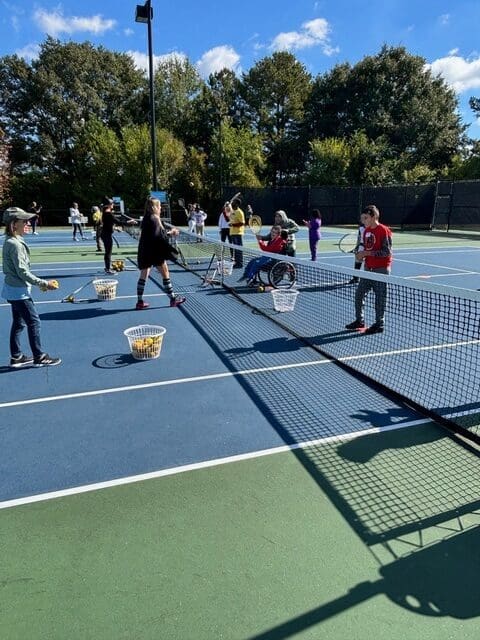
Friday at noon, the Peachtree City Tennis Center has come alive with energy as school buses unload dozens of students eager to play tennis. For six weeks each fall and spring, the courts are filled with smiles, high-fives, and laughter as athletes with special needs take part in Special Pops Tennis — an adaptive program blending sport, friendship, and community.
Building a legacy of inclusion
The Peachtree City chapter of Special Pops Tennis began 15 years ago when longtime player Susan McCabe teamed up with Bob Hokkanen of Fayette County Schools to create an opportunity for students with special needs to learn the game.
“I said, ‘I can teach them how to play tennis, but I don’t know anything about special needs,’” McCabe said. “And he said, ‘I can teach my kids, but I don’t know tennis.’ So we started with 25 students from Fayette County Schools — and that’s how it all began.”
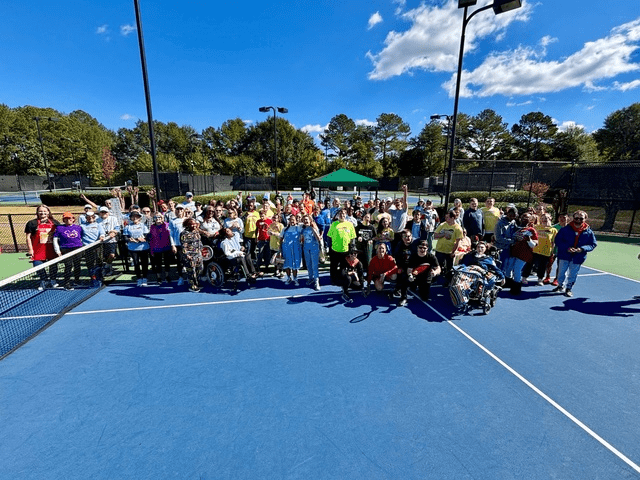
The program now serves more than 120 athletes each season, with about 50 volunteers helping run 10 courts at the Peachtree City Tennis Center. Players are divided into levels ranging from wheelchair participants to those competing in full-court matches.
Volunteer-driven and free for families
“All of us are volunteers,” said Kimber Cardon, who now coordinates the program alongside co-chair Ray Gandhi. “Some volunteers have tennis experience, others have experience working with special needs students, and some are parents like me. We all bring something different.”
The organization is entirely free for participants, supported through donations and equipment provided by the statewide Special Pops Tennis nonprofit.
“Over the years, we’ve gotten plenty of rackets and sponge balls, which make it easier and safer for beginners,” McCabe said. “We run the whole program on about $1,000 a year, thanks to community donations.”
From high school to adulthood
Fayette County’s public high schools bus students to the program, along with private schools like The Joseph Sams School and ClearWater Academy. Once students graduate, they can continue playing as adults in the community.
“It’s been so fun to see how they grow,” Cardon said. “My son Luke is turning 30 next month, and he’s been playing since he was 15. Some drive themselves now, some come on golf carts — they love it.”
Beyond the game
For Cardon, whose son has Williams Syndrome, the transformation tennis brings goes far beyond physical skill.
“It’s a sport you can play anywhere,” she said. “It leveled the playing field for my boys — my older son was a strong tennis player, and suddenly Luke could win points off him. It took away the differences for a moment.”
McCabe said the real mission isn’t just about tennis. “If you look at the Special Pops Tennis website, their goal isn’t first to teach tennis. It’s to have fun, make friends, and play tennis,” she said. “The social time afterward is just as important as what happens on the courts.”
Moments that matter
Each week brings stories that remind volunteers why the work matters. Cardon shared one that brought tears to the courts.
“One of our athletes who is blind was hitting balls with another student who’s nonverbal,” she said. “Every time the first boy hit the ball, he said, ‘Good job!’ to his partner. Then he said, ‘You can tell me good job.’ And the other boy turned and said, ‘Good job, Blake.’ It was the first time he’d spoken that day. There were tears everywhere.”
McCabe added that the program has even inspired a Monday night league for higher-level athletes and a handful who go on to compete in the Special Olympics at Emory University.
A community celebration
At the end of every session, volunteers and athletes celebrate by forming a tunnel of raised rackets while playing “We Are the Champions.”
“We’ve done it every single session for 15 years,” McCabe said. “They run through, high-five everyone, and we all dance. It’s pure joy.”
Cardon said those moments bring volunteers and athletes together in a way that reshapes the whole community. “When people who’ve never worked with special needs kids come out, they might be nervous at first,” she said. “But within 20 minutes, they’re laughing, high-fiving, and don’t want to leave. It’s just easy to love these kids.”
Looking ahead
With every Fayette County high school now building tennis courts, McCabe hopes the program’s impact could grow even further.
“Maybe one day we’ll see special needs tennis teams compete within schools,” she said. “There’s no reason they can’t play right alongside everyone else.”
For Cardon, the focus remains simple: joy, inclusion, and opportunity. “These kids light up the courts,” she said. “When those buses pull in, it’s the happiest hour in Peachtree City.”
To volunteer with Special Pops Tennis in Peachtree City, contact Kimber Cardon at [email protected].


Leave a Comment
You must be logged in to post a comment.