


 11915
11915 4
4
 Some Fayette parents are worried about proposed curriculum additions related to sex education for middle schools and high schools.
And the Fayette School System administration is on the defensive, putting out a statement that the current abstinence-based approach is not going away. “The Fayette County Public School System’s health curriculum has and will continue to emphasize that abstinence is the only truly safe measure that students can use to protect themselves from unwanted pregnancy and sexually transmitted diseases,” according to the statement.
The 13-member selection committee for the new Health curriculum textbooks to be used in Fayette County public schools continues to meet, prior to the committee making its recommendation in the spring. There are some on the committee taking issue with portions of the textbooks being reviewed that deal with aspects of sexuality that they consider inappropriate for the classroom.
Flat Creek Baptist Church Senior Pastor and health textbook committee member Josh Saefkow in a recent letter to the editor at TheCitizen.com dealing with the review of the proposed Health and PE curriculum books said, “I write today to express my immense concern and call to action over the curriculum being presented. My first concern is the timing in which we are to read all the material being presented. We have been presented thousands of pages to read, analyze and report back within only three months.
“It causes suspicion to arise with the rushed timeline of the committee. Once I started reading the material, I understood why. So far, I have learned of several disturbing and downright horrifying facts about the potential new textbooks;
- Several are supported by Planned Parenthood and Trojan Condom board members.
- Even of greater concern was when I discovered to my horror that my elementary daughter would have to write a school paper on masturbation when she gets to high school, if this new curriculum passes.
- Controversial sexual orientations like transgenderism are introduced as young as 11 years old.
Needless to say, I believe the committee should freeze their process and review all the material thoroughly.”
Another on the Health textbook committee, Judi Wilson, agreed with Saefkow, and also maintained that Fayette’s current curriculum approach to the topics are working and do not need an update.
Portions of the books being reviewed by the committee deal with a variety of topics, such as abstinence, dating, declining a date, sexual orientation and gender identity (heterosexual, homosexual, bisexual, transgender, intersexual and LGBTQ), sexual awakening, masturbation, pregnancy, pregnancy termination, avoiding sexually transmitted diseases (STD) and “coming out.”
Among the health textbooks/workbooks under consideration are “Glencoe Human Sexuality,” “Comprehensive Health Skills for Middle School,” “Pearson Human Sexuality,” and “Glencoe Teen Health — Healthy Relationships and Sexuality.”
In terms of the possibilities for both the Health and PE textbook adoption, school system spokesperson Melinda Berry-Dreisbach said, “There are six vendors but each vendor has multiple titles. For example, they have books for elementary, middle and high schools. Additionally, some vendors sell the same text but include sensitive topics in an ancillary workbook that you can decide to purchase or not purchase with your textbook adoption.”
Addressing the point he made about his daughter writing on masturbation, which he gleaned from Lesson 2 from Glencoe Human Sexuality and entitled “Concerns About Sexuality,” Saefkow noted the Quick Write section at the top of the lesson stating: “Write a list of questions you have about sexuality. After reading the lesson, review your list and consider talking to a trusted adult about any remaining questions or concerns.”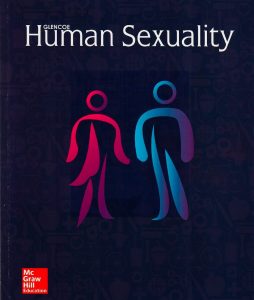
Saefkow then noted the “Health Concepts” area of the “Guide to Reading” section on the same page, which stated, “Explain why some people masturbate.”
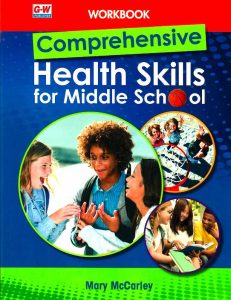
A workbook under consideration by the committee is the “Comprehensive Health Skills for Middle School,” portions of which some committee members point to as being inappropriate.
Middle school students in the workbook are given a number of activities and lessons, with students given scenarios or questions, and space in the workbook to provide a written response.
As an example, one of the middle-school-age scenarios states: “Carsen’s sexual urges and emotions have increased since he began dating Katie. Katie is also very sexually attracted to Carsen. Home alone, they begin to kiss. Kissing leads to intimate touches, and both share the desire to have sex. Include at least three strategies for effective use of this method.”
The student is asked to provide a written response to: How would you finish the story to help Carsen and Katie decide what they should do to reduce their risk of STIs (sexually transmitted infections)?
In the section entitled “Am I normal?” students are to imagine that they are responsible for managing a school blog that allows a safe place for eighth graders to ask questions about their sexual health. Based on that criteria, students are asked to give a written response relevant to the questions.
An example of one of the questions is: “I’m embarrassed to ask, but is it normal to ejaculate while I’m sleeping. I wake up and am surprised and uncomfortable. Am I normal?”
For his part, school board member Barry Marchman said, “I think some of the Comprehensive Sexuality Education (CSE) curriculum is too comprehensive, and not what I’d consider age-appropriate,” adding that he has not seen the books being reviewed by the committee.
The texts are in both hard-copy and digital versions. One set being considered is the G-W Comprehensive Health Skills for Middle Schools, several pages of which The Citizen has viewed. The pages titled “Choose Your Own Ending,” “Understanding Different Types of Sexuality,” “The Effects of Homophobia,” and “Am I Normal” contain this warning: “Copyright Goodheart-Willcox Co. Inc. May not reproduced or posted to a publicly accessible website.”
Under “The Effects of Homophobia” (Activity C Lesson 19.1, page 219) the student is asked what the impacts of the following scenarios will be:
• Transgender Carly has moved from one school to another to escape bullying, but at the new school is faced with “rude and inappropriate comments.”
• Iyanna makes the “difficult decision” to confess to her parents that she is bisexual and instead of receiving their support, “her parents made her feel like an outcast and unloved with their rude and threatening comments.”
Under a “Key Terms Review” in the same G-W text, the “correct” answer to the definition “Irrational fear of homosexuality” is the term “homophobia.” Under the definition “Referring to a person who chooses a gender identity different from the one assigned by society,” the apparent correct answer is “transgender.” The pages reviewed were free of religious or moral stances about sexual issues.
There are numerous textbooks available in the U.S. using the Comprehensive Sexuality Education approach, and they come with both supporters and opponents.
As cited in “Comprehensive Sex Education vs. Abstinence-only-until Marriage Programs,” the guidelines for comprehensive sexuality education are:
• appropriate to the age, developmental level, and cultural background of students;
• respects the diversity of values and beliefs represented in the community;
• complements and augments the sexuality education children receive from their families, religious and community groups, and healthcare professionals;
• teaches not only about abstinence, but also contraception, including emergency contraception and reproductive choice;
• teaches about lesbian, gay, bisexual, transgender (LGBT) issues and questions issues;
• teaches anatomy, development, puberty and relationships;
• teaches all of the other issues one would expect to be covered in a traditional sexuality education class; and
• should be science-based and medically accurate
According to the United Nations Population Fund: “CSE ultimately promotes sexual abstinence as the safest sexual choice for young people. However, CSE curriculums and teachers are still committed to teaching students about topics connected to future sexual activity, such as age of consent, safe sex, contraception such as: birth control, abortion and use of condoms. The most widely agreed benefit of using comprehensive sex education over abstinence-only sex education is that CSE acknowledges the student population will be sexually active in their future. By acknowledging this, CSE can encourage students to plan ahead to make the healthiest possible sexual decisions.”
From another source: “This (CSE) ideology of arming students to most successfully survive their future sexual experiences underlies the majority of topics within CSE, including condoms, contraception and refusal skills,” according to “Sex Education in California Public Schools: Are students learning what they need to know?”
Citing teen STD rates, and Fayette’s current “Choosing the Best” curriculum, some committee members provided a graph from the Ga. Department of Public Health showing the county’s STD rate hovering slightly above “0” while those in DeKalb, Chatham, Dougherty and Grady counties, all of which use “FLASH (Family Life and Sexual Health) CSE,” were significantly higher.
Berry-Dreisbach said parents will be able to opt-out if desired. She also noted that the digital copies to be used by teachers are the same as the hard copy books being reviewed by the committee.
Pertaining to the new Health and PE textbook adoption committee and timelines, Berry-Dreisbach said, “There are 13 members on the health committee: three from faith-based organizations; one healthcare professional; one mental health professional; three parents (a healthcare professional, college mentor, and business owner); three educators with students in the school system; and two educators without students in the school system. Additionally, there are nine members on the physical education committee, and three members are serving on both committees due to their preference and expertise. Students will be added to committee as work on the textbook selection advances.”
Berry-Dreisbach said the committee held its first meeting in November, at which members learned about their roles and responsibilities, and reviewed textbook vendor survey questions and a six-question scoring rubric that will be used to rate the vendors’ answers. Committee members received the sample textbooks and vendor survey answers in December to begin scoring them based on the rubric.
The committee is meeting in January to listen to feedback from teacher committee members and to select the top textbook vendors based on the rubric scores.
“They will meet twice in February to hear presentations from the top textbook vendors and get feedback from teachers prior to selecting the recommended textbooks,” Berry-Dresbach said.
Recommended textbooks will be presented to the public in March for review, and adoption by the Fayette County Board of Education will take place in April or May.
The website set up specifically for the new textbook adoption can be viewed at http://bit.ly/FayetteHPEAdoption
Here’s the statement emailed Jan. 24 from Melinda Berry-Dreisbach, public relations director for the Fayette County School System:
“Facts everyone should know about health textbook adoption
“The Fayette County Public School System’s health curriculum has and will continue to emphasize that abstinence is the only truly safe measure that students can use to protect themselves from unwanted pregnancy and sexually transmitted diseases.
“However, students who do decide to become sexually active now or in the future need information about how to prevent unwanted pregnancies and diseases. Health teachers do not encourage students to become sexually active.
“The school system fully understands that parents are their children’s first and most important teacher, and have the right to opt their children out of this part of the health curriculum.
“It should be noted that the health curriculum also covers other age or developmentally appropriate topics such as nutrition, physical activity, human anatomy, and social and emotional well-being, and that only a small portion addresses human reproduction.
“The overall goal of our program is to emphasize that health education is essential to maintain a high quality of life, and to have students successfully develop, establish, and achieve positive lifestyle goals that will lead to lifelong participation in health-promoting behaviors.
“The K-12 health textbook adoption is a transparent process that is being conducted in accordance with Georgia Board of Education rules. The public can keep up with the progress of the health textbook selection committee by going to the following website: http://bit.ly/FayetteHPEAdoption.
“On the site, the public can view meeting dates of the committee, meeting agendas and minutes, a list of textbooks to be reviewed by the committee, and an adoption timeline.
“Community members who wanted to serve on the health and/or physical education committee were invited to do so in October by completing an adoption committee survey, which was promoted on the school system’s website, through social media channels, and the local media.
“The school system followed Georgia Department of Education guidelines in establishing the composition of the committee.
“According to state rule 160-4-2-.12 COMPREHENSIVE HEALTH AND PHYSICAL EDUCATION PROGRAM PLAN, “the committee shall be composed primarily of nonteaching parents who have children enrolled in the local public schools and who represent the diversity of the student body augmented by others such as educators, health professionals and other community representatives. The committee shall also include a male and female student currently attending the 11th or 12th grade in the public schools.”
“There are 13 members on the health committee: three from faith-based organizations; one healthcare professional; one mental health professional; three parents (a healthcare professional, college mentor, and business owner); three educators with students in the school system; and two educators without students in the school system.
“Additionally, there are nine members on the physical education committee, and three members are serving on both committees due to their preference and expertise. Students will be added to committee as work on the textbook selection advances.
“The committee held its first meeting in November at which members learned about their roles and responsibilities, and reviewed textbook vendor survey questions and a six-question scoring rubric that will be used to rate the vendors’ answers.
“Committee members received the sample textbooks and vendor survey answers in December to begin scoring them based on the rubric.
“The committee will meet in January to listen to feedback from teacher committee members and to select the top textbook vendors based on the rubric scores. They will meet twice in February to hear presentations from the top textbook vendors and get feedback from teachers prior to selecting the recommended textbooks.
“Recommended textbooks will be presented to the public in March for review, and adoption by the Fayette County Board of Education will take place in April or May.” — The preceding statement was prepared by the Fayette County School System.
CORRECTION: The lead paragraph originally stated that the curriculum extended into elementary schools. That is incorrect. The texts being examined pertain only to middle schools and high schools, not elementary school-age students.





Leave a Comment
You must be logged in to post a comment.