


 5649
 0
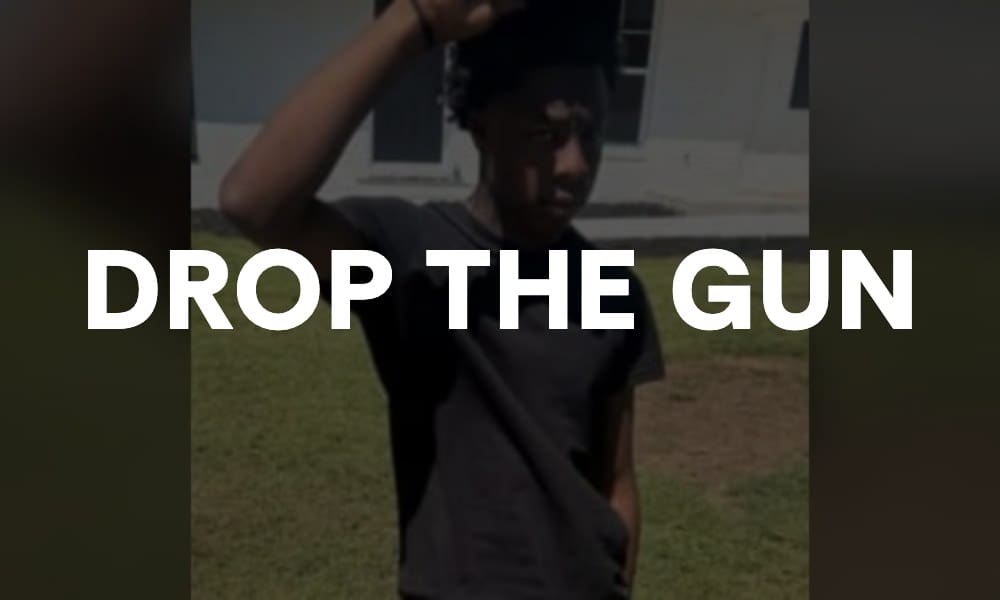
DNA Found on Handgun 42 Feet Ahead of Where Teen Fell; Mayor Says Body Camera Footage Is Inconclusive
The Newnan police officer who fatally shot 18-year-old Zadarious Dorsey knew him from previous encounters and called him by his nickname, Dae Dae, during the foot chase that ended in his death, according to new information released Monday by Coweta Judicial Circuit District Attorney Herb Cranford.
The October 26 statement also confirms that Dorsey’s DNA was found on a handgun recovered approximately 42 feet ahead of where he fell after being shot October 3.
But the available video does not conclusively establish whether Dorsey was holding the gun when the officer fired, according to Newnan Mayor James Shepherd, who reviewed the body camera footage during an October 22 meeting with prosecutors.
In an interview with The Citizen, Shepherd said the recording captures the officer repeatedly ordering Dorsey to drop the gun immediately before firing.
Whether Dorsey pulled the gun to use it, threw it away, or was still holding it when the officer opened fire remains unresolved.
Officer knew Dorsey from previous encounters
According to Cranford’s October 26 statement, surveillance footage shows that the officer pulled his unmarked police vehicle alongside the car in which Dorsey was riding at approximately 1:11 a.m. October 3.
The officer exited wearing a vest marked POLICE, with his badge visible.
The vehicle had not been stopped by police, Cranford said. Its occupants began walking away, and the officer directed only Dorsey to stop.
Shepherd said he believed Dorsey was wearing a ski mask on top of his head, rather than pulled down over his face.
During the ensuing foot chase, the officer called out, “stop, Dae Dae,” using the nickname by which Dorsey’s family and friends knew him.
Cranford said police records confirm that the officer had been present during previous encounters involving Dorsey.
Those included arrests in October 2025 and May 2024, both involving allegations of unlawful firearm possession, and Dorsey’s removal and trespass from Newnan High School in August 2023.
The October 2025 arrest was previously documented in records obtained by The Citizen through an open records request.
That report described an encounter in which Dorsey, then 17, fled from officers after making an improper U-turn on a scooter near Taylor Street and Fair Street. Officers pursued and apprehended him, reporting that they found a handgun in his possession.
He was arrested on a charge of possession of a firearm by a person under 18.
Cranford’s latest statement establishes that the officer involved in the fatal shooting was present during that earlier arrest.
Dorsey’s DNA found on handgun 42 feet ahead of his body
Cranford said the GBI recovered a Canik 9mm pistol equipped with an extended magazine and containing one bullet in the chamber.
The firearm was found approximately 42 feet from where Dorsey fell. Importantly, it was not behind him along the path of the chase. It was ahead of him, farther from the vehicle where the encounter began.
Cranford described its location as approximately the 2 o’clock position relative to the direction Dorsey had been running—diagonally ahead and to his right.
That placement raises questions about how the gun traveled beyond the point where Dorsey fell. Dorsey could have thrown it forward, but the available evidence does not establish precisely when or how the gun reached that location.
On October 15, the GBI Division of Forensic Sciences completed a DNA typing report identifying a match between DNA found on the firearm and Dorsey’s DNA.
The finding provides forensic evidence connecting Dorsey to the handgun. It does not establish when he handled it, whether he threw it, or whether he was holding it when the officer fired.
The original purchaser told investigators the handgun had been stolen from him in Albany, Georgia, several years earlier.
The distance between the firearm and Dorsey’s body has been a point of contention since his family reviewed the body camera footage October 9.
Family members told approximately 100 protesters gathered outside the Newnan Police Department that they questioned how the gun came to rest so far from where Dorsey fell.
Attorneys Ben Crump and Harry Daniels, representing Dorsey’s family, have argued that Dorsey was unarmed when he was shot.
The GBI’s preliminary account stated that Dorsey pulled a firearm from his waistband before the officer fired.
Mayor says body camera footage is inconclusive
Shepherd, who attended the October 22 evidence presentation, said the officer repeatedly ordered Dorsey to drop the gun immediately before firing.
However, he emphasized that the recording does not clearly establish what Dorsey was doing with the gun during the final moments of the chase.
“The video is not conclusive,” Shepherd said.
The mayor said the footage is too blurry to determine whether Dorsey pulled the gun, pointed it toward the officer, or threw it away.
He emphasized that the recording does not provide definitive visual evidence supporting either the family’s position that Dorsey was unarmed when shot or the conclusion that he was threatening the officer with a firearm at that moment.
The number of shots fired also remains to be conclusively established. During the October 9 protest, family members said they counted six shots while reviewing the footage. Shepherd separately described hearing five shots, with the possibility of a sixth.
The GBI’s initial statement said the officer fired multiple times but did not specify a number.
The uncertainty over what occurred in the final moments is significant because the legal justification for deadly force depends on the circumstances the officer reasonably perceived when he fired.
Dispute over Dorsey’s final words
The family has also questioned what Dorsey said after being shot.
During the October 9 protest, relatives who had viewed the complete body camera recording said Dorsey asked the officer, “Why did you shoot me, bro?”
Shepherd said the footage shown to community leaders October 22 stopped at the shooting, out of respect for the family. He did not hear Dorsey’s words afterward.
According to Shepherd, prosecutors provided a transcript of the subsequent audio and believed Dorsey had said, “I dropped it, yo.”
The mayor emphasized that he had not personally heard that portion of the recording and could not determine which interpretation was accurate.
The difference between the family’s account and the prosecutors’ interpretation remains unresolved.
Two meetings with attorneys and family
Cranford’s latest statement followed two meetings he conducted Thursday, October 22, at the Coweta County Justice Center.
During the morning, Cranford met with civil attorneys representing Dorsey’s maternal relatives.
That afternoon, he met with relatives from Dorsey’s paternal side, state and local NAACP leadership, clergy, and elected officials.
The afternoon meeting was requested by Dr. Cynthia Finney, president of the Coweta County NAACP, who helped arrange the attendance of paternal family members with whom the district attorney’s office had not previously been in contact.
Public officials attending included Coweta County Commissioner Al Smith, Newnan Mayor James Shepherd, Newnan Councilwoman Cynthia Jenkins, and Coweta County School Board Member Andrew Copeland.
Cranford presented evidence from the ongoing investigation and explained the legal standards prosecutors will use in deciding whether the officer should face criminal charges.
He also emphasized that his office does not represent the City of Newnan or the Newnan Police Department.
The district attorney declined to comment on the civil attorneys’ interpretation of the evidence.
Why did the officer pursue Dorsey?
Cranford’s statement establishes that the initial encounter was not a traffic stop.
According to surveillance footage reviewed by prosecutors, the other occupants of the vehicle walked away freely. The vehicle itself was driven from Cliff Circle at approximately 1:23 a.m., 10 minutes after the shooting.
The officer pursued only Dorsey.
Cranford explained that Georgia law distinguishes between consensual police encounters, investigative detentions, and arrests.
During a consensual encounter, an officer generally may approach and speak with a person without suspecting a crime, provided the person remains free to leave.
An investigative detention requires reasonable, articulable suspicion of criminal activity.
Cranford said his office has not determined whether the officer had sufficient legal grounds to detain Dorsey when he ordered him to stop.
He also distinguished that question from the legal justification for the shooting itself.
According to Cranford, prosecutors must ultimately determine whether they can prove beyond a reasonable doubt that the officer was unreasonable in believing deadly force was necessary to protect himself from death or great bodily injury.
Cranford also confirmed that Dorsey was prohibited from possessing firearms under the terms of bonds issued in Coweta County on October 10, 2025, and Carroll County on February 16, 2026.
Those restrictions establish that Dorsey was not legally permitted to possess a firearm at the time of the shooting. They do not, by themselves, resolve whether the officer’s use of deadly force was justified.
Investigation continues
The GBI has not completed its investigation, and the final autopsy report remains pending.
Cranford previously announced plans to release the body camera footage, other evidence, and a presentation of the shooting timeline after receiving the autopsy report.
The new forensic findings and confirmation of the officer’s previous familiarity with Dorsey answer some of the questions raised by his family and the community since the October 3 shooting.
But the central question remains unresolved: whether Dorsey posed an immediate threat to the officer at the moment deadly force was used.
Cranford said his office will continue providing updates as the investigation develops. No charging decision has been announced.


Leave a Comment
You must be logged in to post a comment.