


 5253
5253 0
0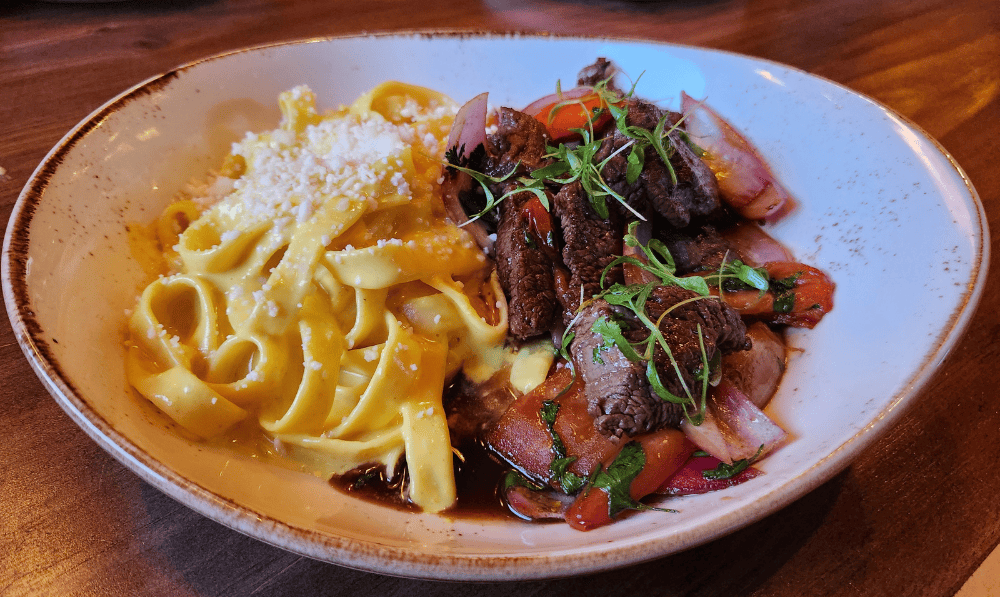
When I first visited Santa Maria Latin Tapas, Seafood and Oyster Bar this summer, the Fayetteville restaurant was still in soft-opening mode. The former Speedi-Pig Bar-B-Q had already been transformed almost beyond recognition, but the menu—and the restaurant itself—was still a work in progress.
Now Santa Maria is fully open, the menu has grown, lunch is being served, and Executive Chef Jeffrey Del Carpio and Chef Mario Garcia have had a little time to discover what Fayetteville diners actually order when given a sprawling menu of Latin flavors.
So I went back with a simple question: What are people loving?
The answer is paella. And ceviche. And tacos. And, apparently, pasta.
“The best sellers are the paellas, of course,” Del Carpio said. “The Taco Macho is one of the most popular. The Ceviche Puerto Inca is a must because people always order ceviche. They love the ceviche.”
But one of the newer additions he particularly wanted me to try was the Fettuccine Lomo.
I’m glad he did.
Peru meets pasta
Del Carpio is Peruvian, and his culinary background includes Peruvian, French, and Japanese influences. Garcia is from Mexico. Together, they have built Santa Maria around the idea that “Latin food” does not have to mean the cuisine of a single country.
That philosophy gets particularly interesting with the Fettuccine Lomo, a $38 dish combining lomo saltado with fettuccine and huancaína sauce.
The pasta is coated in the creamy huancaína sauce, which gets a gentle kick from ají amarillo, the Peruvian yellow pepper. The lomo saltado brings prime steak, onions, tomatoes, cilantro, and a savory sauce influenced by Peru’s long history of Chinese cuisine.
“It has oyster sauce, soy sauce, vinegar, pisco,” Del Carpio said, explaining that pisco is a Peruvian spirit made from grapes.
The result is cheesy and creamy, a little spicy, salty in exactly the way I want pasta to be salty, and then completely different once you get a bite of tender steak and onion with it.
This was my favorite dish of the night.
“We make our own pasta,” Del Carpio said.
But what struck me even more than the fresh pasta was how deliberately the dish changes as you eat it—the creamy noodle, tender steak, crisp onion, heat from the ají amarillo, and savory sauce.
I noticed the same thing later in the ceviche and again in dessert. When I mentioned it to Del Carpio, he lit up.
“You are the first person who discovered this about me as a chef,” he said. “I like to play with the textures.”
Ceviche should crunch, too
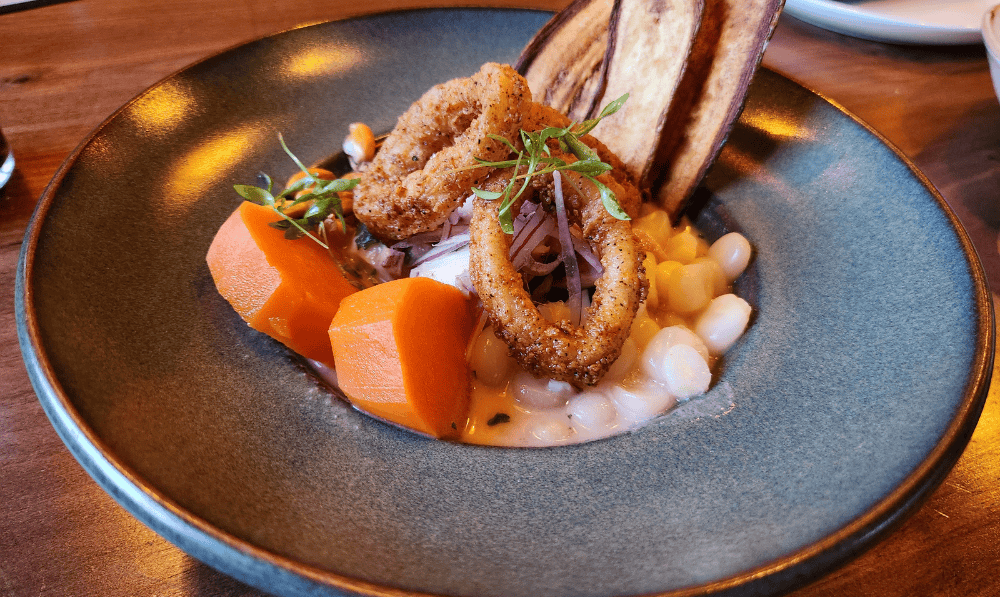
That becomes especially obvious in the Ceviche Puerto Inca, $29.
The menu lists mahi-mahi, octopus, calamari, leche de tigre, choclo, plantain chips, sweet potatoes, onions, and cancha.
If several of those words require explanation, that is part of the fun.
Choclo is a large Andean corn. Cancha is fried corn that provides crunch. Leche de tigre—literally “tiger’s milk”—is the citrusy liquid at the heart of Peruvian ceviche.
Del Carpio makes his with fish, lime juice, ginger, cilantro, and other aromatics.
In Peru, he explained, ceviche is prepared at the moment it is ordered rather than allowing the fish to sit in marinade for hours.
“We have pieces of fresh fish, the catch of the day, and then we marinate it at the moment and serve it,” Del Carpio said.
The textures are intentional: crispy calamari and cancha, soft choclo, sweet potato, fresh onion, plantain chips, seafood, and bright citrus.
“It’s different textures,” Del Carpio said. “All the mix together makes this dish memorable.”
A Taco Macho worth getting messy for
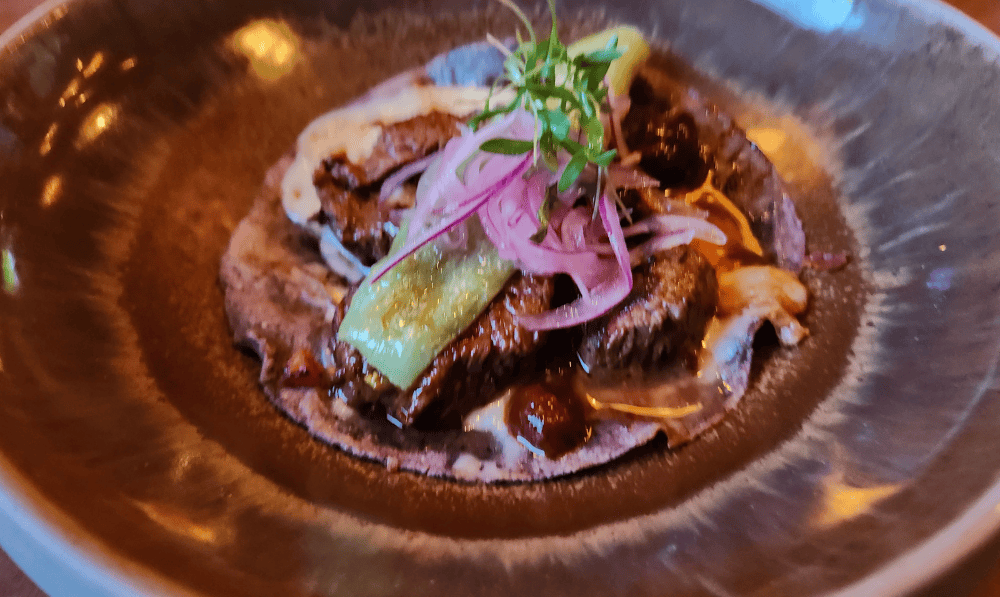
Then there is the Taco Macho, $7.
It is one big taco filled with outside skirt steak, Anaheim pepper, mozzarella, and salsa tatemada.
“Tatemada is a technique to burn ingredients on a direct fire,” Del Carpio explained.
For Santa Maria’s salsa, onions and tomatoes go directly onto the grill and fire before being blended with chiles. The result is smoky without tasting scorched or overwhelmingly hot.
The taco is cheesy, beefy, smoky, juicy—and messy.
It is worth the mess.
Santa Maria sells its tacos individually, which makes it easy to order several different varieties instead of committing to a plate of identical tacos. That becomes particularly relevant on Tuesdays, when the restaurant offers its tacos at half price all day.
There is also live music Tuesday evenings beginning around 6:30 p.m.
Lunch—and a little Speedi-Pig soul
The restaurant now serves lunch Monday through Friday from 11 a.m. to 3 p.m., with lunch choices ranging from $12.99 to about $19.
Among them is a Quick Lunch Express for $12.99: two smoked chicken tacos with melted cheese and onions, served with rice and beans.
And that smoked chicken connects Santa Maria’s very different menu to the restaurant that occupied this building for decades.
Santa Maria retained Speedi-Pig’s smoker and brought a member of the former barbecue operation onto its team. Del Carpio and Garcia are not trying to turn Santa Maria back into Speedi-Pig. They are experimenting with ways to use that old smoker within their own cooking.
“I don’t want to copy Speedi-Pig or be the same as Speedi-Pig, but we want to keep their soul,” Del Carpio said.
When I visited, brisket was smoking. I could smell it from the parking lot and all the way into the building.
The chefs are still “playing,” as Del Carpio put it, with ideas for future brisket dishes.
The old Speedi-Pig cart remains outside, too, as another piece of that history. Del Carpio said the restaurant is working through the necessary approvals to keep it there.
“That’s part of the soul,” he said.
He went to Mexico to learn tortillas
Del Carpio takes the cross-cultural part of Santa Maria seriously enough that when he and Garcia decided to open the restaurant, the Peruvian chef went to Mexico for a month.
Among the things he wanted to learn were mole and tortillas.
“I never tried making tortillas in my life in Peru,” Del Carpio said. “So now I’m a very specialist tortilla maker.”
Eventually, his tortillas began puffing properly.
“Some Mexican ladies get impressed about my tortillas,” he said. “They say that I can get married because my tortillas get puffy.”
It is a funny story, but it also explains quite a bit about the food here. Del Carpio did not assume that being a professional chef meant he already knew another country’s cuisine. He went there and learned.
The oyster bar is open
Another major change since my first visit: Santa Maria’s oyster bar is now fully operating during restaurant hours.
The chefs told me they prefer smaller oysters for their flavor and source many from colder Canadian waters. The regular menu also includes preparations such as Oysters a la Parmesana and Oysters Rockefeller.
From 2 to 5 p.m., oysters are half price during happy hour.
The full bar is open as well, with Santa Maria’s cocktails, wine, beer, and nonalcoholic options. On Tuesdays there is a live salsa band. On Fridays there is live flamenco. And some Saturdays, fire dancing is on the “menu”.
In other words, you can come here for dinner, but you can also sit at the bar, order a drink and oysters, watch what’s happening around you, and make an evening of it.
Save room for this dessert
I thought the Fettuccine Lomo was going to be the most interesting thing I tasted.
Then Del Carpio brought out the Chicha Panna Cotta.
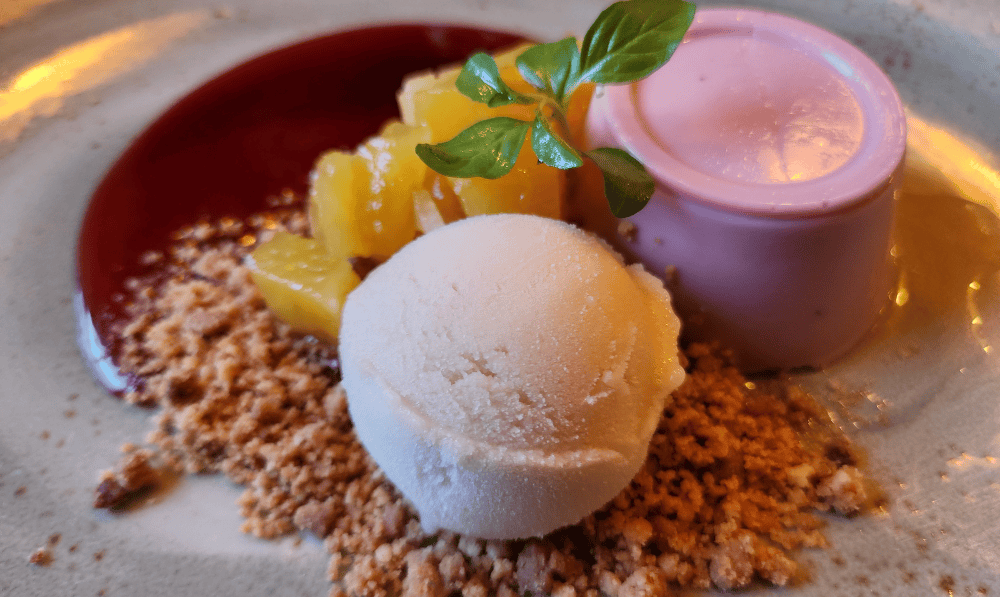
The $14 dessert combines panna cotta, crumble, house-made chirimoya gelato, chicha morada reduction, and pineapple confit.
Chicha morada is a Peruvian drink made from purple corn. Chirimoya is a fruit native to the Andes, and it becomes a delicately flavored gelato here.
The pineapple is not simply chopped fruit. Del Carpio cooks it with sugar, cinnamon, and star anise. Even the purple-corn reduction uses pineapple and lime remnants from other kitchen preparations to build more aroma and flavor.
Del Carpio developed the dessert himself, adjusting the panna cotta after deciding an earlier version was too heavy and adding pineapple because he wanted something bright and citrusy to cut through all that creaminess.
The finished dessert is surprisingly light. Creamy panna cotta gives way to cold gelato, then crumble, then that burst of pineapple, then another flavor from the purple-corn reduction.
Every bite seems like a surprise to the tongue. What is that flavor? That texture? Then you swallow and are surprised again by the next taste.
“Vanilla ice cream you can find in any restaurant,” Del Carpio said. “But chirimoya gelato?”
Nope.
“Chicha panna cotta?”
Also nope.
And after everything Del Carpio had told me about texture, I understood what he was doing with this dessert, too. It wasn’t simply about making something sweet. Each bite was designed to give you something different.
Don’t be afraid to order something unfamiliar
Santa Maria is not inexpensive, and Del Carpio knows some diners have noticed.
His answer is that the restaurant is deliberately buying higher-quality ingredients, including prime meats, while making sauces and other components from scratch and working with local farmers when possible.
For Del Carpio, that attention to quality is tied to a much bigger ambition. In his early 20s, he worked as a chef at a Washington, D.C., restaurant that later earned recognition in the Michelin Guide. Now, he said, he and the Santa Maria team dream of earning Michelin recognition of their own.
That helps put his approach to the menu—and the prices—in perspective. Del Carpio, Garcia, and General Manager Elemuel meet weekly, Del Carpio said, looking for ways to improve the food, drinks, ingredients, and service.
But his bigger request to Fayetteville diners is simply to try something they have never eaten before.
“It’s very important that people don’t get scared to try new things,” Del Carpio said. “I’m pretty sure they’re going to love our food if they give us a chance.”
So order a taco you’ve never heard of. Ask what leche de tigre is. Try purple corn in a sauce with your gelato. Split a paella. Have an oyster.
Now that Santa Maria is fully open, the restaurant Garcia and Del Carpio described to me before they had finished building it is taking shape—right down to the surprising flavors and textures.
As Del Carpio put it, “We don’t just make food; we make experiences here.”
Santa Maria Latin Tapas, Seafood and Oyster Bar
715 Glynn St. South
Fayetteville, Georgia 30214
Open daily at 11 a.m. The restaurant closes at 10 p.m. Sunday through Thursday and 11 p.m. Friday and Saturday. Lunch is served Monday through Friday from 11 a.m. to 3 p.m. Reservations are available through OpenTable.


Leave a Comment
You must be logged in to post a comment.