


 3195
3195 0
0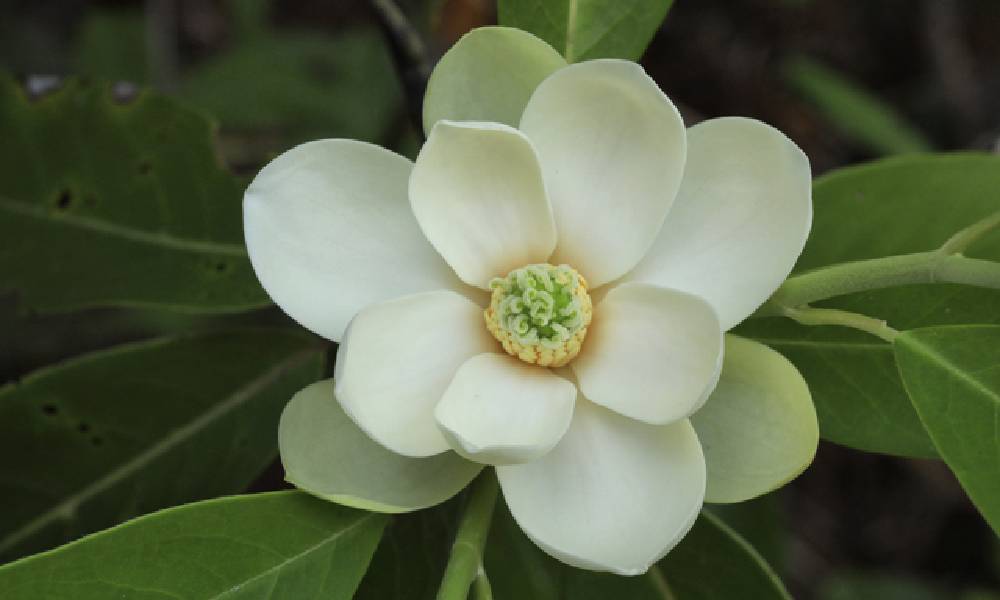
The Georgia Native Plant Society reiterates its support to designate the native Sweetbay magnolia as Georgia’s state flower and to declare April as Georgia Native Plant Month.
(Atlanta, GA) January 20, 2026 – The Georgia Native Plant Society encourages action in the 2026 Georgia General Assembly on HB 955 that will both change the state flower to the native Sweetbay magnolia from the non-native invasive Cherokee rose as well as designate April as Native Plant Month in Georgia. The bill highlights the ecological and economical importance of Georgia’s hardworking native plants.
GNPS encourages all Georgia citizens, and especially its members, to contact their local Senator and Representative to encourage their support for HB 955.
“Native plants are the foundation of all healthy ecosystems—sustaining pollinators, birds and other wildlife. Georgia’s unique bio-diversity is home to nearly 3,600 beautiful and hard-working native plants that actively contribute to making Georgia an economic and agricultural powerhouse as well as a destination for tourists” according to Michael Cowan, board chair of the Georgia Native Plant Society.
The bill was introduced by Rep. Deborah Silcox (R-Sandy Springs) and is co-sponsored by Speaker Pro-Tempore Jan Jones (R-Milton), Rep. Scott Hilton (R-Peachtree Corners), Rep. Stacey Evans (D-Atlanta), Rep. Sandy Donatucci (R-Buford) and Rep. Houston Gaines (R-Athens). The bill was referred to the House Special Rules Committee and awaits a hearing there. Sen. Rick Williams (R-Milledgeville) will carry the bill in the Senate, if passed by the House.
The Sweetbay Magnolia is a small, evergreen understory tree with a wonderfully fragrant and beautiful white flower. It is native to Georgia and can be found growing wild in much of the state. It is a host plant for our state butterfly, the Eastern Tiger Swallowtail, and its flower supports many other pollinators in addition to adding evergreen beauty to cultivated landscapes. The Georgia chapter of the American Society of Landscape Architects is actively supporting the change and sees great potential in incorporating a native state flower into landscapes across the state.
The current state flower is the Cherokee Rose—which was introduced from China in the early 1800’s and has since been designated as an invasive pest by the Georgia Invasive Species Council.
Silcox says her reasoning for supporting the change is simple: “The Cherokee Rose was adopted as the state flower in 1916 under the incorrect assumption that it was native to the state and also a legacy of the Cherokee people—it is neither. Georgia is one of the most bio-diverse regions in the world with so many beautiful native flowers. We deserve a state flower from Georgia!”
While the Cherokee Rose is not sold or encouraged as a landscaping plant because of its invasive tendencies, the Sweetbay Magnolia is widely available and can be planted in all regions of the state. “It would be great to have a state flower that Georgians can buy from local nurseries and feel good about planting on their property” stated Stuart Cofer, owner of Cofer’s Home & Garden Showplace in Athens.
The Cherokee and other native Americans relied on Georgia’s native plants to survive just as the early European colonists did. The myth that the Cherokee Rose was special to the Cherokee people was popularized many years after the tribe was forced to leave the state during the infamous Trail of Tears and has no basis in fact. The Georgia Cherokee Community Alliance not only supports removing the Cherokee Rose as the state flower but also encourages a native plant that was known by their people for the thousands of years that they lived in Georgia be designated as such. The Georgia Council for American Indian Concerns, representing multiple native American tribes throughout the state, is supporting the change as well.
April has previously been designated as Native Plant Month by gubernatorial proclamation; HB 955 will make the designation permanent and forego the need for an annual proclamation. The US Congress has annually declared April as Native Plant Month since 2021. The Garden Clubs of America spearhead the national effort and encourages each state to likewise designate April as Native Plant Month “to amplify the importance of native plants and biodiversity.” Native Plants are special because they have evolved over thousands of years alongside native bees, birds, and wildlife. The intricate relationships that have developed between local flora and fauna are extremely specialized and cannot be replaced with ornamental, non-native plants. Our landscapes today often contain exotic plants from around the world that do not support most of our insects and caterpillars—leading to drastic reductions in beneficial bird and wildlife populations.
Governor Kemp’s 2023 proclamation declared “it is important to encourage public awareness about the benefits of Georgia’s native plants to pollinators and other wildlife, to the economy, and to the health and sustainability of Georgia’s fragile ecosystems.”
Other organizations supporting this measure include: Birds Georgia, the American Society of Landscape Architects, the Georgia Invasive Species Council, the Georgia Cherokee Community Alliance and the Georgia Council on American Indian Concerns.
For more information, visit the Georgia Native Plant Society’s website at gnps.org/advocacy.
About the Georgia Native Plant Society: Georgia Native Plant Society champions the stewardship and conservation of Georgia’s native plants and their habitats. Founded in 1994, the organization conducts education and conservation programs through its state office and 9 local chapters across the state. Learn more at gnps.org.



Leave a Comment
You must be logged in to post a comment.