


 4081
4081 1
1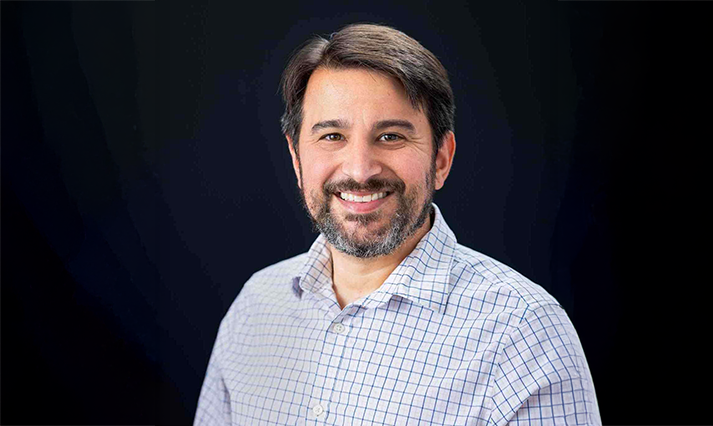
Picture someone facing their third DUI arrest in Fayette County. They’re looking at significant jail time away from their job, their family, their life.
But there’s another path available to them. One that’s harder but more effective.
Last week, I sat down with State Court Judge Jason Thompson to learn about Fayette County’s accountability courts, specifically the DUI/Drug Court and Veterans Treatment Court that have been operating since 2016. These programs offer an alternative to the traditional cycle of incarceration, one built on intensive oversight, consequences for failure, and genuine opportunities for people to rebuild their lives.
How the DUI/Drug Court Program Works
Getting into the program isn’t automatic. Candidates must meet three criteria.
First, they must be a non-violent offender. Judge Thompson can’t have someone with a history of violence in the program because participants meet one-on-one with case managers and treatment providers.
Second, they must legally qualify, typically with a second, third, or more lifetime DUI or drug charges. The program is designed for repeat offenders, not first-timers.
Third, they must clinically screen as “high risk, high needs.” The judge explained that this focus on high-risk offenders is intentional and based on national research showing that drug courts focusing on high-risk, high-need offenders are more effective at reducing crime.
Once accepted, participants face 18 to 24 months of intensive requirements. They meet with the judge every two weeks for check-ins and call a phone number daily between 4 and 7 p.m., submitting to a drug test if their number comes up. They maintain full-time employment, or do community service, or attend school because they must stay busy. They attend both group and individual counseling and submit to home checks by community police officers who verify they’re maintaining a clean and sober environment. They observe a curfew that relaxes as they progress through phases and work with their assigned case manager to ensure compliance with all requirements.
If someone slips up, a collaborative team decides on “course correction.” The judge, coordinator, case manager, prosecutor, defense attorney, treatment provider, probation officers, and law enforcement all weigh in on whether the participant needs additional community service, more treatment, or even short jail time. The judge noted that research shows keeping sanctions under a week helps keep people engaged in the program.
The program offers incentives for success. Up to 40% of court fines are waived upon graduation, the state minimum 240 hours of community service is waived, and participants gain access to a limited driving permit. But the judge says the biggest incentive is being told they’re doing well after years of being told they’re failures. He makes participants a promise at the beginning. “If you don’t quit, we won’t quit you.”
Veterans Get Special Support
For veterans facing similar challenges, Fayette County offers a parallel track. The Veterans Treatment Court follows the same candidate criteria and basic structure as the DUI/Drug Court program but adds critical military-specific elements that recognize the unique challenges veterans face.
Court begins with the Pledge of Allegiance and the military oath. Military branch flags are displayed in the courtroom, and a VA representative is present at every session to ensure veterans have access to all available services. But most importantly, there’s the Battle Buddy system.
Each participant is paired with a retired veteran from the community who volunteers specifically to help a fellow veteran. They match Marine with Marine, Army with Army, Navy with Navy. The mentor didn’t know the participant before the program. They simply volunteer because, as Judge Thompson explains their mindset, “He served. I served. I’m going to serve again in this capacity.”
The battle buddy sits with their assigned veteran in court every two weeks and texts in the morning, “Just checking in on you.” There’s often a significant age gap with participants tending to be in their 20s through 40s while mentors are older retired servicemembers. But the connection transcends age.
The Results Matter
Since 2016, the program has graduated 117 participants. Judge Thompson shared that the recidivism rate drops from 70% under traditional sentencing to under 20% for program participants. That reduction is even more dramatic when you consider Georgia’s overall prison recidivism rate hovers around 30%, according to the Georgia Department of Corrections.
Graduates have become business owners, with one graduate earning her nursing degree while in the program. Another graduate was hired by Keep Peachtree City Beautiful after starting as a volunteer and now supervises other people doing community service there. High school dropouts earn their GEDs during the program, and job promotions are celebrated with fist bumps and applause in court.
The judge made a calculation about the fiscal impact. He asked the prosecutor to determine what those participants would have cost in jail time under traditional sentencing versus their reduced jail time through the program. The program has saved taxpayers at least $1.5 million over the years, with each participant having an average of 103 days of expensive jail time reduced.
Graduation Day
Every few months, Fayette County holds a graduation ceremony for program participants. Judge Thompson described the most recent one, held last month in December, and his account reveals why this program matters beyond statistics.
Two hundred people showed up for only three graduates. The graduates knew about 15 to 20 people in the room while the rest were community leaders showing up to say “we support you.” Representatives from every municipality including Brooks and Woolsey attended, along with state lawmakers. Georgia Supreme Court Justice Verda Colvin delivered the keynote address. Pastors were present, along with past graduates who returned as alumni.
But most importantly, the arresting officers attended. Peachtree City and Fayetteville police officers come to these graduations, sometimes the same officer who arrested the participant years earlier. Judge Thompson described one officer who, while off duty, stood up and said, “I remember you a couple years ago when I arrested you, and I just want to say, on behalf of the Peachtree City Police Department, I’m proud of you and how well you’ve done.”
For someone used to being “the boozer, the loser, the addict, the black sheep of the family,” this moment changes everything.
Judge Thompson shared two stories from that December graduation. A daughter graduated, and her mother, through tears with her arm around her, said, “I’m glad I got my daughter back. This is the daughter I have back.”
Another graduate was probably in his late 20s, and his father was stoic, not the emotional type, the judge noted. The father wouldn’t put his arm around his son, but you could see a tear coming down his face as he got the words out, “I’m proud of you.” The judge reflected, “I think what he was really saying was, I love you.”
Veterans Treatment Court graduations are held at the VFW Post near The Fred in Peachtree City. Veterans show up in uniform, and fellow service members provide cake, water, and lemonade. But their presence says everything to someone who thought no one would support them anymore. Additionally, the VFW offers all graduates a free one-year membership, welcoming them back into the community of veterans.
Addressing the Critics
There is an obvious criticism of this program: “Do the crime, do the time.”
Judge Thompson’s response to this sentiment is straightforward. When people don’t know what the program requires, they might think it’s too lenient. But when he explains what participants actually go through, he says he’s never had anyone who understood the program fail to support it.
That support emerges for a simple reason. It doesn’t take long for most people to think of someone in their life who struggles with substance abuse. Addiction is an issue that touches many of us in some form, and once people understand what the program actually demands, they recognize that the revolving door of jail and re-arrest isn’t working.
The shift from skepticism to support often becomes personal. After the judge speaks publicly about the program, people often approach him to share their own connections to addiction and recovery. Some tell him, “You don’t know me, but my son was in your program.” Others share, “My mom was in a program like this in Wisconsin.” The most heartbreaking conversations begin with, “I really wish this was around when my son was having this issue.” One person told him their son had taken his life four years earlier.
Why This Matters to All of Us
That person arrested for their third DUI facing months of jail time now has a choice that didn’t exist before 2016 in Fayette County. However, it isn’t easy. It’s arguably harder than just serving jail time.
But when someone chooses the harder path and succeeds, we don’t just get one person back. We get a productive employee back in the workforce, a parent back in their children’s lives, a neighbor who maintains their property and contributes to the community. We get someone who volunteers at Keep Peachtree City Beautiful instead of requiring supervision there. We get a nurse caring for patients, a business owner creating jobs, a veteran reconnected with fellow service members.
The accountability courts represent what’s possible when the criminal justice system focuses on breaking cycles instead of just managing them. Every graduate makes Fayette County safer and stronger. Every family reunited strengthens the fabric of our community. Every success story means one less person trapped in the expensive, ineffective cycle of arrest, incarceration, and re-arrest.
Two hundred people showed up for three graduates last December because they understood something important. When we invest in helping people change, we’re not being soft on crime. We’re being smart about building the kind of community we all want to live in.





Leave a Comment
You must be logged in to post a comment.