


 6689
6689 0
0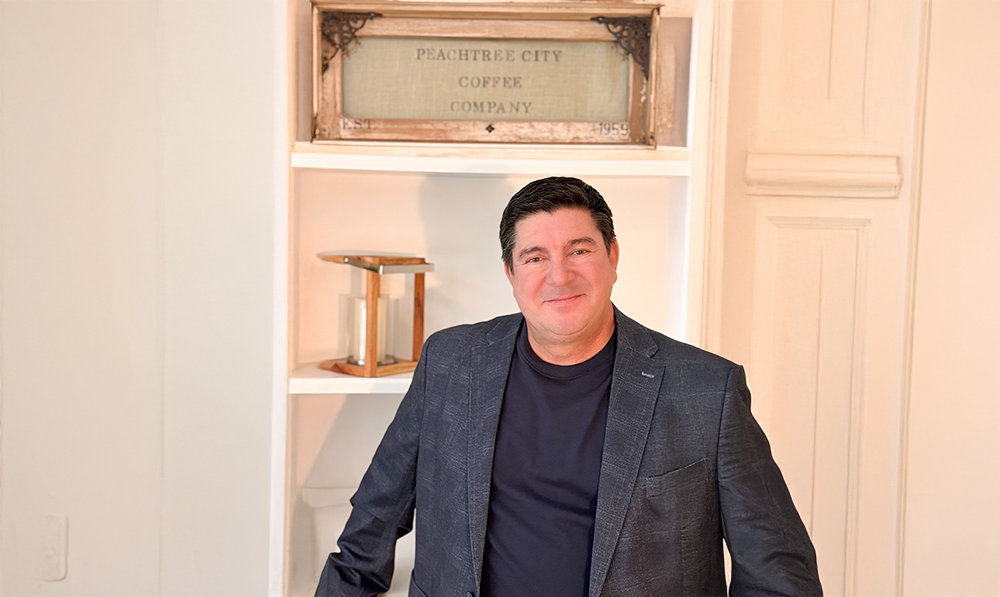
Qualifying has come and gone, and the matchups for Peachtree City’s 2025 election are now locked in. On November 4, residents will head to the polls to decide the mayor’s race and fill two council seats.
The ballot is as follows:
- Mayor: Incumbent Kim Learnard vs. Steve Brown
- Councilmember Post 3: Incumbent Clint Holland vs. Joseph Campbell
- Councilmember Post 4: Michael Polacek vs. James Clifton
In past weeks I’ve taken a close look at Mayor Learnard, Brown, and Clifton. Most recently I wrote about newcomer Michael Polacek. This week the spotlight shifts to Post 3, where challenger Joe Campbell is making his case against incumbent Clint Holland. To better understand Campbell’s candidacy, I dug into his campaign platform and sat down with him for a wide-ranging interview.
Who Is Joe Campbell?
Joe Campbell’s path to Peachtree City politics has been anything but conventional. He spent five years in Wyoming’s foster care system before being adopted by two teachers, who he says taught him the values of hard work, honesty, and service. Those lessons carried him through a 28-year career with the Walt Disney Company, where he started as a hotel bellman and eventually managed large-scale resort operations, multimillion-dollar development projects, and labor negotiations between unions and corporate leadership. Along the way, he developed expertise in traffic and capacity planning, project delivery, and conflict resolution.
Campbell and his wife moved to Peachtree City in 2018 with their two children, one now at Booth Middle School and the other a recent McIntosh graduate. His in-laws followed soon after, making three generations of the family residents. Since arriving, he has chaired the Convention and Visitors Bureau Board, volunteered in local schools, and served as a scout leader.
For Campbell, running for council is the natural extension of that involvement. “My leadership experience in nearly three decades at Disney has given me the skills needed to be a positive force for change on our City Council,” he said. “I’ve driven results across diverse perspectives—both nationally and internationally—and managed complex, multi-million dollar improvements.”
Joe Campbell’s Platform
Campbel’s website frames his campaign around three themes—Preserve, Thrive, and Connect—but the substance of his platform runs deeper than slogans. His proposals touch nearly every area of city government, from taxes and reserves to recreation, housing, and public safety.
Fiscal Responsibility and Taxes
Campbell draws his sharpest policy contrast with opponent Clint Holland on taxes. He rejects routine millage rate rollbacks—a popular campaign talking point, but one he argues is misleading. While the city’s millage rate only funds Peachtree City services—not schools—Campbell often ties strong schools and strong services together as the foundation of property values. Because HB 581 freezes property tax assessments this year, he notes, homeowners would see no savings even if the rate were reduced. “A rollback only affects renters, businesses, and commerce—it doesn’t put money back in the pockets of homeowners,” he said. He also worries that rollbacks shrink the city’s operating budget at a time when residents expect strong services, from police and fire to parks and infrastructure.
On reserves, Campbell favors replacing percentage-based benchmarks with a “days cash on hand” standard, targeting 150 days. He estimates that the city currently sits closer to 220 days—an overage of $8–10 million. He argues those excess funds should be redirected into tangible capital projects such as park improvements, traffic upgrades, and multi-generational recreation facilities. “Percentages can be misleading. But $100,000 a day times 150 days—that’s tangible,” he said.
Transparency and Citizen Input
If there is one throughline in Campbell’s campaign, it is transparency. He believes too many residents feel shut out of decision making, either because public comment is constrained or because budget debates are opaque. He wants to expand speaking time at council meetings, host quarterly town halls, and launch online listening forums to give citizens a chance to weigh in early.
His critique of current council dynamics is blunt: disagreements have too often spilled into public spats and social media posts. Drawing on his Disney background mediating union disputes, Campbell says leaders should hash out differences privately before meetings so council can present a united front. “Our leaders should be setting the example. Going to social media or publications to demean someone you’re supposed to work with is unproductive,” he told me.
Quality of Life and Services
Campbell frequently returns to the idea of Peachtree City as a “garden city” built around green space, cart paths, and village-style planning. He sees preserving that identity as central to quality of life. But he also argues that the city has overlooked some constituencies, particularly teenagers and seniors. His son told him that as a high school student there was “nothing to do at night” besides loiter at Target or Walmart. Campbell wants to change that with safe evening activities for teens, a dedicated senior center, and broader multi-generational programming.
He also supports expanding community events at underused city facilities such as Drake Field and The Fred. On the service side, he proposes exploring citywide Wi-Fi and creating a one-stop permitting office to help small businesses navigate regulations. These ideas range from aspirational (citywide Wi-Fi would be costly) to immediately actionable (a small business liaison could be added with little expense).
Traffic and Infrastructure
Traffic is the centerpiece of Campbell’s campaign. He believes Peachtree City must take a holistic view rather than focusing narrowly on Hwy 54/74. “Addressing one problem, like 54/74, just makes it pop up elsewhere,” he said, pointing to the congestion in Planterra as an example.
His solution is a comprehensive citywide traffic study, paired with smaller city-funded fixes. He calls for synchronizing the six lights along Hwy 54 between Hwy 74 and MacDuff, which he claims currently run out of sequence and cause unnecessary backups. He also favors additional roundabouts, arguing they are cost-effective and reduce delays. Another focus is access to Booth Middle, where current traffic patterns push drivers through neighborhoods. He believes this was a “ball dropped” in planning and needs a rethink.
On cart paths, Campbell advocates both education and enforcement. He supports the idea of golf cart driver’s ed for young operators and equipping police with resources such as e-bikes to enforce rules on paths. He has also floated design upgrades like wider lanes, convex mirrors at blind corners, and quicker hazard repairs.
Growth, Housing, and Annexation
Housing density is where Campbell strikes a careful balance. He is wary of recent high-density developments, warning they can overcrowd schools and worsen traffic. But he also acknowledges the affordability challenge. “It’s sad that 70 percent of the people who work in Peachtree City can’t afford to live here,” he said.
Campbell distinguishes between intrusive apartments and discreet, need-based housing. He cites the senior living community behind Target as an example of higher-density development that works because it is tucked away, serves a clear need, and doesn’t alter the city’s character.
On annexation, he supports updating the city’s growth boundary study (last revised in 2014) and evaluating requests case by case. He was skeptical of the Stagecoach Road proposal, saying he had not seen evidence of clear benefits to the city.
Schools, Public Safety, and First Responders
Campbell is adamant about supporting schools and first responders. He frequently praises Police Chief Janet Moon and her department’s community ties, saying their presence helps make Peachtree City one of the safest communities in Georgia. On education, Campbell stresses that while school funding is set through a separate Fayette County millage rate—not the city’s—local tax policy still matters. “When you have stellar, nationally ranked schools, the value of your home goes up. When you start taking money away from education, schools suffer, and property values go down,” he said. For him, keeping both city services and schools strong is central to protecting Peachtree City’s quality of life.
What Should We Make of Campbell’s Platform?
Joe Campbell has put forward an ambitious and fairly detailed platform, one that emphasizes method over slogans. His Disney background shows in how often he talks about process, planning, and consensus-building—an approach that could be either a strength or a liability depending on what voters are looking for.
On finances, Campbell draws a sharp contrast with his opponent. He rejects routine millage rate rollbacks, pointing out that under HB 581 homeowners won’t see any savings this year, and warning that the city would instead be cutting into its own operating budget. His push to measure reserves by “days cash on hand” rather than percentages reflects the same emphasis on clarity and structure. But it also leaves open a thorny question: if the city has more money than it needs, who decides how to spend it?
Campbell is equally process-driven on transparency and governance. He wants longer speaking time at meetings, more town halls, and online forums so residents can weigh in early. More importantly, he’s been critical of council members airing disputes in public, arguing that leaders should hash out disagreements behind closed doors and present a more unified front in meetings.
Traffic is where his pragmatism is most visible. He favors a citywide study to get a full picture of congestion and sees smaller fixes—like light synchronization on Highway 54—as more realistic in the near term than lobbying GDOT to redo its current plans.
On housing, Campbell walks a careful line. He acknowledges that affordability is a growing problem but limits his support to tightly defined projects such as senior housing, stressing that large-scale rezoning for apartments would threaten the city’s character. It’s a nuanced position, but one that risks being attacked in a political climate where “apartments” is often a dirty word.
Where he is most straightforward is on quality of life issues: protecting schools, supporting police and first responders, improving cart path safety, and creating resources for veterans, teens, and seniors. These aren’t the flashiest promises, but they round out a platform aimed at everyday concerns.
Taken together, Campbell comes across as a candidate who values clarity, order, and collaboration. His appeal lies in pragmatism rather than sharp edges; his risk is that caution and process can sometimes blur into a lack of urgency or prioritization.
The Choice for Post 3 Voters
The Post 3 race offers voters a stark choice. Incumbent Clint Holland has built his campaign around challenging GDOT on the 54/74 project and advocating for millage rollbacks. Joe Campbell offers a different style: pragmatic, process-oriented, and rooted in both professional expertise and local service.
Campbell is not a candidate of sweeping promises or ideological crusades. His platform leaves some gaps, particularly on housing, but it reflects a seriousness about governance and a desire to broaden citizen engagement. He presents himself as a listener, a problem solver, and someone intent on reinforcing Peachtree City’s character while adapting to its challenges.
For voters, the question is whether they want continuity with Holland’s more combative style or a shift toward Campbell’s emphasis on consensus and data-driven pragmatism. The answer will shape not just the balance of the next council, but also how Peachtree City approaches growth, traffic, and quality of life in the years ahead.







Leave a Comment
You must be logged in to post a comment.