


 1993
1993 0
0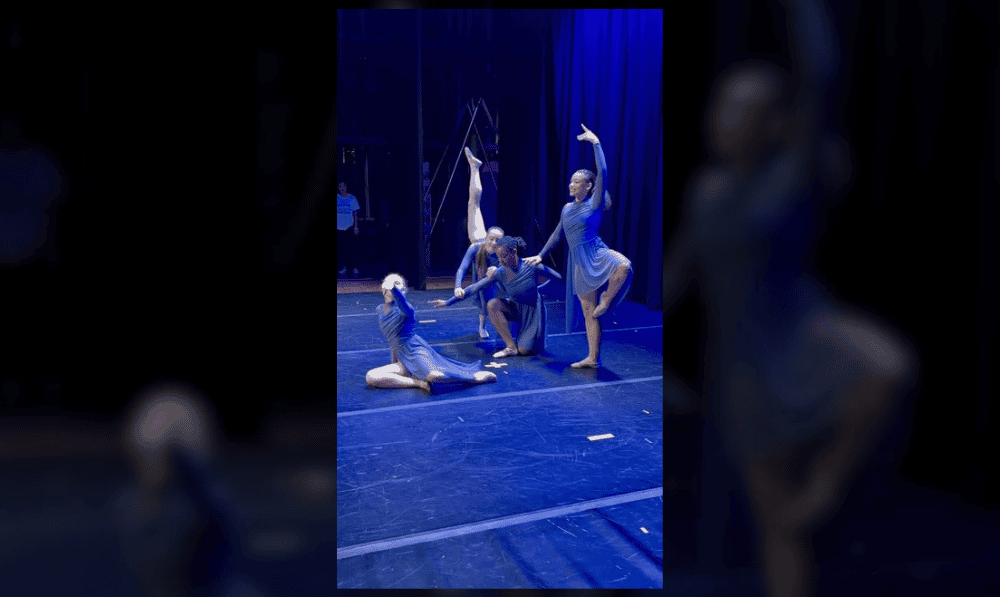
At Southern Arc Dance in Newnan, a dance class may mean preparing a young ballerina for a professional career. It may also mean helping someone with Parkinson’s practice the connection between thought and movement, giving a young person with disabilities a place onstage, or finding a way to keep a child dancing when a parent can no longer afford tuition.
For Artistic Director Paulo Manso de Sousa and his husband, Will Slay, those things belong under the same roof.
The couple built Southern Arc around two very different skill sets. Manso de Sousa, a longtime professional dancer, handles the artistic side. Slay, Southern Arc Dance Center’s director of operations and chairman of the nonprofit Southern Arc Dance Theater, handles the business, logistics, parents, grants, and community relationships.
“The artistic is his lane,” Slay said. “Anything artistic is his, and he handles it. Anything business, parent problems, any of that stuff comes on my desk, which is why Southern Arc Dance works.”
They are different enough, Slay said, that friends have long joked they keep each other in balance.
His friends told him Manso de Sousa was good for him because Slay was so grounded “that if it wasn’t for him, you would bury yourself,” Slay said. Manso de Sousa’s friends had the opposite assessment: “If it wasn’t for Will, you’d just fly away into nowhere.”
“So we’re good,” Slay said. “We’re perfect with that, and that’s why it works for us.”
That partnership has helped sustain an organization now in its 13th season, with a nonprofit mission centered on making dance accessible to people who might otherwise be left out.
“Diversity has been part of our mission from the beginning,” Slay said.
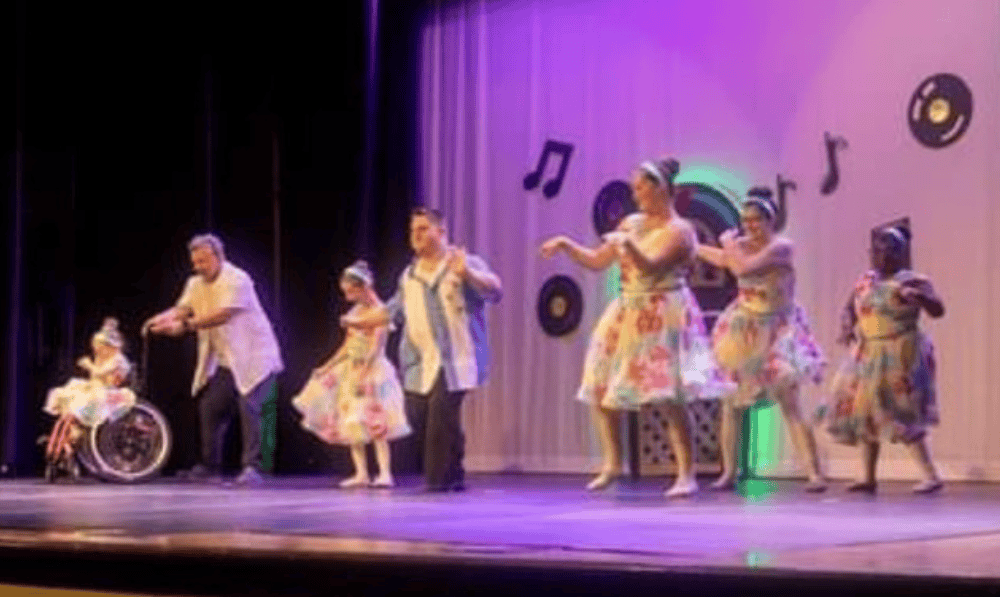
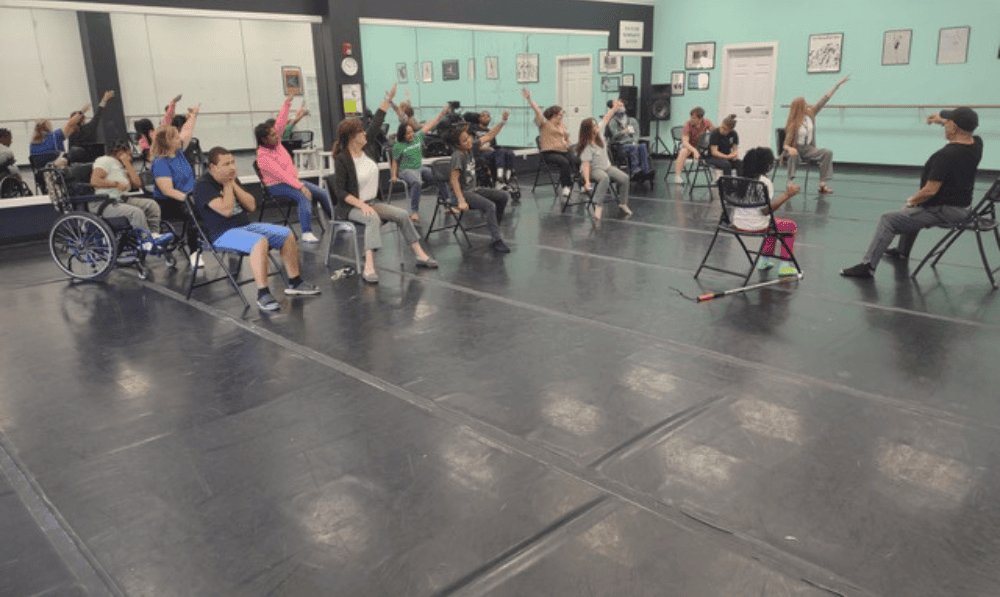
Southern Arc Dance Theater supports programs including Dance Without Limits for people with developmental and physical disabilities and Dance for Parkinson’s, which has expanded to welcome people facing other mobility challenges.
For Slay, those programs have increasingly become the reason the organization exists.
“When we can no longer afford to do the outreach programs, we can no longer afford to exist because teaching dance and preparing people’s careers is important,” Slay said. “But for me, the passion is in those things that we do that everybody else isn’t doing.”
Movement with a purpose
Dance for Parkinson’s started extraordinarily small.
For nearly a year, Slay said, one gentleman was sometimes the only participant who came to class. Southern Arc kept teaching it anyway.
“He got the benefits. He appreciated the class. He wanted it, so he kept doing it,” Slay said.
Today, Slay said the program consistently draws about 10 to 12 people. Most are seniors, although the class has expanded to include younger adults who have experienced strokes or other mobility issues.
It is a dance class rather than a traditional exercise class, but its movements deliberately work areas of the body that can become more difficult to use with age or neurological disease.
Participants point and flex their ankles, lift their legs, strengthen their calves, and practice heel-to-toe movement.
“One of the issues with Parkinson’s is mind-body connection,” Slay said. “Sometimes they call it freezing.”
Instead of simply instructing participants to stretch, an instructor may give the motion a purpose: Imagine a pear at the top of a tree. Reach for it, pull it down, and put it into a basket on the other side of the chair.
“You’ve got a purpose for moving,” Slay said. “So the whole class, you’ve got a purpose. It’s not just movement for the sake of movement.”
Southern Arc asks for a $5 donation for the class, but Slay said no one is turned away for an inability to pay.
The benefits have extended beyond movement.
Slay said participants who once came only for class began making plans together outside the studio.
“One of the big things with Parkinson’s is social isolation,” he said. “So now they have a group that has connected.”
A place to belong
Dance Without Limits grew from another form of exclusion.
The program welcomes children and adults with developmental or physical disabilities, including dancers who use wheelchairs, walkers, or canes and people whose conditions can make participation in a traditional class difficult.
The class is free.
“They’re excluded most places,” Slay said. “So we have a class for them so that they’re not excluded.”
But Southern Arc does not automatically separate those dancers from its broader programs.
Slay said some Dance Without Limits students also participate in mainstream classes when appropriate, and dancers with disabilities have performed in Southern Arc productions alongside other students.
“They’re there because they’re part of our family,” Slay said.
That philosophy is now helping Southern Arc take part in something much newer: the development of dance sport within Special Olympics in Georgia.
Manso de Sousa trained as a Special Olympics dance coach, while Slay trained as an assistant coach. Southern Arc uses Dance Without Limits to teach participants who may also compete in dance sport.
Dance sport can include ballet, jazz, hip-hop, street, and Latin dance, with athletes competing individually or in groups.
Only a small number of programs are participating in Georgia so far, Slay said, and Southern Arc has hosted invitational competitions as organizers work toward creating enough events for athletes to progress toward higher levels of competition.
“We’re helping,” Slay said. “It’s a baby.”
Southern Arc has worked with Coweta County Special Olympics and other supporters as the program develops.
For Slay, seeing dancers with disabilities perform is also important because Southern Arc does not put them onstage simply as a gesture.
“We are very careful never to make it look like they’re being sporty,” Slay said. “They’re where they’re supposed to be. They have their place. We train.”
Professional dance without shutting people out
Inclusivity at Southern Arc exists alongside serious dance instruction.
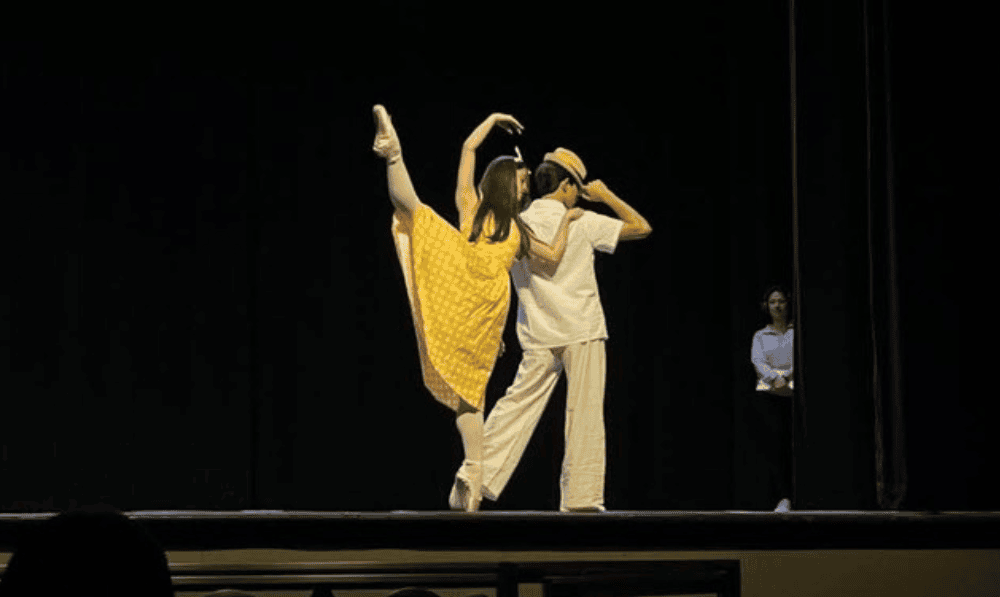
Manso de Sousa had a professional ballet career and taught at dance schools including Atlanta Ballet before starting Southern Arc. Slay said Manso de Sousa wanted students taught by instructors who understood not just choreography but technique, vocabulary, and the realities of professional dance.
Their instructors have professional backgrounds in the disciplines they teach.
“We’re not just teaching choreography,” Slay said. “We’re teaching dance, and we’re there to help them get to the next level.”
Some Southern Arc students have gone on to advanced dance schools and apprentice programs. Manso de Sousa’s connections from his professional career have also allowed him to make introductions and help young dancers get opportunities to be seen.
But Southern Arc made a deliberate decision not to create a traditional competitive student company.
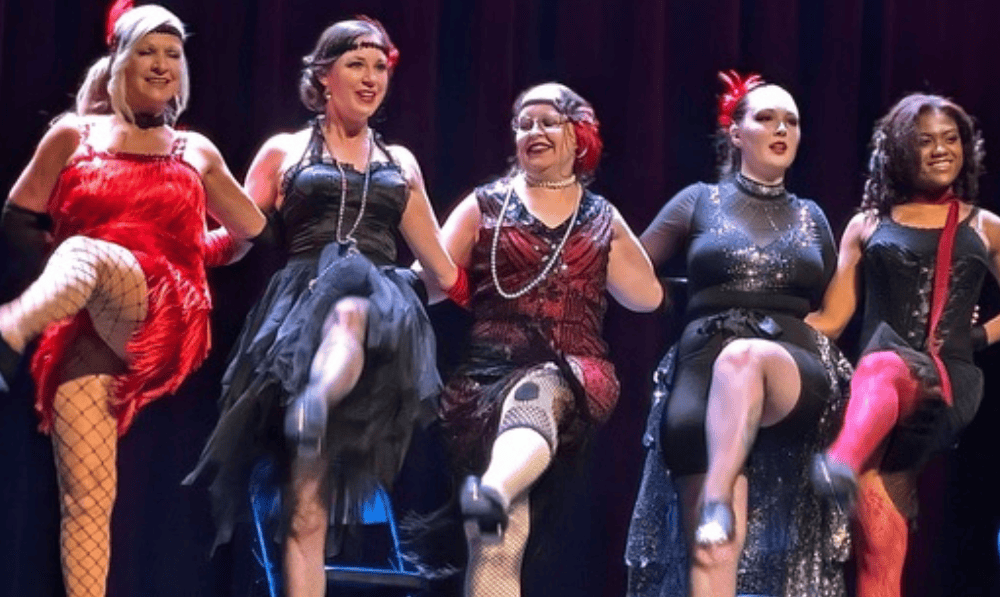
Instead, students are invited to participate in productions without first having to win membership in an elite group.
“What happens because they’re not competing for that?” Slay said. “They’re encouraging each other. They’re supporting each other. They’re bonding together. They’re building each other.”
Accessibility also extends to money.
Slay said Southern Arc has reduced tuition or allowed students to attend for whatever a family could afford when a talented or passionate student did not have the financial resources for classes.
Sometimes the organization calls those arrangements scholarships, even when no outside scholarship fund exists to reimburse Southern Arc for the difference.
“We wanted those kids to be able to get [those opportunities] because you don’t know what you can do until you’re exposed to it,” Slay said. “We wanted to make sure that they had the opportunities that they couldn’t get because of money. We didn’t want that to be a barrier.”
When a parent loses a job or encounters financial trouble, Slay said his first concern is often preserving stability for the child.
“The first thing we’re going to do is going to keep your kid dancing because they shouldn’t have to deal with grown people problems,” he said.
A partnership behind the curtain
Slay did not come to Southern Arc from the dance world.
When he met Manso de Sousa about 16 years ago, Slay said he knew little about ballet. His background was in customer service and business.
The two met by chance over lunch in Atlanta when a crowded restaurant left Manso de Sousa looking for somewhere to sit.
“Can I share a table with you?” Slay remembered him asking.
The conversation continued over a drink afterward. They saw each other again, and Slay said that from then on, they either saw or spoke to each other every day.
They married after same-sex marriage became legal nationwide, surrounded by both families.
Their wedding even included something particularly fitting for a life that would soon revolve around performances: an intermission.
They had been so busy with “The Nutcracker” rehearsals that when the wedding ceremony reached the planned sand ceremony, no one had put the sand on the table.
“Paulo said, ‘We’re gonna take a five-minute intermission, and we’ll be back,’” Slay said.
That mixture of art, logistics, family, and improvisation has continued through their years running Southern Arc.
Manso de Sousa creates. Slay figures out how to make it happen.
“We have our lanes,” Slay said.
The arrangement has carried them through 13 seasons, moves, performances, financial challenges, new programs, grant applications, and the everyday work of keeping a dance organization operating.
There have been times when they have wondered whether retirement might be easier.
The conversation generally does not last long.
“We realized we missed it,” Slay said after one break from the studio. “We were glad to be back.”
‘Bigger than us’
Southern Arc Dance now operates in Newnan from a space the couple once thought was far beyond what the fledgling organization could afford.
“It’s a struggle keeping the rent paid and the utilities, all that stuff,” Slay said.
Still, they have continued offering programs even when funding was uncertain.
“The thing is, we’re making a difference, and this is obviously bigger than us,” he said.
Southern Arc has received grants and support from community organizations and businesses, and Slay continues looking for additional nonprofit and corporate support.
But he measures its success in other ways, too.
He remembers the early Southern Arc students who came from very different backgrounds and would probably never have known one another if they had not ended up in the same dance studio.
He watches Dance Without Limits participants take their places in performances.
He sees Parkinson’s participants forming friendships.
And he sees children coming into his office when they need an adult willing to listen.
“For the last 13 years, it’s become less of a mission and more of a ministry,” Slay said.
He and Manso de Sousa have tried to build a place where differences in age, ability, race, background, or finances do not determine whether someone belongs.
“At the end of the day, when we stop and look back, we’ve added positive pebbles to the lake of life,” Slay said.
Those pebbles, he said, are the connections formed among people who might otherwise never have known one another.
“They will be more receptive to people who aren’t like them,” Slay said. “Diversity, and I know it’s a bad word nowadays. We still use it. Inclusivity, we still use them because that’s who we are.”
Southern Arc Dance is located in Newnan. More information about its nonprofit programs, classes, performances, and ways to support its work is available at SouthernArcDance.org.


Leave a Comment
You must be logged in to post a comment.