


 4286
4286 7
7
I grew up under a communist dictatorship that maintained the outward rituals of elections while denying genuine political freedom.
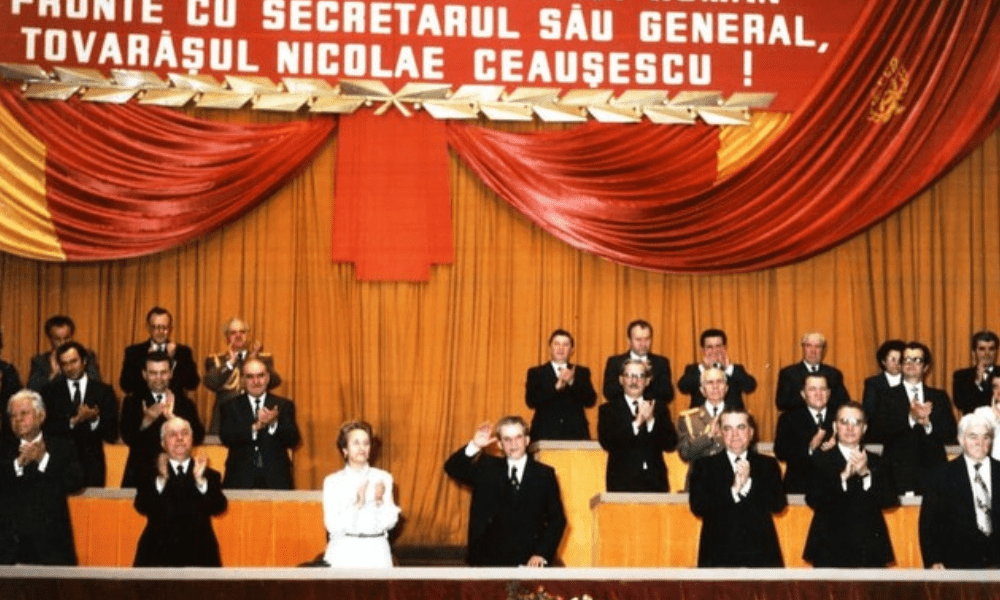
Under the regime of Nicolae Ceaușescu, Romania still held elections. Citizens still cast ballots. Newspapers still celebrated “the will of the people.” On paper, the structures of participation remained intact.
But everyone understood that power had already been decided elsewhere.
By the final decade of the regime, fear had seeped into ordinary life. Speech was constrained. The secret police monitored citizens. Access and opportunity depended heavily on political loyalty and proximity to power. Rights theoretically belonged to everyone, yet in practice they became conditional and unevenly applied.
That experience leaves you sensitive to something many people do not immediately recognize: a society can preserve the appearance of democratic participation while slowly hollowing out its substance.
I am not claiming the United States has become Ceaușescu’s Romania. It has not. America still possesses constitutional protections, civic institutions, independent journalism, and freedoms that did not meaningfully exist where I grew up.
But lived experience teaches you to recognize warning signs early.
You notice when rights begin narrowing instead of expanding. When participation becomes harder for some groups than others. When immense wealth gains outsized influence over government. When history itself becomes dangerous to discuss honestly.
That is why the weakening of civil rights protections in this country alarms me so deeply.
The Civil Rights Act of 1964 and the Voting Rights Act of 1965 did not magically erase America’s racial inequalities. But they pushed this country closer to its own ideals by expanding access to voting, education, public accommodations, employment, and political representation for millions of Americans long denied equal participation in civic life.
Those protections mattered. They still matter.
Any honest observer knows America has not fully overcome its racial divide. Extraordinary progress has been made, yet disparities in wealth, healthcare, education, criminal justice outcomes, and political representation remain real and measurable. Pretending otherwise does not create unity. It creates denial.
That is why recent decisions weakening Voting Rights Act protections feel so consequential.
The Supreme Court’s ruling in Louisiana v. Callais, centered on Louisiana’s congressional maps and minority representation, may sound technical to many Americans. But such decisions shape something fundamental: who holds political power, whose communities receive representation, and whose voices can more easily be diluted or ignored.
Supporters of these rulings often frame them as matters of constitutional neutrality or colorblind governance. Yet history teaches us to look not only at rhetoric, but at outcomes.
And too often, the outcome is the preservation of existing racial and political hierarchies.
The danger is not that history repeats itself in identical costume. It rarely does. The danger is that power learns to speak in cleaner language while producing familiar forms of inequality.
Modern white supremacy does not always arrive wearing white hoods. Sometimes it emerges through attacks on voting access, manipulated district maps, racialized fear, unequal enforcement of laws, or narratives suggesting some Americans are less deserving of rights, dignity, or political influence than others.
And once a society begins deciding whose rights matter less, democracy itself begins to erode.
I know where that road can lead.
I know what happens when citizens lose faith that their voices matter. I know what happens when truth becomes subordinate to ideology, when fear becomes governance, and when ordinary people convince themselves democratic erosion is temporary or harmless.
Authoritarian systems do not merely restrict freedom. They diminish human potential. They corrode trust, punish honesty, drive out talent, and shrink the moral imagination of a nation until survival replaces hope.
And contrary to what many assume, these systems rarely benefit most people. They primarily benefit those closest to concentrated political and economic power.
Everyone else pays the price.
That is part of what once made America feel so extraordinary to many of us who came from behind the Iron Curtain.
Not because the country was perfect. It never was.
But because it aspired, however imperfectly, toward the radical idea that rights belong to individuals rather than to the state, and that law should constrain power rather than merely serve it.
That promise matters.
And preserving it requires honesty. Are we willing to tell the truth about this country’s history, all of it? Are we willing to defend voting rights, equal representation, public education, due process, and equal protection under the law not only for ourselves, but for people unlike us?
Because democratic collapse rarely arrives all at once. It arrives piece by piece. Right by right. Until citizens wake up realizing freedoms they assumed were permanent have become conditional.
I am not willing to be a bystander to that process.
I am not willing to watch the Black side of my family stripped of rights generations fought to secure. I am not willing to watch immigrant families dehumanized for political gain. I am not willing to normalize authoritarian impulses wrapped in patriotic language.
I have seen what happens to societies where citizens no longer believe institutions belong to them. It is a grim way to live.
America does not have to become that place.
But freedom survives only when enough people decide it belongs equally to all of us.







Leave a Comment
You must be logged in to post a comment.