


 4585
4585 1
1Those of us who were around in the Kennedy years remember the challenge in his inaugural address: “Ask not what your country can do for you; ask what you can do for your country.” In 1961, I was just entering elementary school—too young to advise anyone in Vietnam or spread goodwill through the Peace Corps—so I mostly let my country do things for me.
In the decades since, my country has been very good to me. I’ve tried to pay it back in my own modest ways—working with children who were wards of the state and teaching in public colleges—but let’s be honest, I’ve been more of a bench player than a National Public Service Award contender. Perhaps they’ll slip me a plastic participation trophy.
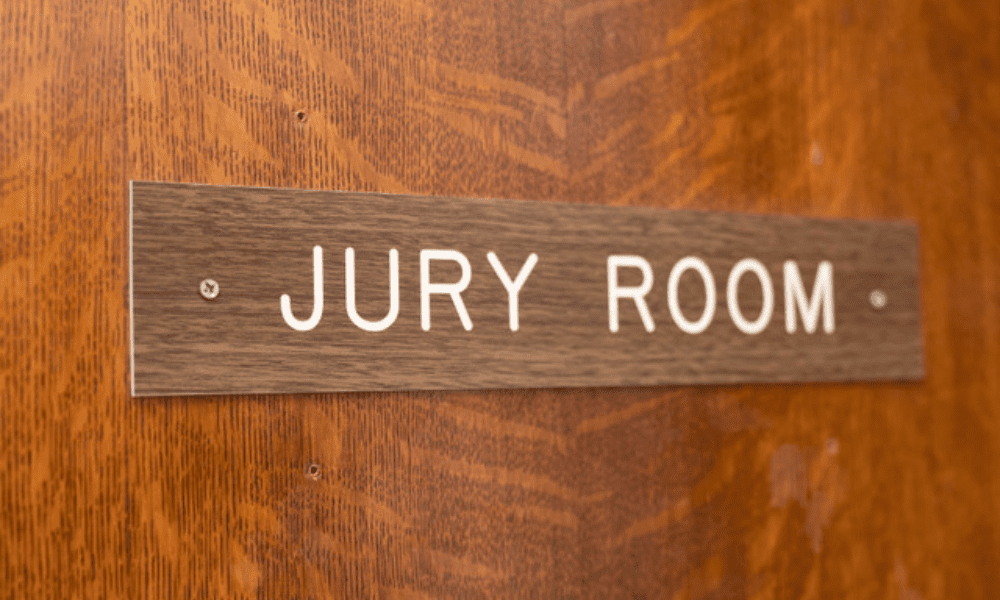
Then last month, my country came calling again with a jury summons. My age allows me to decline without explanation, but I refused to take a pass. The uniform is a bit tight after all these years, and I’ve lost a step or two (or four), but I suited up anyway.
Longtime readers may recall that I candidly recounted my jury experience nine months ago. You may wonder why I was invited back so soon. Surely this was the luck of the draw, not some retaliatory machination for my witty published observations. Circumstantial evidence, I know, but they had motive, means, and opportunity. You be the judge (and jury).
So, how does this jury experience compare? I’m happy to report some improvements, though we do get off to the same tiresome start. We number around 130 and show photo identification upon entering. The staff offers instructions without microphones or video screens, so confusion is baked into the system.
Roll is called twice in the first hour, even though there are no back doors from which to abscond, and they call our names yet again to receive debit cards loaded with our $25-per-day remuneration. Let’s just say this isn’t the venue for a L’Oréal “I’m worth it” ad.
Superior Court Judge Fletcher Sams enlivens the pace by addressing his captive audience with warm gratitude. He references Thomas Jefferson’s 1785 assertion that the right of trial by jury is a more precious privilege than the right to vote because suffrage determines who governs, but juries determine how power is exercised. Less optimistically, Judge Sams delineates the government’s three coercive powers (compulsory military service, exacting taxes, and jury duty) to remind us that sometimes doing for our country is less a suggestion than a demand.
I hope for a thorough discussion of the judiciary’s pivotal role in the Sixth and Seventh Amendments to our Constitution, but I doubt that my fellow jurors share this enthusiasm. A civics lesson might be a bridge too far this morning—especially since even our current Supreme Court struggles to understand late 18th century English.
Shelia Studdard, the Clerk of Court, graces us with an appearance as well—and it isn’t even an election year. She offers no material information, but she’s pleasant and affirming. These greetings by courthouse luminaries are a grand improvement over last May.
Since no one knows what to expect, every word from someone sporting a name tag could be consequential. One staff member seems allergic to silence. Like the voice that interrupts the music when you’re on hold, she periodically fills every silence with increasingly trivial information. This is the only significant irritation, and it is easily ignored.
A jury is finally needed, and 42 of my peers are called. The rest of us are dismissed with instructions to call each evening to see if we must assemble on the morrow. I get Tuesday off, but the summons pulls me back on Wednesday and Thursday. Finally, I am called into Judge Sams’ courtroom as a potential juror.
A casually outfitted, bearded defendant is in the dock accused of trafficking methamphetamines, and he seems much more comfortable than I would be if we changed seats. We jurors swear the oath, offer some personal demographics and vocational information, and take questions from the opposing attorneys.
No one knows the defendant—or, more wisely, no one is about to admit knowing an alleged drug dealer with a room full of uniformed peace officers watching. Everyone is willing to be fair, even those who have been victims of crime. I find this laudatory.
As the general questions continue, my frequently raised hand doesn’t entice the solicitor to pick me for his team. I join a distinct minority in raising my eyebrows at Georgia’s strict laws forbidding cannabis. He also asks directly if any are involved in social work, and my profession taints me as someone dangerously willing to consider socioeconomic factors, or worse, give the benefit of the doubt.
My final disqualifying answer comes when asked about previous legal activity. I acknowledge that I was not a forensic psychologist, but explain that I have testified in juvenile, state, and superior courts as both an expert witness and treating psychologist. Apparently, knowing how the sausage is made is kryptonite. So, though I was among the many called, I am unsurprisingly not among the few chosen.
President Kennedy’s call for national service now feels as anachronistic as a black-and-white television using rabbit ears to hunt for a signal. No current politician would dare ask voters to sacrifice for the common good. Yet millions of Americans still do—quietly, faithfully, and without applause. Whether professionally (military, education, public safety) or voluntarily (benevolence groups, religious charities, voter registration), plenty of us will lay down a bunt if it moves a teammate into scoring position.
Of the government’s three coercive powers, the military has little use for me, though the IRS eagerly calls every year. No district attorney wants me anywhere near her jury box, but perhaps a civil litigant might take a chance. When summoned, as long as I can squeeze into the old uniform, I’ll keep showing up for the games. But if I really want to contribute, I may need to settle for being an usher or the hot dog vendor.





Leave a Comment
You must be logged in to post a comment.