


 170
170 0
0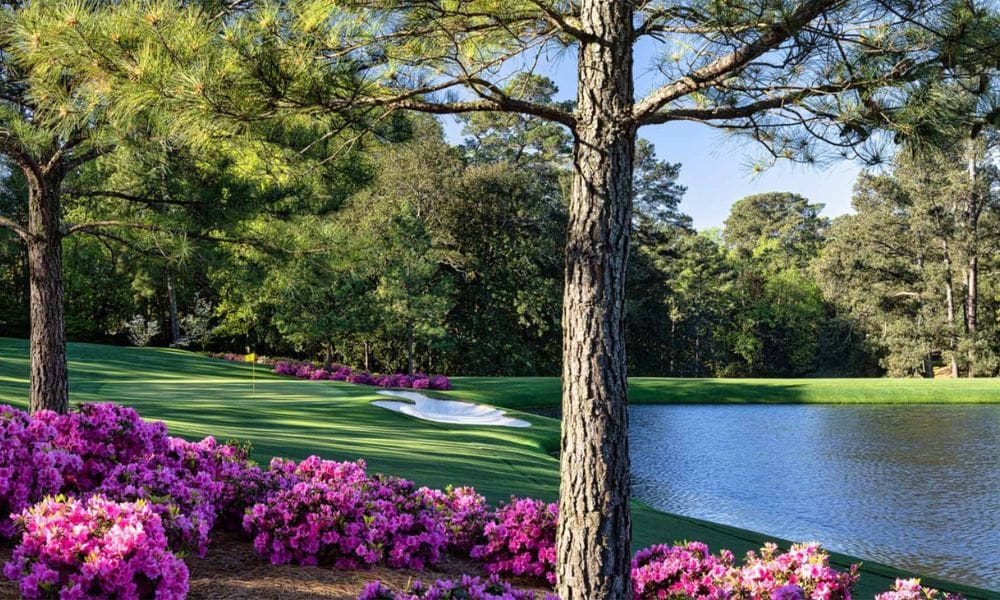
It’s that magical time in the South when spring flowers burst into bloom and create a heavenly kaleidoscope of color and fragrance. Nowhere is the beauty more pronounced than at the Masters in Augusta, where their famous golf course gardens are engineered to look naturally spectacular every April.
Augusta National’s gardens look effortlessly pristine, but behind the scenes, a host of people are working to create the perfect result, through plant selection and meticulous timing. The course is filled with the quintessential southern flowering plants, including azaleas, camellias, dogwoods and tea olives, and many of these plants are historic, having been growing on site since the property was a plant nursery – Fruitland Nurseries – that operated there from 1858-1918!
Golfers may not realize this but gardeners will…Augusta National is basically a botanical garden disguised as a golf course. Each hole is named for a plant that grows there, and these iconic species are mass planted for a theatrical effect each spring.
Signature Plants at Augusta National include, of course, the azalea. Over 30 different azalea species and cultivars are planted on the course. Hole 13 (“Azalea”) alone features over 1,600 azaleas of mixed types. While the golf course keeps its plant list private, you can identify many of the varieties on the course, including the Southern Indica, which is a large evergreen plant that creates the iconic massive color displays during the Masters. Common cultivars are ‘Formosa,’ ‘Georgia L. Tabor,’ ‘Judge Solomon,’ and ‘Mrs. G.G. Gerbing.’ Kurume azaleas and native azaleas are also seen in abundance.
You will find the pink dogwood featured on Hole 2 and the white dogwood on Hole 11. Camellias take center stage on Hole 10 and the tea olive on Hole 1. Other plants tied to a specific hole name include flowering peach, crabapple, magnolia, juniper, holly, redbud, Carolina cherry, pampas grass, and yellow Jasmine.
At Augusta National, the staff and members want you to see only the beauty and not the “behind the scenes” utilitarian structures. The gardens are designed to hide concession stands, restrooms, player facilities and service roads. Note the use of tea olives, hollies and magnolias used to screen these necessary buildings.
Many wonder how Augusta National gets everything to bloom exactly on time for the Masters, despite weather variations. The horticulture staff applies the most advanced techniques to control the timing of the flowers. Microclimate management includes the strategic use of shade, wind protection, and slope orientation to slow or speed up the bloom cycles. North-facing slopes delay flowering and south-facing slopes speed up the process. Refrigeration of plants and forced blooming techniques are also used.
Mass planting thousands of plants of various varieties ensures staggered blooming and gives an overall look of a full and balanced garden. Continual pruning and impeccable soil management keep the plants thriving.
What are some takeaways and tips for gardeners from Augusta National?
- Mass plant a variety of blooming plants that stagger flowering time to get an extended bloom.
- Use understory trees, like dogwood, for canopy layering.
- Use camellias for color in the winter garden.
- Plant tea olives and camellias for fragrance and to hide unsightly structures.
- Prune judiciously to insure prolific blooms. Don’t prune spring-blooming plants until after they bloom, and prune summer-blooming plants in the early spring.






Leave a Comment
You must be logged in to post a comment.