


 4109
4109 1
1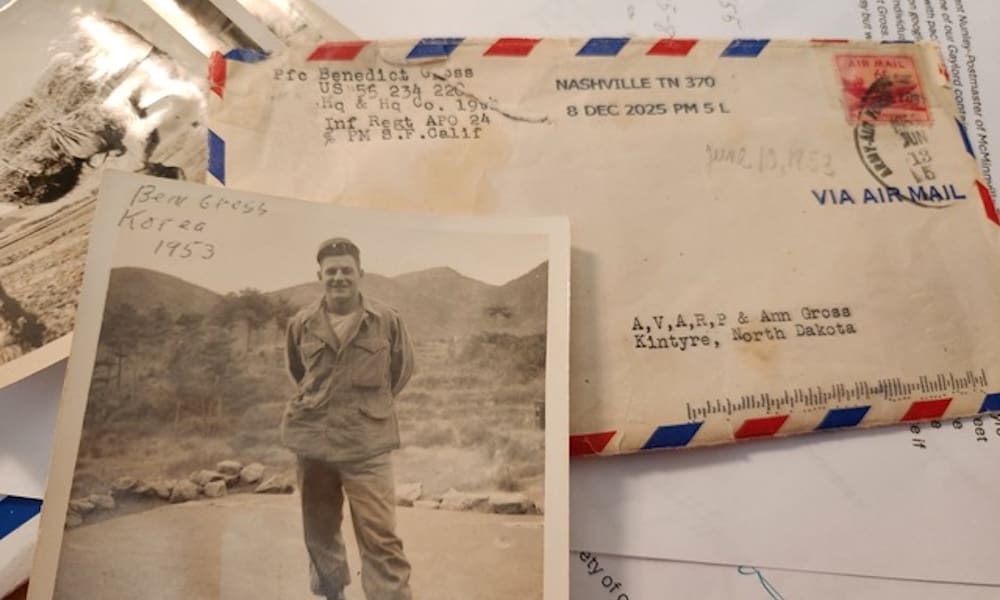
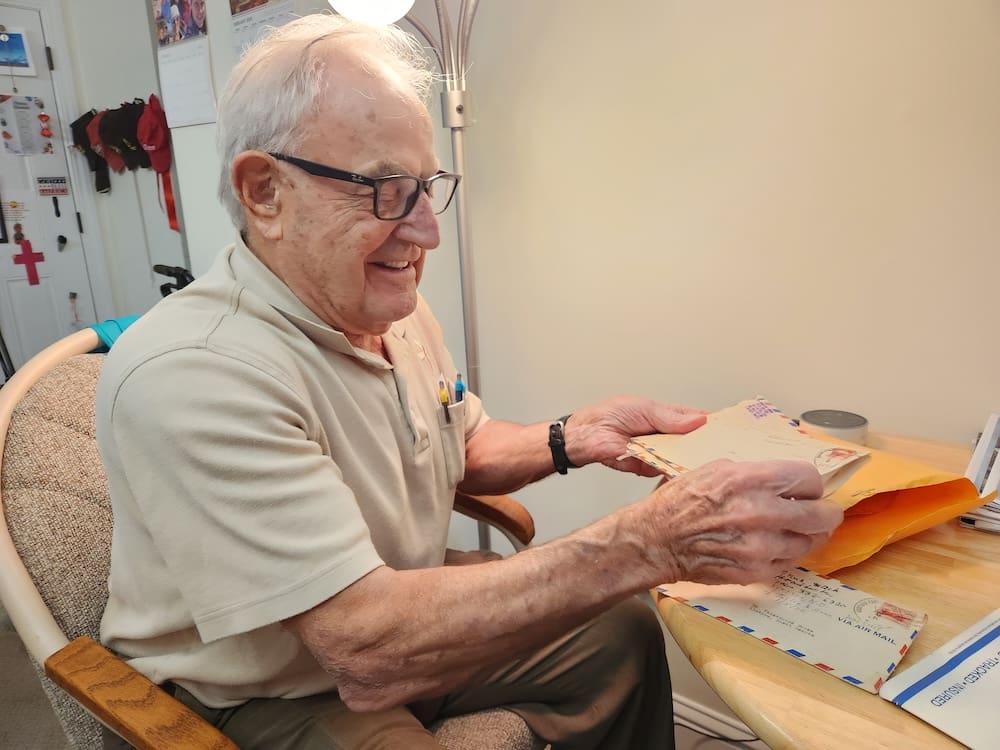
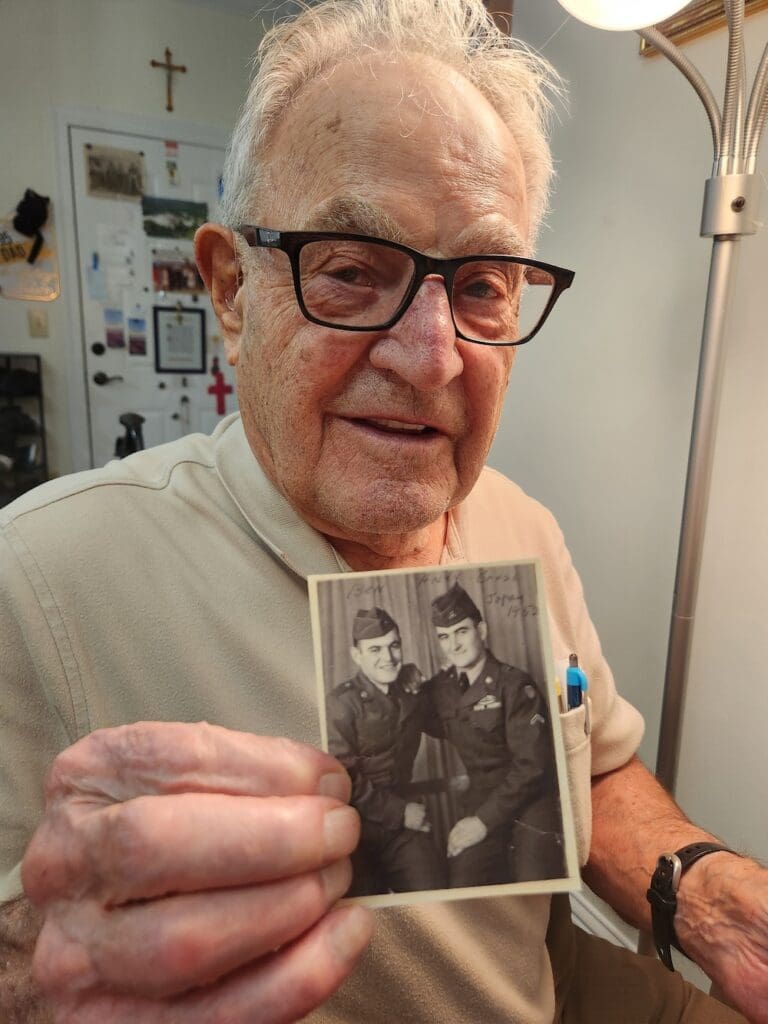
More than 70 years after they were written during the Korean War, letters sent home by 95-year-old Peachtree City resident Ben Gross are resurfacing one by one—returned through the U.S. mail after a modern postal error scattered them across multiple states.
When Gross received a plastic-wrapped envelope late last year at his Peachtree City home, he expected to find a bundle of old family letters his brother had mailed from North Dakota. Instead, only one letter remained inside.
“I thought that was the end of it,” Gross said. “I got the one letter that was still in there.”
A damaged envelope, a scattered trail
Gross’ brother had mailed roughly two dozen letters Gross wrote home between 1952 and 1953 while he was stationed in Japan and Korea during the Korean War. The letters, saved for decades, were sent together from Bismarck, North Dakota, to Gross in Georgia.
Somewhere in transit, the envelope was damaged—likely by a sorting machine—causing the contents to spill out and reenter the postal system individually.
The envelope that did reach Gross was sealed inside clear, sticky plastic, a standard Postal Service procedure for damaged mail. Gross said the plastic was difficult to handle and that after removing the one remaining letter, he threw the rest of the wrapping away.
“If I knew then what I know now, I would have tried harder,” Gross said.
Found across multiple states
In the weeks that followed, letters Gross had written more than seven decades earlier began surfacing in different ways.
Some were delivered to family members whose names or initials appeared on the envelopes, and were later forwarded on to Gross. Others were recovered loose in mail-processing facilities and returned with notes from postmasters explaining where they had been found.
One letter carried a Nashville, Tennessee, cancellation dated Dec. 8, 2025, despite having originally been mailed overseas in the early 1950s. Another arrived with a Dec. 12, 2025, cancellation, more than 70 years after it was first written.
So far, nine letters have been returned to Gross.
‘I did not have the heart’
In a letter dated Dec. 12, 2025, Katie S. Nystrom, a North Dakota postmaster, explained how one of Gross’ letters arrived at her office after passing through multiple states.
“I did not have the heart to send this to dead mail,” Nystrom wrote.
Nystrom explained that postal workers across several North Dakota offices coordinated efforts to identify the intended recipient, eventually locating Gross through an online search that led them to a StoryCorps interview he recorded in Fayetteville in 2012.
Another letter was recovered in McMinnville, Tennessee, where Postmaster Brent Nunley found it loose in a bulk mail container.
“When I saw this I felt compelled to try and get it closer to home if possible,” Nunley wrote.
Nunley noted that the envelope lacked a street address and had been mixed in with packages, making delivery uncertain.
Words from a 21-year-old soldier
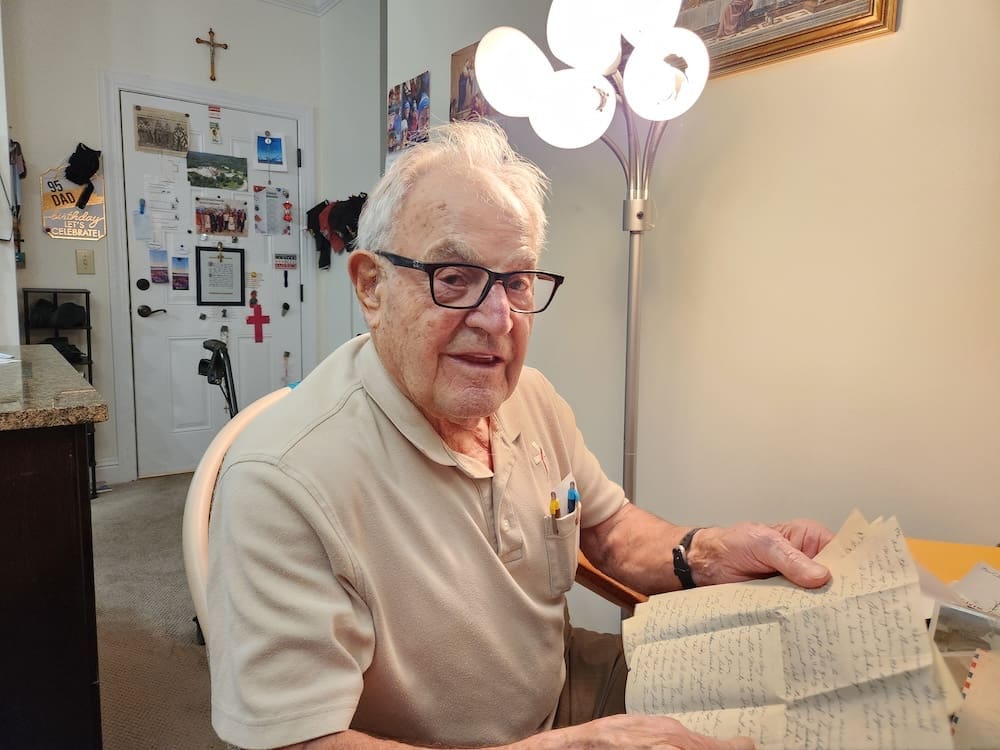
The letters themselves are handwritten and informal—messages from a 21-year-old farm kid writing to a large family in rural North Dakota. Many were addressed only by initials and a town name, reflecting how mail was commonly sent before ZIP codes and even street addresses were used in rural areas.
“I remember it well,” Gross said. “I don’t think I ever wrote anything real war-like.”
During part of his service, Gross served as a chaplain’s assistant, a role that kept him focused on daily routines and morale rather than combat.
Gross said his unit was involved in guarding Chinese prisoners of war both before and after the 1953 armistice, and later helped with their repatriation. He said camps his unit helped guard held roughly 90,000 Chinese prisoners of war in one area and more than 100,000 in another.
Several letters reference farm life, teasing between siblings, and daily routines rather than combat.
Service and life beyond the war
After returning home, Gross earned his GED, attended college using the GI Bill, and built a long career in education and federal service. He moved to Georgia in the 1960s and has lived in Peachtree City since 1996.
Now 95, Gross lives at Arbor Terrace Independent Living in Peachtree City and remains active in the community. He is involved with Holy Trinity Catholic Church, the American Legion, the Veterans of Foreign Wars, and continues to volunteer with the Peachtree City Running Club.
Gross’ daughter, Marie Gross Swope, said the experience has been meaningful for her father.
“This has been very exciting for him,” Swope said.
A story spreads
As the letters continued to surface, a television station in Bismarck, North Dakota, covered the unusual journey of the Korean War correspondence. Since then, the story has been picked up by additional outlets, bringing national attention to what began as a private family discovery.
“I never imagined seeing these again,” Gross said.
More than seven decades after they were written overseas, the letters—creased, postmarked, and rerouted—have found their way back not through archives or official records, but through chance, family connections, and the decisions of people who chose not to let them disappear.





Leave a Comment
You must be logged in to post a comment.