


 4881
4881 0
0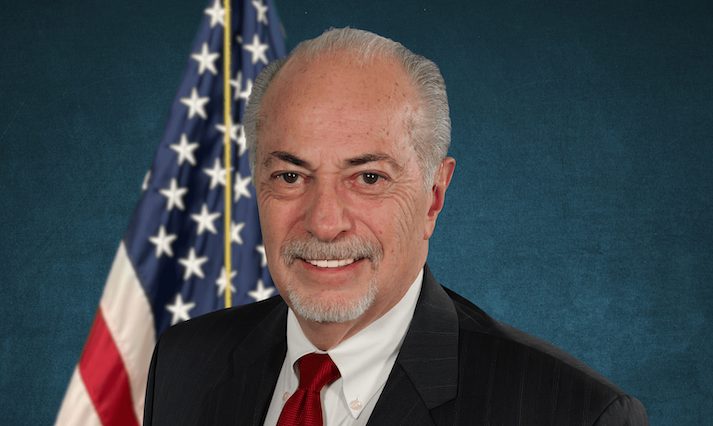
The lineup for Peachtree City’s 2025 election is officially set. Voters won’t just be picking a mayor this fall—they’ll also decide who fills two council seats that could shift the balance of power at City Hall.
The ballot is as follows:
- Mayor: Incumbent Kim Learnard vs. Steve Brown
- Councilmember Post 3: Incumbent Clint Holland vs. Joseph Campbell
- Councilmember Post 4: Michael Polacek vs. James Clifton
So far, I’ve covered Mayor Learnard, Brown, and Clifton. Most recently I wrote about newcomer Michael Polacek. This article spotlights the man currently holding the Post 3 seat, Clint Holland. As he campaigns for another four years, the central question is whether his record and platform align with the direction voters want Peachtree City to take.
Who Is Clint Holland?
Clint Holland moved to Peachtree City in 2019 after a career that spanned more than four decades in water treatment, medical devices, and environmental engineering. He holds multiple engineering degrees and an MBA in economics and marketing, has earned four patents, and ran several companies as president and CEO.
Since retiring in 2021, Holland has immersed himself in local politics. He was elected to council in 2022, where he currently serves as Mayor Pro Tem. Outside City Hall, he is Vice Chair of the Water and Sewer Authority, active in the Georgia Municipal Association, and heavily involved in Fayette County Republican politics, including serving as a delegate to state and national conventions.
Holland frames his political identity around being a “Christian Conservative” and has said that effective governance in Peachtree City requires a conservative council majority. He has emphasized his willingness to spend full-time hours on the job—often 40 to 50 hours a week—meeting residents, reviewing documents, and attending community events.
Clint Holland’s Platform
Clint Holland’s re-election platform spans nearly every area of city government—finances, planning, recreation, infrastructure, and governance. While he frames his agenda as citizen-centered, the details reveal both bold ambitions and points of friction with the rest of council.
Fiscal Responsibility and Taxes
Holland places taxes and reserves at the heart of his campaign. He argues that the city’s cash reserves—currently about 59% of the annual budget, or $34 million—are far too high compared to minimum guidance of 31–33%. His stated goal is to reduce reserves to a range of 35–45% “over time,” using the difference to fund projects or deliver tax relief.
His preferred vehicle is a full rollback of the millage rate, which he claims would hold homeowners’ city taxes steady despite rising property assessments. Alternatively, he suggests raising the homestead exemption for primary residences, though he acknowledges this would require legislative action at the state level.
The issue came to a head this summer, when Holland and Councilmember Suzanne Brown refused to approve the city’s $58 million budget without a rollback. Their move blindsided city staff, who had spent months drafting the budget with input from council and residents. The result was an unprecedented impasse that delayed firefighter hires, police vehicle purchases, and threatened a matching grant for the library’s HVAC replacement.
For Holland, the standoff was about principle: protecting citizens from what he calls a “bloated reserve fund” and giving money back. For staff, it represented destabilizing brinkmanship that risked core services. The tension highlights both the appeal and the risk of Holland’s fiscal stance—popular with taxpayers, but difficult to square with the realities of city budgeting.
Transparency and Citizen Input
Holland often presents himself as the citizens’ direct representative at City Hall. Early in his term, he pushed to make administrative variance hearings open to the public. He describes that change as one of his proudest accomplishments.
He has also supported expanding public comment periods at council meetings, suggesting five minutes per speaker or more if necessary. He favors letting citizens place items directly on the council agenda and has advocated for an invocation or prayer before meetings, saying that “a Christian Conservative council majority” is key to putting residents ahead of special interests.
Quality of Life and Recreation
Holland’s recreation agenda combines small fixes with big-ticket projects. He has pressed for bathrooms at Battery Way Park, upgrades to the Kedron Fieldhouse hockey rink, and replacing the “bubble” at Kedron Pool with a permanent year-round enclosure.
Pickleball remains central to his platform. At one point he called for 21 courts with a championship “center court” to host tournaments, though he now backs 18 courts as a realistic compromise.
He also supports creating a teen center, possibly near McIntosh High, that would provide space for studying, music, games, and hanging out. Holland has proposed that the center be run in part by teenagers themselves to teach responsibility and leadership.
Veterans’ services are another focus. Alongside former Councilmember Frank Destadio, Holland championed a veterans memorial park on Kelly Drive. He also wants to formally enshrine Veterans Day, Memorial Day, and Purple Heart Day as official city events, treated with the same permanence as other municipal observances.
Infrastructure and Traffic
Holland has made traffic—and particularly the 54/74 intersection—a signature issue. He has consistently argued that GDOT’s displaced left-turn design will not solve the problem, and instead calls for a full overpass at SR74, complete with flow-through lanes and improved sequencing of traffic lights on SR54’s west side.
Recognizing the scale of the project, Holland has pushed for a regional partnership that includes Fayette and Coweta counties, Tyrone, and Fayetteville, arguing that the intersection is not just Peachtree City’s burden to solve.
Within the city, he supports roundabouts at Robinson Road and Crosstown, citing their success in other parts of Fayette County. At Walt Banks near McIntosh High, he has floated building golf cart bridges to separate cart traffic from cars—a costly but potentially safer solution.
Growth, Annexation, and Planning
Holland has been a consistent opponent of what he calls “urbanization” and mixed-use development. He notes that Peachtree City already has about 2,000–2,200 multifamily units—roughly 15–16% of the housing stock—higher than the 12–14% average for cities its size. In his view, that’s enough.
Instead, he favors expanding light industrial areas along SR74 through annexation. Holland argues that industrial businesses absorb taxes as a cost of doing business, spreading the burden across their customers. In his long-term vision, that revenue growth could allow Peachtree City to dramatically increase homestead exemptions—potentially reducing the average city tax bill for homeowners to only a few hundred dollars.
Looking ahead, Holland wants to revisit the 2022 Comprehensive Plan to remove language promoting mixed-use. As the city prepares for the 2027 update, he has pledged to push for a clearer suburban identity. While he says he would “bend to the will of the citizens” if a survey showed strong support for mixed-use, he makes clear his personal opposition.
What Should We Make of Holland’s Platform?
Clint Holland’s platform is detailed, wide-ranging, and rooted in ideological consistency. He envisions a Peachtree City that is fiscally lean, firmly suburban, and guided by citizen voices rather than staff or outside interests. That clarity of identity is part of his appeal—residents know where he stands on taxes, growth, and the city’s future character. He has also distinguished himself in accessibility, often showing up at local events, answering questions directly, and opening processes like administrative variances to public participation. For many voters, he represents a councilmember who puts citizens first.
But the platform is not without contradictions, and those contradictions matter.
On finances, Holland champions tax relief through millage rollbacks and higher homestead exemptions. At the same time, he proposes new or expanded capital projects—18 pickleball courts, a permanent enclosure for Kedron Pool, a teen center, and upgrades to the hockey rink. These are costly undertakings. While Holland suggests tapping into reserves “for one year” to soften the impact, city staff have been clear that reserves are not meant to fund ongoing expenses. Peachtree City’s healthy reserves are a key reason for its AAA bond rating, which lowers borrowing costs and—importantly—allows flexibility when disaster strikes or major capital needs arise. Reducing reserves too aggressively could weaken that financial standing and limit the city’s long-term options.
The recent budget showdown underscored those trade-offs. By refusing to approve the $58 million plan, Holland and Suzanne Brown put firefighter hires, police vehicle replacements, and a library HVAC grant on hold, leaving staff who had spent months assembling the budget blindsided. Holland cast the standoff as protecting taxpayers from excess reserves. Others saw brinkmanship that put essential services at risk. It was a revealing moment: his consistency on principle is clear, but so is his willingness to fracture consensus and unsettle city operations in order to hold that line.
On infrastructure and traffic, Holland shows vision but faces daunting realities. His insistence on an overpass at 74 reflects the frustrations of residents who see the current displaced left-turn plan as insufficient. Yet the scope of such a project—engineering studies, regional agreements, and tens of millions in funding—means it could take a decade or more before shovels hit the ground. In the meantime, the city will still wrestle with everyday traffic pressures at intersections like Robinson Road and Walt Banks. Holland’s support for roundabouts and cart bridges are creative and demonstrate ambition, but ambition does not guarantee execution.
On growth, Holland’s stance is straightforward: no new apartments and no mixed-use. He leans instead on annexation for light industry as a way to broaden the tax base and ease pressure on homeowners. The idea is appealing in theory, but the reality is more complicated. Annexation is slow, politically fraught, and often less straightforward than promised.
On recreation, Holland taps into popular desires. Bathrooms at Battery Way, upgraded pickleball courts, a modernized hockey rink, and a teen center are the kinds of projects that resonate with everyday families. He has even emphasized veterans’ recognition, proposing a park and permanent observances of military service. These ideas strengthen his image as someone attentive to quality-of-life issues. Yet they also circle back to the financial question: how to pay for them while simultaneously rolling back taxes. Without new revenue streams or cuts elsewhere, the math may not add up.
Finally, on citizen engagement, Holland has arguably made the most tangible impact. Opening variance hearings, pushing for longer public comment, and calling for prayer before meetings all reflect his belief that citizens should have a greater voice in government. To supporters, this is the essence of representative leadership. To critics, it raises questions about whether his emphasis on ideology—particularly the call for a “Christian Conservative council majority”—risks alienating residents who do not share those views.
Taken as a whole, Holland’s platform reflects both his greatest strengths and his most persistent challenges. He is principled, consistent, and accessible. He is also confrontational, sometimes at the expense of consensus or practicality. His promises of tax relief resonate, but his simultaneous push for new spending and capital projects reveals a tension that has not yet been resolved. His infrastructure ideas are ambitious, but their feasibility and cost remain unclear.
In short, Holland’s agenda appeals to voters who want to preserve the suburban, fiscally conservative character of Peachtree City. But it carries risks.
The Choice for Post 3 Voters
For Post 3, voters face a decision between continuity and change. Clint Holland offers a clear, consistent conservative vision. He has been deeply engaged in city matters, spends full-time hours on the role, and has delivered on promises like opening variance meetings to the public. His emphasis on fiscal restraint and suburban preservation will resonate with many.
But Holland’s approach has also contributed to gridlock. His refusal to pass the budget without a rollback left city staff scrambling and raised questions about governance by brinkmanship. His platform includes ambitious infrastructure and recreation ideas, but it is less clear how they will be funded if revenues are reduced and reserves are trimmed.
If re-elected, Holland would likely continue to be a polarizing but influential voice on council—pushing for tax relief, resisting urbanization, and pressing regional leaders on traffic. Voters who share his conservative priorities may see him as a necessary check within city government. Others may view his style as disruptive.
Either way, the outcome of Post 3 will help determine the direction of the next council. Re-electing Clint Holland means endorsing a more combative, tax-cutting approach. Electing Joe Campbell would mark a shift toward a newcomer’s vision. For Peachtree City, the choice will shape not just budgets and cart paths, but the tone and trajectory of local governance in the years ahead.
On a final note, I won’t be linking to Holland’s campaign website, which is currently occupied by content that has nothing to do with city politics. Voters interested in his platform should look to his Facebook page instead.




Leave a Comment
You must be logged in to post a comment.