


 4642
4642 0
0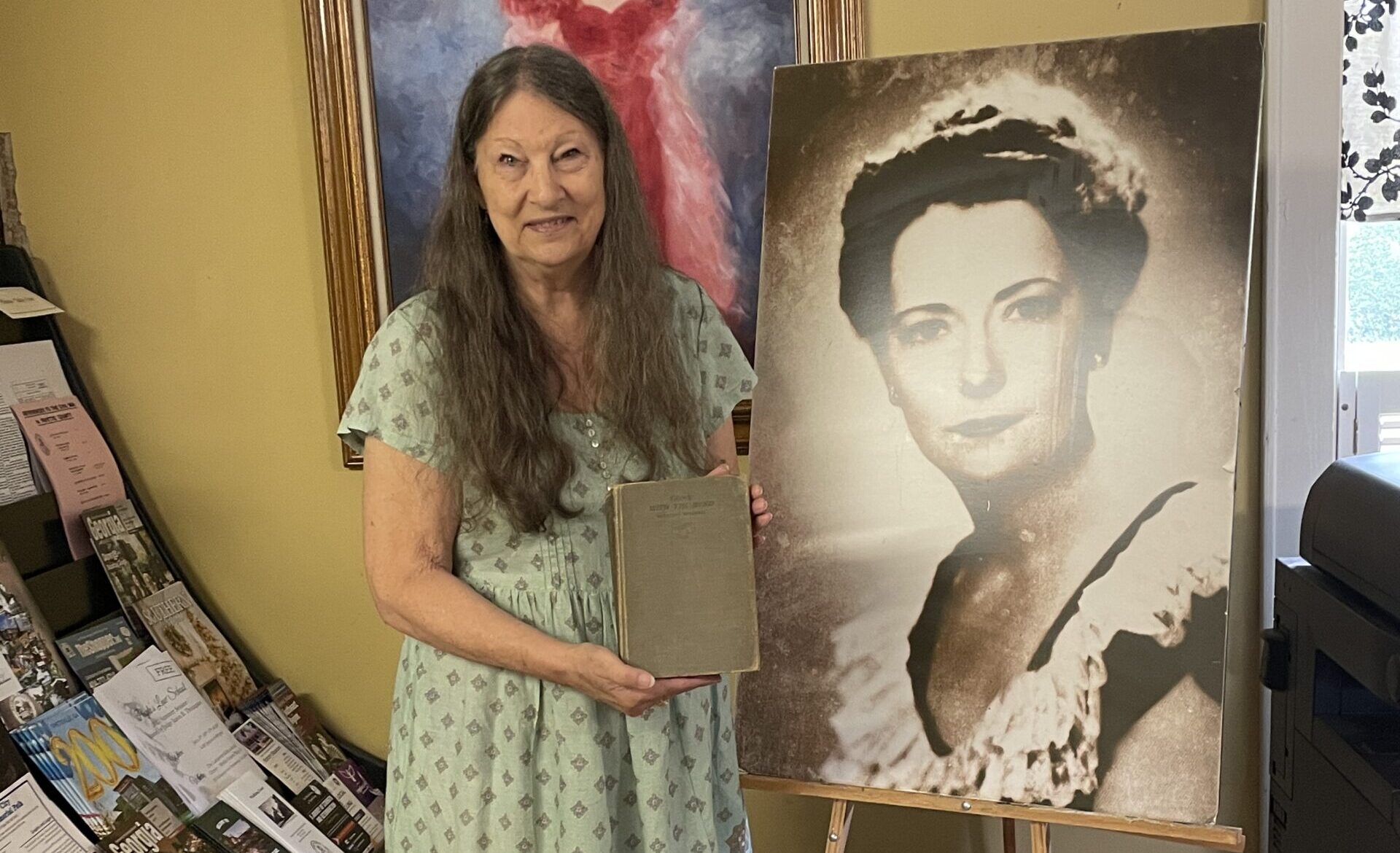
Few things are more infectious than someone lighting up about what she loves. A musician chasing the perfect hook, a foodie raving about a Michelin-starred dish, my granddaughter breathlessly reliving her scooter stunts—every story crackles with delight, pulling you right into their joy.
Living in Freemont, California, 15-year-old Debi Riddle spurned her literature teacher’s assignment to read and report on a mere 300-page novel, opting instead for Margaret Mitchell’s 1037-page opus. A lifelong passion was born. Several decades later, Ms. Riddle’s enthusiasm for all things Gone With the Wind is only stronger.
Now vice president of the Fayette County Historical Society, she recently shared her passion with a delighted audience at the Fayetteville Senior Center, relating colorful tales of Ms. Mitchell’s relatives who inspired such unforgettable characters. There are many ties to Fayette County, some buried on Stonewall Avenue.
Unlike Ms. Riddle, I have a complicated relationship with this dramatic 1937 Pulitzer Prize winner and the famous 1939 screenplay. I remember seeing the movie for the first time as a young adolescent on the towering screen at the Ambassador Theater in Raleigh, North Carolina. I recall enjoying the first half of the picture with all the antebellum gaiety and opulence. I was ready to enlist with the Tarelton twins to whip the Yankees. After all, one of them was Superman, so what could go wrong?
The second half was a real downer. I hated the hardscrabble consequences of such misguided rebellion. Alas, my uninformed youth unquestionably backed the home team without reflection on their cause–or the cost of losing so large a gamble.
Moving to Fayette County in 1988, GWTW was hard to ignore. Fictional Tara is just across the Flint River, a short buggy ride from the courthouse if you squint and ignore the soccer fields. Scarlett attended the Fayetteville Female Academy, though she was hardly a scholar.
Our first house in the county was on land that could have belonged to Ashley Wilkes’ equally fictitious Twelve Oaks plantation. I’ve even toured a rural barn that houses the original Hollywood facades of Katie Scarlett’s Tara with delightful commentary from Peter Bonner, another passionate wellspring of local Civil War history.
When considering GWTW, there is an elephant in the room. Lost Cause revisionist history permeates every page of this novel, rendering its historical backdrop as fanciful as its characters. For example, Yankee occupiers’ excesses compel the Ku Klux Klan’s interventions to restore civility—try not to gag. I still appreciate Margaret Mitchell’s ability to weave such a splendidly entertaining web of flawed-character relationships even though the historical background to this tapestry is wildly unreliable.
The book is heralded as a grand love story between Scarlett O’Hara and Rhett Butler with Ashley Wilkes always lurking just out of her reach. But Scarlett has only one true love: herself. She is the consummate narcissist. Margaret Mitchell’s virtuosity is making this villainous heroine sympathetic. Like J.R. Ewing, Dorian Gray, or Humbert Humbert, we are enticed to root for her rather than excoriate her for her countless sins.
Scarlett can’t fathom adopting any perspective that deviates from her own, and she is not curious about anything unrelated to her. She bends reality to fit her interpretations of the world, regardless of how radically it differs from consensual reality. For instance, she can dismiss the eternally kind Melanie Wilkes only as a barrier to Ashley’s love, even though everyone else knows Melanie has the heart of an angel.
She breaks rules of propriety without shame. Daring others to reprimand her for her impertinence, Scarlett dances in mourning clothes after her uniformed husband dies of pneumonia. Following their initial shock, polite society never fully casts her out. She handles shame as a temporary insult that will wither with time when papered over with Rhett’s money. Since she escapes social ostracism repeatedly, eventually she ceases to fear any backlash.
The book is not without prudent insights. Mitchell cleverly observes, “The liar was the hottest to defend his veracity, the coward his courage, the ill-bred his gentlemanliness, and the cad his honor.”
Ashley Wilkes, who witnessed the ravages of battle firsthand and suffered the indignities of total conquest, refuses to commiserate over the defeated South and contends, “Life’s under no obligation to give us what we expect. We take what we get and are thankful it’s no worse than it is.” Even Scarlett recognizes some truths, “Apologies, once postponed, become harder and harder to make, and finally impossible.”
Gone With the Wind is sweeping historical fiction. Like Ivanhoe, The Other Boleyn Girl, or Dan Brown thrillers, accuracy is more a garnish than a main course. As my dear friend Sam Burch always says, “If it ain’t worth colorin’, it ain’t worth tellin’.” A mature reader might hold his nose while navigating ethnic slurs in Huckleberry Finn to discover that runaway Jim is clearly the most decent man within a hundred miles of the Mississippi River. Likewise, Mammy is the wisest woman at Tara, despite her station of servitude.
You’ve doubtless watched the four-hour David O. Selznick movie version of Gone With the Wind. Fayette Countians should dig into the printed prose. Go with the story even if you must curse the ethnocentricity. After all, how often is your community featured in one of America’s most popular novels?
The drama is intense. The characters are multilayered and colorful. The relationships are penetrating. Their goodness and badness are complicated. It makes you think – what a concept. Was it the War of Northern Aggression or the War of Southern Rebellion?
You may become as enthralled as Debi Riddle in this literary exploration. You may walk away muttering, “Frankly, my dear, I don’t give a damn.” Either way, you’ll be entertained while you sort it out.
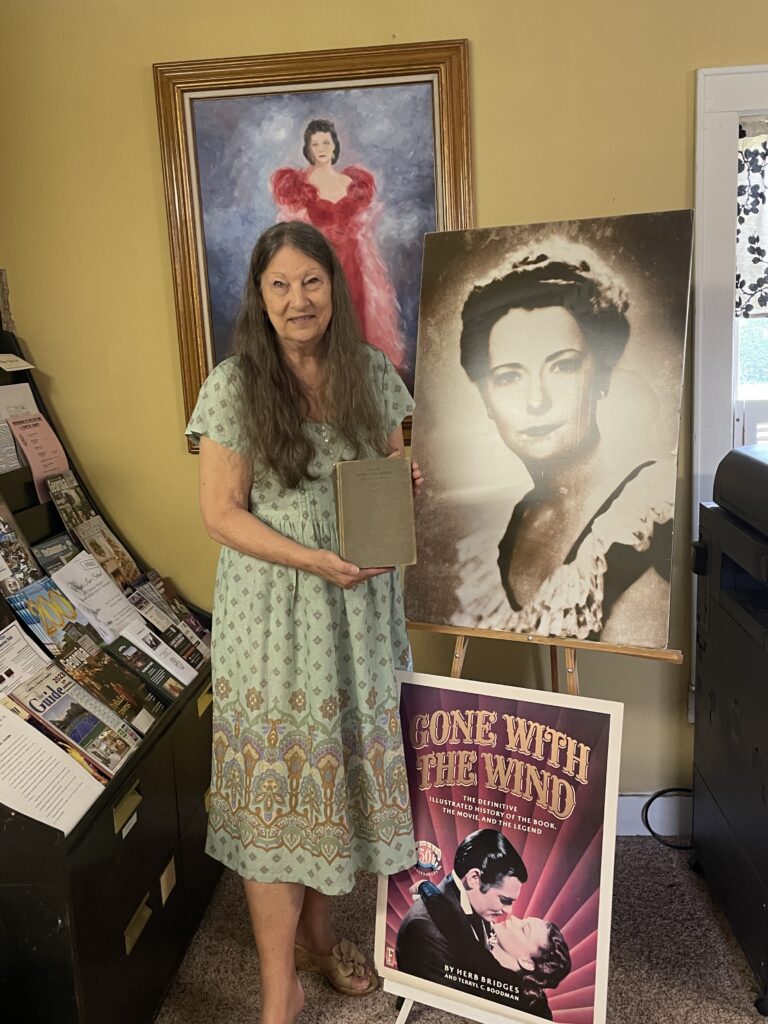
*Debi Riddle from the Fayette County Historical Society holds a first print edition of Gone with the Wind signed and donated by Margaret Mitchell in 1936, the year it was published.





Leave a Comment
You must be logged in to post a comment.