


 1010
 0
SPONSORED FEATURE
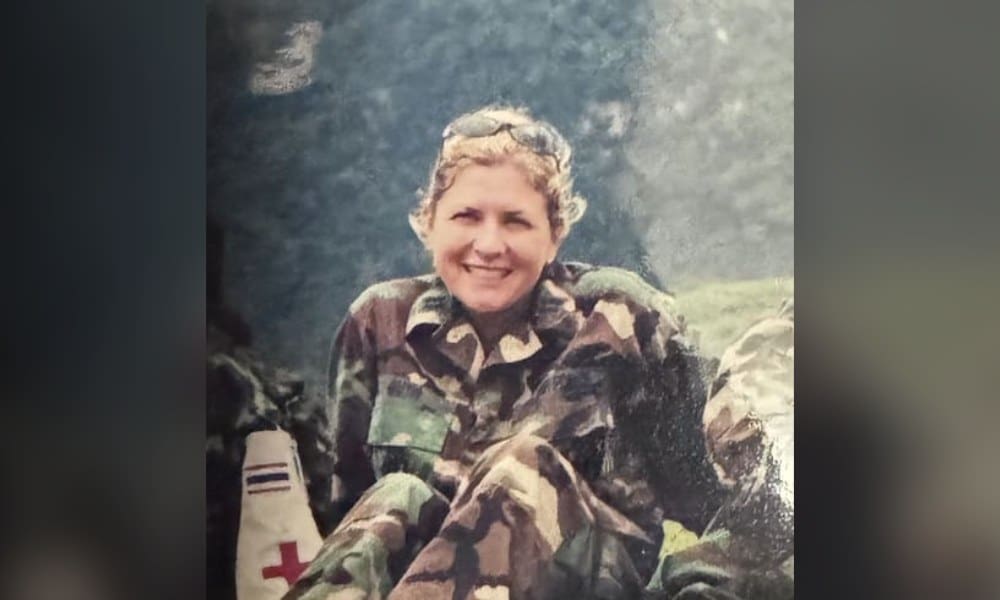
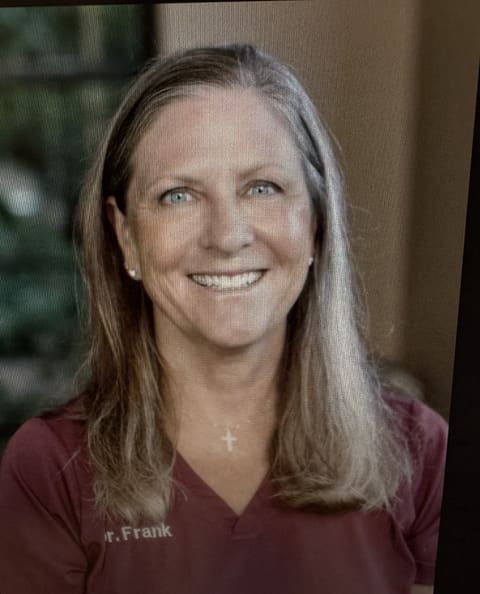
For Dr. Alicia Frank of Braelinn Village Family Dentistry in Peachtree City, Veterans Day is an opportunity to reflect on seven years of active-duty service in the United States Air Force, a career that took her around the world, and the lessons she still brings to her patients nearly 30 years after graduating from dental school.
Dr. Frank served in the Air Force Dental Corps, providing care to military personnel and their families, training dental assistants, and participating in a humanitarian mission in East Timor. Along the way, she met her husband, an Air Force fighter pilot, and began building a family whose life would remain connected to military service for decades.
“I’m proud to be a veteran, and I had the most positive experience in the military,” Frank said.
An unexpected path into military service
A native of Annapolis, Maryland, Alicia Frank attended the University of Maryland, Baltimore County, before earning her dental degree from the University of Maryland in 1997.
The Air Force offered her a Health Professions Scholarship that paid for dental school in exchange for military service. The arrangement also included an opportunity for advanced training after graduation.
Frank initially hoped to remain near Maryland or Virginia, but the Air Force assigned her to Offutt Air Force Base in Nebraska, where she completed an intensive, hospital-based residency in advanced general dentistry.
There, she rotated through specialties including oral surgery, periodontics, endodontics, and prosthodontics. The goal was to prepare military dentists to handle a wide range of dental problems, even in locations where specialists might not be available.
The Air Force’s approach to dental care was built around readiness. Every active-duty airman needed regular dental examinations and treatment to reduce the risk of an emergency during deployment.
Dr. Frank explained that her responsibility was to get service members into optimal dental health so they could deploy without worrying about a toothache or infection while serving far from home.
After her residency, an unexpected turn changed her career. Frank broke her thumb while playing on the hospital soccer team, temporarily limiting her eligibility for assignments. By the time she recovered, the remaining assignment was to Okinawa, Japan.
“And I really didn’t want to go there, but I went, and it was the best experience of my life,” Alicia Frank said.
A world of experience beyond the dental chair
At Kadena Air Base in Okinawa, Dr. Frank treated active-duty personnel and military family members, including children. She also found an opportunity to help military spouses develop professional skills.
Through a Red Cross volunteer program, Dr. Frank trained spouses to become dental assistants. The six-month course included classroom instruction, observation, and hands-on experience with patients. Participants received certificates and could use their training to seek employment after returning to the United States.
For spouses who were far from home and sometimes had limited employment opportunities overseas, the program offered a practical way to build a career. Dr. Frank particularly appreciated that the women could return home with marketable skills while contributing to the dental clinic’s work.
“But it was a win-win because they got the experience and they actually left Japan with a skill that they could use when they came home, and they helped us as well,” Dr. Frank said. “And they felt like they were part of the mission too. And I really enjoyed that a lot when I was over there.”
Alicia Frank also served on a humanitarian mission in East Timor, working with the United Nations during a period of unrest involving Indonesia. The assignment gave her an opportunity to provide dental care to people outside the military community.
Her military experiences also took her to England, expanding her professional experience across different settings and patient populations.
But perhaps the most consequential experience in Okinawa happened outside the dental clinic.
Frank enrolled in a scuba diving class, where she met the man who would become her husband. He was an Air Force fighter pilot.
When Frank became pregnant with their first child, she decided to leave active duty after seven years. Her husband continued his military career, ultimately completing 20 years of service.
Dr. Frank continued working as a civilian contract dentist at military installations in North Carolina and Alabama for approximately three additional years. Later, she worked in private practice in Texas.
The couple raised two children, Noah and Emma. Noah has graduated from Auburn University, while Emma attends the University of Georgia.
Military family life required sacrifices. During their years in Texas, Frank’s husband deployed twice, spending a combined 18 months away from their children.
Alicia Frank chose to work part time during much of their childhood, allowing her to maintain her dental career while supporting her family through military assignments and deployments.
Today, her husband works for Delta Air Lines, where he trains other pilots. The family lives in Fayette County.
Bringing military standards into civilian dentistry
One of the biggest adjustments Dr. Frank faced when moving into private practice was the business side of dentistry.
In the military, patients received the care they needed without paying the dentist directly for each procedure. In civilian practice, treatment decisions also involve insurance, costs, and patients’ financial circumstances.
Dr. Frank joked that she nearly lost her first private-practice job because she was accustomed to providing care without considering what to charge.
She also noticed that civilian patients sometimes placed greater emphasis on cosmetic improvements than on the underlying health of their teeth.
Her approach is to address dental health first, then consider cosmetic treatment.
“Sometimes the patients want that, but we educate them, and then they come around, and they’re like, ‘Okay, I get it. Yeah, let’s make everything healthy first, and then build the house on the solid foundation,’” Dr. Frank said.
Her Air Force training also shaped her commitment to evidence-based dentistry, a philosophy she says is shared by the team at Braelinn Village Family Dentistry.
“I was trained evidence based dentistry. Period,” Dr. Frank said. “In the military, I mean that was drilled into my brain.”
For Dr. Frank, that means recommending treatments supported by scientific research rather than adopting every new product or technique promoted to dental practices.
She appreciates that Braelinn Village Family Dentistry, led by Dr. Todd Cox, takes a conservative approach to treatment and focuses on what patients need.
“We are evidence based, and we don’t oversell, and we listen to the patient,” Dr. Frank said. “We treat the whole person, so and it’s good. It’s a very good fit.”
Dr. Frank also values working alongside other dentists, where experienced practitioners and newer graduates can learn from one another.
“We always look out for each other, so I think that is similar,” Dr. Frank said, comparing the office’s teamwork to her military experience.
She enjoys having colleagues available for second opinions and appreciates the opportunity to share her experience while learning about the latest developments in dentistry.
After nearly three decades in the profession, Dr. Frank says the collaborative atmosphere has helped make Braelinn Village Family Dentistry a particularly good fit.
A special connection with Fayette County veterans
Dr. Frank has worked at Braelinn Village Family Dentistry for approximately six years. She particularly enjoys caring for the area’s substantial community of military veterans and retired pilots.
With so many former military members living in Fayette County, including those who transitioned into aviation careers with Delta, Dr. Frank frequently encounters patients who share her background.
“I love treating retired military members,” Dr. Frank said. “We love talking war stories.”
Her experience gives her a personal understanding of the military lifestyle, from overseas assignments and deployments to the challenges faced by military families.
And while her Air Force career required her to focus on making service members ready to deploy, her work today allows her to develop long-term treatment plans with patients she expects to see regularly for years.
That continuity, combined with the standards she learned in the military, continues to shape her approach to family dentistry.
A Veterans Day reflection
As Veterans Day approaches, Alicia Frank hopes more Americans recognize the opportunities military service provides, along with the sacrifices made by service members and their families.
She credits the Air Force with providing her education, professional mentoring, international experiences, and the opportunity to serve people in ways she never anticipated when she first applied for a dental scholarship.
She also encourages young people to consider military service as a possible path toward professional training, education, and personal growth.
For Frank, Veterans Day is about recognizing the privilege of serving and appreciating the freedoms Americans enjoy.
“I think that we should be proud that we’ve served,” Frank said.
Her years in uniform are behind her, but the mission of caring for others remains central to her work.
At Braelinn Village Family Dentistry, that means helping patients maintain healthy teeth, making thoughtful treatment decisions, and bringing the same commitment to service that guided her years in the Air Force.
To learn more about Dr. Alicia Frank and the team at Braelinn Village Family Dentistry, visit www.braelinndentistry.com or call (770) 486-9400. The practice is located at 260 South Peachtree Parkway in Peachtree City.



Leave a Comment
You must be logged in to post a comment.