


 385
385 0
0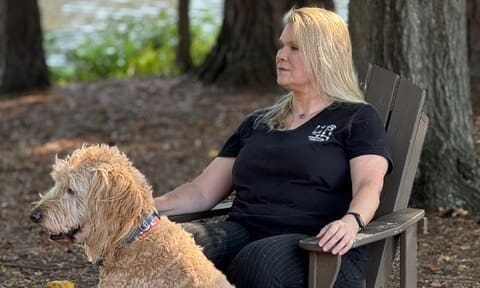
While serving as a U.S. Army captain overseeing fuel logistics, Piper Hill suffered a catastrophic injury that left her bedridden and incapacitated for years.
Through it all, there was one companion who never left her side.
Her dog, Valentine.
“I have a traumatic brain injury, and I don’t remember almost four years of my life,” Hill said. “I was given two months to live. I didn’t know my name. I couldn’t read. I couldn’t write.”
Hill spent an extended period bedridden at Fort McPherson, struggling with the effects of her injury. Her husband cared for her, and Valentine stayed beside her bed, providing companionship that Hill credits with helping her through her recovery.
Today, Hill is the founder and CEO of Healing4Heroes, a Fayette County nonprofit that has helped thousands of veterans and other individuals find that same kind of support through trained service dogs.
The nonprofit was recently recognized in The Citizen’s Choice Awards, winning the category “Which Company Would You Be Proud to Work For?” The Citizen’s Choice Awards are powered by the Fayette Chamber of Commerce.
For Hill, the appeal of working at Healing4Heroes is pretty obvious.
“I mean, what better job that you can play with puppies all day long? It’s incredible,” she said.
But behind the puppies is a mission born from a deeply personal experience.
From Army Captain to Nonprofit Founder
Hill grew up in a military family. Both of her parents served in the Army, and her father was preparing to deploy during Operation Desert Storm when she decided to enlist herself.
She was just 18.
Beginning as a private in the Army Reserve, Hill later entered ROTC and became an officer. She served in military logistics, helping coordinate fuel supplies for heavy military units. As she describes, “Lots and lots of tanks are involved.”
“I loved every minute of it,” she said. “I loved doing fuel.”
“I love this country. I really do,” Hill said.
Her military career eventually ended because of a line-of-duty injury that caused a severe traumatic brain injury. The injury left large gaps in her memory, including nearly four years of her life.
Her recovery was long and difficult. Although she eventually regained much of her independence, she continues to experience effects of the injury, including problems with memory and migraines.
Valentine played an important role in helping her through those years.
Hill knew firsthand how much a dog could help someone dealing with neurological injuries and other disabilities. She also knew there were veterans returning from military service who were struggling to get the support they needed.
In 2008, she founded Healing4Heroes.
Eighteen years later, the nonprofit serves veterans from across the United States.
Saving Two Lives at Once
Healing4Heroes trains service dogs for veterans at no charge. First responders can also receive the organization’s services without paying, while civilian clients may pay a fee.
The nonprofit has a second mission, too: rescuing dogs that might otherwise remain in animal shelters.
“It’s a dual mission, too. If the veteran doesn’t already own a dog, most of our dogs are from the shelter. So we’re saving two lives at once,” Hill explained.
Hill estimates the organization has trained more than 2,500 service dogs for veterans, along with 139 for veterans’ children and more than 425 for civilians.
Not every veteran wants or needs a service dog. Some simply want the companionship of a pet without the additional attention that comes with bringing a service animal into public places.
For those individuals, Healing4Heroes also helps place companion animals.
Hill said the nonprofit has placed 3,009 companion animals, primarily dogs, but also cats and even a bird.
Finding the right dog for each person is essential.
In the organization’s early days, Hill obtained dogs directly from shelters, testing their temperaments and preparing them for service work herself.
She learned that dogs could behave very differently once they were healthy, comfortable, and settled into a home.
At one point, she found herself caring for 15 dogs that had initially passed their temperament tests but ultimately were not suited for service work.
She found them other homes and changed her approach.
Today, Healing4Heroes frequently works with animal rescue organizations that have already placed dogs in foster homes and learned more about their personalities.
Hill said the organization places more than 125 dogs annually from rescues and shelters.
Safety is particularly important because the dogs must be able to accompany their handlers into stores, restaurants, and other public places.
More Than a Service Dog
Healing4Heroes trains dogs to assist people with a wide range of disabilities, including traumatic brain injuries, post-traumatic stress disorder, seizure disorders, and other medical conditions.
For veterans experiencing PTSD, a service dog might be trained to wake its handler from nightmares or create physical space around the person in a crowded environment.
A dog might stand behind a veteran at a checkout counter, alerting the handler when someone approaches, or position itself between its handler and another person.
These tasks can help veterans manage anxiety and navigate everyday situations.
The training also involves teaching veterans how to work with their dogs, building a partnership that continues long after class ends.
Healing4Heroes holds classes approximately once a month in Fayette County, drawing veterans from across the country. Veterans may arrive with their own dogs or receive dogs through the organization.
The program extends beyond obedience and service-animal training.
Hill said classes include meditation, nutrition education, and techniques intended to help participants manage stress and improve their well-being. When someone needs specialized services beyond what Healing4Heroes provides, Hill helps connect that person with other organizations and treatment programs.
“It’s more than just dog training with us,” she said.
That philosophy comes directly from her personal experience.
Hill remembers how difficult it was to find help after her injury, and she doesn’t want other veterans to experience that same isolation.
“There’s no reason that any veteran anywhere in this country should feel like nobody cares and that there’s no help,” she said.
A Workplace Where the Mission Is Personal
Although Healing4Heroes has grown considerably since 2008, it continues to operate with a relatively small team.
Hill said approximately 12 people might be helping during a training class on a particularly well-staffed day.
For the people who work there, the rewards go far beyond spending time with dogs.
Amanda Holmes, the nonprofit’s executive assistant, said the most meaningful part of her work is seeing the changes in veterans who arrive for training.
“What makes me proud to work for Healing 4 Heroes is seeing the immeasurable difference in our clients from their first day to their last day of their first class, and knowing that I had a part in helping them get there,” Holmes wrote.
She explained that many veterans arrive skeptical that the program will help them, particularly after years of struggling with physical injuries or psychological trauma.
But the difference she sees by the end of that first training session can be remarkable.
“They leave with a renewed sense of purpose, with more confidence, and with hope,” Holmes wrote.
For Holmes, some of the most meaningful moments come after the veterans return home. She hears from spouses who feel they have gotten their partners back, sees children reconnecting with their parents, and watches former participants return to work and become active in their communities.
Because Healing4Heroes continues providing training and support after the initial classes, its staff and volunteers often get to see those changes develop over time.
Amanda Harris, another member of the Healing4Heroes team, said the nonprofit’s mission brings together people who genuinely want to make a difference.
“Working for Healing4Heroes has never felt like simply having a job. It is something I feel incredibly proud to be part of, because every day I know that what we are doing has a purpose and can genuinely change — and sometimes literally save — someone’s life,” Harris wrote.
Harris said the organization feels more like a family than a workplace. Her own friends and relatives have become involved in supporting its events and volunteer efforts, along with businesses and other members of the community who share its commitment to helping veterans and their families.
That combination of meaningful work, community involvement, and a supportive team helps explain why Healing4Heroes earned recognition in The Citizen’s Choice Awards.
Building a Permanent Home in Fayette County
Healing4Heroes is working toward creating a permanent training facility on 60 acres in rural Fayette County.
The property already has a primitive cabin ready for visiting veterans to stay in during training that will be available when their main building is finished. Hill hopes construction of the main building can begin within the next year.
For now, training takes place at various community locations, including the Peachtree City Library and community center.
Veterans and their dogs also visit local stores, including Home Depot and Target, where they can practice navigating public spaces.
At the nonprofit’s property, an agility course funded by Clothes Less Traveled provides another opportunity for dogs and handlers to develop their skills.
Hill would welcome additional volunteers, particularly people willing to help veterans learn the fundamentals of working with their dogs.
A recent class had 25 participants, including several who had never owned dogs before. With seven or eight puppies also participating, Hill said the team could have benefited from more coaches to provide individual attention.
Even teaching something as simple as “sit” requires time and patience when working with that many beginners.
Funding remains a challenge as well.
For years, individual donors in Fayette and Coweta counties provided more than half of Healing4Heroes’ operating budget, Hill said. Contributions from those donors have declined, and the nonprofit now relies more heavily on corporate support and other contributions.
Financial donations help Healing4Heroes continue providing service dogs and training at no charge to veterans, and Hill welcomes additional community support. She also encourages those who are unable to give financially to help by spreading the word to veterans who might benefit from the program.
“If they know a veteran that needs help, they just tell them. Tell them about us and save somebody’s life,” Hill said.
She remembers the soldiers she served with who never came home, along with those who returned carrying physical and psychological injuries that continue to affect their lives.
“I don’t want any veteran to be floating around out there and not know that something as simple as a discarded dog from the animal shelter can help them be and feel better,” she said.
For Hill, the mission that started with one dog named Valentine has become a way to offer other veterans the companionship and practical support that helped her rebuild her own life.
And while she may joke about getting to play with puppies all day, the work remains deeply personal.
She knows what it is like to need someone, or something, that refuses to give up on you.
To learn more about Healing4Heroes, apply for a service dog, make a donation, or volunteer, visit www.healing4heroes.org.


Leave a Comment
You must be logged in to post a comment.