


 3346
 0
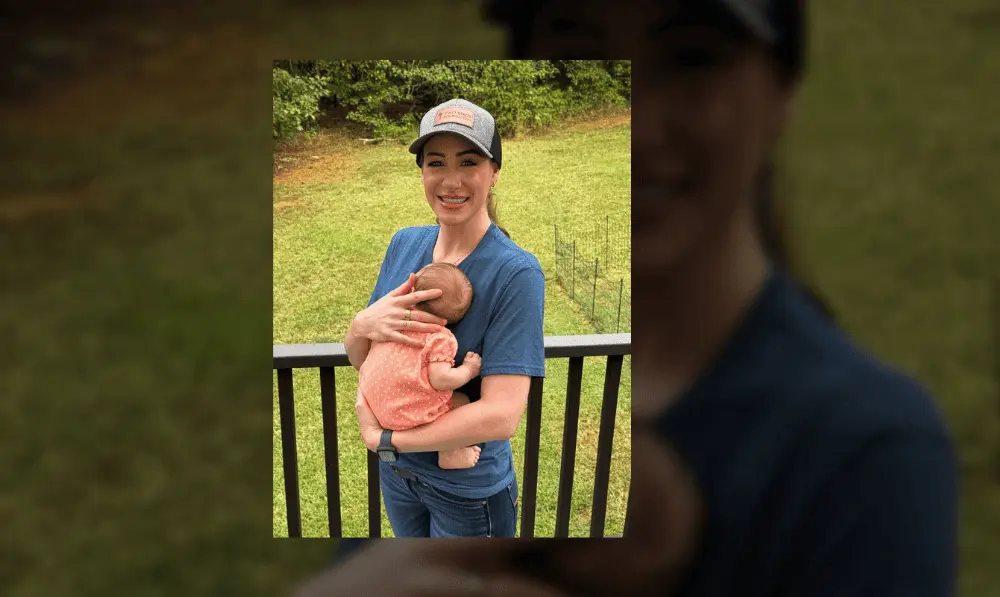
Emily Morrison was eight and a half months pregnant when she launched a nonprofit dedicated to rescuing food that would otherwise go to waste and delivering it to people who need it. A few weeks later, she was navigating life with a newborn daughter while working to build the organization she had dreamed of creating.
The 37-year-old Fayetteville resident and founder and executive director of Two Birds Foundation has embraced both challenges, determined to show that motherhood and making a difference in her community can go hand in hand.
“It’s never convenient to do the right thing,” Morrison said during an interview shortly after the foundation’s ribbon cutting. “I’m so in love with this journey that I’m on, and the people I can help.”
Her nonprofit addresses two problems at once: food waste and hunger. Two Birds Foundation collects surplus food from restaurants, caterers, hotels, and other businesses and coordinates its delivery to organizations serving people in need.
The foundation calls its approach “feeding two birds with one scone.”
A Problem Hiding in Plain Sight
The idea for Two Birds began years before Morrison officially established the organization.
While working for a large company that organized events throughout the United States and Canada, Morrison frequently saw a troubling contradiction. Hotels would prepare elaborate catered meals for corporate gatherings, only to have enormous quantities of perfectly good food left over.
Sometimes, a homeless shelter was just down the road.
“We would be in a hotel, and we would have this gorgeous meal catered, and have maybe 100 meals left over. And right down the road is a homeless shelter,” Morrison said.
She discovered that the barrier wasn’t necessarily a lack of willingness to donate. It was logistics.
Hotels needed containers, employees to package leftovers, and someone to transport the food. Meanwhile, nonprofits needed volunteers and resources to collect it.
Morrison occasionally arranged for surplus meals to reach nearby shelters herself, but she knew the problem required a more comprehensive solution.
She later spent more than a year serving as executive director of a nonprofit in the Fayetteville area, gaining experience in nonprofit leadership and building relationships within the community.
Eventually, she decided to combine that experience with her passion for reducing food waste.
Two Birds Foundation was born.
A Mother’s Example
Although Morrison’s professional experiences revealed the opportunity to rescue food, her motivation to serve others reaches back to her childhood and the example set by her mother.
Her mother grew up with limited financial resources, but Morrison remembers her as someone who was always willing to help others, regardless of how much she had herself.
One of Morrison’s childhood memories involves an unusual family meal called milk soup.
The recipe was simple: milk, salt, and dumplings made with egg and flour.
It was a meal her mother remembered from her own childhood, when families sometimes had to make do with very little.
Morrison is careful to explain that she herself did not grow up hungry. Although her family shopped at thrift stores and lived in a trailer for a time, her parents provided for her, and she enjoyed opportunities to travel.
The milk soup was a comfort food passed down from a previous generation, but it represented something important.
Morrison grew up understanding that hardship could shape a person’s life long after their circumstances improved. She also saw that generosity wasn’t determined by how much money someone possessed.
“I just grew up with her example and her kindness,” Morrison said. “If somebody needed something, she was always the first to jump in.”
That example helped establish the philosophy behind Two Birds Foundation.
“Once you see that, and you see a problem, and you know you can fix it, you have the responsibility to do so,” she said.
Making Food Rescue Simple
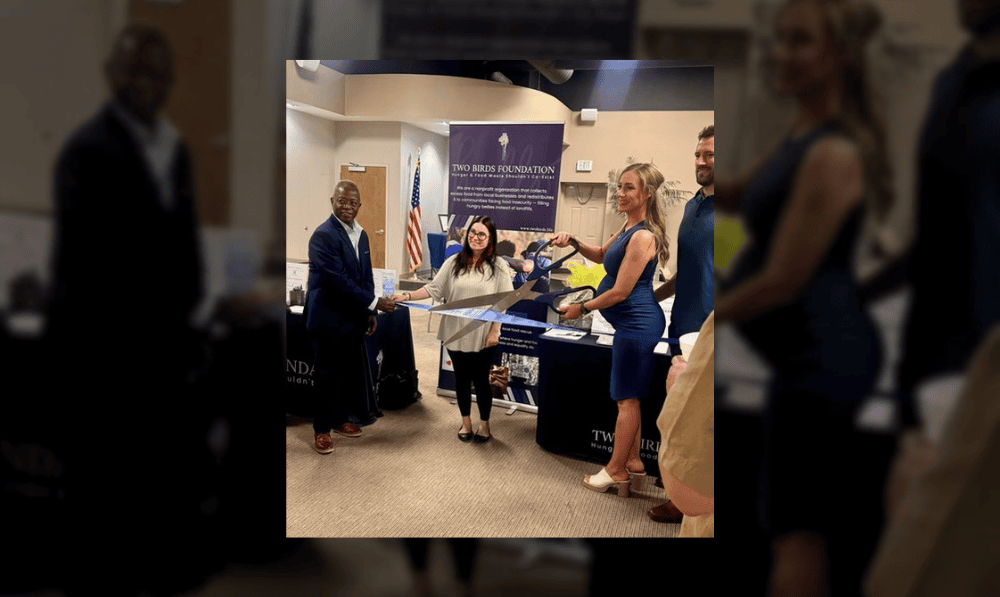
Two Birds Foundation officially celebrated its ribbon cutting on June 30, raising $3,268.41 through its opening fundraiser, according to its website.
The organization uses technology licensed through Food Rescue US to coordinate food donations, volunteers, and nonprofit recipients.
Morrison compares the process to Uber Eats, except that volunteers deliver rescued food rather than restaurant orders.
Businesses with surplus food can register as donors. Volunteers sign up through the Food Rescue US app, where they can see available routes, pickup times, delivery destinations, and vehicle requirements.
The app provides directions and allows participants to track their impact.
During one of the foundation’s first pilot rescues, Morrison transported surplus food from Hog Pit Barbecue to the I-58 Mission, a local nonprofit that operates a food pantry.
That single rescue recovered 98 pounds of food, representing 82 meals. According to the app’s calculations, it also offset 114 pounds of carbon dioxide emissions and avoided 1,080 gallons of water associated with waste processing.
Those measurements help businesses and volunteers understand the difference their contributions make.
The I-58 Mission became the foundation’s first nonprofit food recipient and remains a primary partner.
Morrison’s goal is to establish a network of businesses and nonprofits across Fayette and Coweta counties, with potential expansion into surrounding communities.
She doesn’t see other food distribution organizations as competition. In fact, she hopes to collaborate with established groups, including those equipped to transport or store larger quantities of food.
“Becoming a part of a network is so much better than trying to compete with each other,” she said. “The end goal is always the same: Help as many people as possible. So how do we do that? We work together.”
Pregnant, Not Powerless
Launching a nonprofit is challenging under almost any circumstances. Morrison did it while preparing to welcome her first child.
She had expected to have a little more time to establish the foundation’s operations before giving birth, but her daughter arrived two weeks early.
The timing interrupted the nonprofit’s plans to onboard additional food donors.
Labor and delivery also brought unexpected medical complications for both mother and baby, resulting in a hospital stay of approximately five days.
Fortunately, both recovered and returned home.
Six weeks after giving birth, Morrison was already back at work, balancing fundraising, partnership development, and meetings with the demands of caring for a newborn.
“I didn’t get a maternity leave,” Morrison said. “Obviously, when you own your own business, you don’t have the luxury of taking one.”
Breastfeeding and running an organization have made for an unpredictable schedule, but Morrison sees the experience as an opportunity to demonstrate what women can accomplish.
She admits there were times during her pregnancy when she considered delaying the nonprofit’s launch until after the baby arrived.
She’s glad she didn’t.
“Pregnant, not powerless,” Morrison said. “You can still do so much and help your community.”
She hopes her experience encourages other women who may question what they are capable of accomplishing during pregnancy and early motherhood.
“We are so much more capable than we think we are,” she said.
And now, she has another reason to keep building the foundation.
“We’re an example for our children,” Morrison said.
Building a Foundation for the Future
Following the birth of her daughter, Morrison returned her attention to expanding Two Birds Foundation’s partnerships.
The nonprofit has established a relationship with Copia, a food recovery network that can help connect Two Birds with additional businesses donating surplus food.
At the time of her follow-up interview, Morrison was also working to establish a food donation relationship with Carrabba’s Italian Grill.
Her next goal is to recruit more restaurants and businesses in downtown Fayetteville, Trilith, Senoia, and Peachtree City, including businesses at The Avenue.
The foundation is still in its launch phase, with active food rescue routes operating intermittently as additional donors are brought into the network.
Financial support is also essential.
Morrison said she and her family personally covered many of the nonprofit’s startup costs, making fundraising an immediate priority.
One significant boost came from Evergreen Church, which awarded the organization a $2,000 grant.
That support, Morrison said, was especially important as the young nonprofit worked to establish itself.
The organization needs additional financial contributions, food donors, and volunteers to continue expanding its operations.
Everyone Deserves a Seat at the Table
For Morrison, the work is about much more than preventing waste or providing meals.
It’s about dignity.
She envisions a future in which people receiving food assistance don’t have to feel embarrassed or explain their circumstances to their children.
One of her long-term goals is to operate a food truck that could bring rescued meals directly into underserved communities.
Imagine a mother approaching a food truck with her two daughters, ordering dinner, and receiving a receipt just as she would at any other restaurant.
The receipt would show a total of zero dollars.
The family would leave with a meal, and the children wouldn’t necessarily know that their mother had received charitable assistance.
“That is the dream,” Morrison said. “Where you don’t have to be ashamed to take something, and you don’t have to feel less than. It just feels normal.”
It’s an ambitious vision for an organization still finding its footing, but Morrison believes food rescue can eventually become part of a larger effort to make food assistance more accessible and respectful.
When asked what kind of world she hopes to create for her daughter, Morrison’s answer was immediate.
“An equal world where everybody has access to the same resources and everybody is treated with dignity and respect.”
That vision connects the lessons she learned from her mother with the example she now hopes to set for her own child.
One generation taught her that generosity doesn’t depend on wealth. The next is giving her another reason to put that lesson into practice.
And if Morrison succeeds, the result will be more than rescued meals. It will be a community where less food goes to waste, more neighbors have enough to eat, and everyone has a seat at the table.
How to Help Two Birds Foundation
Two Birds Foundation is seeking restaurants, caterers, grocery stores, and other businesses willing to donate surplus food. The organization also welcomes financial contributions and volunteers willing to transport food between donors and local nonprofits.
Food rescue volunteers use their own vehicles and can select available routes through the Food Rescue US app. The foundation also welcomes assistance with outreach, grant writing, marketing, and other professional skills.
To volunteer, donate, register as a food donor, or learn more about the organization, visit www.twobirds.life.


Leave a Comment
You must be logged in to post a comment.