


 9966
9966 0
0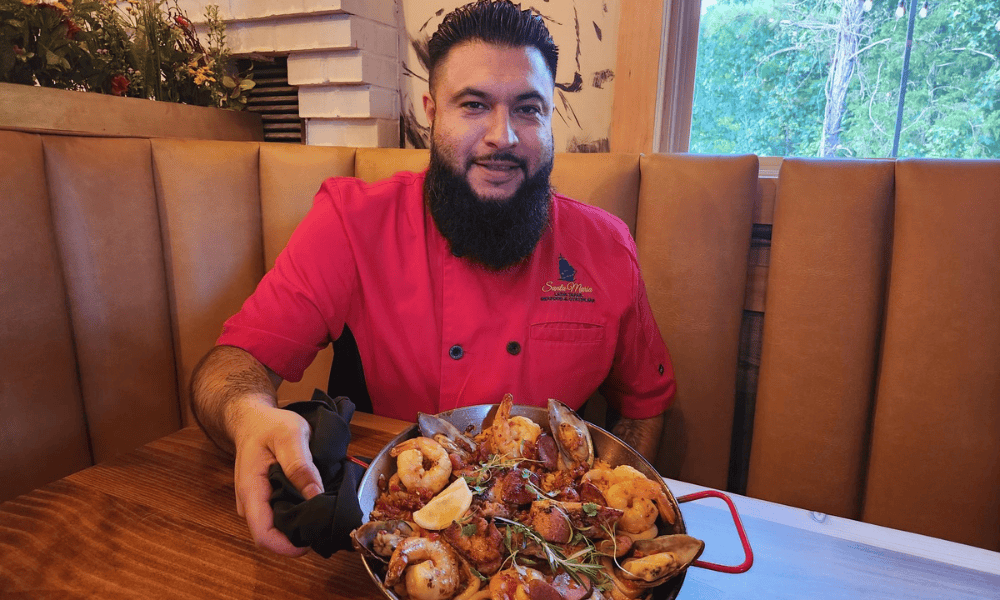
The old Speedi-Pig Bar-B-Q building is still standing in Fayetteville, but almost everything familiar about it is gone.
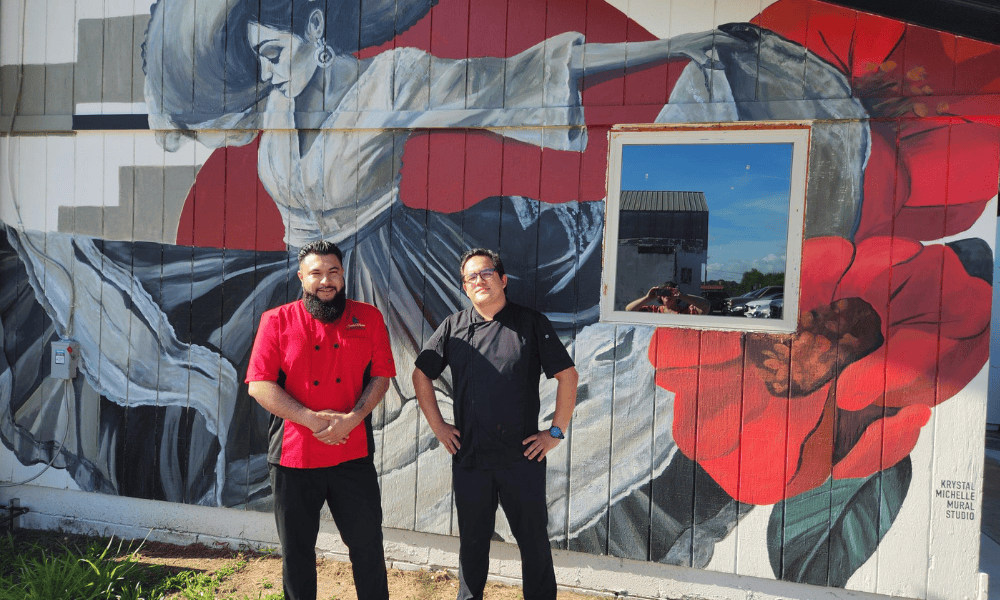
Inside and outside, custom murals stretch across the walls. Decorative baskets soften the lighting over polished tables, an expansive bar, and carefully chosen finishes. Outside, professional murals cover both sides of the building, while a large patio creates room for dining under the open sky.
The footprint may belong to Speedi-Pig, but Santa Maria Latin Tapas, Seafood and Oyster Bar is a complete transformation.
That is true of the restaurant—and of its owner.
Mario Garcia attended Fayette County High School but dropped out before graduating. His family worked in restaurant kitchens, and Garcia began learning the business from the ground up. He later opened two Fuego Tortilla restaurants in Fairburn and Kennesaw, followed by the first Santa Maria in Cumming.
The new Fayetteville restaurant is his fourth establishment and his second built around the Santa Maria concept. Santa Maria is locally owned and operated—Garcia lives in Senoia.
Garcia spent years refining the idea with chef and business partner Jeffrey Del Carpio. Both men describe themselves as foodies who enjoy exploring restaurants and flavors together. They wanted to create a place where diners could share smaller plates, experience food influenced by countries across Latin America and Spain, and linger over drinks and conversation.
“We are foodies, so we go out sometimes, and we decide to create a concept with different countries, but with a really good flavor,” Del Carpio said.
Garcia said tapas gave them the freedom to draw from a wide range of cultures rather than limiting the restaurant to one country’s cuisine.
“We were talking about how we enjoy going to eat tapas to the Spain restaurants and all that,” Garcia said. “But at the same time, it was much more out there, like the cultures, like the Peruvian, the Colombian, Venezuelan, Mexican—so different other countries that we can definitely put the tapas on that concept as well.”
Coming home to Fayetteville
For Garcia, opening in the former Speedi-Pig building was not simply a real estate decision.
He came to the United States from Mexico when he was about 11 and spent part of his childhood in Fayetteville. He remembers visiting Speedi-Pig regularly while he was in school and continuing to return after moving away.
“So Speedi-Pig, it was, at least to me, was a famous part of Fayetteville because of the barbecue, and it was really good,” Garcia said. “So I used to come to eat at least once a week or once a month whenever I could.”
When the restaurant closed, Garcia eventually bought the property. What followed was a renovation lasting roughly a year and a half.
The work went far beyond new paint and furniture. Garcia said the team replaced the plumbing, electrical systems, flooring, walls, roof, insulation, and air conditioning.
When asked what had to be replaced, his answer was simple.
“Everything, literally everything,” Garcia said.
The result is polished without feeling stiff. Santa Maria is designed for celebrations and special dinners, but it is not hushed or overly formal. Music with a fairly driving beat played during The Citizen’s visit, giving the dining room an upbeat energy as couples, groups, and a family with a baby settled in comfortably.
This is a high-end restaurant, but it is not fussy.
A menu meant for sharing
The full menu is extensive, with dishes influenced by Mexico, Peru, Spain, Brazil, Argentina, Colombia, and other parts of Latin America.
The tapas section includes bacon Brussels sprouts, Mexican street corn, patatas bravas, shrimp and bacon brocheta, Spanish-style octopus, gambas al ajillo, empanadas, queso fundido, and several preparations of calamari.
Signature tacos include mojo pork belly, carnitas, carne asada, birria, shrimp, chicken, and fish. The menu also offers ceviches, oysters, soups, salads, enchiladas, and larger entrées.
Those entrées range from familiar steaks and seafood to dishes that may be new to many Fayette County diners. Choices include churrasco, lomo saltado, carne asada, whole fried red snapper, Peruvian-style grilled chicken, seafood pasta, and several paellas.
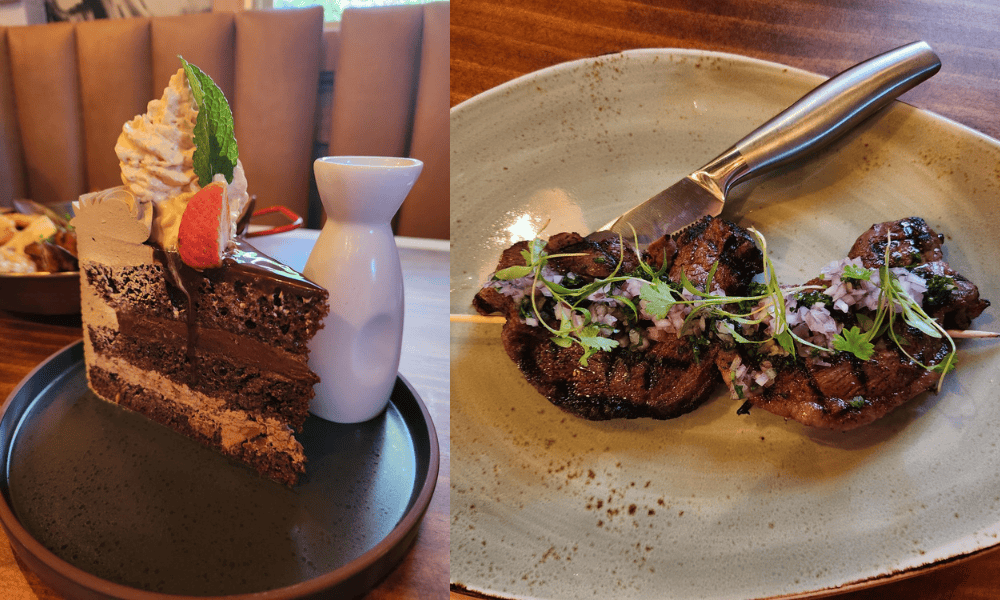
One of the dishes served during The Citizen’s visit was picanha, a Brazilian cut of beef known for the layer of fat along its edge. Del Carpio serves it with house seasoning, chimichurri, and onions.
The steak was phenomenal—exceptionally tender, with a bright, herbaceous chimichurri that made each bite taste richer rather than heavier.
“This is picanha,” Del Carpio said. “Picanha is a traditional Brazilian part of the meat. Many of the Brazilian steakhouses pass picanha, and we add our own touch with the seasoning, and also we put a chimichurri on top, and the onion that gives us a different texture and a different flavor on it.”
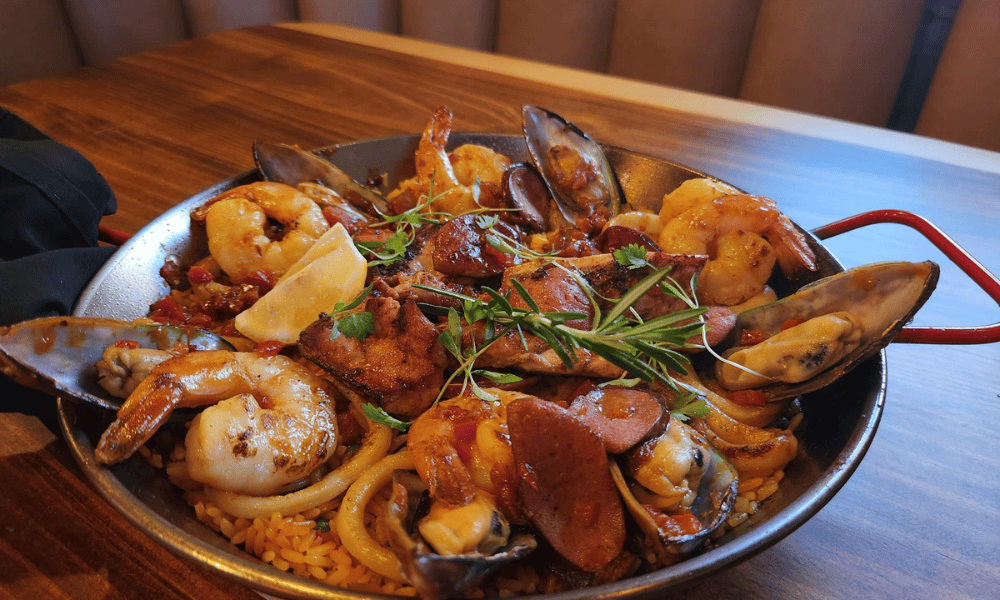
The mixed Valencian paella arrived in a broad pan filled with rice, chicken, shrimp, sausage, calamari, and mussels. Del Carpio said the restaurant’s dishes, including its ceviches, steaks, and sauces, are prepared from scratch.
That approach takes more time, particularly with paella.
“Making everything from scratch, it takes about like 15 minutes, 20 minutes,” Del Carpio said. “But you’re gonna eat something really, really good.”
The paella traveled home well. My husband, who had recently eaten paella in Spain, loved it.
Microgreens from their own garden
Even some of the smallest details receive attention.
The picanha was topped with micro cilantro grown in a garden maintained by the Santa Maria team in Cumming. The restaurant grows microgreens there, cuts them fresh, and transports them to its restaurants.
“We have our small garden that we produce for our own microgreens,” Del Carpio said. “So we cut every week in the morning.”
Although the greens provide an attractive finishing touch, their purpose is not purely decorative. The concentrated cilantro flavor added freshness to the steak and chimichurri.
The same from-scratch approach extends to the bar. Santa Maria’s cocktail list includes margaritas, sangria, a mezcal sour, pisco sour, carajillo, espresso martini, and a frozen piña colada made with pineapple, coconut, lime, and a small amount of espresso.
The unexpected coffee note deepens the drink without overpowering its tropical flavor.
House Manager Lemy Moreno said the restaurant does not rely on a premade piña colada mix. Its staff prepares batches using fresh ingredients and works to balance the citrus, liquor, liqueurs, and other flavors.
The beverage menu also includes red, white, sparkling, and rosé wines; draft and bottled beer; mocktails; and nonalcoholic choices such as Inca Kola.
Three kinds of tres leches
Dessert is not an afterthought.
Santa Maria serves churros, flan, panna cotta, and three elaborate tres leches cakes inspired by sweets familiar to Garcia and Del Carpio: Mazapán, Gansito, and Kinder.
The Kinder tres leches cake served during The Citizen’s visit was topped with chocolate, layers of cream, and house-made dulce de leche whipped cream. It was intensely rich—the kind of dessert that can only be eaten a few bites at a time, then revisited later.
Del Carpio said the desserts were designed to connect diners with childhood memories while presenting those flavors in a new form.
“That reminds us of our childhood,” he said. “So we decided to do something different with the tres leches because a lot of people love tres leches, but we’re gonna bring that memory.”
It is the kind of oversized, extravagant dessert someone might order for a birthday or other celebration—something most diners would never attempt to reproduce at home.
Keeping part of Speedi-Pig alive
Garcia did not want the transformation to erase everything that came before it.
After buying the building, he and Del Carpio began searching Fayetteville for the person who had cooked Speedi-Pig’s barbecue. They eventually found the former pitmaster and brought him into the Santa Maria project.
“We finally find him,” Garcia said. “We went through the whole city of Fayetteville to look for him.”
Garcia said the old ovens have been fired up again, and the team is testing brisket, chicken, ribs, and other smoked meats. The barbecue will not simply recreate the former menu. Instead, Santa Maria plans to incorporate it into Latin-inspired dishes while identifying its connection to Speedi-Pig.
“We’re gonna keep that little piece of Speedi-Pig,” Garcia said. “So Fayetteville still has that little piece of the barbecue.”
The barbecue dishes are expected to be added after the opening menu is established. Garcia also plans to bring them to the Cumming Santa Maria, giving diners there a taste of a Fayetteville institution.
A new addition to Fayetteville’s food scene
Santa Maria is currently operating under a soft-opening menu as its staff prepares for the full launch. The restaurant plans to celebrate its grand opening August 3.
During the soft opening, guests may dine from 1 to 9 p.m. After the grand opening, Garcia said Santa Maria will serve lunch and dinner beginning at 11 a.m., closing at 10 p.m. during the week and 11 p.m. on weekends.
Reservations are available through OpenTable. Larger groups should contact the restaurant directly.
Garcia said he wanted Fayetteville residents to have a restaurant suitable for date nights, family meals, ladies’ nights, celebrations, or simply trying something different without driving farther north.
“Again, we’re trying to bring the city concept to the south,” Garcia said. “We’re trying to make sure that, especially Fayetteville, has this special place for any kind of occasions.”
A former Fayette County High School student who left without a diploma has returned as the owner of four operating restaurants. He has taken a building from his youth, rebuilt it almost from the ground up, and created a restaurant unlike anything else in the immediate area.
Speedi-Pig’s outline remains. Inside it, Santa Maria is something entirely new—and an exciting addition to Fayetteville’s food scene.
Santa Maria Latin Tapas, Seafood and Oyster Bar
715 Glynn St. South
Fayetteville, Georgia 30214


Leave a Comment
You must be logged in to post a comment.